all 2013

Book Author(s)
Martyn Chorlton
Review Author
Hub Plott
Published on
Company
Osprey Publishing
MSRP
$18.95

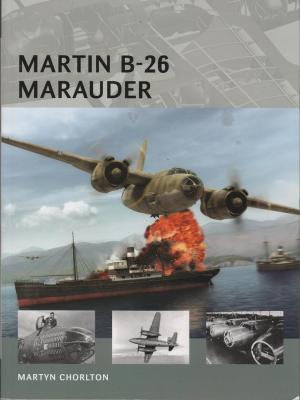
“Martin’s Mistake”, “Martin’s Murderer”, “The Flying Prostitute”, “The Baltimore Whore”, and “One a day in Tampa Bay” are all some of the derogatory nicknames and phrases used to describe the Martin B-26 Marauder. This outstanding aircraft was never able to get out from under the bad reputation it got early on. The early versions with the short-span wings and other ticks that come with a new design contributed to the type’s undeserved reputation. A really “hot ship”, it could be difficult for a newbie to handle, but once mastered it then demonstrated its full potential. And when the longer improved wing was installed on later variants, the crews felt that almost all of the ship’s vices disappeared.

Books on the Martin B-26 are not all that common, so it is good to see one that does its level best to dismiss the bad reputation this aircraft garnered in training. As the author state, crews loved the Marauder.

Review Author
Ken McDevitt
Published on
Company
Quickboost
Scale
1/48
MSRP
$4.39

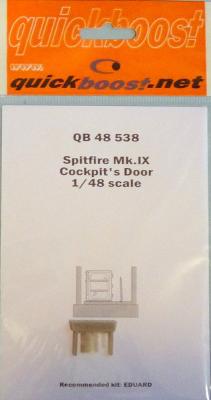
This is the second Quickboost piece that I have acquired for my 1/48 Eduard Spitfire Mk.IXc build. The other is the cockpit seat.

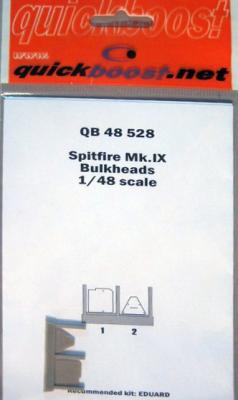
Quickboost has produced a detailed resin cockpit door that provides details that are missing even in the excellent Eduard kit. This is not to diminish the Eduard kit that has been reviewed by Bret Green as the definitive (his opinion) 1/48 Spitfire kit. In the photos, obviously, the Quickboost piece is still attached to the casting block. The Quickboost web link to the picture brings out more detail than my photo. A word of caution – there seems to be a size difference with the Eduard door being larger. I won’t know about final fit until I get to the build.

I highly recommend this highly visible replacement part. Thanks to Quickboost for providing these parts and to IPMS/USA for the opportunity to review this item.

Book Author(s)
Tomasz J Kopański
Review Author
Hub Plott
Published on
Company
Stratus
MSRP
$23.95

This book takes a look at the most famous of the Polish bomber type in WWII and its developments. The PZL 23 was known as the Karas (or Carp, according to Google translation) to the Polish Air Force and, along with its offshoot variants PZL 42, 43 and 46, did the lion’s share of bombardment work for Poland.

The majority of the book (65 pages) gives us a brief history of the main variant, the PZL 23, and its service with both Poland and Romania. There are many previously unpublished black and white photos used to illustrate this aircraft, along with gorgeous color profiles. The Poles had some of the best group insignias I have ever seen. Who could resist doing a model of a Karas with a flying fire breathing dragon with a bomb clutched in his talons?!

Review Author
Rob Benson
Published on
Company
Zoukei-Mura
Scale
1/32
MSRP
$191.00

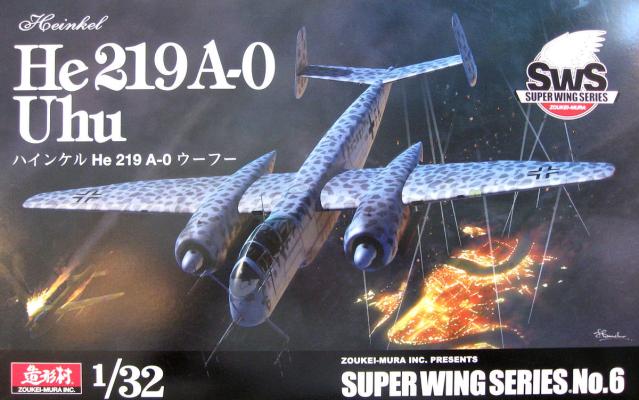
Many, many thanks to Mr. Hideyuki Shigeta for honoring me with the privilege of building the Super Wing Series He 219 Uhu (Eagle Owl) model kit for public review as an IPMS Reviewer Corps representative. I am deeply appreciative of the trust and confidence shown in me by both Mr. Shigeta and the IPMS Reviewer staff. I am delighted to report on the next stage of construction: the cockpit.

Book Author(s)
Edward M. Young
Review Author
Greg Wise
Published on
Company
Osprey Publishing
MSRP
$18.95

These are two of the most iconic fighter aircraft that came out of World War II. They’re the Mitsubishi A6M Zero-sen and the Grumman F4F Wildcat. This book covers the ways in which these two contemporaries, with very different design influences, each possessed its unique strengths and weaknesses. The book includes information on the pilots who flew them and technical data including performance specifications. The author explains in plain English how each of these aircraft was developed in a side-by-side chronology. He further explains how these two enemy aircraft existed in the harsh, war-ravaged Pacific Ocean and jungle island environments.

The book itself is well printed with a hearty gum binding. The print is easy to read and the photographs are very clear. The artwork and cutaway illustrations are colorful and honestly represented. The maps and charts are rendered so that any layperson can understand them.

Book Author(s)
Steven J. Zaloga
Review Author
Greg Wise
Published on
Company
Osprey Publishing
MSRP
$17.95

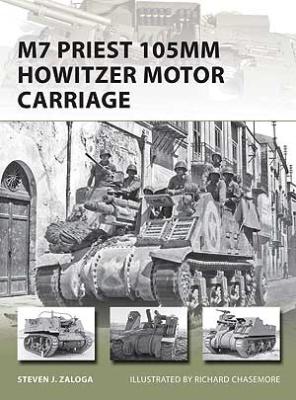
Based upon the Grant/Sherman tank, the M7 Priest was a self-propelled howitzer with a high-mount machine gun ring resembling a pulpit. It was utilized by the US, British, Canadian, and Free French forces. This book tells the complete story from design and development to deployment. In addition, this book covers all variants of the Priest, including the British/Canadian Sexton 25-pounder version and the US M12 155mm GMC.

I found the book to be well thought out with a very coherent outline. It’s written with easy to understand explanations. It has beautiful color paintings, cutaway artwork, and is packed with a wide range of period b&w photographs.

The book itself is well printed with a hearty gum binding. The print is easy to read and the photographs are very clear. The artwork and cutaway illustrations are colorful and honestly represented. The maps and charts are rendered so that any layperson can understand them.

Book Author(s)
Steven J. Zaloga
Review Author
Greg Wise
Published on
Company
Osprey Publishing
MSRP
$18.95

The US M10 was originally developed as a tank destroyer while the StuG III was a turretless, low-profiled tracked vehicle developed for direct fire support for infantry formations. This book discusses how these two fighting vehicles went beyond their respective design missions when called upon. It also covers how they fought one another during the 11 month campaign on the battlefields of northwest Europe in 1944-45.

I found the book to be well thought out with a very coherent outline. It’s well written with easy to understand explanations. It has beautiful color maps, paintings, cutaway artwork, and a wide range of period b&w photographs.

The book itself is well printed with a gum binding. The print is easy to read and the photographs are very clear. The artwork and cutaway illustrations are colorful and honestly represented. The maps and charts are rendered so that any layperson can understand them.

Review Author
Floyd S. Werner Jr.
Published on
Company
Quickboost
Scale
1/48
MSRP
$8.50

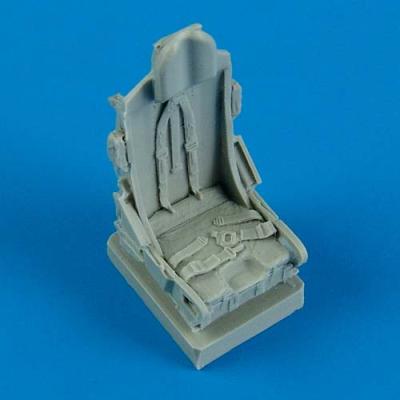
Let’s face it, ejection seats in kits usually leave something to be desired. Usually, the culprits are the lack of seat belts or just the limitation of the plastic molding process. The ejection seat is also the most visible part of the interior, either with the canopy open or closed.

It sure would be nice to have a well-detailed seat in your Hun. Quickboost provides just that – a perfectly detailed seat complete with seatbelts and shoulder harness. It is easy enough to remove the resin pour block. My example was perfectly cast in light grey resin. It is perfect and just needs a coat of paint to bring it alive. It is an easy addition to either your Trumpeter or Monogram Hun.

Easy installation, perfectly cast, and highly detailed...what more can you ask for? Absolutely nothing. Another great product from Quickboost. Remember if you are doing an F-100F you will need two seats.

Highly recommended.

Thanks to Quickboost and IPMS/USA for the review copy.

Review Author
Floyd S. Werner Jr.
Published on
Company
Quickboost
Scale
1/48
MSRP
$8.50

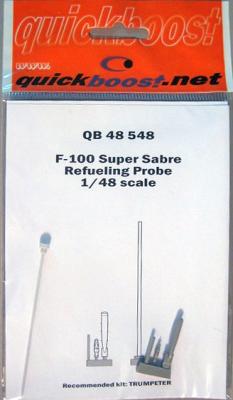
The Trumpeter F-100 series of models is nice. If you are like me, it is really tough to get rid of the mold line on the round parts such as the refueling probe. I can get rid of the mold line, but keeping it round is not my forte. Quickboost offers a quick and easy upgrade. This set provides three pieces of resin molded perfectly in light grey resin.

The probe comes in three pieces. One is the fuselage mounting point with a perfectly hollowed out tip. Then there is the long probe itself. I was amazed at how straight this part was and, best yet, no mold line. The part is removed from the base. Then the final part is the probe end. This is really a nice looking piece. It is an accurate representation. It will require a sliver of resin to be sanded off the end, but that is an easy operation.

While designed for the F-100, the probe tip can be used on any US aircraft that has an in-flight refueling probe.

Review Author
Floyd S. Werner Jr.
Published on
Company
Plusmodel
Scale
1/48
MSRP
$11.20

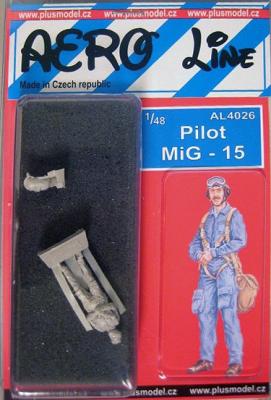
Plusmodel’s Aero Line continues its tradition of providing the modeler with simple and interesting pilot figures. The latest is a pilot for the MiG-15. This is a two-piece figure. The biggest part is the pilot himself. The other piece is the parachute pack. Both are perfectly cast in light grey resin. There is very little clean-up required. The thin wafer of material around the figure is easily removed by hand and cleaned up with a sharp blade. The face is perfectly formed. The proportion of the figure are perfect. The stance of the pilot is relaxed and completely natural. The equipment is perfectly sculpted, as well. I could not find anything I didn’t like. The small parachute pack is easily attached to the pilot’s backside.

The figure is safely packaged in a plastic container with the parts safeguarded by a piece of foam. Included on the packaging is a painting of the figure. Inside the packaging is the same painting but much larger.

Review Author
Floyd S. Werner Jr.
Published on
Company
Aires Hobby Models
Scale
1/48
MSRP
$21.50

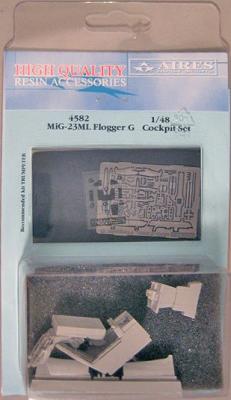
The Trumpeter MiG-23 is a nice kit, but the seat and the whole cockpit is simplified. It may be just the limitations of plastic molding technology, but now you don’t have to scratchbuild the cockpit. The Aires set comes in their normal packaging in a plastic container, with foam securing the parts in place. It is effective. I did have one piece fall off the sprue, but that is to be expected in shipping, sometimes.

There are nine exquisite resin parts perfectly molded in light grey resin. The amount of detail in this set has to be seen to be believed. The cockpit is perfection. The undercuts on the side walls are impressive. The same can be said for the instrument panel coaming. The pour blocks are small and will be easy to remove.

Review Author
Floyd S. Werner Jr.
Published on
Company
Aires Hobby Models
Scale
1/32
MSRP
$37.50

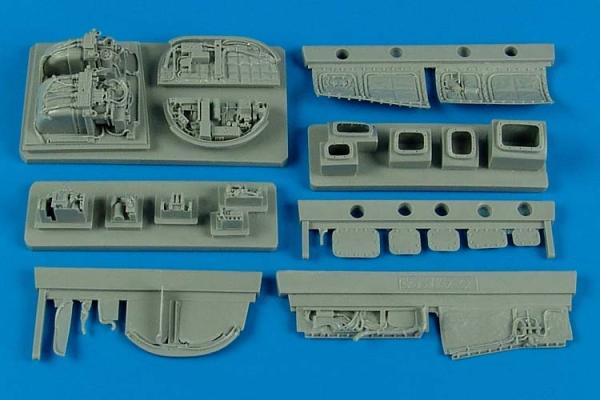
You want your Flogger to stand out on the model table? How about opening up the entire nose section? Now we are talking. What can be cooler than complete electronic bays? Normally the whole process would be hours of research, and then hours of scratchbuilding. Thanks to Aires, this will be significantly easier.

You get 25 high-quality light grey resin pieces that feature bulkheads, access panels, and radio/radar equipment. Unlike most Aires sets, this set does not come with any photo etch parts. Everything is rendered perfectly in resin. The bays are deep and have the equipment added from behind. Just exquisite molding.

You think you have to wire the electronics? Nope; miraculously, Aires has even molded the wiring. All the modeler will need to do is artful painting.

Review Author
Floyd S. Werner Jr.
Published on
Company
Quickboost
Scale
1/48
MSRP
$6.50

Having just finished the Eduard Royal Class Spitfire Mk.IX kit, I can say that this kit is absolutely perfect; however, that is the Royal Class kit. The Weekend Edition of this kit will be lacking two essential items in plastic – the ballistic bulkheads. The Weekend Edition won’t have the PE parts that the Royal Class kit has. Quickboost calls them bulkheads, but they are actually the ballistic protection plates behind the cockpit.

Molded perfectly in thin light grey resin, these two pieces are easy enough to remove from the pour block, and just need paint to upgrade your cockpit. Your other option is to cut your own bulkheads. We all know what a pain it is to get them perfect. Quickboost does that for you.

This set is essential for the Weekend Edition of the Spitfire. If you have the Royal Class or the Profipack, you will not need it unless you don’t want to deal with the PE parts in the kit.

Highly recommended.

Review Author
Jim Stepanek
Published on
Company
Revell
Scale
1/25
MSRP
$23.95

Jeep must be an American icon. They’ve been around forever and keep on going.

Engine

Well, there isn’t an engine. All you get is an oil pan molded into the chassis.

Chassis

The chassis features nice detail and crisp engraving. The exhaust pipe, front and rear differentials, and springs are separate assemblies. The kit comes with actual springs for springs – they were a very pleasant surprise. It’s been a long time since I’ve had to screw the chassis to the body, but this kit calls for it. Fit is right on and the screw heads are covered by the suspension parts. The kit also has metal axles to hold the wheel/tires to the suspension. Wheels are gorgeous bead-lock units and the no-name tires are just beautiful. I’d like to see the wheels/tires in a Revell Parts Pack that they had years and years ago.

Book Author(s)
David Doyle
Review Author
Mike Van Schoonhoven
Published on
Company
Squadron Signal Publications
MSRP
$18.95

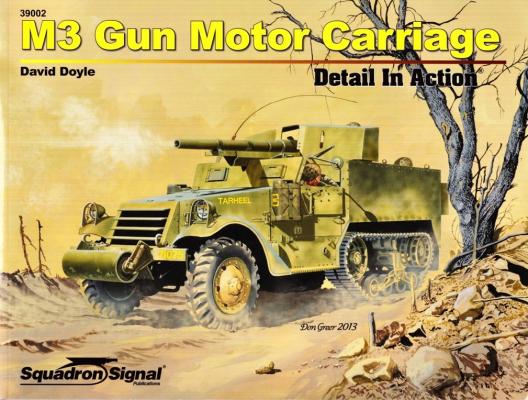
The Squadron Detail In Action series was started in 1971. This series covers the development, testing, and production of aircraft, armored vehicles, and ships. The focus of this book is on the M3 Gun Motor Carriage.

At the beginning of World War Two, the United States realized the need for an effective antitank weapon. Through this need, the Military used the M3 halftrack as the base and married it to the M1897A4 75mm gun to create the M3 Gun Motor Carriage. In October, 1941, the first production contract began. By October, 1944, the Gun Motor Carriage was considered obsolete by the U.S. Army. During its career many of these units were used by Great Britain and U.S. Marines well into 1945.

Review Author
Mike Van Schoonhoven
Published on
Company
Model Art
MSRP
$11.00

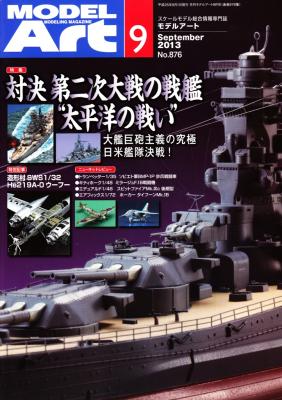
The feature article of September’s issue covers some of battleships of the Pacific during the Second World War. They use the Hasegawa 1/450th Yamato (there are actually two builds of this particular model by two builders), Fujimi 1/700 Kirishima, Pit Road 1/700 USS North Carolina 1944, Dragon 1/700 USS Pennsylvania 1944, and the HP Models HP 1/700 USS Tennessee 1944 as representatives of some of the vessels that were used by the Allies and Axis. Each model is beautifully built and accompanied with color photographs during the build and b&w in-action photos. This article encompasses thirty six pages of this issue.

Review Author
Marc K. Blackburn
Published on
Company
Revell
Scale
1/32
MSRP
$23.99

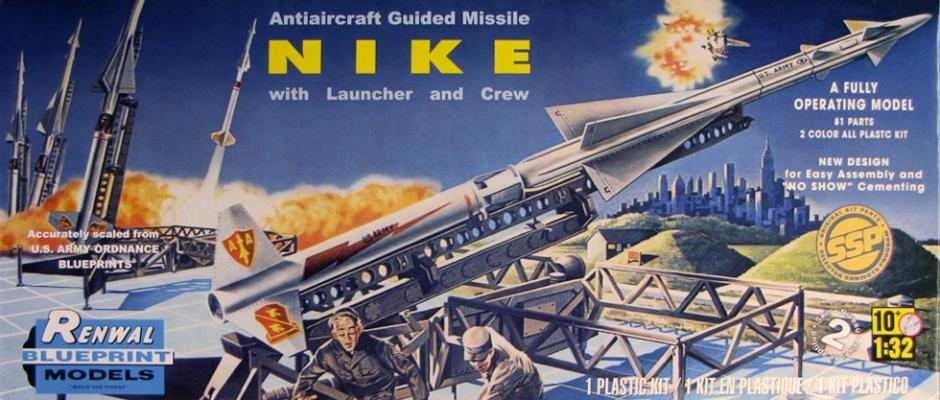
I am sucker for old kits. While I don’t collect vintage kits, I certainly relish every new special release from Revell. I was very happy to see that the Nike Missile got the green light for a re-release. The missile depicted in this kit is, in fact, the Nike Ajax. First fielded in 1954, it was a two-stage, supersonic anti-aircraft missile with a range of 25-30 miles and a ceiling of 65,000 ft. It remained in service until 1964 in the continental US and was superseded by the Nike Hercules, a much more robust and capable missile.

Review Author
Dave Morrissette
Published on
Company
Aires Hobby Models
Scale
1/48
MSRP
$13.50

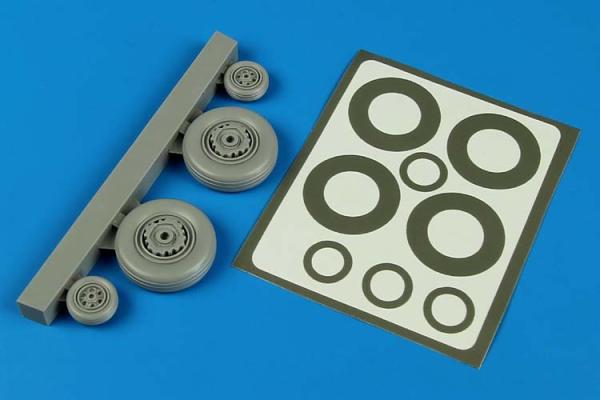
Aires continues its rich tradition of detailed aftermarket parts with a wheel set for the Kinetic S-2 Tracker. This set contains two front wheels and two main wheels as well as a masking set for the wheels to help painting. The set is cast in Aires’ usual gray resin and has no defects or issues.

The set is simple to use. The wheels can be trimmed from the pour stubs. One thing you will need to do is to sand the mold seam off and rescribe the wheel treads. Total prep time is maybe 5-10 minutes. You will also need to drill the hole slightly deeper to allow the axle to slide fully into the wheel.

The kit wheel has a separate hub and a two-part wheel. To build it, you paint the hub and glue the two wheel parts over it. This leaves a seam that needs sanded down and then painted. The Aires set wheel is a single piece with better detail. It also has a masking set, allowing the wheel to be painted and then masked and the hub painted.

Review Author
Brian R. Baker
Published on
Company
RS Models
Scale
1/72
MSRP
$29.95

History

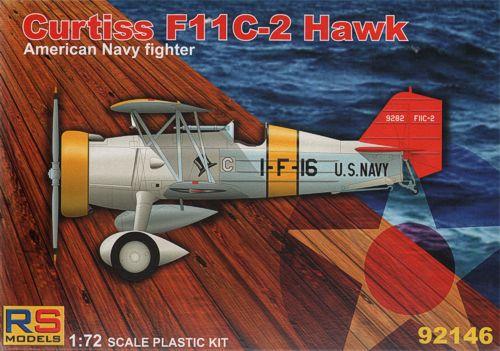
The Curtiss F11C-2 was one of the last of the Curtiss Hawk series of biplane fighters that began with the F6C-1 and P-1 series of 1925. Although later models used different wings and powerplants, the F11C series reverted back to the tapered wing. While the later F11C-1 had a metal wing, the F11C-2 wings were wooden. Power was provided by a 575 hp. Wright R-1820-78 radial engine using a two bladed metal prop. Known as the Goshawk in service, only 29 production F11C-2’s were built during 1933, and they were all issued to VF-1B, who operated them off the USS Saratoga along with some Boeing F4B-3s. In 1934, all of the F11C-2’s were upgraded, the most notable improvement being a raised turtledeck behind the cockpit and a small sliding canopy which partially covered the cockpit. These planes were known as BFC-2’s and they were considered to be a dual-purpose aircraft, fulfilling both the fighter and dive bomber roles.

Book Author(s)
Nicholas Millman
Review Author
Roger Rasor
Published on
Company
Osprey Publishing
MSRP
$22.95

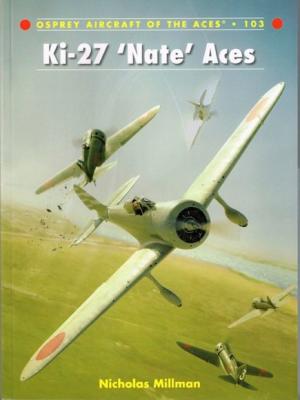
Volume 103 in Osprey's Aircraft of the Aces series details the interesting story of the Nakajima’s Ki-27 and the pilots who prevailed while flying the little fighter. The “Nate,” as it became known to most Westerners, contributed to a prevailing myth among aviation experts during the early years of WWII that Japanese aircraft were almost impossible to best in a dogfight. The nimble aircraft was fast enough and agile enough to give well-trained Japanese pilots the edge over almost any adversary as quickly as the fighter could be supplied to the Japanese Army Air Force (JAAF).

Review Author
David Horn
Published on
Company
Hasegawa
Scale
1/48
MSRP
$65.00

Aircraft and History

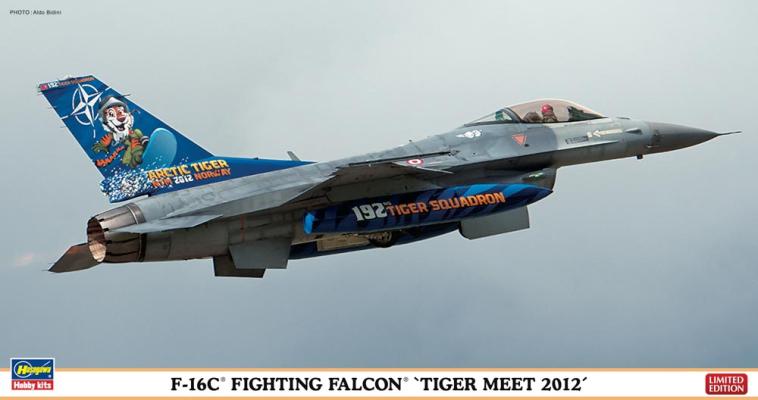
NATO Tiger Meets started around 1961 with the Royal Air Force (RAF) and grew into a large multinational military exercise over the years. The aircraft that participate usually sport distinctive tiger stripe markings and unique tail art. The model depicted is a Turkish Air Force F-16C (Block 50), 192 squadron “ Filo,“ which became a member of NATO Tiger society in 1980. The last F-16C version produced is the block 50/52 aircraft (block 50 GE engine and block 52 Pratt & Whitney engine). Turkey has operated F-16’s since 1987, starting with the block 30, and as of 1996 Turkey received block 50 Vipers.

Review Author
Greg Wise
Published on
Company
AZ Model
Scale
1/48
MSRP
$18.00

History Brief

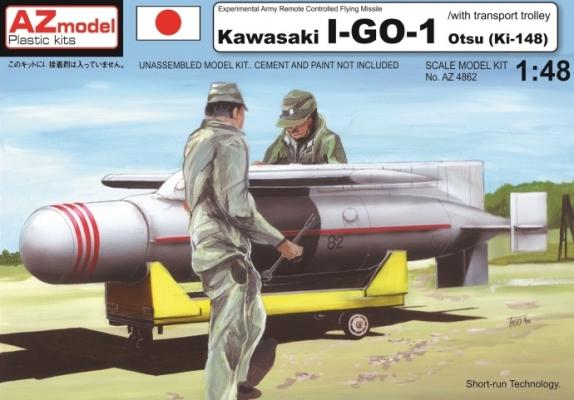
Designed in 1944 by Kawasaki, the Ki-148 was a World War II Japanese guided air-to-surface missile. In a nutshell, it was a radio-controlled bomb powered by a rocket engine capable producing 330lbs of thrust for up to 80 seconds. Approximately 180 were built. Luckily, none saw service by war’s end.

The Product

My sample arrived in a somewhat flimsy box. The box top featured a helpful rendering of the missile. On the reverse side, three decal options were presented, with the latter two being what-ifs. The plastic is a short run offering and lacks the finesse of standard production run kits. The kit includes plastic for one missile and one trolley cart. Also included are one small photo-etch fret, an instruction sheet, and a small decal sheet.

Review Author
Greg Wise
Published on
Company
Quickboost
Scale
1/48
MSRP
$6.50

The Product

My sample arrived packaged in the familiar orange-topped poly sleeve with the typical card insert. After close inspection of the parts, I found them to be perfect. These little beauties are just what the doctor ordered. They’re a drop-in replacement for the kit parts. They were easily detached from the pour block and cleaned up with a few swipes from my trusty sanding stick. How easy is that?

The Bottom Line

I recommend these babies to anyone wanting to enhance his P-38 build. Thanks to Quickboost and IPMS/USA for the opportunity to review these nice little castings.

Review Author
Jack Kennedy
Published on
Company
Wingnut Wings, Ltd
Scale
1/32
MSRP
$69.00

This is without a doubt the best aircraft kit I have ever built. Wingnut Wings has produced an absolute wonder of a kit in this Sopwith Snipe.

Upon opening the sturdy box, one finds six grey sprues, one clear sprue, and a photo etch fret. In addition, there is a very colorful and complete 23-page book of instructions with color photos and actual WW I photos of several Snipes.

To begin, I assembled the cockpit which consists of over 30 parts, not counting the rigging wires. When complete, this is a real gem that should really be displayed alone. It is a shame that it has to be shut up inside the fuselage as not much can be seen once installed. I hope that Wingnut Wings will produce kits of just their cockpits. The instructions for the cockpit are color drawings and color photos of the real cockpit. Can’t beat that.

Next came the 13-piece engine. This also is a real beauty.

Review Author
Floyd S. Werner Jr.
Published on
Company
Hasegawa
Scale
1/48
MSRP
$58.00

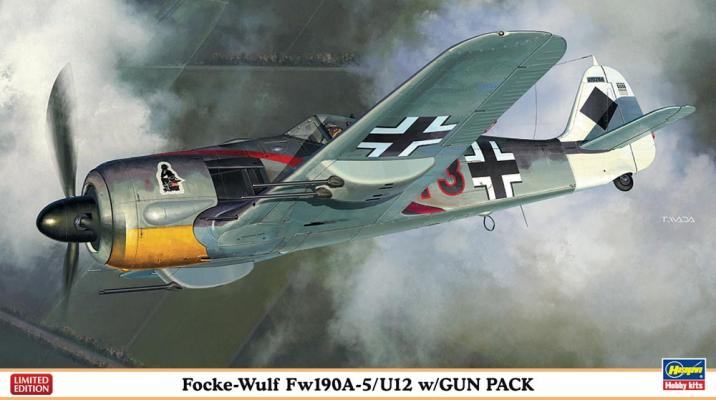
I’ve always loved the look of the Fw-190A-5/U12. Designed with two cannon pods containing two cannons each, it’s one mean machine. For those of us who are old enough to remember, we had the Monogram Fw-190 in the ‘70s, and in that kit they included the gun pods. While not totally accurate, it did make an impression on a little red headed kid. I built it with my kid. Fast forward a few years (okay, so more than a few), and we are blessed with accurate Fw-190s all around, but no U12 versions…until now.

Hasegawa’s Fw-190 kits are easy to build and really accurate. Inside this one, there are five sprues of light grey plastic with no flash or blemishes. The panel lines are recessed and display typical Hasegawa fine quality. Amazingly, the parts count is low at 81 pieces. A sprue of clear is also provided. Some poly caps are included for the prop. This makes a very good A-5 version.