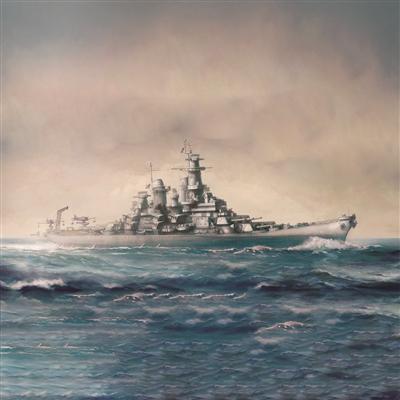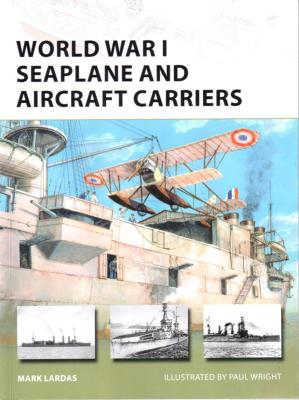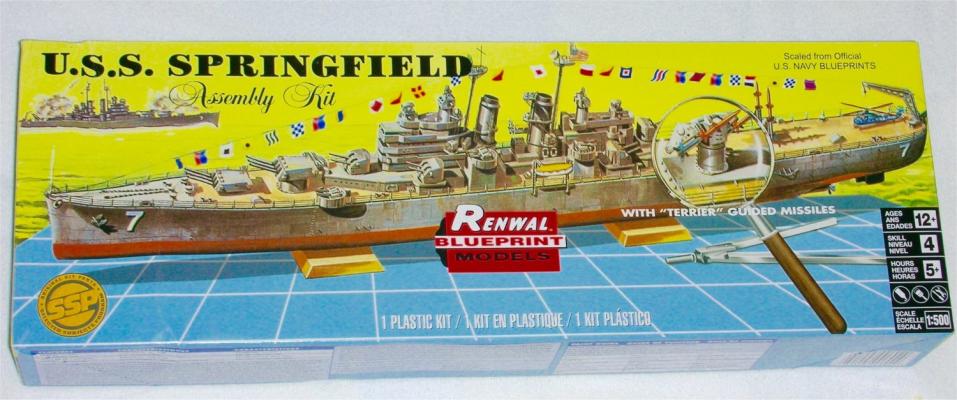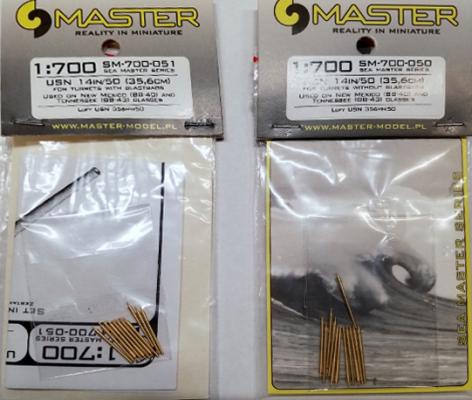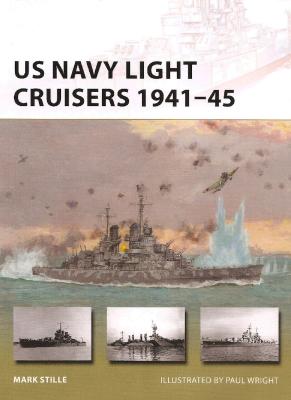
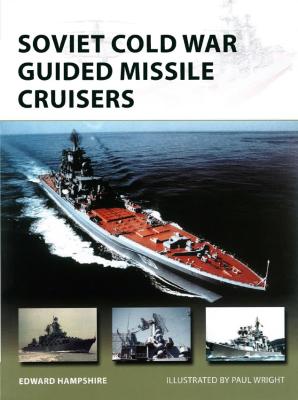
The latest New Vanguard naval edition from Osprey covers one of the least well-known class of modern US Navy vessels, the light cruiser. The operational lifetime of the Navy’s light cruisers spanned 50 years, from the commissioning of the USS Omaha in 1923 to the scrapping of the USS Roanoke in 1973. Their heyday occurred between 1941 and 1945. By 1947, most of those that had survived the World War II had been decommissioned. A few soldiered on either as gun platforms during the Korean War, or were adapted to missile platforms during the Cold War.
Thank you to David Doyle of David Doyle Books for choosing the IPMS Reviewer Corps to examine and report on one of his new titles, all of which may be viewed on the website listed above. I am very appreciative of the IPMS Reviewer Corps support, whose efforts make this review program so good.
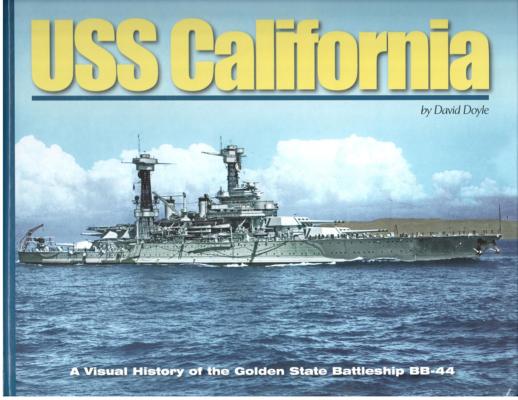
Author Doyle’s treatment of the USS California strikes an excellent balance of book size and detail. The content is laid out in a picture-rich minimum-text format from keel-laying to cutting-torch life stages of the ship. Design concepts, politics, renaming, and many other facets of the California’s history are covered, in addition to her thoroughly-documented long and distinguished career, punctuated by survival and salvage at Pearl Harbor. The image-rich format is a wealth of information for the scale model builder, using hundreds of high-quality images, complemented by select line drawings and color renderings.
Osprey publishing continues to expand the Duel Series, this time with WWII naval enemies: British Submarines and Italian Torpedo Boats in the Mediterranean. The Italian Torpedo Boats were more like a “destroyer escort” or “frigate”-style ship, not a fast attack torpedo craft.
This book follows the typical format of the series including a few chapters on the technical aspects of each vessel, the training of the combatants, the strategic situation, a very detailed narrative of combat, and wraps it up with statistics and analysis.
I have to say that I have found the reading of this book very interesting and I was surprised by how many references –to other books or interviews- this issue of Osprey Duel has. It is clearly an extremely well researched book and some of the main things I learned follow:
Since April of 2013 when Kodakawa games released their free browser game Kantai Collection (aka Kancolle), featuring cute anime girls each of which represent ships from the Second World War IJN, there has been an increased interest in ship modeling in Japan. Tamiya, Hasegawa and Aoshima, have long worked in harmony releasing a sizable number of 1/700 warships represented by the waterline series of kits. These three companies as well as Fujimi are capitalizing on the popularity of the game and anime series by re-releasing many of these kits, as well as creating new kits, with extra decals of the girls as well as game specific box art.
Admittedly, because of the game as well as the anime series, I too have become a bit more interested in ship modeling. After my review of Model Art Advanced 1/700 model (1), why not continue on with number 2.
Again, I was not disappointed.
Thank you to Master Model and the IPMS Reviewer Corps for the privilege of reviewing this excellent replacement part set for 700-scale ship models in the Sea Master Series offered by Master Model. The replacement masts will add a crisp eye-catching detail in a highly visible part of any modern ship model. Master Model is continuing an excellent line of replacement brass parts for ship models.
Thank you to Master Model and the IPMS Reviewer Corps for the privilege of reviewing this excellent replacement part set offered by Master Model in the Sea Master Series for 350-scale ship models. The replacement masts will add a crisp eye-catching detail in a highly visible part of any modern ship model. Master Model is continuing an excellent line of replacement brass parts for ship models.
The zipper closure package has 4 smoothly tapered, turned brass masts in a variety of sizes. A small spec sheet is included. The masts taper evenly and symmetrically from the base upward to the tip. Each mast is 100 mm long, with mast base/tip diameters of 2.2/0.7 mm, 2.5/0.8 mm, 2.8/0.9 mm, and 3.0/1.0 mm. This size range is effective for larger-size modern ships. The brass has a nice smooth sheen, with no sign of cutting oils. A major bonus of these masts is the rigid character of the brass. Temperature changes and subsequent rigging tension are much less likely to bend the masts.
Thank you to Master Model and the IPMS Reviewer Corps for the privilege of reviewing this excellent replacement part set offered by Master Model in the Sea Master Series for 350-scale ship models. The replacement masts will add a crisp eye-catching detail in a highly visible part of any modern ship model. Master Model is continuing an excellent line of replacement brass parts for ship models.
To most readers of a certain age, the Falklands Conflict was a watershed event which tested the resolve, capabilities, and persistence of the Royal Navy and the Nation. It was a bloody affair at sea; the Royal Navy suffered immensely and yet still prevailed. The loss of the Type 42 HMS Sheffield to Exocet missiles shocked naval professionals and called into serious question Royal Navy air defense capabilities. Other air defense ships suffered as well. The County Class ships – HMS Antrim and HMS Glamorgan (which survived an Exocet hit) were damaged and another Type 42, HMS Coventry, was lost. The conflict also highlighted inherent design issues with the Type 42 and Royal Navy damage control readiness.
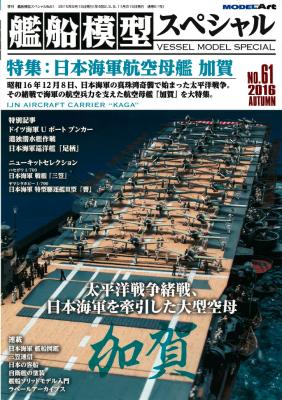
Model Art Issue 60 is typical of other Model Art magazines in that it is written entirely in Japanese, with occasional English words, usually in article titles or in captions. The Vessel Model Special is a quarterly issue that focuses on naval subjects. Advertising comprises the inside covers (and back cover) along with another four pages showing what is available and new, always useful for building up that wish list. I counted nearly 600 photos (mostly in color) along over forty 1/700 scale drawings. Additionally there are a lot of color scrap drawings highlighting details in the Ship Construction series.
There is a lot of incredible models in this Summer edition as I was just amazed at what could be done in 1/700 scale. This issue’s feature is the Battle of Leyte Gulf. As you can see in the following Contents, the focus is primarily on Ozawa’s Task Force with the USS Lexington thrown in to represent the US side.
Academy is re-releasing its well-known 1/700 Titanic, this time in a MPC (Multi-Color-Parts) format with an LED Light Set. Upon opening the box you will find 6 sprues (white, tan, black, brown, bronze and orange), plus the hull –in two parts, black and red hull- and the main ship structure, molded in white.
Construction of this kit is simple and broken down into 24 steps. You basically assemble the main ship structure, bow and aft deck, plus the hull as main subassemblies. The instructions are good and easy to follow and the fit is really good.
Please note this is not a “snap-tite” kit, you will need glue and many of the parts are actually pretty small so this is not a model for kids. I do believe a young modeler could assemble this kit with some adult supervision.