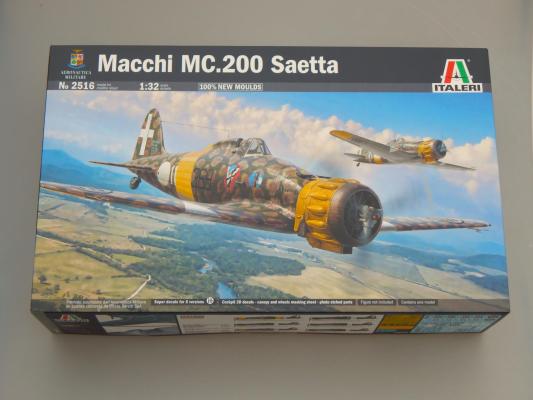
I’ve built several jet fighter kits in this scale in the past year. They don’t seem to get much love and turn up in model club swap nights, usually for free. Granted, the size of these models can challenge the eyesight of us mature folks. However, I’ve found that if you’re careful with assembly, these 1/44 kits can build up into nice mini representations of the real thing.
Long-time supporter Ross and his team at SAC Supports IPMS/USA yet again with one of his gear sets to use and review!
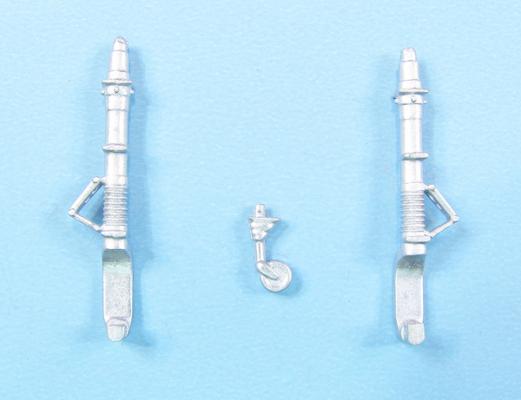
This set provides a sound basis for replacing the more delicate parts of the Spindly (in real life and modeling world) Fairey Gannet AEW-3 landing gear. Designed for the newly-released SWORD kit, it definitely addresses the question on whether plastic or metal is better for this task. The metal gear, once carefully installed (it is NOT an easy Geometric construction) is definitely “go metal”.
Made up of eleven finely-cast metal parts, these bits are scale in size and flexible enough for initial installation, while work-hardening if required for additional stiffness. The truss angles and installation are a difficult design to address, and the idea the kit plastic would last was first in my mind. It’s a large aircraft, and unique in design and appearance.
Artist - Howard Gerrard
Articles - Varius Contributors
The non-profit UK based group known as the Great War Aviation Society publishes A new magazine, Contact!, is now available in both print and digital download. The first two issues of Contact! Are available for a free digital download on their website. Their journal, Cross & Cockade International, is also published four times a year. Issues are available in English as printed [Softbound, A4 (8.27” x 11.69”), 72 pages [Including Covers] as well as digital copies (or both). The Society also provides a free newsletter (sign up on their website) and occasionally publish WWI themed books like the Sopwith Dolphin monograph I reviewed earlier for IPMS USA. This Journal is the sister of the US Journal, Over The Front. The Great War Aviation Society also hosts a lecture series available through Zoom. If interested, you will need to register early as the call is limited in attendance.
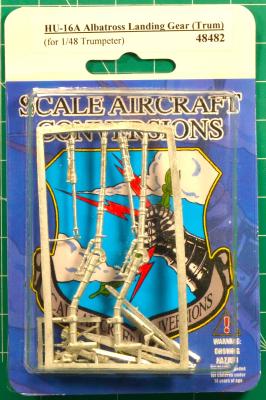
Scale Aircraft Conversions (SAC) has provided the IPMS reviewer corps with a set of 1/48th scale metal landing gear for Trumpeter’s HU-16A Albatross. These parts are drop-in replacements and provide a more robust landing gear set given its metal properties.
In the Package
The metal pieces are packaged in a clear blister package with cardboard backing. No instructions are provided.
Review Process
The metal landing gear set is used as drop-in replacements for the kit parts as noted
- Nose Gear: G12, G19 and G16 (also Metal Nose Strut parts A & B)
- RHS Gear: J19, J26, and K11 (also Metal Right Strut)
- LHS Gear: J16, J21, and K27 (also Metal Left Strut)
Note: The Trumpeter kit does provide some metal landing struts as optional parts for the builder. However, SAC does provide more replacement parts in this set.
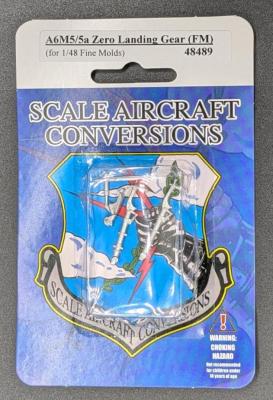
The iconic Mitsubishi A6M Zero was the Imperial Japanese Navy’s primary carrier-based fighter plane from 1940-1945. Over 10,000 of these ubiquitous fighters were produced, with the A6M5 Type 0 Model 52 being the last and most effective model. Scale Aircraft Conversion has produced its famous white metal landing gear for the A6M5/5a Zero in 1/48 scale. As aircraft modelers well know, aircraft models displayed on their landing gear are susceptible to damage from the weight of the model, especially on styrene landing gear.
Scale Aircraft Conversion has had the solution since 1990. Their white metal landing gear is designed to bear the weight of the model and complement the detailed non-load bearing plastic parts. Their extensive range covers white metal landing gear from 1/144 to 1/18 scale aircraft.
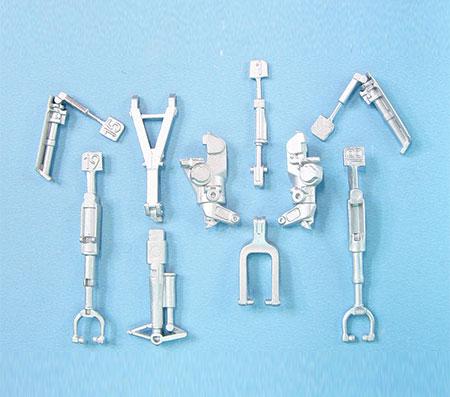
Scale Aircraft Conversions (SAC) has provided the IPMS reviewer corps with a set of 1/48th scale metal landing gear for UMa’s AV-8B Harrier II Plus. These parts are drop-in replacements and provide a more robust landing gear set given its metal properties.
In The Package
The metal pieces are packaged in a clear blister package with cardboard backing. No instructions are provided.
Review
The metal landing gear set is used as drop-in replacements for the kit parts as noted:
- Nose Gear: C1, D20, D21, and D26
- Rear Gear: D9 and D17
- Wingtip Outrigger Gear: D15, D16, D18, and D19
The metal used is malleable and has some give to allow for any minor bending if needed. Also, seam lines will need to be cleaned up prior to painting just like the plastic kit parts.
1942 was a pivotal year in WWII in North Africa. The year started with the British on the back foot and the Germans on the offensive, but ended with the positions being reversed as Montgomery’s Alamein Offensive in October ground it’s way towards final victory on the continent.
The back-and-forth war between the British on one side and the Germans and Italians on the other in 1940-1 had been exhausting for both sides. But boosted by fresh supplies and materials, Rommel launched an offensive in January 1942, which saw the Axis forces on the Libya–Egypt border. For the next few months, Rommel’s forces were in the ascendancy, and he was at the height of his military power. His military masterpiece at the battle of Gazala in late May and early June resulted in a major victory for the Axis, and led to the conquest of Rommel’s long-held objective—Tobruk.
What is in the Box
- 4 gray injection molded plastic sprues [247 parts total]
- 1 clear sprue
- 1 decal sheet with 6 markings options
- 1 3d printed instrument panel (three parts)
- 2 Etched Brass frets
- 1 canopy & wheel hub masks
- 1 elastic vinyl tubing
- 1 brass wire
- 1 instruction book in FULL color
Construction
The construction begins with the cockpit and the fuselage interior and this makes up the majority of the early construction sequence. Extra time spent here will pay dividends later in the build and I recommend a thorough reading of the instructions since they will alleviate most if not all construction problems. The sprue gates are on the mating surfaces, so it is imperative to cut them from the sprues with care and be sure not to over sand the sprue gate nubs. Now I have noticed this trend in manufacturers. The cockpit has nice set of 3-D decals which dress up the cockpit nicely.
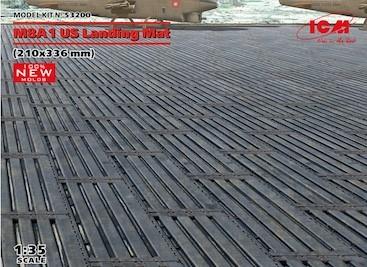
During World War II, the concept of creating airfields in days, rather than months or years, came about with the use of what was called “Pierced Steel Planking”. These were segments of metal, linked together to form runways, taxiways, and parking areas, to name a few. Its modern day equivalent is the M8A1 Landing Mat.
This is a fairly simple, straight-forward kit. Six sprues, each containing one section of matting, comprised the entire kit. The instructions show two different ways of creating a rectangular mat, and I build the 2nd version.
The only downside I have to mention is that when I assembled the kit, there was a minute gap down the center seam – although I cannot discount the possibility of an erroneous assembly procedure on my part.
Painted and weathered well, this would be a great little addition to any diorama in 1/72 scale. Best of all, each kit can combine with other landing mat kits for bigger aprons and parking spaces.
I am familiar with Scale Aircraft Conversions but have never used any of their products. Having a Fine Molds Ki-43 III, I was keen to compare these metal landing gear parts to the kit parts provided by Fine Molds. The SAC landing gear provides additional strength being metal, and the ability to slightly bend the gear if needed.
Upon close inspection, the landing gear provided by Fine Molds is my preference over the metal landing gear offered by Scale Aircraft Conversions. In my sample, the metal landing gear has mold part lines, heavy pitting, and a shape that is more oval than round. One of my struts had a curve coming out of the packaging, but this was easily bent back to shape.