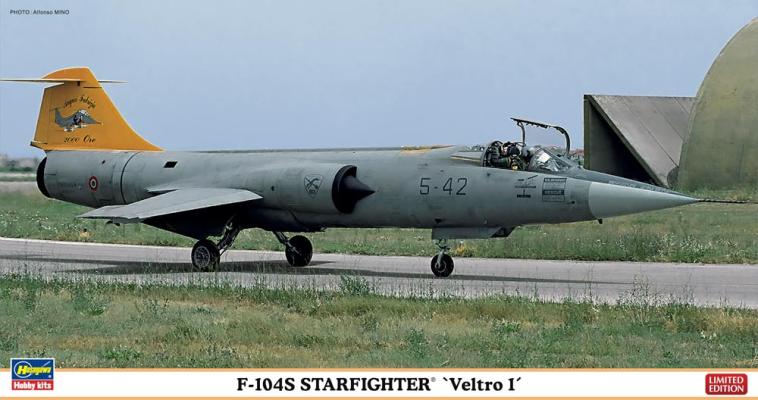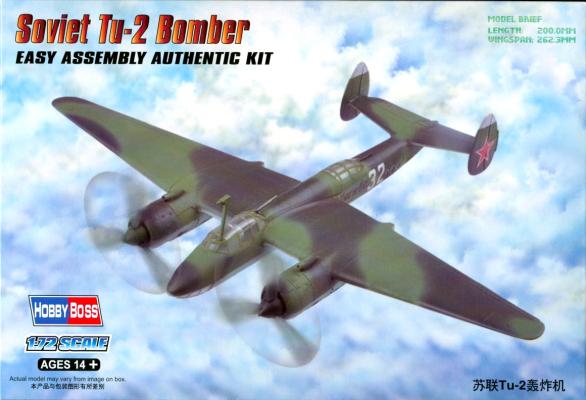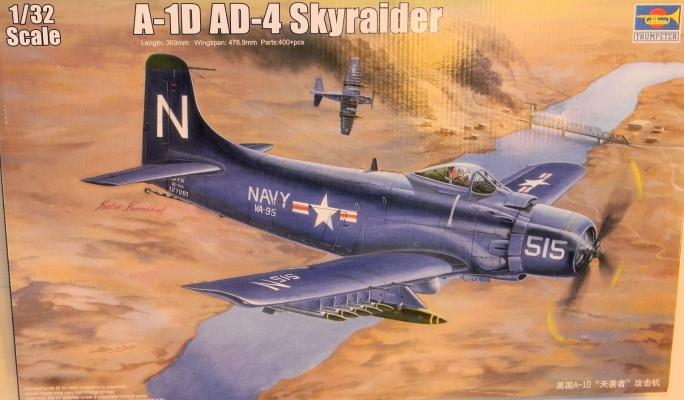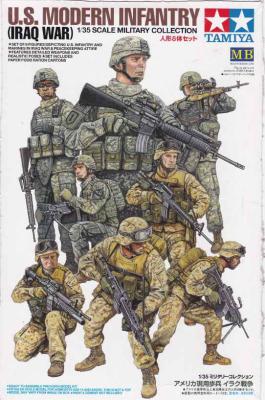
If you are interested in building some of the older kits that you may have missed when they were first introduced, you have a friend in Round 2 Models, who is re-releasing kits from the likes of AMT, MPC, and Polar Lights. One of their latest releases is the AMT F-14A Tomcat that includes vintage kit packaging and some nicely produced decals. The kit has parts included to add up to four Phoenix (AIM-54) missiles, two Sparrow (AIM-7) missiles, two Sidewinder (AIM-9) missiles, TARPS (Tactical Air Reconnaissance Pod System), and has the markings for two different early F-14A aircraft. The built-up kit is a respectable looking early F-14A Tomcat; just keep in mind that, being an older kit, there will be some fit issues to overcome, and there are some items not mentioned in the instructions.
The idea behind these pre-cut masks is to save you time and frustration when painting your model and also to protect the clear areas under the masks. I think the B-18 could be a “poster child” for using pre-cut masks on a model. As a typical pre-war bomber, it sports lots of clear areas with lots of framework. I counted 74 individual clear window panels on the model. In addition to the large number, the panels on the windscreen have rounded edges which present problems when using tape or foil, since very careful trimming is called for. Do not despair, fellow modelers, Eduard has come to the rescue. This particular set, matched specifically to the Special Hobby B-18, has all the masks necessary to cover all those 74 “panes,” as well as masks for the wheel hubs.
The June issue contains two Feature articles. Feature 1 is entitled, “Arthurian Legend” and is nine pages of images coupled with an excellent description of how Chris Fleet built his Airfix Agusta Westland Merlin HC3. Interestingly, Chris shares his use of copper wire to simulate detail within the model. Two pages of full-color images of a real Merlin add to the trove of detailed information that one can use when building this Airfix kit.
Feature 2, by Neil Pinchbeck, covers the Revell Supermarine Stranraer in 1/72nd scale. Neil’s article covers how he dealt with the rigging (oh, those hated double stands!), cutting the canopy open, and adding rivet detail. Neil’s work is outstanding, both on the model itself and then within his article.
Scale Aircraft Conversions specializes in white metal replacement parts. Its line of replacement landing gear has been expanded to include a set for the venerable Bf-110 from Revell/Monogram.
This set is one of the more elaborated sets from SAC I’ve seen. It includes three main parts – two landing gear struts and a two-part tail wheel, plus 3 “frames” with the rest of the delicate parts.
My example arrived partially crushed (I guess due to shipping). Having the small parts attached to a “frame” actually prevented them from being distorted. But still, a bit of work might be needed to straight them out; however, it is very easy to work with white metal.
The Aircraft
The Tu-22M3 Backfire C has had a somewhat confusing development history. The original Tu-22 was NATO code-named Blinder. It had two pod-mounted engines above the rear fuselage, one on either side of the vertical stabilizer, and fixed sweptback wings. Then Tupolev came out with what I think is almost a new design, with the engines mounted in the rear fuselage and intakes along the fuselage side, and variable-position wings...I think the first on a large Russian bomber. This was the Backfire. The designation for this aircraft was Tu-22M1. The M probably stands for “Modified.” There were only nine Tu-22M1s built, and it was fairly quickly replaced by the Tu-22M2. The M2 had more powerful engines, a bigger wing, and an area rule fuselage.
Yet one more “You really should buy this or have your plastic gear fail in a year” set for a heavy model. Thanks as usual to our friend Ross at SAC for providing IPMS USA this set, and IPMS for sending it to me for review!
- Product/Stock # QB 72 390 Sea Harrier FRS.1 Pylons for Airfix kit, $8.50
- Product/Stock # QB 72 385 Sea Harrier Outrigger Wheels for Airfix kit, $6.50
We continue to express sincere appreciation to our friends at Quickboost for providing us more of the prolific output of their company; I buy a lot of their items and hope others do as well. Without their expertise, we would be the poorer!
Not much I can say for these additions...the new Airfix kits are a boon to the modeling community, addressing the need for simple yet detailed kits for the newcomers and also us old guys. But sometimes the details cry out for more. As usual, Quickboost steps up to the plate!
History
The Kawasaki Ki-45 was the first attempt by Japanese manufacturers to provide the JAAF with a modern twin-engine fighter. The original specification was issued to Nakajima, Mitsubishi, and Kawasaki in 1937, but the first two soon withdrew from the project, Kawasaki continued into 1939 with the completion of the Ki-45 prototype. This proved to be inadequate in many respects, so in 1940 the aircraft was completely redesigned, with some existing Ki-45 prototypes being converted to Ki-45 Kai (Modified), with different wings, tail surfaces, and engines. Thus modified, the new aircraft was accepted for production by the IJAAF, entering service in 1942. The aircraft served throughout the Pacific War in China, New Guinea, Indo-China, Manchuria, the Philippines, and finally in mainland Japan against the B-29 heavy bombing offensive, where it was one of the few relatively effective interceptors.
Lockheed’s derivative of the venerable T-33 as the Navy’s carrier-capable jet trainer, the T2V/T-1A bears a strong family resemblance to the T-Bird, but was a far different animal. A redesigned and strengthened wing with leading edge droops, different flaps, and boundary layer control was a big item, while a strengthened fuselage and gear, plus the raised rear cockpit for better visibility by the back-seater, gave the Seastar its characteristic humpback look. Larger tail surfaces, intakes, tailpipe, and an uprated J33 engine were included. Additional fuselage speedbrakes were added to the fairings aft of the wing, and other improvements were added as well, along with upgraded ejection seats, a hefty arresting hook, and a catapult hook.
History
Another of Kelly Johnson’s modern marvels in aviation history, the F-104 truly lived up to the many nicknames it was bestowed. The “Missile With a Man In It” is probably the most reflective of this great machine. It was a plane that was produced in greater numbers for foreign use rather than US use. It was, however, a major leap forward in technology that led to multiple advances that allowed the US to be the leader in high-performance aircraft. A quick look at the main gear configuration and wing thickness can lead one to see how the F-16 was influenced.