
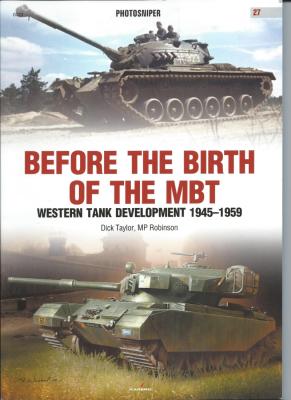
According to the Kagero website, this book is the first in a short series looking at the major developments of battle tanks by Western nations in the years following the end of the Second World War up through to the present day. This volume is a good mix of B&W images, design sketches, as well as a color photo section and selection of color profiles.
Welcome to IPMS/USA Reviews
Introduction: The primary organization of the IPMS/USA Review website is by IPMS/USA National Contest Class. Within each Class there are sub-menus by kits, decals, books, etc. The Miscellaneous Class is for items that are not class specific or that cross two or more classes.
IPMS/USA Members: We encourage you to submit reviews, both here and to the Journal. To volunteer for membership in the IPMS/USA "Reviewers Corps" and submit your own reviews, please read the Guidelines For Submitting Product Reviews.
Manufacturers, publishers, and other industry members: IPMS/USA is pleased to offer your company the opportunity for product reviews. All product reviews are performed by IPMS/USA members, and are posted in the publicly-accessible section of our website. With very few exceptions, we perform full build reviews of new kit releases, aftermarket products, and supplies. If you would care to provide product samples for review, please contact the IPMS/USA First Vice President.
To learn more about IPMS/USA, please see our About Us page.
Background
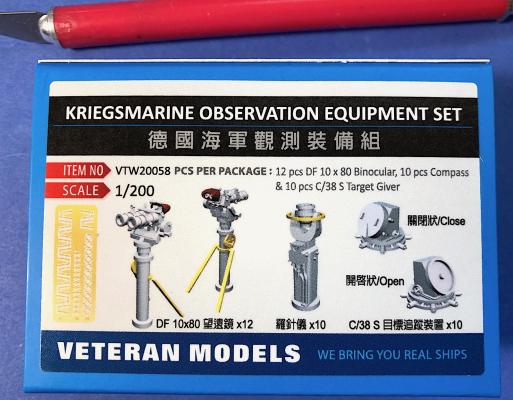
For directing the 38cm and 15cm guns, Bismarck was equipped with three armored fire control posts (in the conning tower, on the foretop, and on top of the aft superstructure. The main and aft control posts were equipped with 10.5m rangefinders, while the front control post received a 7m rangefinder. Each station was also equipped with optical target givers (Zielgeber C/38 S), two pieces in the aft post and three each in the fore and main posts. Binocular columns were also probably placed in the fire control posts. Veteran Models provides a diagram of the Bismarck showing possible locations for the equipment. The Battleship Bismarck By Stefan Draminski
Tru-Color paint was started in 2008 when Rick Galazzo and Scott Cohen, armed with a desire to improve the Accupaint formulas, set about to formulate a new model paint. Both gentlemen have extensive experience formulating commercial paints, so they brought their knowledge and experience to bear in the model world. The goal was to produce a paint that was a solvent-based formula with a quick drying time and a glossy finish. The result of their efforts is Tru-Color paint.
Introduction
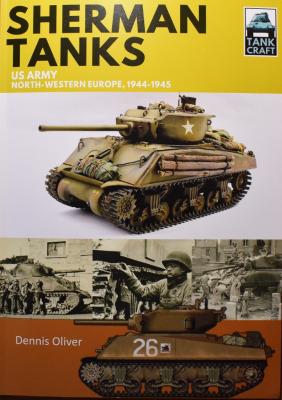
The aim of this innovative new series is to provide modelmakers and tank enthusiasts with a new standard of primarily visual reference of both full-size tanks and their scale models. Each book will contain detailed technical information imparted through drawings and photographs while the meticulously researched full-color profiles will provide a complete reference for paint schemes and markings, in addition every volume of TankCraft series will feature summaries of design histories and operational careers, and reviews of available kits. Each book is devoted to an iconic tank type – chosen for its popularity as a modelling subject – and the series will provide coverage across a range of different criteria, showcasing the best of the world’s tank types and providing invaluable insight and guidance for modelmakers.
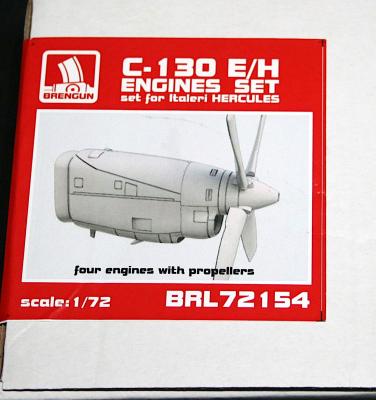
Brengun is a new company to me, but what I have seen they are producing a wide range of unique resin and photoetch accessories in 1/32, 1/48, 1/72 as well as 1/144. These nacelles were previously produced by Attack Squadron (Arma Hobby) and that product line was sold to Brengun, which is a big relief to C-130 fans.