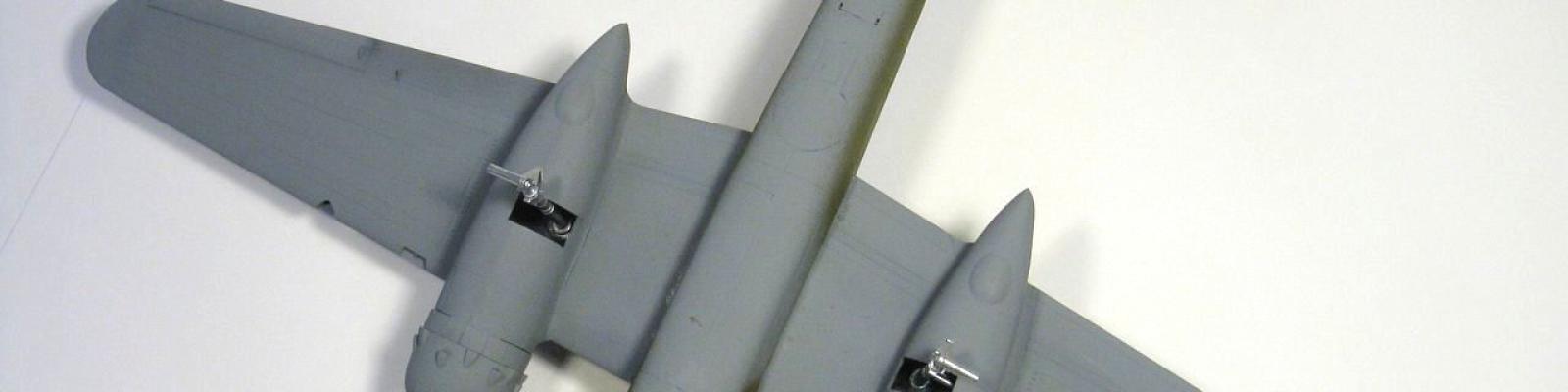
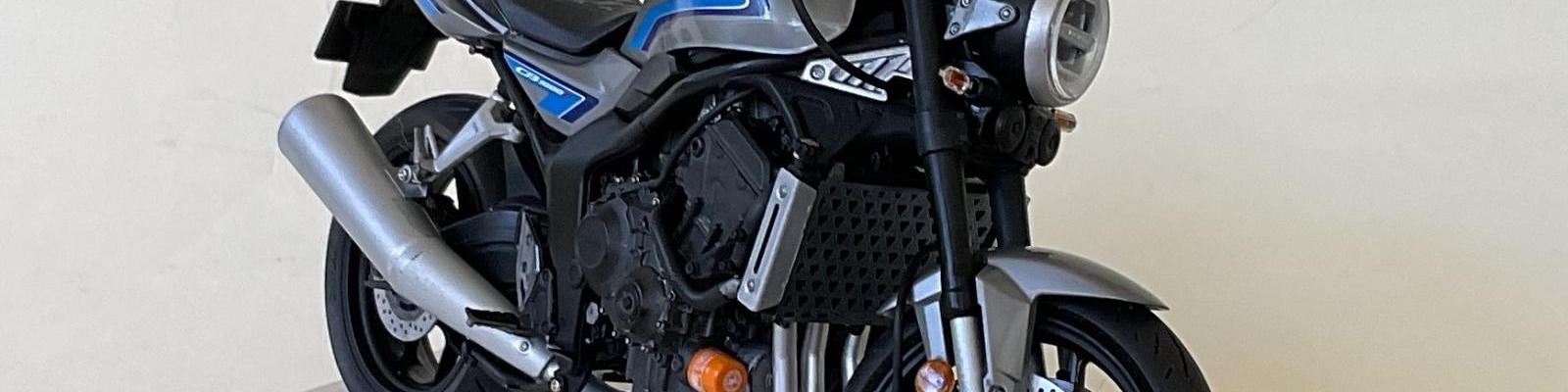
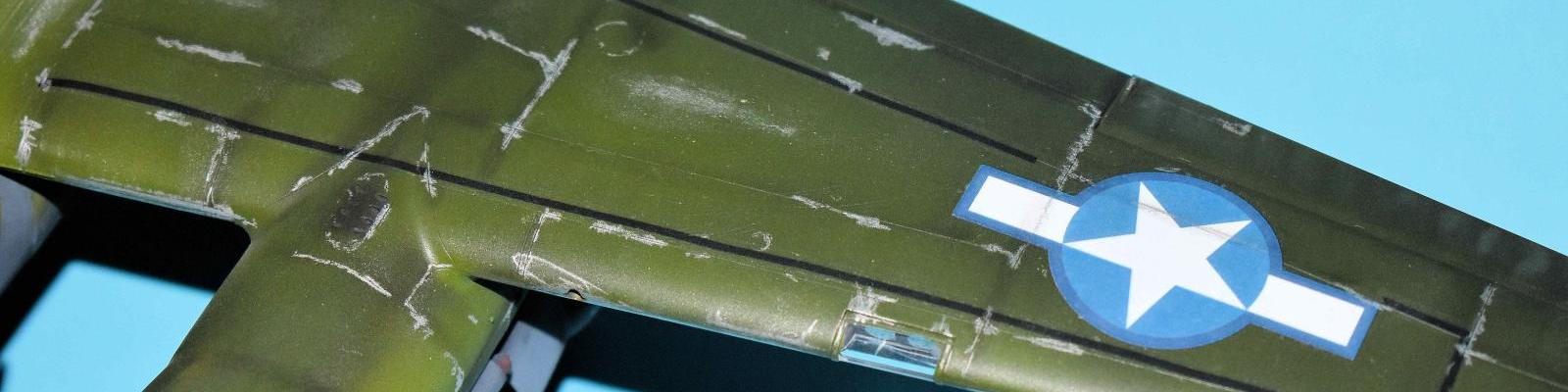

Zoukei-Mura is relatively new on the model making front as far as time goes but they have set a new standard for modeling with their philosophy of having the internal detail be included in their planes. They have also chosen extremely desired and interesting subjects and the latest 1/32nd scale offering is a Horten Ho-229 jet- their first jet. The Ho-229 (sometimes called the Go-229) was an all wing aircraft propelled by two jet engines deep in the fuselage. It has somewhat the look of a B-2 Spirit. It was purposely designed to allow for minimal radar detection with 1000kg load of bombs, a 1000 kph top speed and a range of 1000 km. It might have been close to those numbers if mass produced.
Welcome to IPMS/USA Reviews
Introduction: The primary organization of the IPMS/USA Review website is by IPMS/USA National Contest Class. Within each Class there are sub-menus by kits, decals, books, etc. The Miscellaneous Class is for items that are not class specific or that cross two or more classes.
IPMS/USA Members: We encourage you to submit reviews, both here and to the Journal. To volunteer for membership in the IPMS/USA "Reviewers Corps" and submit your own reviews, please read the Guidelines For Submitting Product Reviews.
Manufacturers, publishers, and other industry members: IPMS/USA is pleased to offer your company the opportunity for product reviews. All product reviews are performed by IPMS/USA members, and are posted in the publicly-accessible section of our website. With very few exceptions, we perform full build reviews of new kit releases, aftermarket products, and supplies. If you would care to provide product samples for review, please contact John Noack, IPMS/USA 1st VP.
To learn more about IPMS/USA, please see our About Us page.
Each issue of Scale Aircraft Modeling has the same basic design and format. That's not a bad thing as it is jam packed with superb aircraft builds and tips. There does seem to be a trend to add more feature articles and that is a very good thing as the builds are superb. In this issue, there are five feature articles, an Aviation in Profile piece, and six Compact Build Reviews.
The Feature articles for this issue start with Jay Laverty's build review of the Fisher Models 1/32nd F7U Cutlass. He details some upgrades to the wheel wells and how to handle such a large resin kit. A good description of his way to get a true white base coat sprayed is also a highlight of the article.
Next up is Mr. Laverty's continuing build of the new Airfix 1/24th Scale Typhoon. In this installment, the engine is built and wired and added to the already finished main spar/cockpit assembly. the conclusion is in Decembers issue and I can't wait to see it.
Background
H.P. Martin and George Handasyde were an aircraft and motorcycle manufacturer from 1908 to 1922. The subject of this kit was one of their first efforts and appears to represent the third version of this aircraft. I base that on the 40hp J.A.P. engine that is fitted to this kit. This aircraft strongly resembled the French Antoinette including the odd twin wheel controls in the earlier versions. Those were abandoned after criticism from early test flights. Controls were modified to a control wheel with fore and aft motion for the elevators and wing wrapping controlled by turning the wheel. A bar controlled the rudder.
What's a decent diorama builder to do if you want to pose your plane with a boarding ladder? Plusmodel to the rescue! They have recently released a series of 1/48th scale boarding ladders for several planes. This one if for a F-105F/G (the two seat version) and could be used with either the Hobbyboss or Revell kits and it is INJECTION MOLDED!!!!!
HAD Models from Hungary has its own line of resin and photoetch and this set is an example of how superb their parts can be. Set 132001 is a set of wheel chocks meant for Mig-29's, but would work with any 1/32nd scale Russian planes. The set consists of two resin parts for the majority of the chock and 6 photoetch pieces. Four make up the braces and two are the ends with the claw-like grabbers, which prevent the chock from moving.
Assembly is done by removing the casting block from the resin chock bodies. Next two of the braces are bent into channel shapes. A hold and fold is excellent for this. Lastly, the front part is bent so the grabbing fingers bend down. All three of these are glued in place on the bottom via their excellent instructions. Super glue is a must for adhesion since we are bonding photoetch and resin. Repeat for the other chock and prime (I used Alclad gray).