
What's New

Book Author(s)
Tomasz J. Kowalski & Marek Rys
Review Author
Jeffrey Brown
Published on
Company
Kagero Publishing
MSRP
$34.75

I was fortunate enough to review the new Kagero Fokker Dr. I: The Aces’ Aircraft, Legends of Aviation in 3D book. This is the first book in a series of aviation books they are releasing in 3D. Now don’t get freaked out, the whole book is not in 3D, just some prints that show the plane and its components. You get a really nifty 1950’s style pair of 3D glasses, too (the old blue and red kind that some of you might remember from your childhood).

Review Author
Stephen Bierce
Published on
Company
Eduard
Scale
1/72
MSRP
$6.95

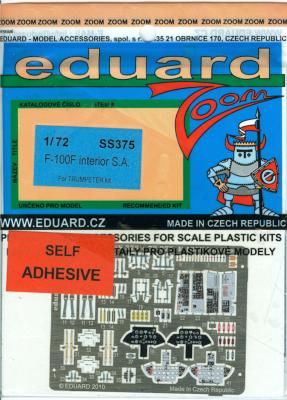
I've had an Airfix Buccaneer in my to-build pile for about ten years since I bought it in a flea market in Florida. I'd never used die-cut masking sets (or liquid mask) before, so I took up this product as something of a challenge.

The product is relatively easy to use...more so on the canopy and windshield than on the landing gear. Still, you need liquid masking agent to complete the job on the canopy, and I'm not sure I did the job right. After painting and removal of the masks, the canopy had either residue or etching left behind on some of the liquid masked areas. I'd kept the masking on for more than a week, so that might have something to do with it.

I didn't get a chance to photograph the completed windshield. The mask removed some of the paint from one of the frames, so I'll have to go back and do touch-up there.

Review Author
Floyd S. Werner Jr.
Published on
Company
Aires Hobby Models
Scale
1/32
MSRP
$15.50

One of the areas that the 1/32nd scale Hasegawa Bf-109 kits lacks is the wheel wells. There is no lining and the detail is a little heavy. Aires now offers an option.

The Aires set includes two resin wheel well inserts and a small fret of photoetch. The parts are molded in light grey resin without any imperfections that I could see. The instructions are adequate for the job at hand.

Start the addition by deciding whether or not you want the round or squared off wheel wells. If you elect to use the squared off one, you’ll have to do it now. Then start thinning out the upper wings and the area around the wheel well opening. You will have to remove a good amount of plastic and thin out the upper wing, but nothing that a Dremel tool with sanding bit can’t fix. The process was actually quite easy. I removed some of the stiffeners in the kit wing but it wasn’t really necessary.

Review Author
Luke R. Bucci, PhD
Published on
Company
Eduard
Scale
1/700
MSRP
$16.95

Bottom Line

Another entry into aftermarket 1/700 scale US Navy 20mm mounts. Has single and double tripod mounts. Photoetch steel with close to scale look, not difficult to fold, fair value, but still has flat barrels. One of few sources for 20mmx2 mounts. Will give acceptable, good-looking 20mm mounts for late WW2 USN warships.

One major bugaboo for 1/700 scale warships has been oversized light AA weapons. Most injection-molded kits have 20mm barrels that are more like 3-5 inch guns when scaled up to actual size. Gun shields are thicker than battle ship armor plate when scaled up. In other words, most WW2 models suffer from light AA weapons that are way too big, wide, chunky and oversized, enough so to make the model look toy-like instead of accurate. This is especially true for US Navy WW2 warships, which carried numerous Oerlikon 20mm mounts.

Book Author(s)
Angus Konstam
Review Author
Perry Downen
Published on
Company
Osprey Publishing
MSRP
$17.95

In the 17th and 18th centuries, the Dutch and the English were both great maritime nations. Their trade routes were far reaching and their trading companies rich and powerful. It was inevitable that a conflict would arise between them. In a series of three wars called the Anglo-Dutch Wars, the two countries fought for naval supremacy and for control of the seas and trading rights. A little political intrigue was mixed in just to make it interesting.

The first war, caused by commercial rivalry, took place from 1652-1654 during the time of English parliamentary and military rule by Oliver Cromwell, Lord Protector. Cromwell eventually decided that the two Puritan nations should be allies instead of antagonists and opened negotiations for peace.

Review Author
Paul Mahoney
Published on
Company
Kagero Publishing
Scale
1/48
MSRP
$14.50

This is the first release in Kagero’s new Red Series. From what I understand, the Red Series will consist of decals accompanied by 8 pages of color instructions. Although I have the 1/48 scale sheet for review, it is available in 1/72 and 1/32 as well.

The decals and accompanying booklet come in a re-sealable plastic sleeve, which is useful for storage purposes. The booklet itself is indeed 8 pages (including front and back cover), and is printed on high quality, thin (think good quality magazine) paper stock. Good quality color printing has been used throughout. The cover page has a dramatic in-action painting of Mustang #1 on the decal sheet. The interior 6 pages cover the individual subjects of the decals (see below). The final (back) page has 3 small profiles of the subjects, as well as a brief how-to on the best way to apply Kagero decals.

3 aircraft are covered in this decal sheet:

Review Author
Rod Lees
Published on
Company
Aires Hobby Models
Scale
1/32
MSRP
$46.99

Thank you to David Lajer at Aires for this review item (I don’t know if he did the work on this one, but it is beyond amazing…I hate the expression “Awesome”… too fluffy for something as utilitarian as an afterburner, but this is just a great set!).

If you have ever had the chance to poke your head up the tailpipe of a MiG-23, you would be amazed at the complexity of the afterburner on that engine. Now, take that same thought, shrink down an actual engine to 1/32nd scale, and you would have this kit. Really.

Review Author
Scott Hollingshead
Published on
Company
Hasegawa
Scale
1/8
MSRP
$39.99

The rotary engine (the engine itself rotates while the crankshaft remains stationary) was first developed by Felix Millett as a five-cylinder engine that was mounted in a bicycle wheel, and was displayed at the 1889 Exposition Universelle in Paris (his design having been patented in 1888). In 1889, Lawrence Hargrave designed a rotary engine intended for use in an aircraft, and in the United States, Stephen Balzer worked on rotary engines in the 1890s. Back in Europe, De Dion-Bouton developed a rotary engine in 1899, but this was never fitted to an aircraft, and in the United States, Adams-Farwell developed a rotary engine for use in automobiles in 1901. Gnome, a French company run by brothers Louis, Laurent and Augustin Seguin, developed the world's first production rotary engine, the 7-cylinder, 50 hp “Omega”, which was shown at the 1908 Paris automobile show.

Review Author
Scott Hollingshead
Published on
Company
Fine Molds
Scale
1/48
MSRP
$37.95

Based on a design by Ensign Mitsuo Ohta with the assistance of students of the Aeronautical Research Institute at the University of Tokyo, the Yokosuka MXY-7 Ohka (Cherry blossom) was first conceived. Over 850 of these rocket-powered, anti-shipping, kamikaze planes that were dropped by Mitsubishi G4M “Betty” bombers were constructed during 1944 and 45. The idea was to glide in on the attack, and then the pilot would ignite three rocket engines on the final approach, delivering a 1200 kg (2646 pound) payload to the target. The aircraft had a limited range (twenty-three miles), and with delivery being via a heavily laden bomber, there are no recorded successful attacks by the Ohka during World War II (although there was a near miss with the battleship USS West Virginia on 1 April 1945). The basis for this particular kit, though, is the unpowered K1 variant that was filled with water in place of the explosives and engines in order to train the pilots for their mission.

Review Author
Rod Lees
Published on
Company
Aires Hobby Models
Scale
1/48
MSRP
$21.50

Once again a hearty “Thank you” goes to David Lajer at Aires for this review item.

This is a simple cockpit upgrade, intended to be used on the Kinetic kit. Unfortunately, I thought this was for the Tamiya kit, but I am certain it can be used in either one; I have no Kinetic single-seat Block 50 kit, and no access to one, so I decided to build it in the “press on” mode, with intent to use it in my next Tamiya F-16.

The cockpit tub is what we have come to expect from Aires - superlative! Detail abounds, and careful painting yields an excellent canvas for the rest of the model. Switches, hoses, and actuators are all included, and the control stick is molded on the sidewall, preventing the usual fiddling around we experience when installing such items. With careful painting and drybrushing, you will have an impressive, much-more-detailed-than-in-the-injection-molded-kit cockpit. The PE fret includes delicate rudder pedals; be careful here as they are VERY fragile.