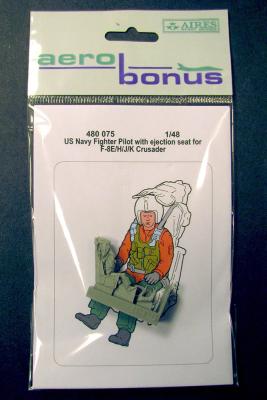
Aerobonus continues to expand its range of pilot/ejection seat combos with this Crusader pilot seated in his Martin Baker Mk7 seat. The arms and head are separate attachments, allowing for some variation with the positioning of each attachment. The detailing of the g-suit and survival vest easily defines these garments as separate from the flight suits. All the belts, straps and buckles are minutely detailed. The separate arms and head allows you to more easily position them after the seats are installed in the cockpit, so that they’re not interfering with the fit, and more realistically seated in the cockpit.
What's New
Upfront, I want to thank Aires and Quickboost for providing these fine aftermarket bits for our beloved models and to the IPMS USA a big thank you for allowing me to review this Quickboost product.
Admittedly I am proud of the fact I love the stubby World War II fighter. The Rita, Buffalo and certainly the Grumman Wildcat. I have several in my stash including the Hobby Boss and Tamiya 1/48 F4F-4 Wildcats kits.
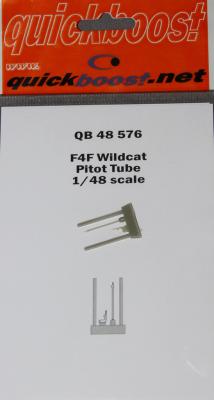
I snagged the Quickboost pitots for the Wildcat before even looking closely at the pitot tubes. Both kits are F4F-4’s and thus use the stubby angled pitot tube mounted near the port wingtip. No problem here, Quickboost provides both the angled pitot found on the F4F-4 as well as the longer straight version found on the F4F-3’s. Just a quick look at the comparison photos you will see the resin replacement parts are much less bulky and more defined than the stock parts. Unfortunately I don’t have a F4F-3 to compare the longer style pitot.
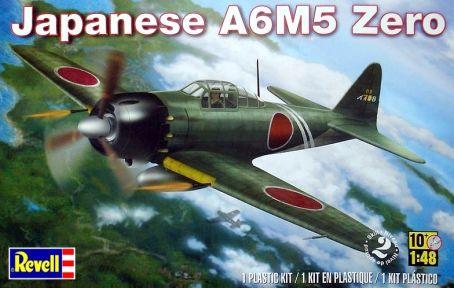
Manufactured by Mitsubishi Heavy Industries, the A6M5 Zero was a long range fighter aircraft flown by the Imperial Japanese Naval Air Service. Its first flight was on April 1st 1939 and entered service on July 1st 1940. More than ten thousand Zero aircraft were built.
Revell brings us another easy and fun to build kit. Being a skill level 2 kit, detail is a bit sparse in the cockpit department. It consists of only a pilot figure and a decaled instrument panel. Regardless, of the lean detail, this is a great little kit. The Zero is moulded in grey, and panel lines and detair are raised.
The kit went together nicely, and the fit of all parts were very precise. Other than some very minor "flash"on a few of the parts, the only predicament I encountered were the 4 small locating tabs on the bottom of the canopy. These locating tabes had to be removed to ensure the canopy had a flush fit with the fuselage.
Mr. Neil Yan and the wonderful folks at HK Models deserve tremendous thanks for providing this review kit. I appreciate their work to bring new and unusual subjects to the scale modeling community. The IPMS/USA Reviewer Corps also deserves thanks for giving me the kit to review. I am only one member of a large staff in the Reviewer Corps, and I appreciate all the tireless team and individual work that goes into getting the material out to be reviewed and the finished write-ups published.
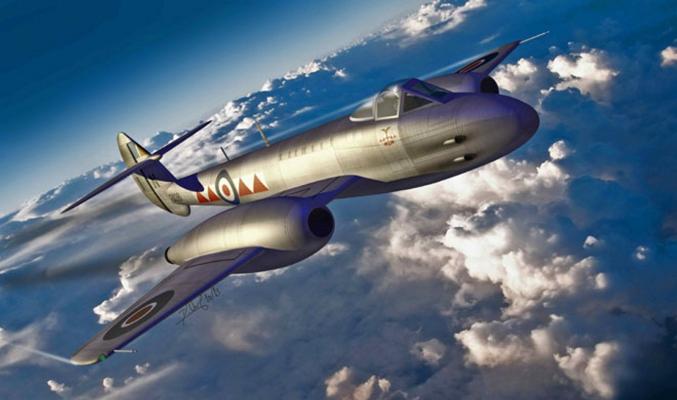
The Meteor appeared late in WW2 as a counter to the V-1 threat to England. It was the first operational Allied jet fighter, operated primarily by the RAF throughout its history. The design of the Meteor might seem primitive by today’s standards, but it truly was groundbreaking at the time. Many versions of the Meteor were developed, including stints as turboprop and ejection-seat test beds. HK Models chose the MK 4 version for their new kit.
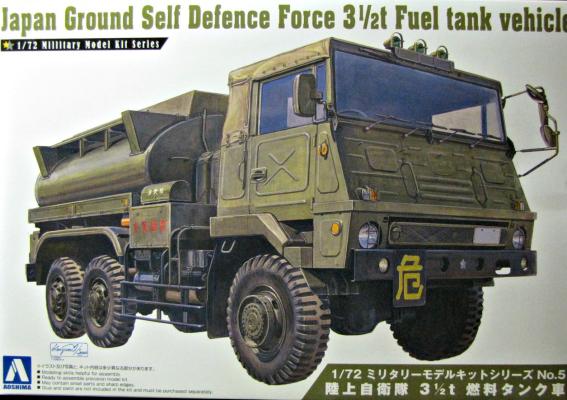
Aoshima has released a number of vehicles of Japanese Ground Self Defense Force (JGSDF), including this little gem. I don’t know anything about the ground equipment of the JGSDF, but this is what’s included as a description, “JGSDF 31/2 ton Fuel truck is mainly assigned to Logistic Support Regiment, utilized for fuel supply to tanks, armored vehicles, and other various vehicles in the field. It has “Ki” (danger) marking just like civilian vehicles.” This is one of a series of service vehicles in the JGSF that Aoshima offers in 1/72 scale.
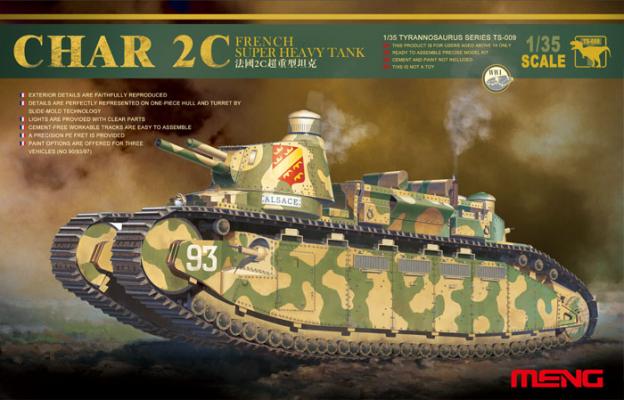
Following on from their superb yet diminutive FT-17 WW1 French tank, Meng Models of China provides the modeling public with a colossus of a tank model, the French Char 2C. Like the FT-17, the Char 2C was born during the years of battle in World War One, but came too late in the piece to see combat. Before the prototype was even completed, an order was placed for 300 of these gargantuan beasts, but due to the war coming to an end, this order was subsequently cancelled, and only 10 Char 2C’s were eventually delivered in 1921, becoming the largest tank ever to enter service in any of the world’s armies. The 10 vehicles went on to become mainly propaganda vehicles, “staring” in various cinematic productions to show the strength of the French military machine. Each of the ten tanks was named after the ancient regions of France: Poitou, Provence, Picardie, Alsace, Bretagne, Touraine, Anjou, Normandie, Berry and Champagne. Normandie was renamed Lorraine in 1939.
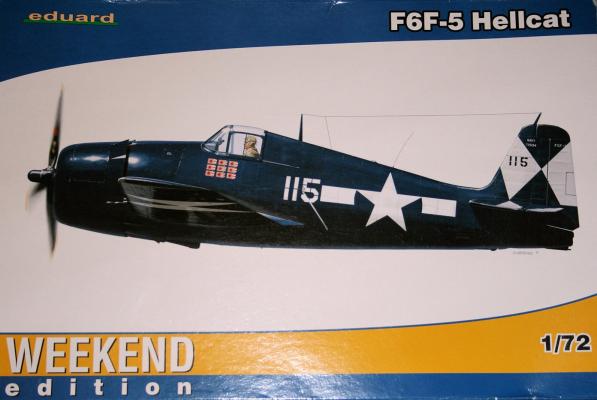
Everybody probably knows that Eduard has a series of Hellcats available in 1/72. Everyone probably also knows that one of their competitors has released a similar series. The question arises as to which kit is better. In my opinion, the answer is a qualified neither. Both kits have strengths and weaknesses. I’ll be discussing those of the Eduard kit.
Please note first that this build incldues the following aftermarket:
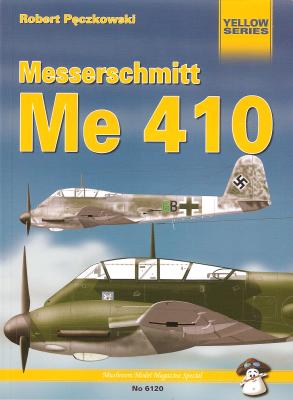
With the recent releases (and re-releases) of a few Me 410 kits, MMP’s book on the aircraft is quite timely.
The first 10 (out of 120) pages of this book describe the rather convoluted developmental history of the Messerschmitt Me 410, actually starting with the Me 210. The blurred lines between what constitutes a late Me 210 and an early Me 410 are well described. In fact, as the lineage is so confusing, MMP provides a good flowchart to clear it all up. At the end of this section are a brief few paragraphs describing the remaining two surviving examples of the aircraft (photos of these appear later).
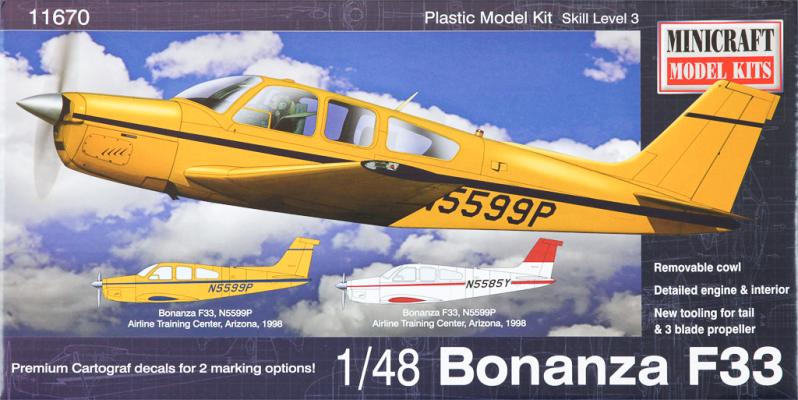
The Beechcraft Bonanza V-tail is one of the sleekest general aviation designs out there, and it’s still flying today. I wish I would have had the chance to log some hours in one before I gave up flying. The Bonanza was introduced in 1947 and is still produced today, although the V-tail design was retired in 1982.
Introduction
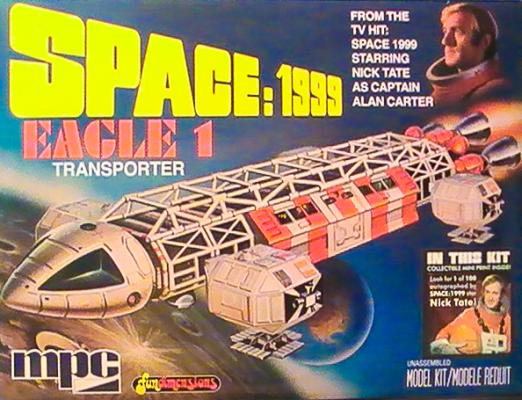
By 1999, a human colony had been built on the Moon (you remember, right?). Moonbase Alpha safeguarded all the nuclear waste shipped from Earth, and carried out research. Then, on September 13, 1999, disaster struck when the nuclear waste exploded in a chain reaction, and the Moon was blasted out of Earth's orbit, into deep space. Thus began the adventures of Space:1999. Space:1999 was a British produced science fiction television series that aired from late 1975 to early 1977, and for us science fiction fans, there was nothing else like it on TV at the time. The workhorse of Moonbase Alpha was the Eagle spacecraft. Eagle spacecraft were cleverly designed, modular utility ships (like the Huey helicopters of the day), and were used for work tasks and in various configurations to transport personnel and cargo around the Moon and the planets the Moonbase Alpha crew came across in their travels.