What's New

Review Author
Michael Scott
Published on
Company
Minicraft Model Kits
Scale
1/144
MSRP
$18.00

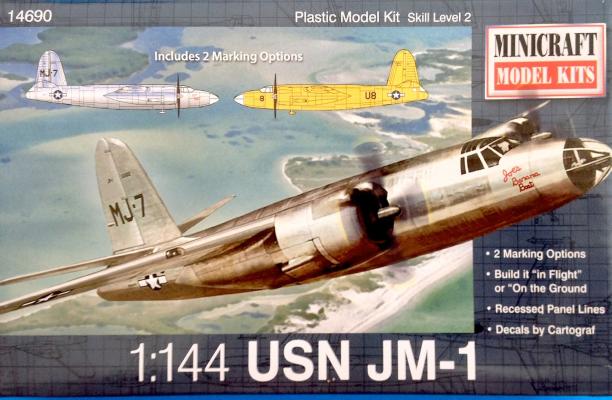
This is a small scale kit of the USA JM-1 in two schemes: Joe’s Banana boat and US Marine Corps MJ-1. It is a basic 1:144 kit with limited interior, no painting masks and a small, but nice set of decals.

I opted for the JM-1 Banana Boat scheme. As you can see from the kit instruction sheet - one large fold out - there are minimal parts. There was little flash, but some of the detail was very soft on some parts. The kit provides the option to build the model on the ground, or in flight. I chose the latter. The issue with this decision was with the poorly fitting nose gear doors. The main gear doors were a much better fit.
Review Author
David Horn
Published on
Company
Academy Models
Scale
1/48
MSRP
$75.00

Aircraft and History

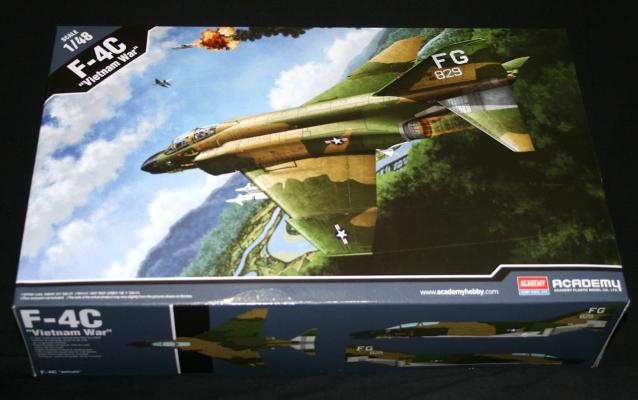
The F-4 Phantom II was originally developed for the United States Navy and made its first flight on 27 May 1958. Exactly 5 years later, the first USAF Phantom II flew and that version was the F-4C. These early Phantoms did not have an internal gun which was an issue in close combat and when the missiles were unreliable. This kit represents Col Robin Olds aircraft as it appears in the National Museum of the US Air Force and the box art shows the phantom during Operation “Bolo” on 2 January 1967. During “Operation Rolling Thunder”, F-105 fighter bombers (heavily loaded) were being attacked by North Vietnamese Mig-21 fighters and sustaining high losses of F-105’s. In response to these attacks, Col Olds devised a tactic to trick the North Vietnamese air force into thinking the Phantoms were F-105 on a bombing run which were being attacked by Mig-21 aircraft.

Review Author
Dave Morrissette
Published on
Company
Scale Aircraft Modelling
MSRP
$7.50

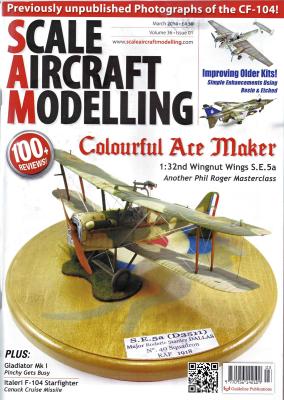
Each issue of Scale Aircraft Modeling follows a basic design and format and this one is similar. There are usually two Feature Articles, an Aviation in Profile piece, industry news and a series of Compact Build Reviews.

The Feature articles for this issue covers a build of Wing Nut Wings 1/32 S.E.5a and a 1/48 Eduard PKZ-2. The WNW S.E5a is a fantastic kit to begin with and the author, Phil Roger does a spectacular job. He uses a special method for oxidizing the exhaust pipes and shows the rigging and weathering in many detail shots.

Review Author
Dave Morrissette
Published on
Company
Master Model
Scale
1/48
MSRP
$5.50

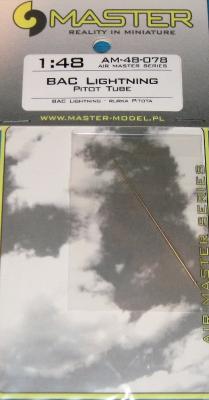
Master Models now provides coverage of the Airfix 1/48 Lightning kit with a perfectly formed replacement pitot tube. Master Models is well known for their superb turned brass parts and this set is another fine example. The set is one part of perfectly turned brass to replace the kits parts.

Here's a great picture of the pitot tube and how far it sticks out from underneath the front of the plane.

Pitot Tube Photo

The instructions are great. In this case , the kit part is cut off of the support, a small hole drilled and the new part inserted. As you can see by the comparison pictures, the kit parts is straight, much thinner and too scale and also has the durability of brass. Another hit for Master Models.

Highly recommended for both accuracy and toughness. My thanks to Master-Models and IPMS/USa for the chance to review it.

Review Author
Pablo Bauleo
Published on
Company
Master Model
Scale
1/48
MSRP
$12.50

Master Model from Poland specializes in metal turned parts for aftermarket kits. In my personal option, they are among the best in the market. I really like their products.

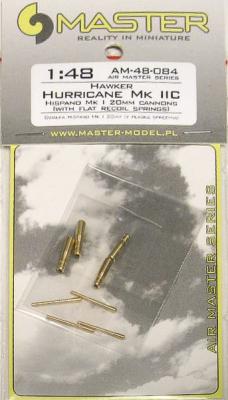
This set is devoted to the weapons of the Hawker Hurricane Mk IIC. There are several kit options in 1/48 scale: Hasegawa, Hobbycraft and Italeri. This set can be used with all of the above, with different modifications in each case.

For any of the base kits, you are instructed to drill holes in the wings for the fairings and to replace the plastic parts with the metals ones. In the case of the Hasegawa model (see photo), it could be possible to modify the wing fairing and just use the cannon barrel. You’ll lose a bit of detail, but you “gain” less effort needed to modify the kit.

Be aware that the outer and inward cannon fairings have different sizes, and should not be used interchangeably. The instructions are very clear about which one is which and how to position them.

Review Author
Pablo Bauleo
Published on
Company
Master Model
Scale
1/48
MSRP
$13.00

Master Model from Poland specializes in metal turned parts for aftermarket kits. In my personal opinion, they are among the best in the market. I really like their products, and this set in particular is probably one of the nicest I have seen from them.

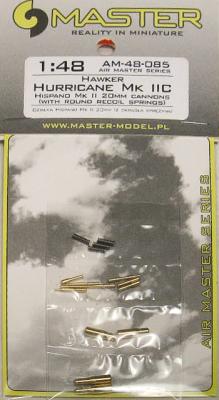
This set is devoted to the weapons of the Hawker Hurricane Mk IIC. There are several kit options in 1/48 scale: Hasegawa, Hobbycraft and Italeri. This set can be used with all of the above, with different modifications in each case.

For any of the base kits, you are instructed to drill holes in the wings for the fairings and to replace the plastic parts with the metal ones. In the case of the Hasegawa model (see photo), it could be possible to modify the wing fairing and just use the cannon barrel. You’ll lose a bit of detail, but you “gain” less effort needed to modify the kit. For the Hobbycraft and Italeri models, you have to drill the holes and use the full metal assembly.

Review Author
David Wrinkle
Published on
Company
Master-X
Scale
1/48
MSRP
$52.95

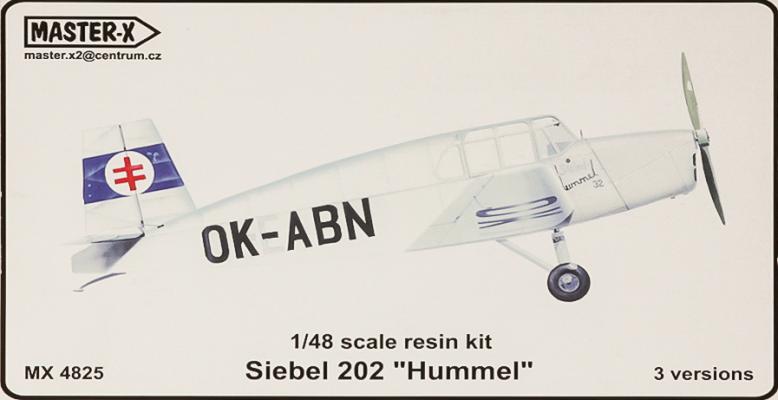
I was not familiar with the Siebel 202 “Hummel” (Bumble-bee) prior to this review, and the internet is not overflowing with information about this little gem. This build crosses a couple of firsts off my list: 1) a full resin kit, and 2) a kit from the Czech company Master-X. Up front, I will say that if given another opportunity to build one of their kits, I will do so again.

What you receive in the sturdy little box is a very nice set of clean, detailed resin pieces molded in a couple shades of beige, as well as two black pour stubs with the small resin pieces, including landing gear parts, the control stick and a few as yet to be identified pieces. They also include a basic assembly guide, with color guide on the back side of the sheet, as well as a small photo etched fret, one canopy, and a nicely made decal sheet printed by Aviprint (more on this later).

Review Author
Bill O'Malley
Published on
Company
Master Box Ltd
Scale
1/72
MSRP
$22.95

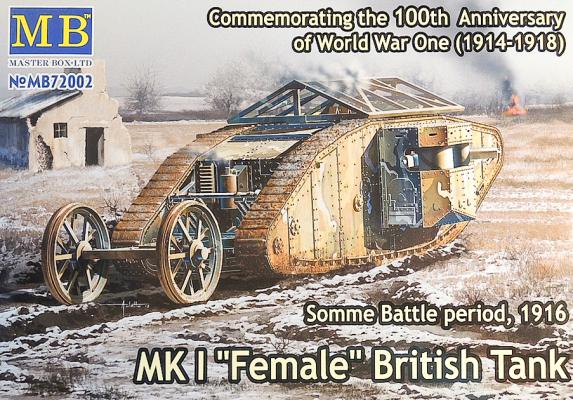
Tank History

A bit of research on Wikipedia reveals that the British Mark I tank entered service in August 1916, becoming the world’s first combat tank. It was developed during World War I to combat the trenches and machine guns that dominated the battlefields of the Western Front. Despite the primitive nature of the first “tank,” a designation chosen to maintain secrecy, it was able to deal successfully with the various tasks found on the battlefields: small-arms fire, fortified enemy positions, challenging terrain, and the need to carry supplies. The Mark I’s first combat usage was on September 15, 1916, during the Battle of Flers-Courcelette, part of the Somme Offensive.

Review Author
Pablo Bauleo
Published on
Company
Quickboost
Scale
1/48
MSRP
$8.25

Review

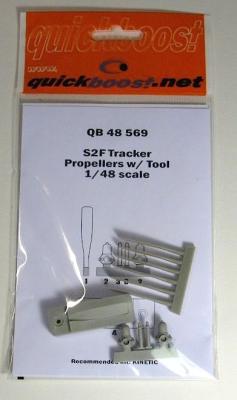
The S2F Tracker needs no introduction. It has been in service for decades with Navies from all over the world. Kinetic has the only 1/48 injection molded kit in town and as such it is getting the attention from different aftermarket manufacturers.

Quickboost has released a series of aftermarket details (wheels, pylons, radar, etc) including one for the propellers, which is the subject of this review. The addition of a “Tool” is a great idea to ensure all the blades have the same pitch and very easy to use.

The resin parts are clearly sharper and finer than the plastic ones. Perhaps the main differences relates to size. The resin propeller hub is a tad longer than the plastic counterpart and the resin blades are a bit longer and narrower than the plastic ones. I do not know if that might have something to do with earlier/later marks of the Tracker. Check your references.

Review Author
Charles Landrum
Published on
Company
Quickboost
Scale
1/48
MSRP
$6.00

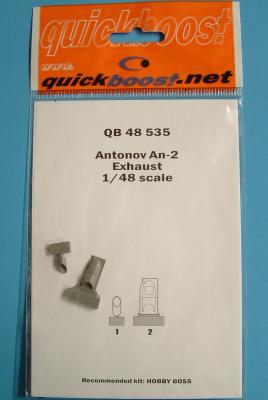
The AN-2 "Annushka" bi-plane (NATO designation “Colt”) is a throwback from a very earlier age, not only because it is a biplane, but because of the larger Shvetsov Ash-62 9 cylinder radial engine that powers it. On the right side of the plane is a single large exhaust pipe that belches fire and smoke when in operation. The pipe on the real AN-2 comes out from the engine at a shallow angle of incidence and then makes a radius bend outward to carry the exhaust away from the fuselage.