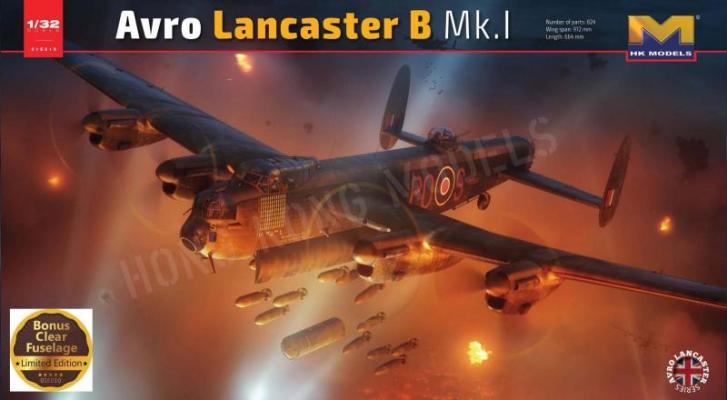
Down the home stretch! Last time we had just completed the wings, tail, fuselage, nose and wheel-wells, leaving just the final assembly and finish for the last segment of this three-part review. To recall: I chose to display only the port wing’s inboard engine detail, and to cover up the remaining three engines. Otherwise, the aircraft is built up from the box with the exceptions of a set of brass gun barrels, and a set resin control panels and accompanying decals. The brass barrels will be part of a separate IPMS review.

What's New
The Eduard Mirage IIIC is a well-known kit, first released in the mid-2000s. Despite being 15-yr old molds, they hold well the pass of time and it is nice to see it re-released. It sure builds into a nice replica of the French interceptor.
The kit comes molded in light grey plastic, with a total of 167 parts in 8 sprues, plus a small sprue of clear parts. The decals are printed by Eduard, they are opaque, shiny and in register. This boxing also includes pre-painted photoetch and pre-cut masks. As an add-on, this kit also includes resin parts for the upgraded airframes which used the ATAR 9C engine.
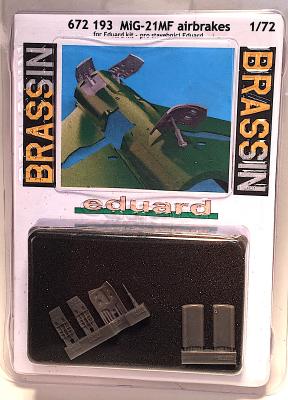
This set is designed to be used on Eduard’s MiG-21MF kits that were released last fall. The set consists of 6 resin parts – the two forward speed brakes, the large rear speed brake, two inserts for the forward speed brake bays, and the actuator for the rear speed brake.
The rear speed brake and actuator are one for one replacements for the kit parts and offer nicely refined detail over the kit parts.
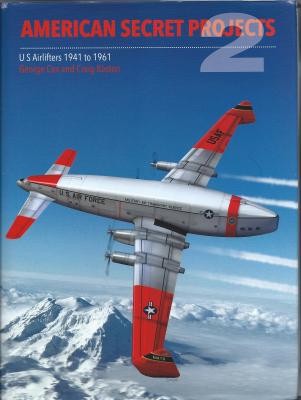
This book is the second in a series on American prototypes and secret projects, the first on cargo aircraft. It covers many different aircraft from WWII types to right up till the early cold war. The authors were granted an unprecedented level of access to the various manufacturers’ archives and the amount of information in the book really shows this! This book covers over 200 designs from the well-known to those beyond obscure.
The book is broken down into nine chapters. The first is a brief overview of the last 80 years of airlift design and usage.
The second chapter covers the design challenges facing aerospace engineers especially when the government demands were outpacing the technology. Everything from wing placement to cargo door size and placement are discussed. Many other factors such as carrying capacity and range are also covered, as are the advantages of prop, turboprop, and jet configurations both real and perceived.
Background
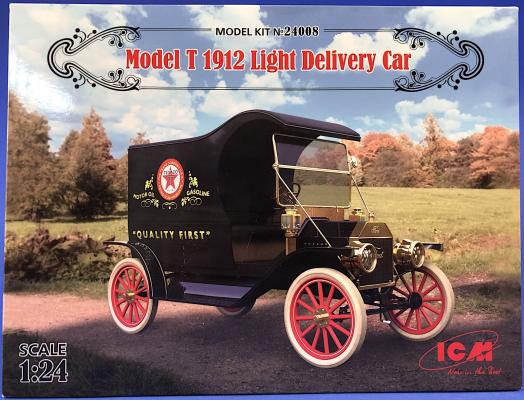
One of the most numerous and famous cars in world history was the Model T produced by the Ford Motor Company. It became the first mass-production car and was affordable for middle class. The first examples of the Model T were built starting on October 1, 1908. It had a four-cylinder engine of 20 hp. The mass production was launched at the Highland Park Ford Plant, Michigan beginning in 1910. There were 16.5 million cars produced between 1908 and 1927. Model T cars were produced in different types, like the 1912 Light Delivery Cars.
The Light Delivery Car version is another of ICM‘s excellent series of 1/24 scale Model T kits. Other 1/24 scale Model T kits released by ICM include:
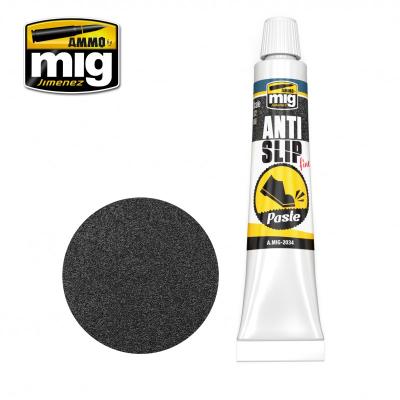
The anti-slip surface on tanks and airplanes are a unique feature and often not represented, especially on airplanes and helicopters. In the past the ways to replicate this were barely passable. Well that has now changed.
Ammo by Mig Jimenez has released not one but, three different versions, of this anti-slip paste. Of course, there are different scale models and so there are different ‘scales’ of this new paste.
The first anti-slip paste is in sand color for 1/35th scale. These would be used on vehicles like the M1 Abrams and Bradley fighting vehicles.
The second paste is designed for 1/72 and 1/48th scale models, in particular airplanes can benefit from this paste. The ‘grit’ is a finer one that is typical for airplanes.
The third one is a brown color designed for 1/35th scale vehicles.
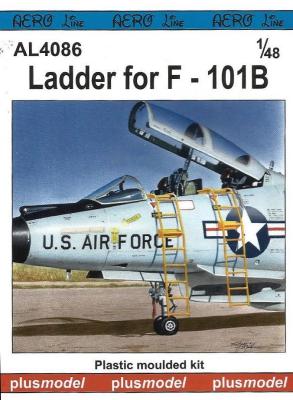
Plusmodel is located in the Czech Republic and when you visit the company website you are given the option of an English language version. The links above go to that option.
To get some idea as to what products are offered by plusmodel, select the Catalogue option on the home page. The Catalogue lists hundreds of items that can be used as stand-alone models or items, such as the Ladder being reviewed, to enhance a model. My modeling experience with plusmodel products includes only a dozen or so of the aftermarket-type items, and I have been pleased with each of those items.
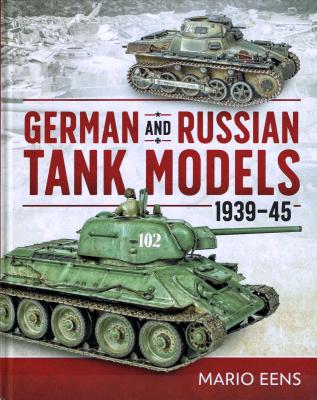
John Geigle of Masterpiece Models gave us a number of review items in Chattanooga this year and because I love to build the quirky and unusual stuff, I volunteered to do the dirty work (I’m going to try my best to avoid puns during the rest of this review, as difficult as that is for me.) and put this one together.
The author of this tome, Mario Eens, is well known to those on the international modeling scene as an award winner at European model shows, together with being a regular contributor to the excellent French modeling magazine, Steelmasters. The book itself consists of a master class in building, painting and finishing scale models, divided into five chapters, and spanning 128 pages measuring 8” x 10”.
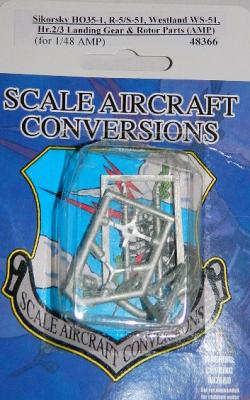
IPMS/USA again thanks Ross and his Team at SAC for supporting the IPMS USA reviewer corps with one more of many monthly releases, with useful and well-thought out landing gear additions for those who build. And thanks to IPMS leadership for sending it to me to be reviewed.
This set has eight parts: two nose gear halves, two shock struts for the main gear, a main rotorhead three-point blade swashplate, a cyclic main rotor mount plate with four points, a main rotor brace, and a tail rotor pitch link assembly. Rotor heads are the main focal point and the failure point of most rotary wing aircraft… and metal is the perfect solution for the fragile bits.