This is another book in this series, each concerning itself with one particular type or class of ship. This one is about British Anti-/Aircraft Cruisers and includes ships specifically built for this mission or converted to it. As usual for this series, it is not so much a history of the ships, although brief accounts of their careers are included, as it is a description of the various specific modifications made to them that made them anti-aircraft ships. Included are the “C” class cruisers that were converted for this work, merchant vessels that were requisitioned and converted and the more-or-less purpose build Dido Class ships.
Reviews
As this is a relatively new and unknown combat vehicle, Wikipedia provided some background:
The K808/806 White Tiger (Korean: 백호 "Baekho", Hanja: 白虎) wheeled armored personnel carrier (APC) is family of 8×8 and 6×6 armored vehicles. Developed by Hyundai Rotem as a private venture in 2012, the Korean Army declared a plan to acquire 600 6×6 and 8×8 wheeled APCs in order to help build rapid response forces modeled after U.S. Stryker combat brigades.
Scale Aircraft Conversions (SAC) has provided the IPMS reviewer corps with a set of 1/48th scale metal landing gear for UMa’s AV-8B Harrier II Plus. These parts are drop-in replacements and provide a more robust landing gear set given its metal properties.
In The Package
The metal pieces are packaged in a clear blister package with cardboard backing. No instructions are provided.
Review
The metal landing gear set is used as drop-in replacements for the kit parts as noted:
- Nose Gear: C1, D20, D21, and D26
- Rear Gear: D9 and D17
- Wingtip Outrigger Gear: D15, D16, D18, and D19
The metal used is malleable and has some give to allow for any minor bending if needed. Also, seam lines will need to be cleaned up prior to painting just like the plastic kit parts.
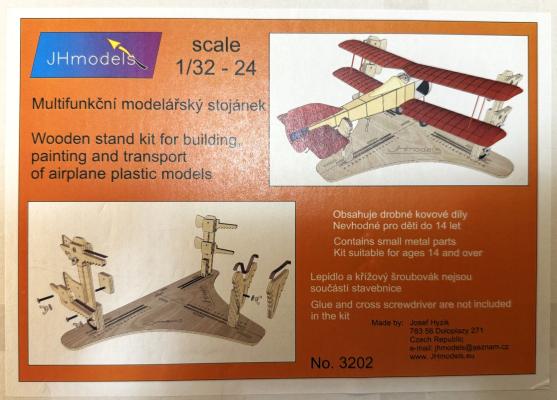
I saw these modeling stands mentioned in one of the chapter newsletters Mark Young compiles and sends to all members (sorry, can’t recall which one). I decided to purchase the sets mentioned above at https://www.wardogmodeling.com/. War Dog also makes a Model Ship Stand and a Model Car Stand. My stands arrived unassembled in a plain white cardboard box, so I don’t have any box art to show you. The box contains the parts in separate plastic bags, a copy of the order information, and that’s it. No instructions, but they aren’t really needed. Assembly is straightforward.
War Dog Modeling is a new company that produces work stand for all types of models, including aircraft, ships, cars, and armor (the subject of this review).
What’s in the Box
The stand arrives in a corrugated cardboard box containing the major parts and a small bag with the metal hex-bolts and plastic wing nuts, all protected by brown paper packaging. The wing nuts and main components are 3-D printed in a sturdy resin, the stand base is 6.25 inches long and the grippers will open to 4.625 inches wide.
The Instructions
Don’t look for any instructions, but do not panic as it only takes a quick visit to the War Dog Models website to see how the stand is supposed to look. Construction is beyond intuitive and takes no time at all.
Helion is a prolific publisher of military history based in the United Kingdom. This two-volume set provides an overview of the formations, equipment, and actions of German light divisions from 1938 through the end of the Polish campaign. As with all Helion offerings, they are paperback but professionally produced. Each volume is full of beautifully reproduced black and white photographs, campaign maps, drawings of tables of equipment and organization, as well as several color profiles of German vehicles in this time. The first volume covers the formation, armament, and pre-war deployment. The second volume is devoted to the Polish campaign with additional information on camouflage, markings, and the continued evolution and ultimate dissolution of the light divisions.
1942 was a pivotal year in WWII in North Africa. The year started with the British on the back foot and the Germans on the offensive, but ended with the positions being reversed as Montgomery’s Alamein Offensive in October ground it’s way towards final victory on the continent.
The back-and-forth war between the British on one side and the Germans and Italians on the other in 1940-1 had been exhausting for both sides. But boosted by fresh supplies and materials, Rommel launched an offensive in January 1942, which saw the Axis forces on the Libya–Egypt border. For the next few months, Rommel’s forces were in the ascendancy, and he was at the height of his military power. His military masterpiece at the battle of Gazala in late May and early June resulted in a major victory for the Axis, and led to the conquest of Rommel’s long-held objective—Tobruk.
Details the StuG from its inception in December 1943 to the end of WWII on the Eastern Front. Officially, the Sturmgeschütz IV (StuG IV, Sd.Kfz. 167) was a German assault gun variant of the Panzer IV based on the identical in role and concept to the highly successful StuG III assault gun variant of the Panzer III. In the last two years of the war, both StuG models were given a tank destroyer role in German formations and tactical planning, greatly augmenting the capability of the dwindling tank force available to the German military. After all, what could be better than a StuG III? A plus one to StuG IV!
From the talented author, Dennis Oliver,
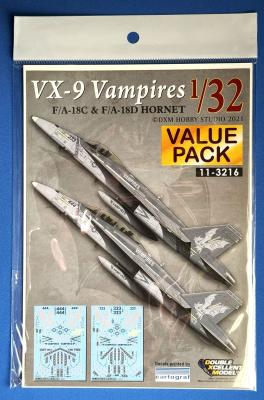
AOA Decals has a good reputation for quality decals, and I was thrilled to have the opportunity to review one of their newest releases, the US Modern Letters & Numbers Decals (35-014).
The decals come in two sheets of the same page, so there are plenty of numbers, codes and colors available for 1/35 modern subjects. As it is a generic set, there are no instructions provided.
From the AOA website
This sheet offers number and letter variations as seen on US "modern" vehicles - both in black and green for most styles.
A full alphabet is provided for one of the most common US stenciled styles, including multiple "M" variations.
Other styles are primarily numbers for USMC/USN vehicles (M-ATV, JLTV, MTVR, M1 Abrams, LAV-25, etc.). Also includes USMC vehicle plate decals.