
The 101st Airborne in Normandy, June 1944
Due to the nature of our armament, and the tactics in which we shall perfect ourselves, we shall be called upon to carry out operations of far-reaching military importance, and we shall habitually go into action when the need is immediate and extreme. Let me call your attention to the fact that our badge is the great American eagle. This is a fitting emblem for a division that will crush its enemies by falling upon them like a thunderbolt from the skies.
The 101st Airborne Division…has no history, but it has a rendezvous with destiny.
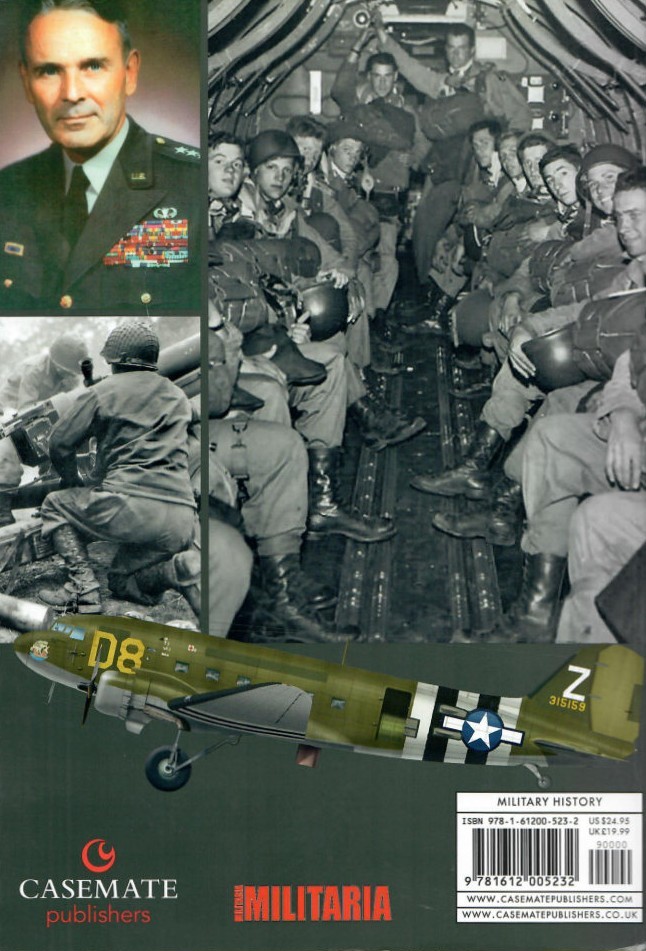
Both quotes were by Major General Willam C. Lee, the “Father of the US Airborne”. As a lieutenant colonel in 1940, he organized the first US paratrooper platoon and developed its training. In July 1942, Major General Lee took command of the 101st Airborne Division, the second US airborne division, following the 82nd Airborne Division by a day (the 82nd Infantry Division served in WWI, the 101st was created on paper, but was not activated until 1942).
The exploits of both airborne divisions in Normandy are legendary and intertwined, made famous by the popular TV series, Band of Brothers, whose exploits are also partially covered in this book. For the 82nd, this would be their third airborne operation, the 101st this would be their first. MG Lee did not lead his division in combat as he suffered a heart attack in February 1944; he was replaced by MG Maxwell Taylor, who had previously served as Chief of Staff of the 82nd Airborne.
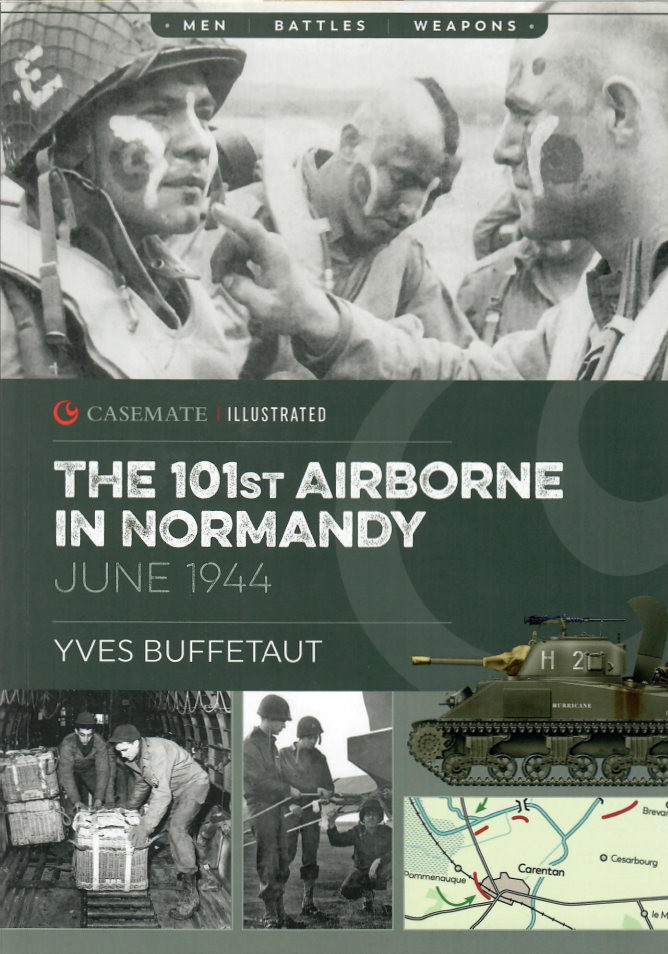
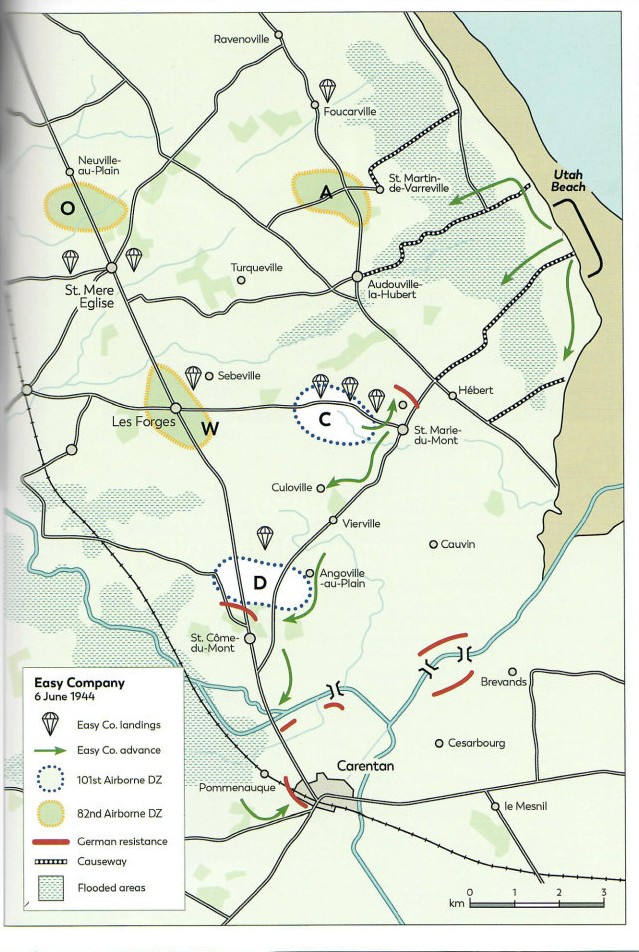
The 101st Airborne in Normandy, June 1944 is written by Yves Buffetaut, an internationally respected French military historian and editor of Histoire & Collections major magazine, Militaria. This 128-page paperback contains 100 black and white photographs, five color photographs, 24 color profiles, and three maps. It is organized in the Casemate Illustrated format, and is composed of the following chapters:
https://www.casematepublishers.com/9781612005232/the-101st-airborne-in-normandy/
- Introduction
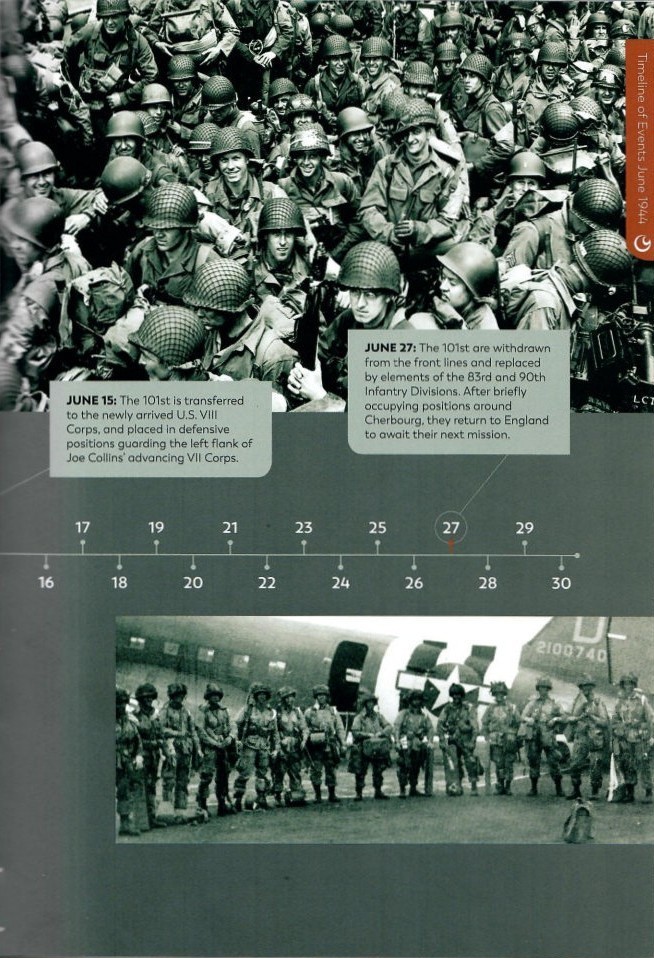
- Timeline of Events: June 1944
- Background and Formation of the 101st Airborne Division
- General William C. Lee
- Planning and Preparation
- In Profile: General Dwight D. Eisenhower
- The Airborne Controversy
- In Profile: General George C. Marshall
- In Profile: Materiel Used by the 101st Airborne
- The 101st Airborne in England
- The Airborne Transport Force
- The Pathfinders
- Exercise Eagle
- The American Plan
- The Final Developments
- In Profile: Waco CG-4 Glider
- Airborne Invasion
- The First Difficulties
- Drop Zone A
- In Profile: Captured French Tanks in German Use
- A Troubled Jump at Drop Zone C
- In Profile: General Maxwell D. Taylor
- Massacre at Drop Zone D
- The Battle of Sainte-Marie-du-Mont
- Operation Chicago
- In Profile: Lt Colonel Robert F. Sink
- In Profile: C-47s Used by the 82nd and 101st Airborne Divisions
- “E” is for Easy
- Formation
- D-Day Preparation and Action
- Taking Brécourt Manor
- In Profile: Sergeant William “Wild Bill” Guarnere
- The Battle for Carentan
- The Defense of Carentan
- The Handover
- In Profile: Lieutenant Richard Winters
- The 101st in Carentan
- Stage 1: Take Saint‑Côme‑du‑Mont
- Fallschirmjäger Regiment 6 on the Verge of Annihilation
- In Profile: M4 Shermans from Utah Beach
- The Battle from the American Side
- The American Plan
- In Profile: Brig. Gen. Anthony McAuliffe
- A Missed Attack
- A Bayonet Charge
- The Battle from the German Perspective
- The Americans Threatened with Collapse
- In Profile: German Materiel Used Against the 101st Airborne
- The Glider Infantry in Battle
- The Failure of the Northern Attack
- June 12th: The Americans Prepare Their Offensive
- Von der Heydte Moves Out
- In Profile: Oberstleutnant Friedrich Freiherr von der Heydte
- In Profile: German Armored Vehicles
- The Americans Enter Carentan
- Von der Heydte Surprised
- In Profile: American Armored Vehicles
- The German Counteroffensive
- Von der Heydte Stopped by the Waffen-SS
- The Battle from the American Perspective
- Afterword
- Further Reading
This book is an easy-to-read overview of the 101st Airborne’s operations in Normandy. Each section contains captivating photographs, profiles of noted personalities, color vehicle profiles and maps that illustrate the operations. As a former paratrooper, I found this book to be a balanced accounting of the operations, appreciated the author’s view and learned a few things to round out my knowledge of Operation Overlord and the larger strategic viewpoints of airborne operations.
The Airborne Controversy section of the Planning and Preparation chapter is fascinating and shows the opposing viewpoints of General George Marshall, Chief of Staff of the US Army and General Dwight D. Eisenhower, Commander of Supreme Headquarters Allied Expeditionary Force (SHAEF). General Marshall wanted to use the airborne forces to establish a strategic airhead in Evreux and seize its four useful airfields, far beyond the beaches. General Eisenhower, having had experience with airborne forces in both Sicily and Anzio replied,
My initial reaction to the specific proposal is that I agree thoroughly with the conception but disagree with the timing. Mass in vertical envelopment is sound – but since this kind of enveloping force is immobile on the ground, the collaborating force must be strategically and tactically mobile. So the time for mass vertical envelopment is after the beachhead has been gained, and striking force built up!
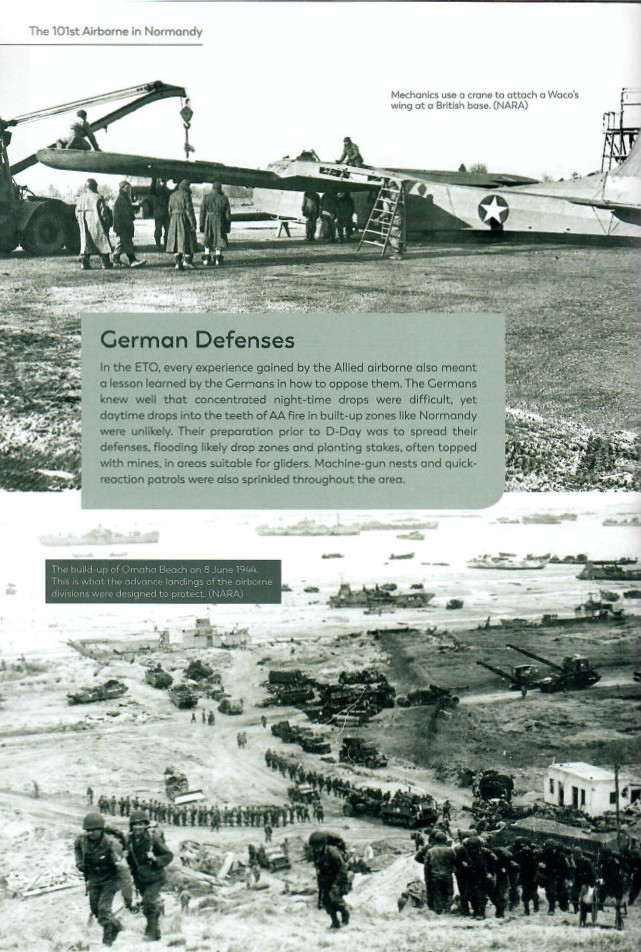
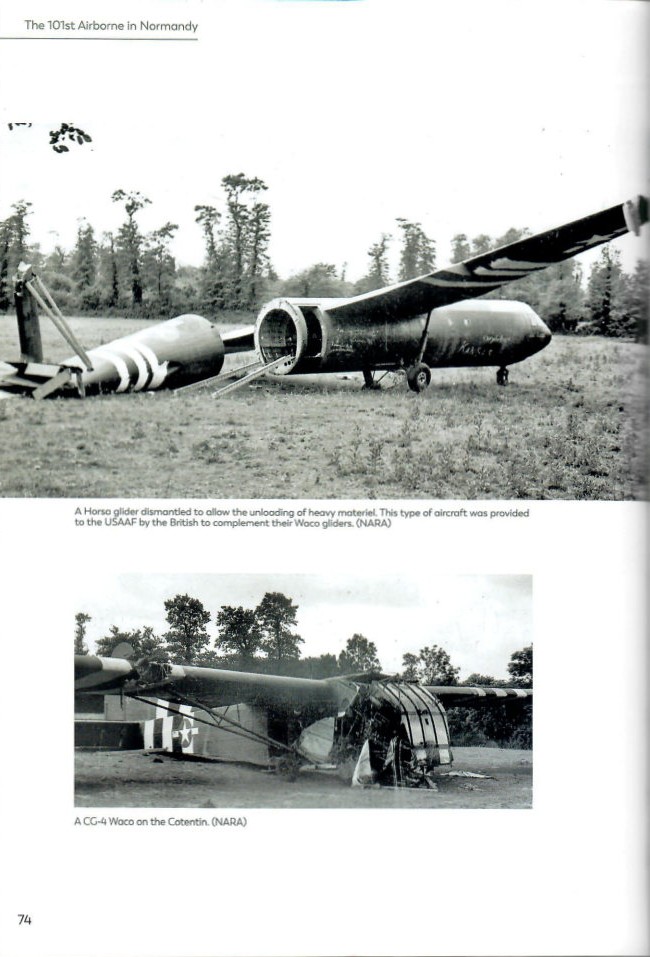
As history would show, the airborne forces, consisting of both paratroopers (Parachute Infantry Regiment) and glider-borne (Airborne Infantry Regiments), would jump hours before the sea-borne invasion to secure vital objectives. The book goes into great detail on not only the aircraft (C-47s, US Waco and British Horsa gliders), but also their aircrews and organizations so vital to getting airborne forces to their objectives.
After the widely scattered drops, units were intermixed and the airborne followed their training and aggressive methods to form little groups of paratroopers (LGOPs) and moved out to their objectives. General Taylor later commented as he formed a group of 30 paratroopers around him, most of them officers, “Never have so few been commanded by so many.”
The Taking of Brécourt Manor is described well in this book, the Band of Brothers, and is used as a case study for small unit assaults. This was to preclude the 101st Airborne’s Battle for Carentan (10-14 June 1944), which was key to linking the Utah and Omaha beachheads. The author does a fantastic job of explaining the vital importance of this town and its crossroads, from both the American and German points of view. Holding Carentan were two battalions of their German counterparts, Fallschirmjäger of the 6th Parachute Regiment. It was a close-fought battle with the Fallschirmjäger retreating just as the 17th SS Panzergrenadier Division reinforced arrived for battle. Had the paratroopers not dislodged the Fallschirmjäger and set up defenses before the 17th SS counterattack, the situation would have been dire. This became an extreme example of the effectiveness of airborne operations and the determination of American paratroopers against elite German forces.
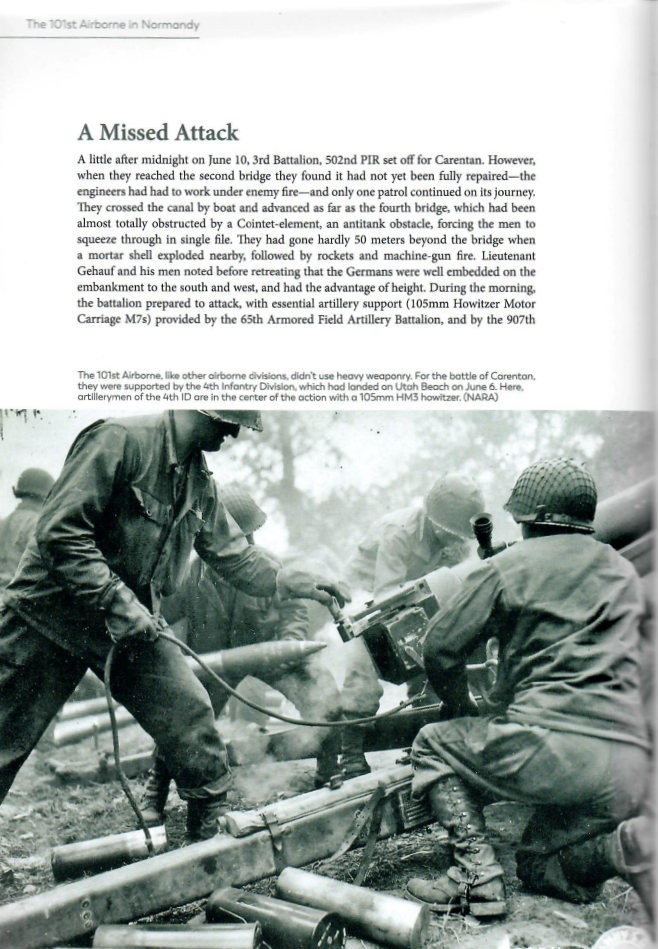
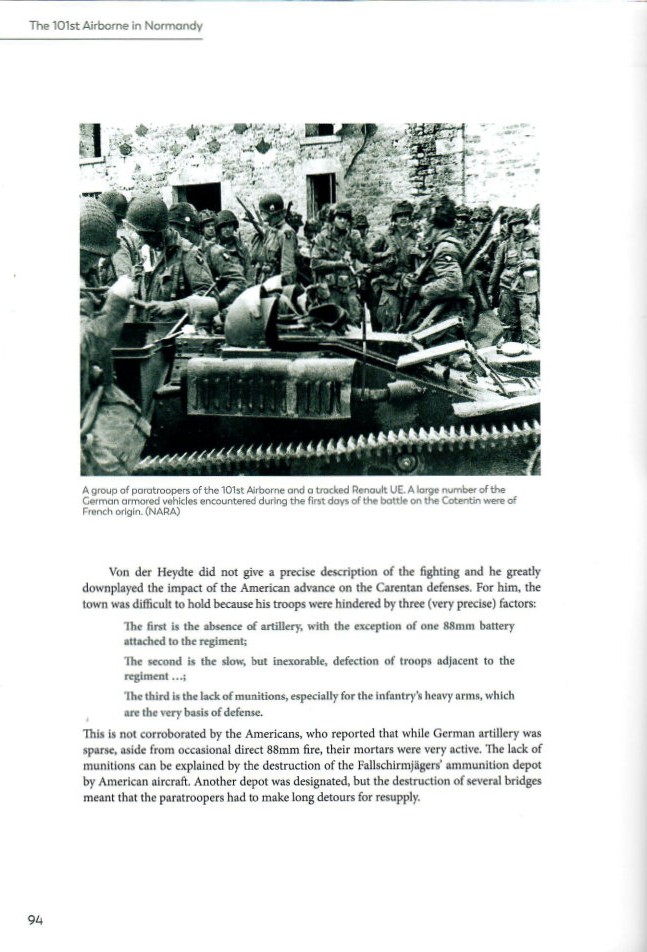
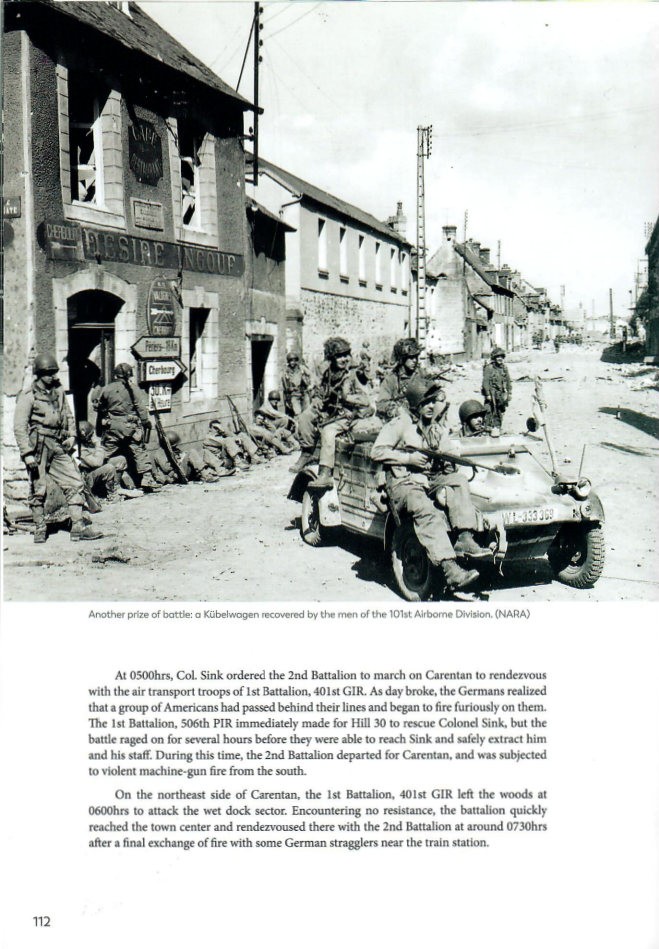
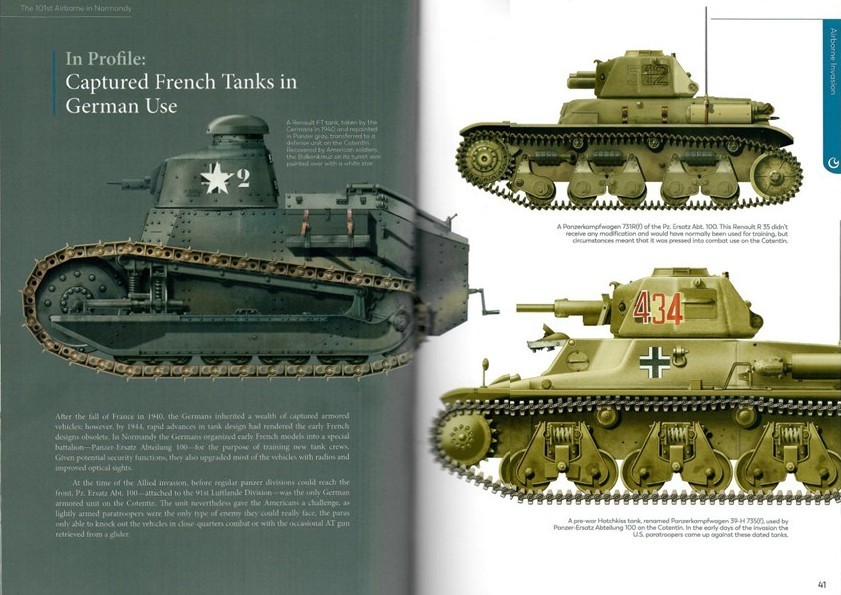
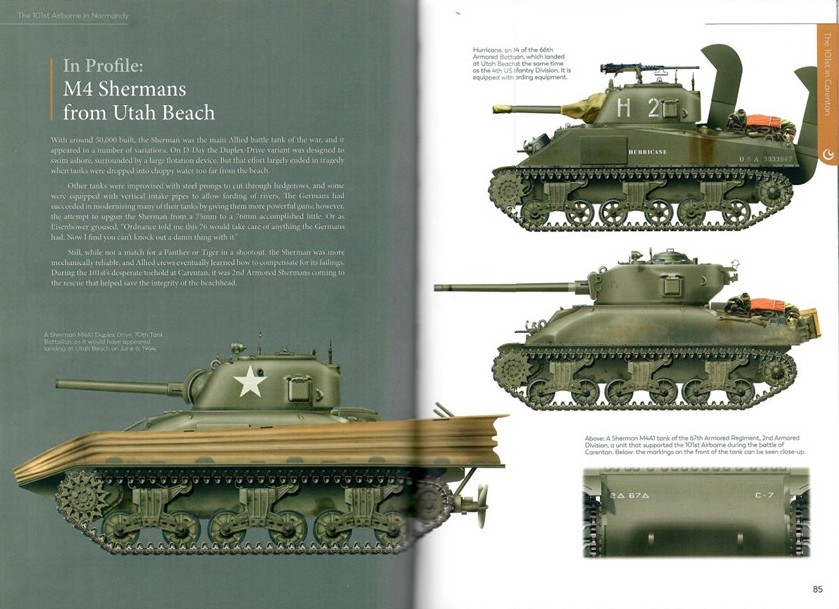
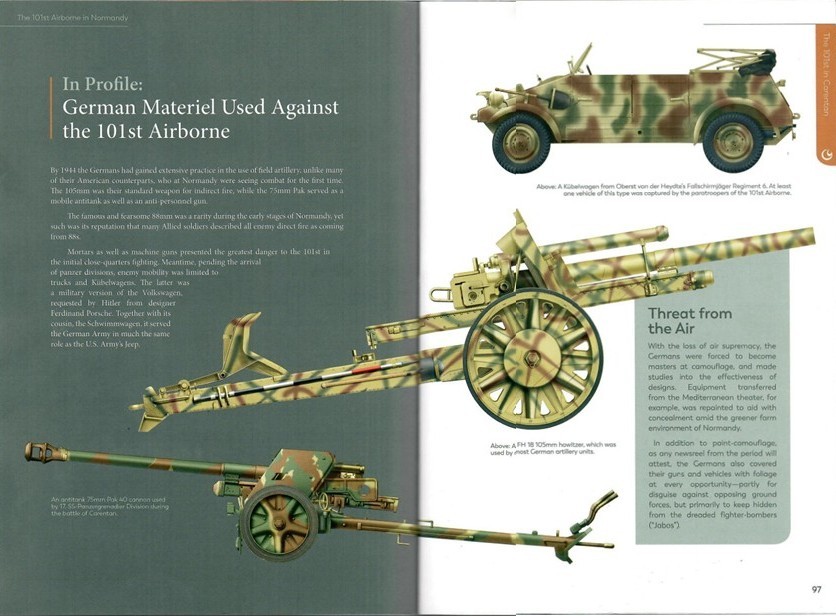
Modelers are well served by the amazing period photographs. Color profiles include: Willys Jeep, 75mm pack howitzer, French Laffly V15T in German service, Waco CG-4 Glider, Captured French tanks in German service (Renault FT-17, 731R(f) Renault R35, and 735(f) Hotchiss 39-H), C-47 SkyTrains, M4 Shermans, Kubelwagen, FH-18 and Pak 40 artillery, SdKfz 251/1 Ausf D, StuG IV, M5A1 Stuart, M8 Greyhound and M10 Tank Destroyer.
Famous photographs of 101st paratroopers show some of them applying war paint before the night drop. Many of them felt that it made them look, or feel, more fierce. A German veteran later commented, “that the look simply made them easier targets.”
This is a good book for modelers on the 101st Airborne Division in Normandy. It is well worth you're modeling money and adding it to your library for future builds.
Profuse thanks to Casemate and IPMS/USA for providing the review sample.
Comments
Add new comment
This site is protected by reCAPTCHA and the Google Privacy Policy and Terms of Service apply.
Similar Reviews