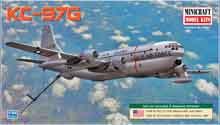
Minicraft models has issued another boxing of their KC-97G. I believe this is the second boxing of this kit and is a slight improvement over the first release. The parts are unchanged, but this new boxing includes a gorgeous decal sheet with two different options (more on this later). The kit includes five sprues of light gray plastic and one sprue containing the clear parts, which consists of boomer’s pod and the cockpit windows/part of the front fuselage. No clear parts are provided for the side fuselage windows; black decals represent these windows.
Reviews
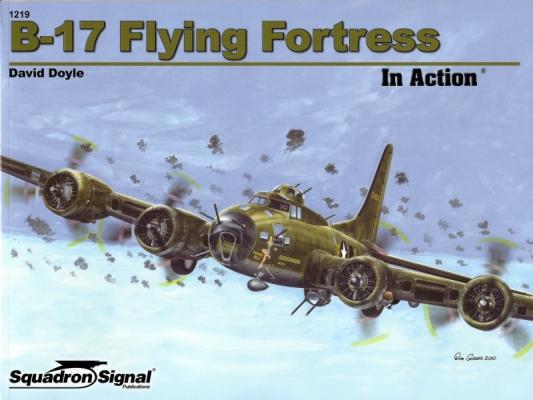
The B-17 is most recognized bomber of WWII and certainly one of the most recognizable airplanes to ever fly. It was an effective weapons system particularly when accompanied by the P-51 Mustang. It dropped more bombs than any other U.S. aircraft in World War II and its survivability was much greater than most other planes of that time. This legendary aircraft has been the subject of many books. It is the subject of the latest offering from Squadron/Signal’s long list of In Action series.
This soft bound 8-1/4” X 11” book consists of 80 pages. The book contains approximately 200 photographs and drawings. The photographs are all period photographs and many are in color. Each photograph is accompanied by a block of text explaining what is depicted. The quality of these period photographs is exceptional.
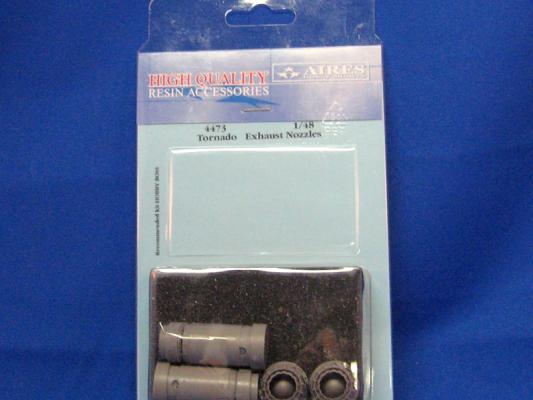
We just keep getting more and more great stuff from these guys. They are truly one of the best resin casters out there. Their attention to detail is magnificent and the prices are reasonable to boot. This time up is a look at the burner cans for the Hobby Boss Tornado's. They look more towards the ones on the GR/4s then the ones on the Fighter /Interceptor variant but I could be wrong.
There are 6 great cast parts. 3 of each make up the burner assemblies for the Tornadoes twin engines. The engraving is second to none and the fit of the resin parts is superb. Aires gives you a kind of instruction sheet with installation pics and a few notes. Most of you who buy these already know the deal so I won’t dwell on it. No photoetch is in the set, nor is it needed. Just read the simple instructions, then paint and pop them in.
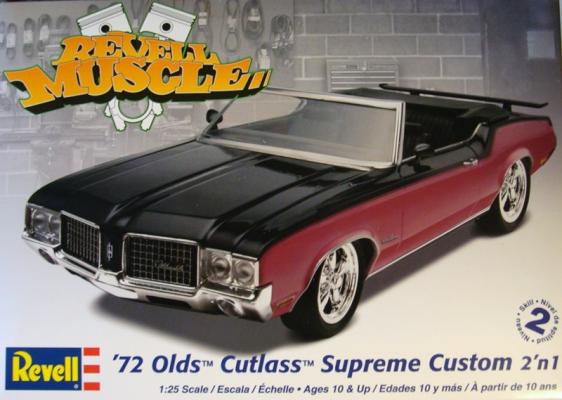
My latest kit for review is the new Revell’s '72 Oldsmobile Cutlass Supreme. Upon opening the box, the first thing I noticed was the very clean molds. The mold seams on the body were scarce and very easy to clean up. Moving on, the kit gives a few different options to build the car. First off is the choice of an automatic or manual transmission (I'll be building the manual version) which also includes an extra set of floor pedals, different center consoles and shifter options.
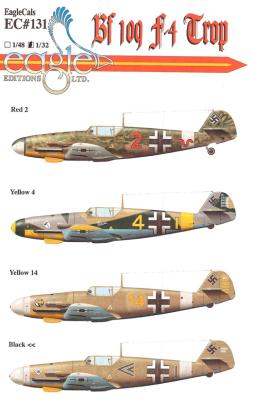
Eagle Editions is synonymous with Luftwaffe research designed for the model builder. Their latest release is for any 1/32nd scale Friedrich. As always with EagleCals, the quality is felt right from opening up the packaging.
You are presented with markings for four Freidrichs. These are quite colorful aircraft. All of them start out with base colors of RLM 78/79, but that is where they commonality ends.
The instructions are printed in color on four 8x10 pages. The front page contains the profile and plan views. The profile views are printed larger on the second page. These profiles are absolutely beautiful. I don’t know for sure but I’m fairly certain they are done by Tom Tullis. The third page is a written description of each aircraft. The fourth page contains the stencil diagram.
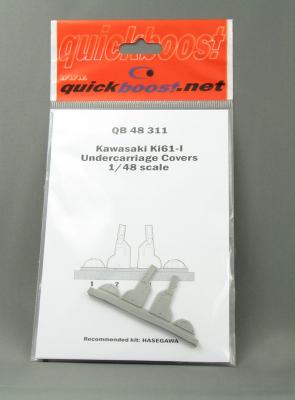
The folks at Quickboost continue to add superb detail sets to their growing catalog of items. For this review I will be looking at the Undercarriage Covers detail set for the 1/48 Hasegawa Ki-61 family of kits.
This superb detail set is designed to work with the 1/48 Hasegawa Ki-61 I Hein “Tony”. The Hein was a WWII Japanese fighter with an inline engine. When Allied pilots first encountered the Hein, they thought they were flying against German Bf 109 fighters because of the similar nose shape. They quickly discovered that this was in fact a Japanese design, and it was given the code name “Tony”.
The Quickboost Undercarriage Covers (Landing gear doors) are finely molded, and are very easily removed from the casting block. I find that using a razor saw is the easiest method, and after a little sanding, these great detail parts are ready to glue in place.
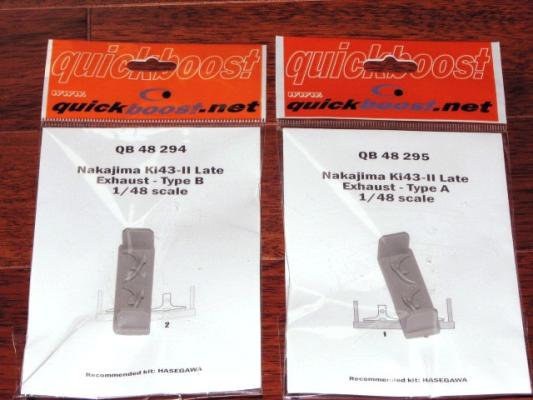
The folks at Quickboost continue to add superb detail sets to their growing catalog of items. For this review I will be looking at two sets for the 1/48 Hasegawa Ki-43-II Hayabusa “Oscar” Japanese WWII Fighter.
Both sets are designed to fit any number of the Hasegawa kits, as every boxing of the Hayabusa share the same fuselage – either set will work for Hasegawa’s entire series of Ki-43 aircraft.
Before you run out and purchase one of these sets, check your reference material to decide if you would like to build an early model Ki-43-II or a Late model Ki-43-II. Quickboost set 48-295 is labeled “Type A” and represents the later style exhaust pipes (pointing toward the tail). Set 48-294 is labeled “Type B” and is for the early models with the exhaust stack pointing outward. For this review, the kit shown is a Ki-43-II Early type with the exhaust stack pointing outward.
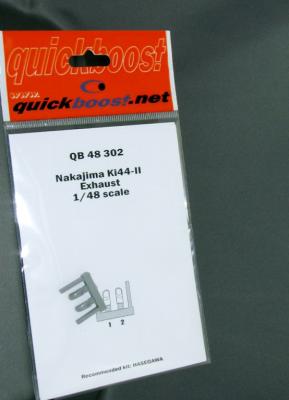
The folks at Quickboost continue to add superb detail sets to their growing catalog of items. For this review I will be looking at the exhaust detail set for the 1/48 Hasegawa Ki-44 II “Tojo” family of kits.
Hasegawa has released many different boxings of the Japanese WWII Shoki Fighter, and from what I see in my collection, this Quickboost set will work with any of the Ki-44 II kits.
The Quickboost exhaust stacks themselves are finely molded, and are very easily removed from the casting block. I find that using a razor saw is the easiest method, and after a little sanding, these great detail parts are ready to glue in place.
As you can see from the photo, the detail is far above the kit part that these replace. The exhaust well is deeper and more defined on the Quickboost replacement parts than the original kit part.
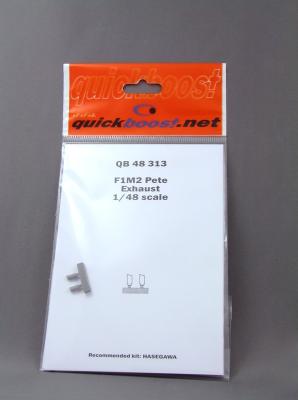
The folks at Quickboost continue to add superb detail sets to their growing catalog of items. For this review I will be looking at the Exhaust detail set for the 1/48 Hasegawa F1M2 “Pete” family of kits.
This superb detail set is designed to work with the 1/48 Hasegawa Mitsubishi F1M2 “Pete”. The “Pete” was a WWII Japanese reconnaissance floatplane. This biplane was inititally designed for reconnaissance, but was used as a bomber and fighter as well.
The Quickboost Exhaust parts are finely molded, and are very easily removed from the casting block. I find that using a razor saw is the easiest method, and after a little sanding, these great detail parts are ready to glue in place.
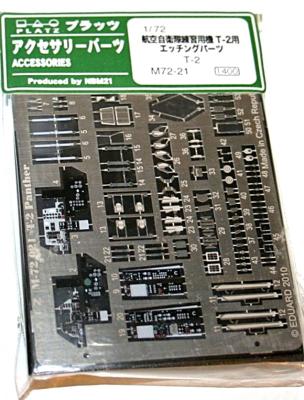
The Mitsubishi T-2 was a supersonic trainer for the Japanese Air Self Defense Force (JASDF). Like the T-38 and F-5 in the US, it was used as an aggressor aircraft and demonstration team mount as well as the original trainer mission. The T-2 used the same engine as the SEPECAT Jaguar, the Rolls Royce Turbomeca Adour, built in Japan by Ishikawajima – Harima Heavy Industries. The Jaguar T.2 and the Mitsubishi T-2 look similar, but they’re definitely not the same aircraft. It’s a case of engineers with the same problem coming up with similar solutions.