
War in Ukraine Volume 11: The Battle of Chernihiv, February-March 2022
From the first paragraph,
The Russian-Ukrainian War that began in the spring of 2014 with the annexation of Crimea, turned into a full-scale invasion by the Armed Forces of the Russian Federation (VRSF) on 24 February 2022. One of the areas of attack was the northern-eastern part of Ukraine, primarily Chernihiv Oblast, which the Russian generals saw as an easy target and one of the springboards for capturing the country’s capital, Kyiv. However, in the end, for more than a month, the Russians failed to realize their plans.
This opening paragraph well illustrates what happened in the critical opening stages in this part of Ukraine. The rest of the book illustrates the Russian plans, overconfidence, bewilderment, then frustration as determined Ukrainians resisted, blunted and ultimately turned back the Russian 41st Combined Arms Army (with its four brigades), the 90th Guards Rifle Division, and the 2nd Guards Combined Arms Army with its four brigades, two separate battalions, border guards and territorial defenses units.
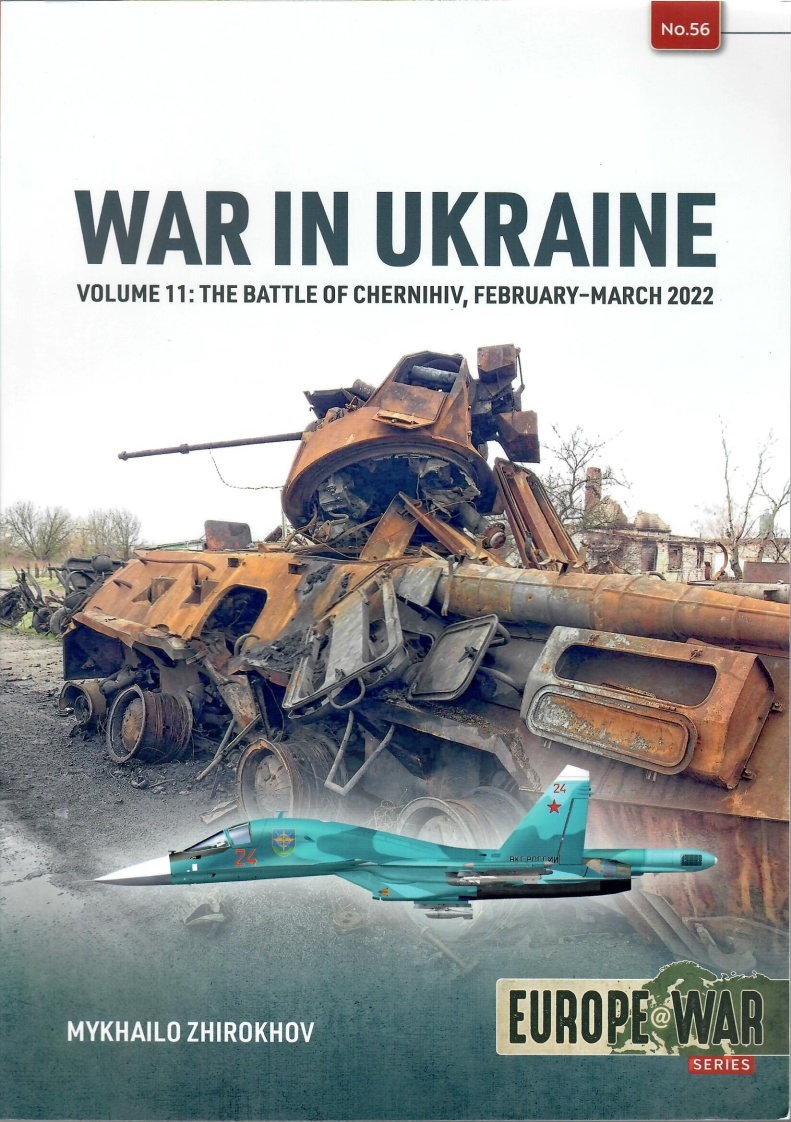
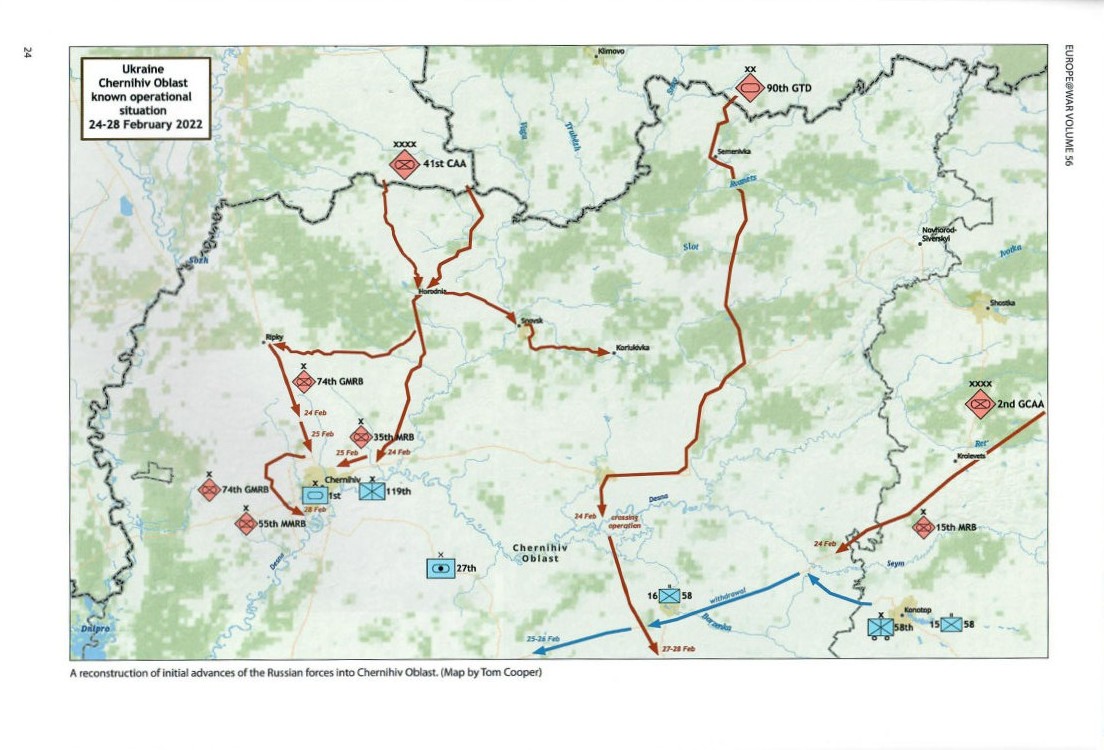
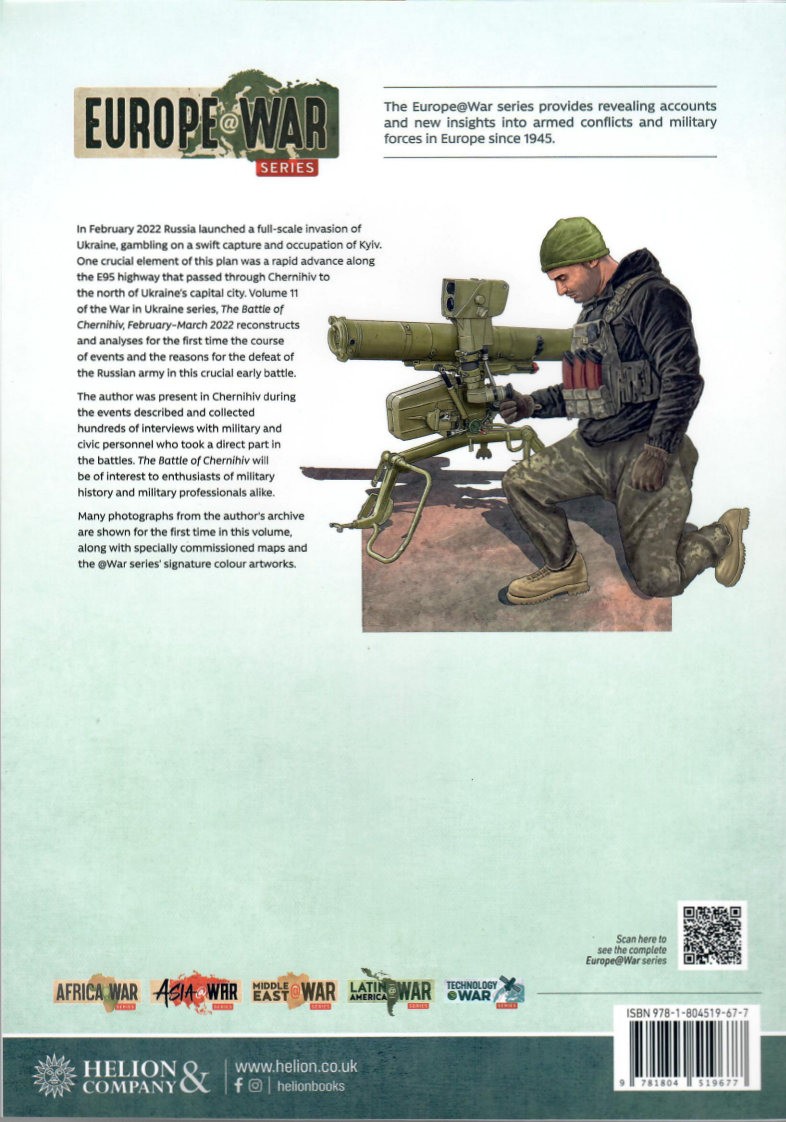
This 72-page paperback book is part of Helion & Company’s @War Series. War in Ukraine Volume 11-The Battle of Chernihiv, February-March 2022 (Helion No. HEL2113) is outlined in the familiar @War format with 70 color photographs, five black and white photographs, 21 color profiles, six tables and four color maps. The book is composed of the following sections:
- Abbreviations and Acronyms
- Introduction: Escalation
- Opposing Forces
- The Battlefield
- Opening Moves
- Assaults on Chernihiv
- The Bypass Attempt
- The Siege
- Radioactive Vacation
- Subversive and Guerrilla Operations
- Russian Withdrawal
- Consequences
- Bibliography
- Endnotes
- About the Author
As with most battles, geography plays a large role in where forces will meet and fight.
The Chernihiv region is one of the largest regions of Ukraine in terms of area (31,900 square kilometers, which is 5.3% percent of the territory of Ukraine), but sparsely populated: as of 1 January 2022, only about 959,300 thousand (sic) people lived on its territory. The region borders on the Russian Federation (225.09 km of the state border), the Republic of Belarus (232.61 km of the state border), Sumy, Poltava and Kyiv regions.
The Chernihiv region has significant agricultural potential and is one of the most agriculturally developed in Ukraine.
The geography of the Chernihiv region was characterized by a large number of extensive forests: these covered 20 percent of the Oblast’s territory. Another notable characteristic is its rivers: 1,570 rivers with a total length of about 8,500 km flow through the region. During the Russian all-out invasion, these severely restricted the actions of both the Russian and Ukrainian forces and, as a result, were the principal reasons why the VRSF units proved unable to establish a working logistics system and then bypass Chernihiv in order to storm Kyiv.
Chernihiv is one of the oldest cities in Eastern Europe, founded in the late seventh century. It has been a part of many empires over its history, including Kyivan Prince Oleg’s successful campaign to take Constantinople in 907, the Southern Rus in 1026, the Grand Duchy of Lithuania (mid-fourteenth century), Russia, Poland, Cossacks’ Hetmanate, and Soviet Union before gaining Ukrainian independence on 24 August 1991. Chernihiv was no stranger to warfare, and Ukraine was ready for the Russian invasion in February 2022.
According to the author, “While the precise composition of VRSF units involved in the Chernihiv Oblast remains partially unclear – principally because of the destruction of their headquarters (HQ)…” What a great way of saying that the Russian planning was flawed from the beginning. According to VRSF intelligence assessments, the population of the Chernihiv was expected to welcome VRSF with open arms. As such, the lead units were deployed in march formation as they didn’t expect to attack any built-up areas. In the case any Ukrainian resistance was encountered, lead forces were to block off the urban areas, report, then wait for orders. VRSF units only carried three days of supply as they expected the ZSU (Armed Forces of Ukraine) to offer only token resistance.
Those are strange orders indeed as Chernihiv was a key objective for VRSF units as it set the conditions for the capture of Kyiv from the East and Northeast. The Ukrainians did an outstanding job holding back the Russians and delaying their attacks and timetable by using their resources to their advantage. VRSF units were bottle necked at bridgeheads which were accurately targeted by artillery and rocket forces. The VRSF did not plan for redundancy and had to reinforce units and bridging from other areas, thus delaying the attacks further.
The table of contents does an excellent job outlining the battle and fighting between conventional forces, border troops, territorial defense units, special operations forces, and civilians fighting the VRSF. Once the VRSF was stopped, they committed many atrocities against any Ukrainians they could capture or control, particularly during siege operations when it became obvious they could advance no further.
During the retreat, Russian troops massively and deliberately destroyed residential buildings and social facilities, carried out massive mine-laying, and destroyed bridges and overpasses not justified by tactical necessity. There were massive numbers of murders, robberies, looting, rape and other abuses against the civilian population.
With limited heavy weapons, the Ukrainians did amazingly well, shooting down several Russian aircraft, especially during the siege when the Russians targeted civilians and infrastructure. During the VRSF retreat, many units abandoned their tanks and AFVs in favor of private automobiles to carry away their loot.
It is not surprising that commanders looked the other way when their subordinates looted, and sometimes tried to prevent the morale of the soldiers from falling. Therein lies another paradox inherent in the Russian army; in any other armed force, looting was a symptom of degradation and loss of combat capability. In the Russian army, on the contrary, looting was considered a proper reward for the risks of military service.
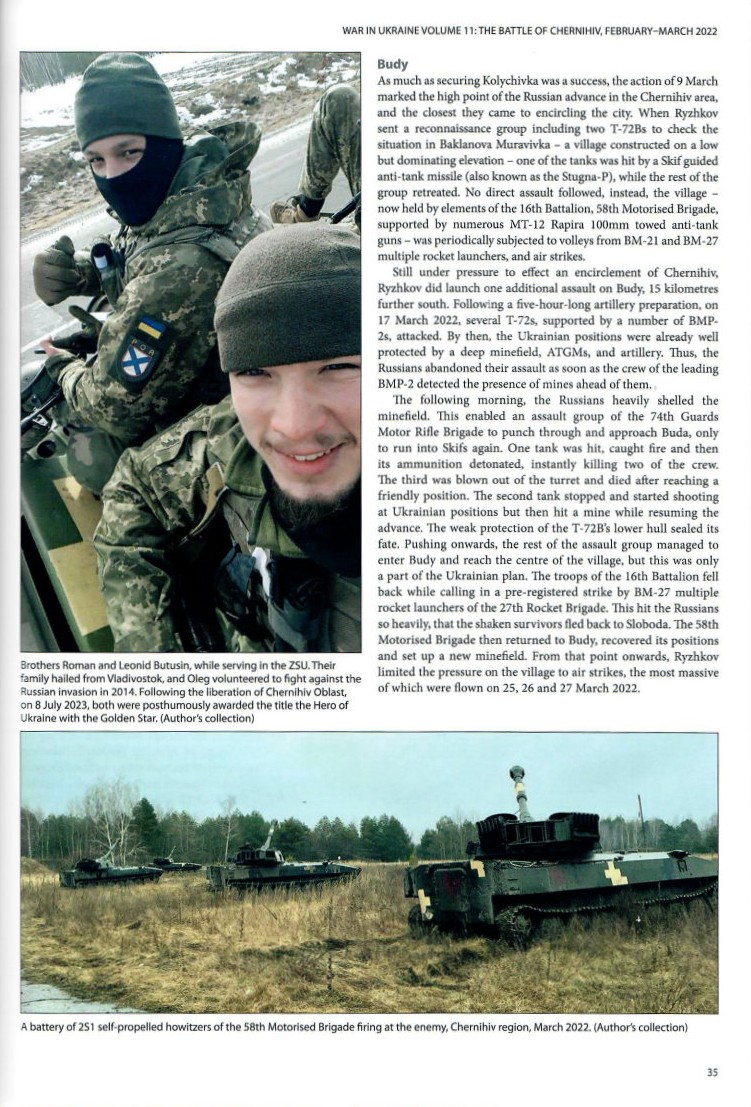
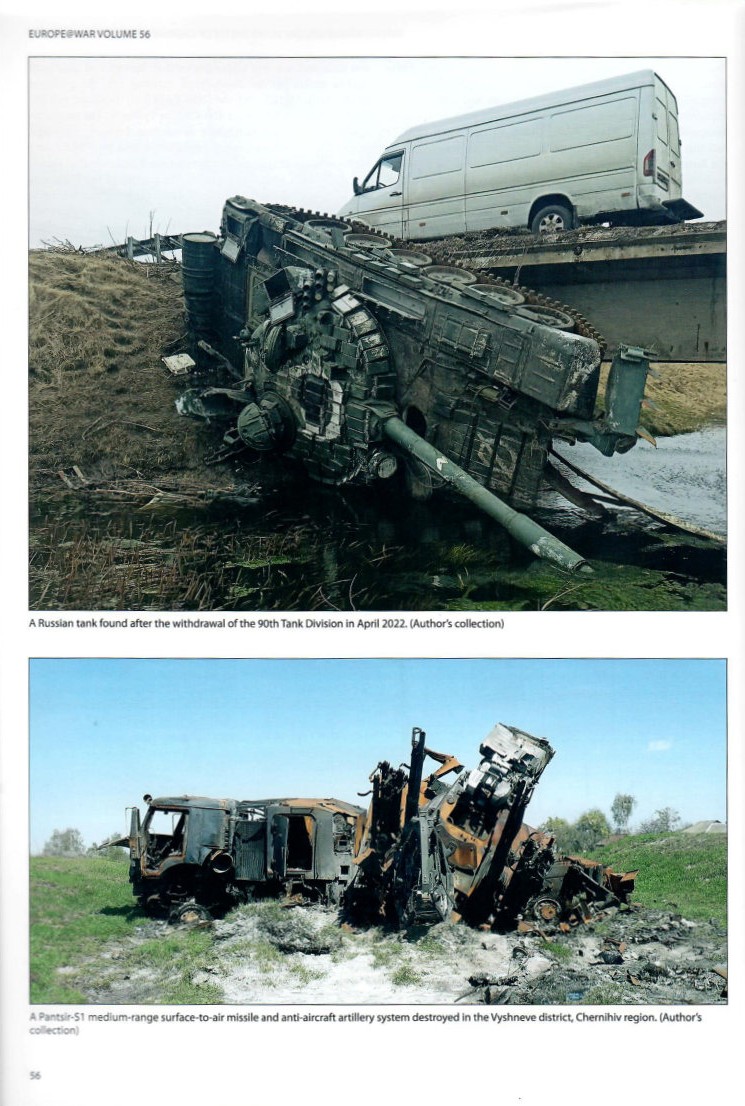
The author did a splendid job of including statements from Ukrainians involved in the fighting and several of the color photographs are his taken during and after the fighting.
Chapter 7 is aptly named “The Radioactive Vacation” as VRSF occupied the Chernobyl Nuclear Power Plant and its Exclusion Zone. The Ukrainians operating the site were in disbelief as VRSF commanders showed no regard for their soldiers who were forced to garrison the area and occupy known highly radioactive areas for over a month. Several thousand Russian troops were garrisoned and exposed to radioactive particles with no safety precautions or gear.
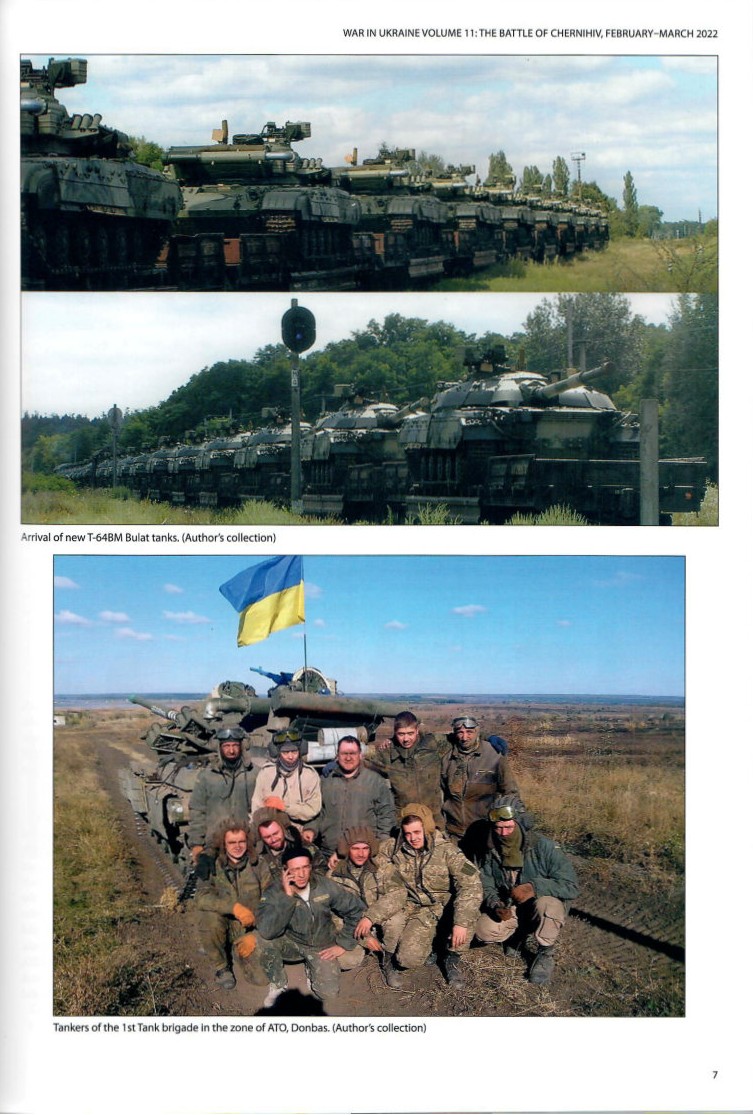
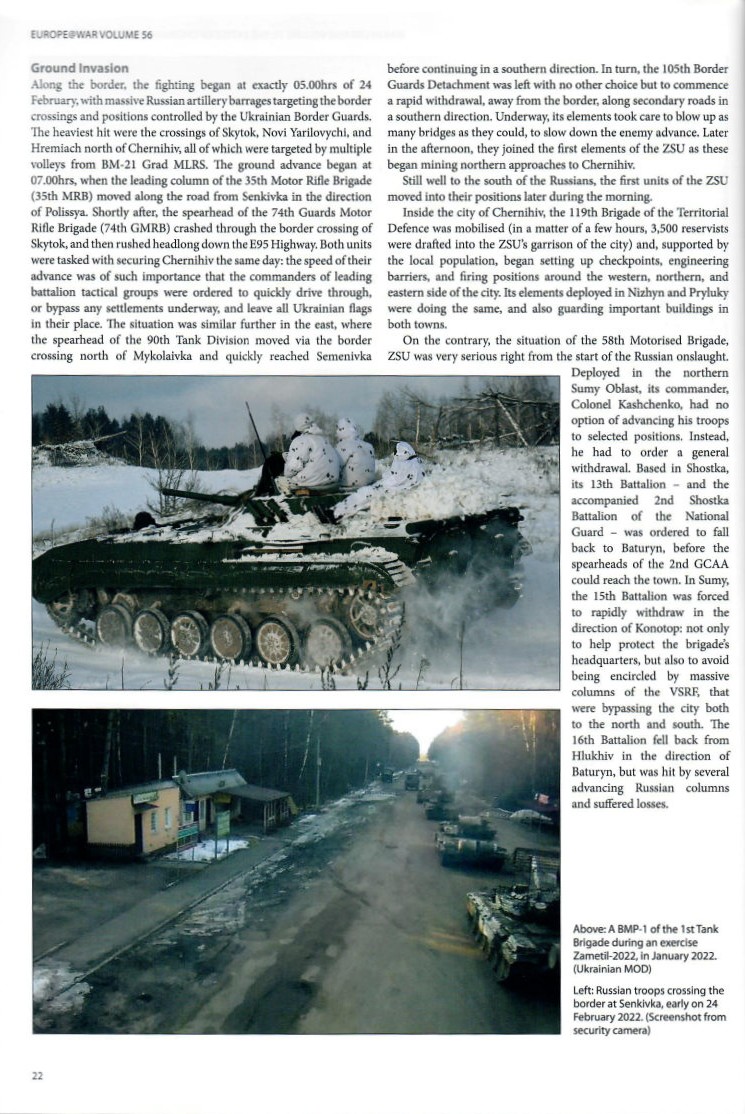
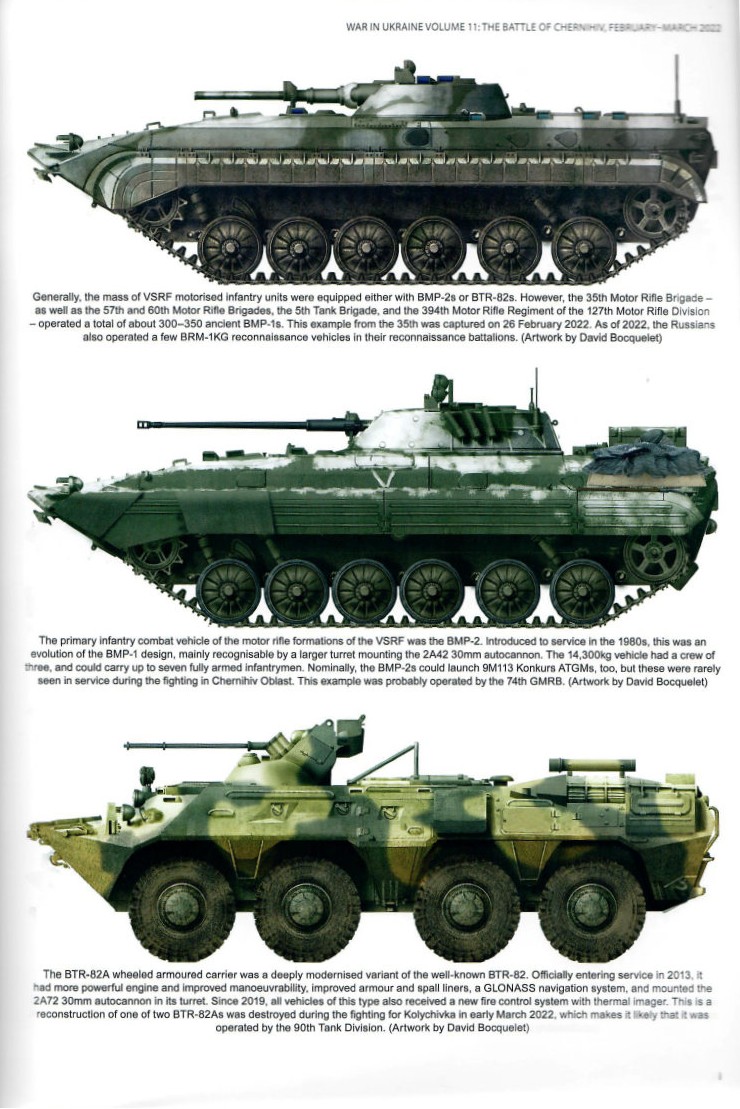
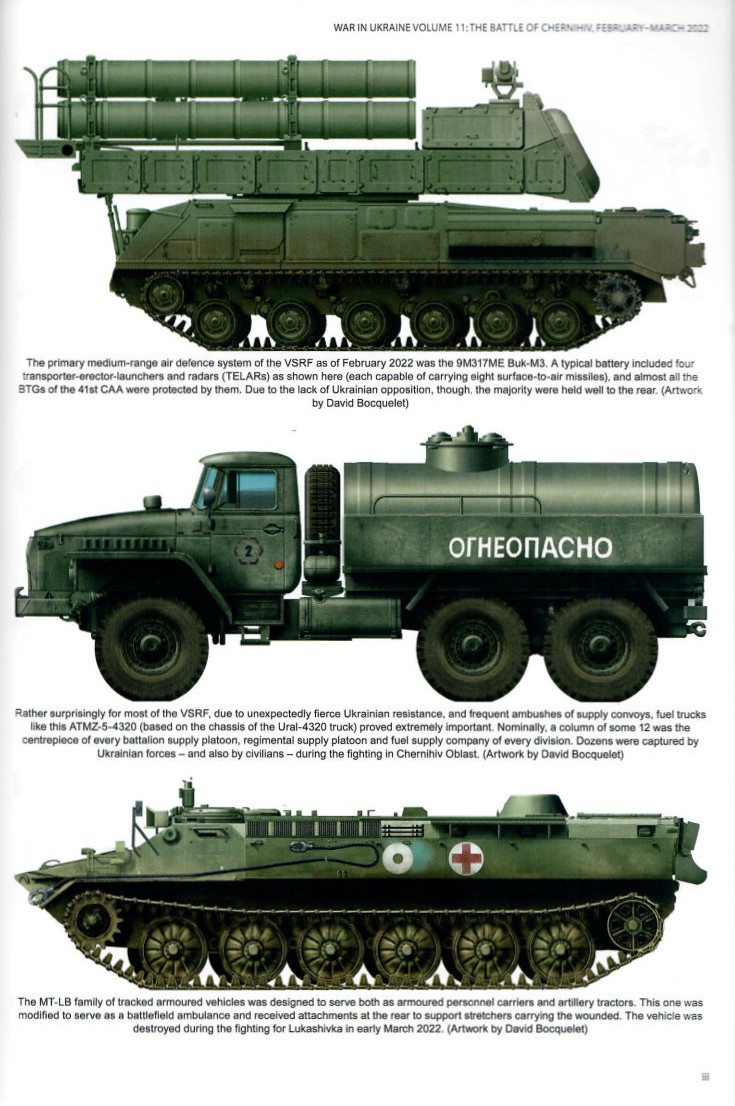
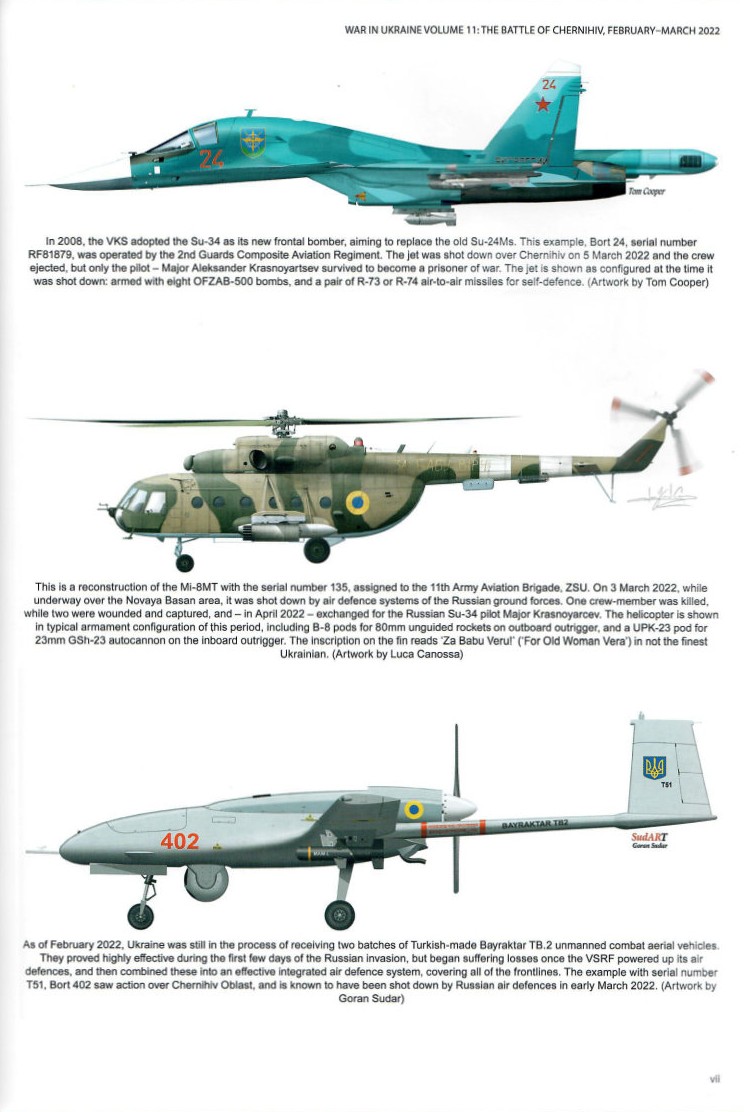
The photographs and profiles are well worth the price of the book, particularly for modelers who want to build a model, vignette or diorama of current Russian and/or Ukrainian combat vehicles and aircraft. The book is replete with both serviceable and destroyed vehicles. The battles took place during the winter of February – March 2022 and snow and non-snow, but cold, backgrounds, perfect for weathering inspiration. Ground combat vehicles include BMP-1, BMP-2, BTR-82A, T-72A and B, 9M317ME Buk-M3 (medium-range air defence system), ATMZ-5-4320 fuel truck, MT-LB, 2K22 Tunguska (self-propelled anti-aircraft defense system), T-64BV, 2S1 Gvozdika 122mm SPG, and 2S3 Akatsiya 152mm SPG. Aircraft are represented by the Su-34, Mi-8MT Hip, Turkish Bayraktar TB-2 UAV, Tu-22 Backfire, Yak-18, MiG-15, MiG-21, and L-39 Albatross.
The Ukrainians are nothing if not adaptable and innovative. Western militaries should be taking notes.
Profuse thanks to Casemate and IPMS/USA for providing the review sample.
Comments
Add new comment
This site is protected by reCAPTCHA and the Google Privacy Policy and Terms of Service apply.
Similar Reviews