
War in Ukraine - Volume 10: Ukrainian- & Western-Designed Artillery Systems, 2022-2024
From the Introduction,
In battle, the artillery has always had two roles. In defence, its purpose is to destroy the impetus of the enemy’s attacks, and in attack, its task is to destroy the enemy’s will to resist. Just that. And whether you consider the medieval wars or the Napoleonic wars or the great wars that followed them, those two tasks have remained.
– General Sir Thomas Lovett Morony, KCB, OBE, Master Gunner, St James Park (1985)
The author, Wen Jian Chung continues,
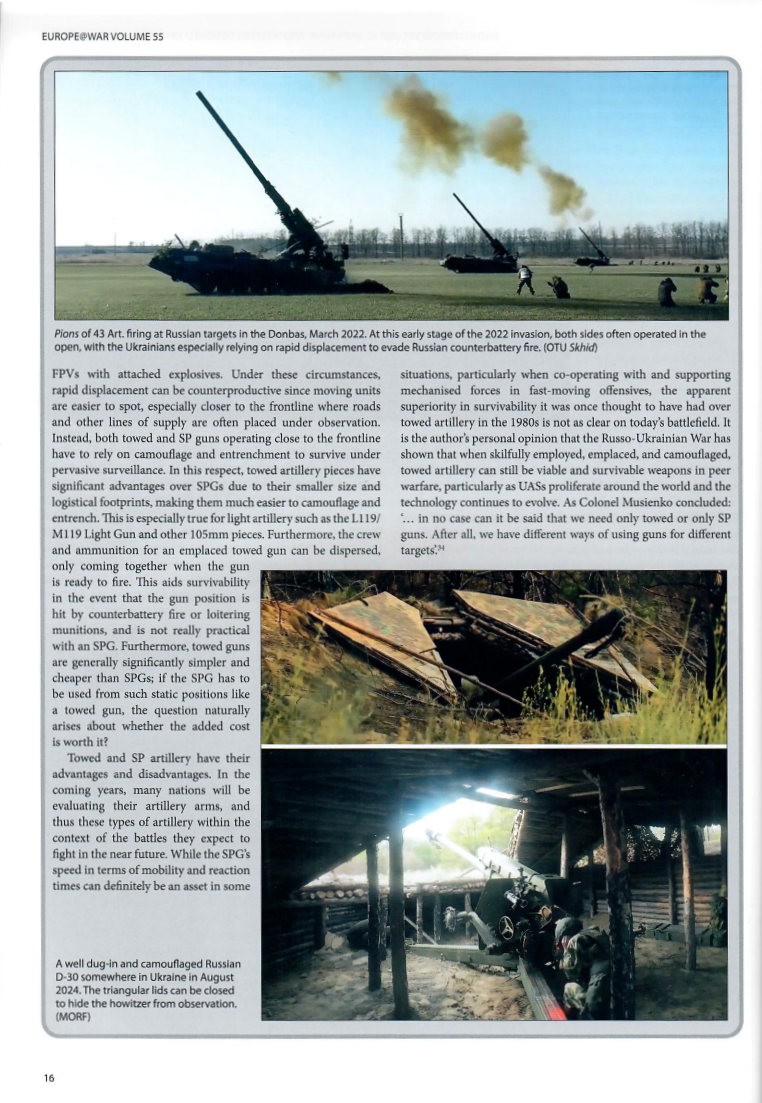
A modern army’s infantry and armour are its primary direct-fire instruments, its ‘melee’ weapons in a sense. Artillery is traditionally the army’s primary organic means for indirect fire, flinging explosives at the enemy. New weapons such as armed first-person view (FPV) drones have recently appeared to challenge the dominance of artillery in this role. However, when it comes to efficiently and reliably inflicting violence in the worst of conditions, the brutal simplicity of an artillery gun firing an explosive shell is hard to beat.
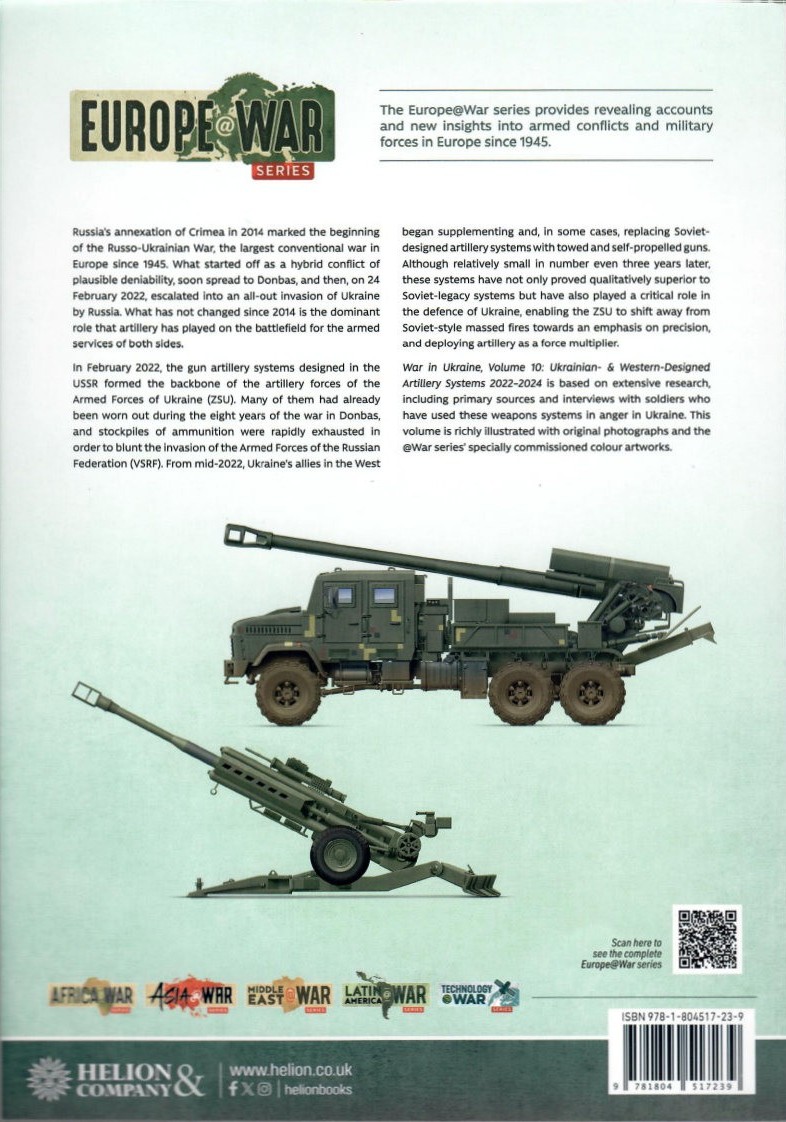
What a fantastic and compelling way to open a book! This 72-page paperback book is part of Helion & Company’s @War Series. War in Ukraine Volume 10: Ukrainian- & Western-Designed Artillery Systems, 2022-2024 (Helion No. HEL1970) is outlined in the familiar @War format with 124 color photographs, four black and white photographs, 18 color profiles, five diagrams, two tables and one color map. The book is composed of the following sections:
- Abbreviations and Acronyms
- Acknowledgements
- Notes
- Introduction
- Kings of Battle: Western Artillery Guns
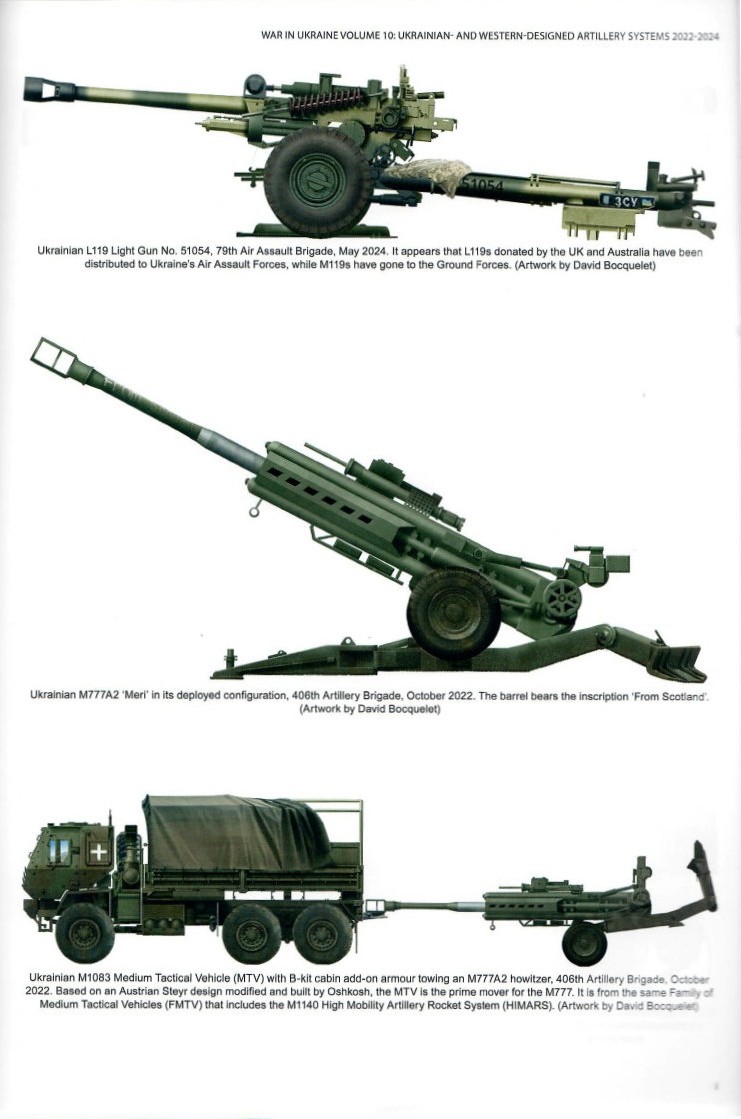
- L119 & M777: Lightweight Champions
- M109: Long-lived Paladin
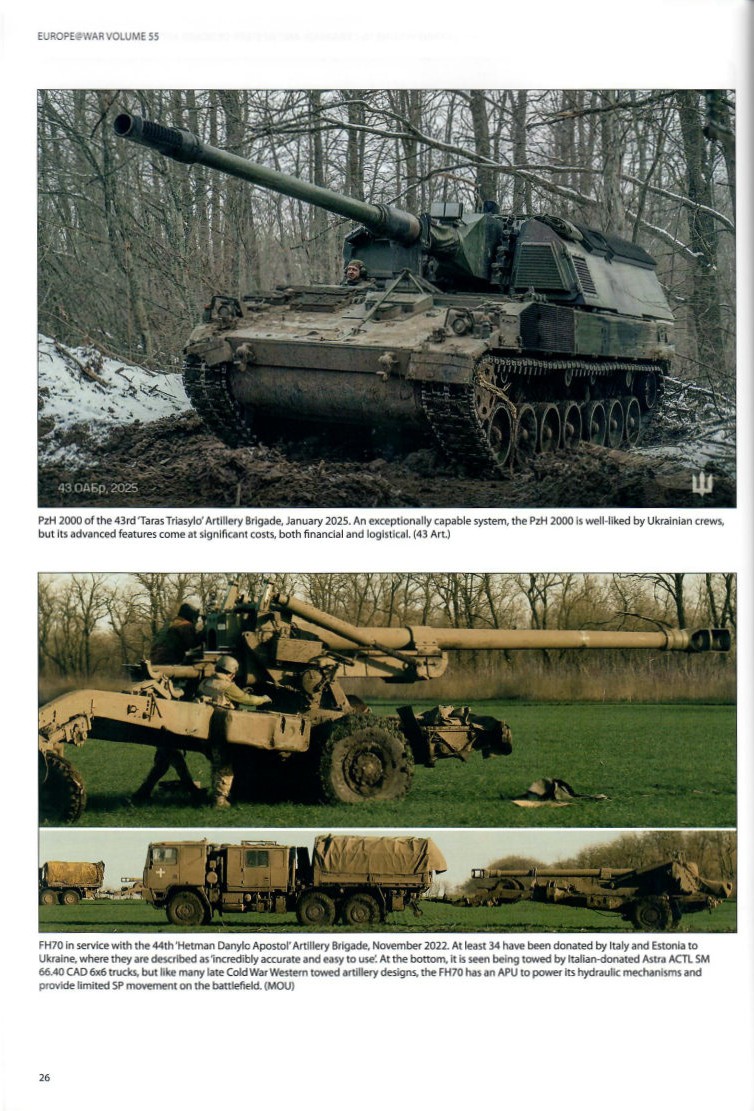
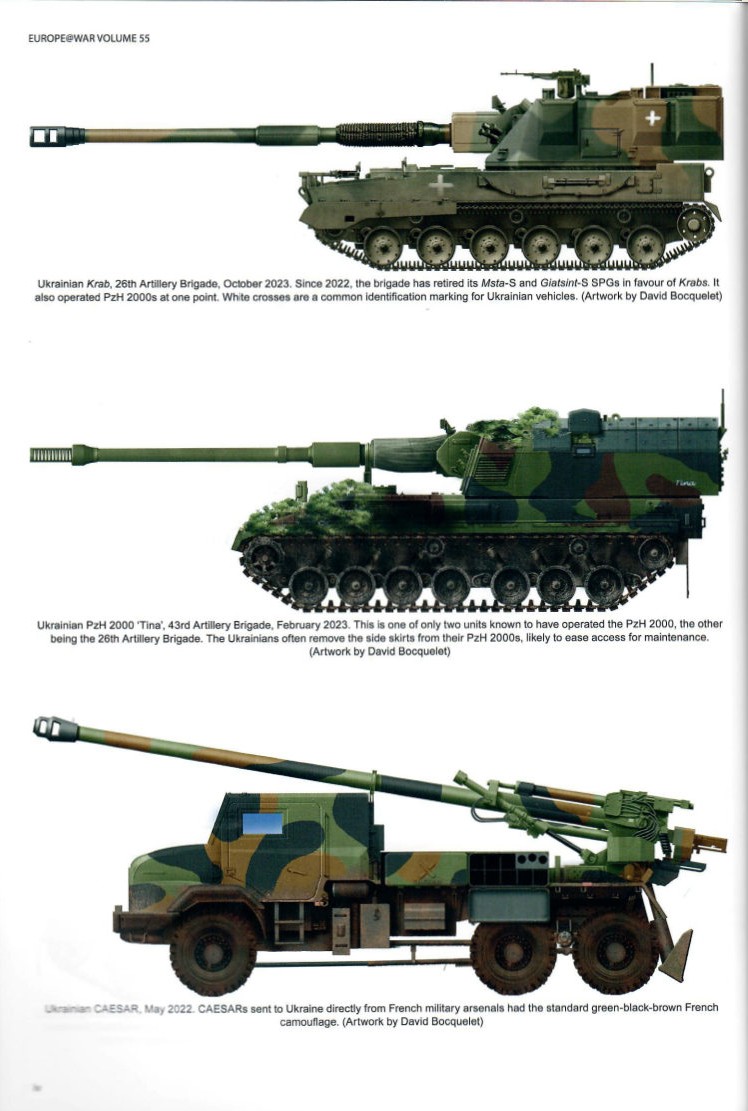
- Panzerhaubitze 2000: The Gold Standard
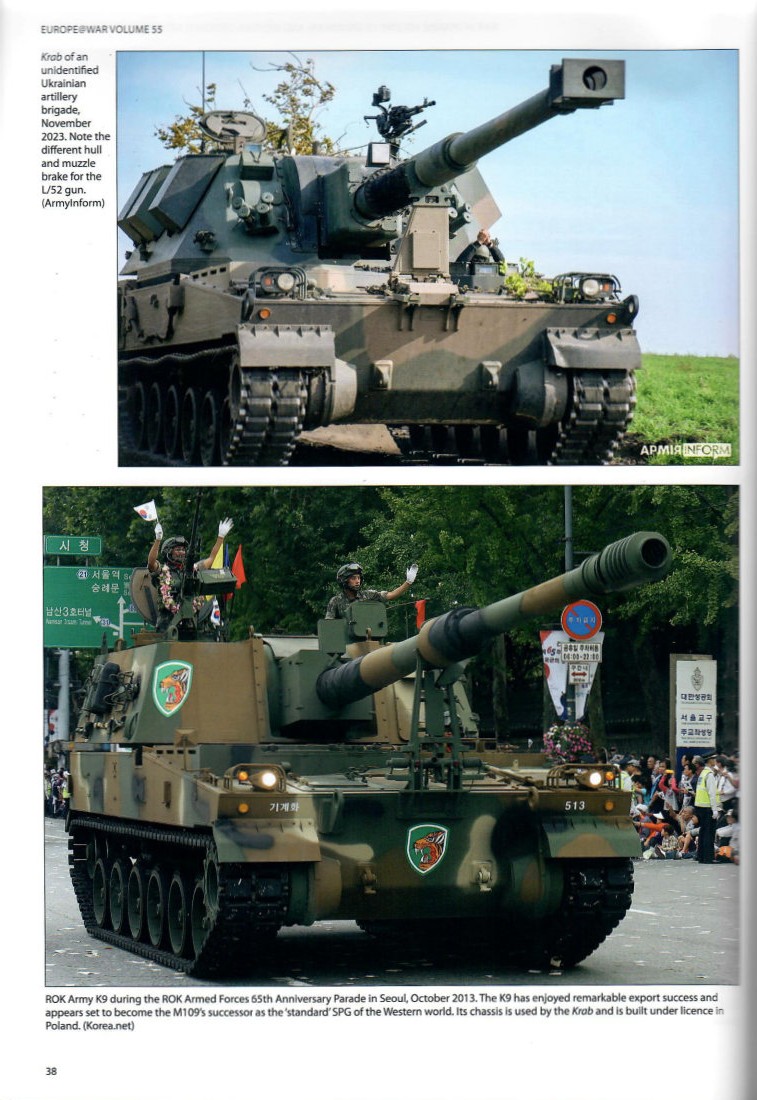
- AS90 & Krab: A Marriage of Convenience
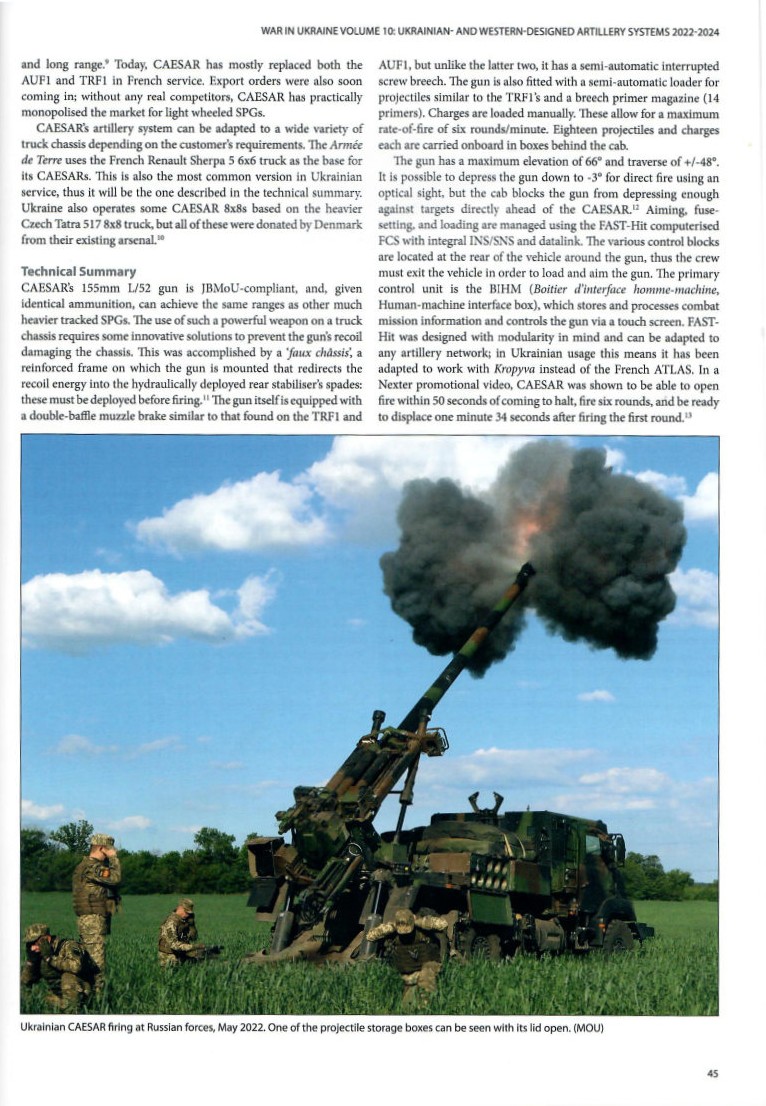
- CAESAR: Way of the Future?
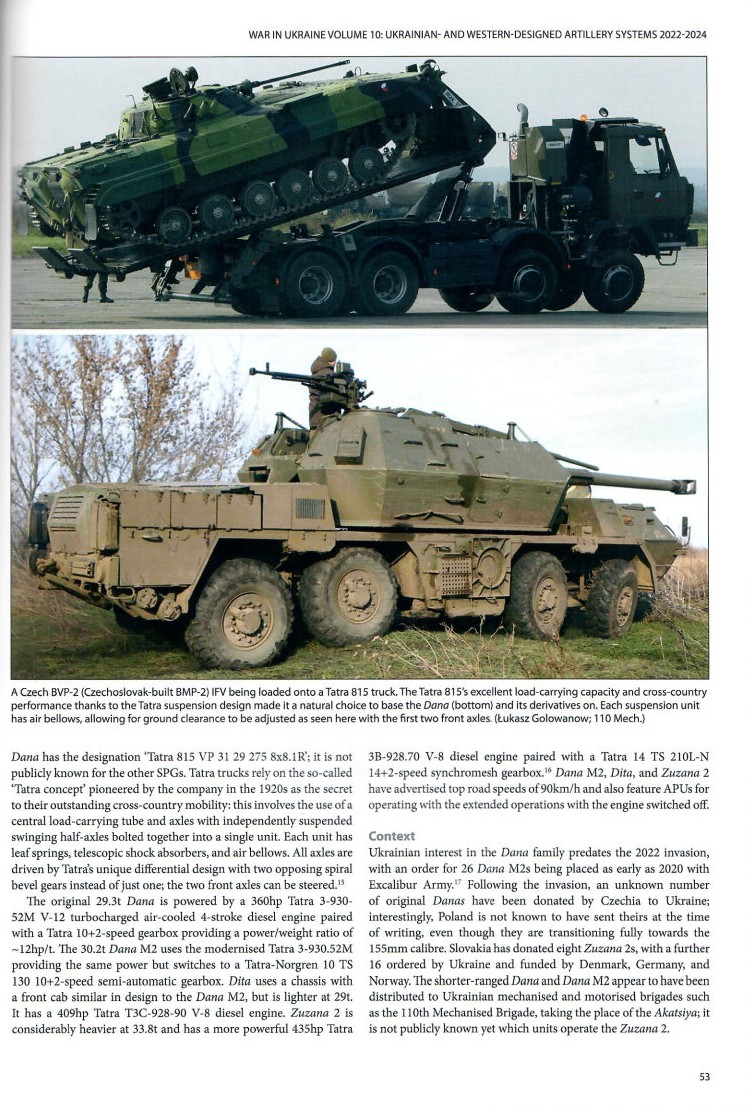
- The Dana Family: Warsaw Pact to NATO
- Appendix: Projectiles
- Selected Bibliography
- Endnotes
- About the Author
The beginning of the Russian 2022 invasion proved Ukraine’s ability to blunt the enemy’s attacks with Soviet-legacy guns. Since that time, Ukraine has continued to use its legacy systems and has also been augmented by Western towed and self-propelled guns (SPGs) as wear and tear, along with combat losses, have attrited their legacy systems. With the shift from Soviet to NATO indirect fire, so has the shift from Soviet doctrine of massed fires to more NATO-like focus on precision and as a force multiplier for its armed forces. This is the second volume of a two-book guide of major guns used in the Russo-Ukrainian War, focusing on Western systems, while the first focused on Soviet systems.
Western Cold War artillery doctrine and designs assumed that NATO would be severely outnumbered by the Soviet forces. A 1951 Combat Forces Journal article stated,
We face a contest where the edge our artillery may enjoy in professional excellence could be wholly blunted by inferiority in numbers…It is not enough for American artillery to be faster and more flexible than our enemy when…his infantry, artillery, and armor can smother us by sheer number. To answer this challenge we must develop more firepower per artilleryman.
Both sides of the Iron Curtain had their respective standards for artillery. While the Soviets preferred the 122mm and 152mm, NATO standardized their calibers at 105mm and 155mm, providing guidance for the types of charges and projectiles, as well as barrel length. Western artillery guns are measured by not only the caliber but also barrel length. Thus “the M777 howitzer is often described as a ‘155mm/L39’ howitzer, indicating that it has a bore diameter is 155mm and has a barrel length of approximately 6.1m (39 calibers, i.e. 155x39mm).”
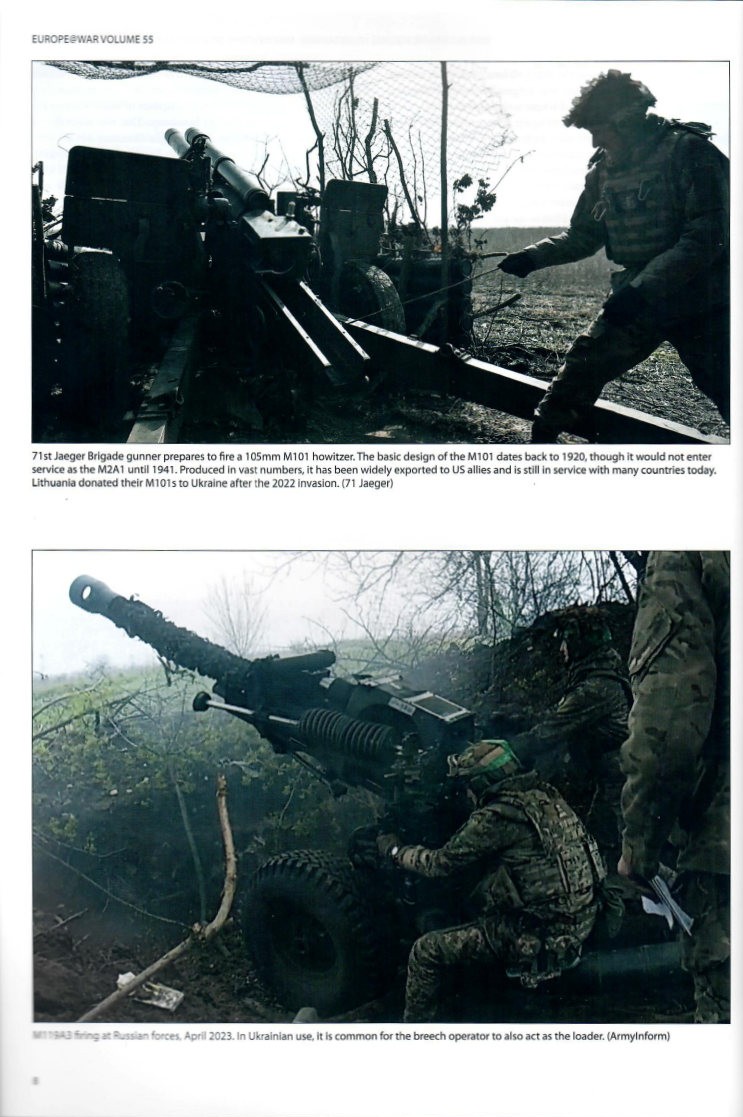
The chapters focus on a particular artillery system and is a plethora of information. In addition to the characteristics, history and performance of these various systems are Ukrainian testimonials on their performance and use in combat. For example, the Light Gun, L-119/M-119, Commonwealth and American designations, respectively, compares to the Soviet D-30 122mm.
In an interview, ‘Yaroslav’ of 79 Air Assault compared his L119 favorably with the D-30, praising its lightness and accuracy. When the interviewer brought up the lower range of the L119 compared to the D-30 (12km vs 15km), ‘Yaroslav’ did not seem to mind, stating that he preferred to ‘hit the enemy more effectively than stand further away’ and that the range difference was not really significant. He noted that the lighter 105mm shell was not as effective against tanks, but their primary targets are the more common Russian infantry attacks.
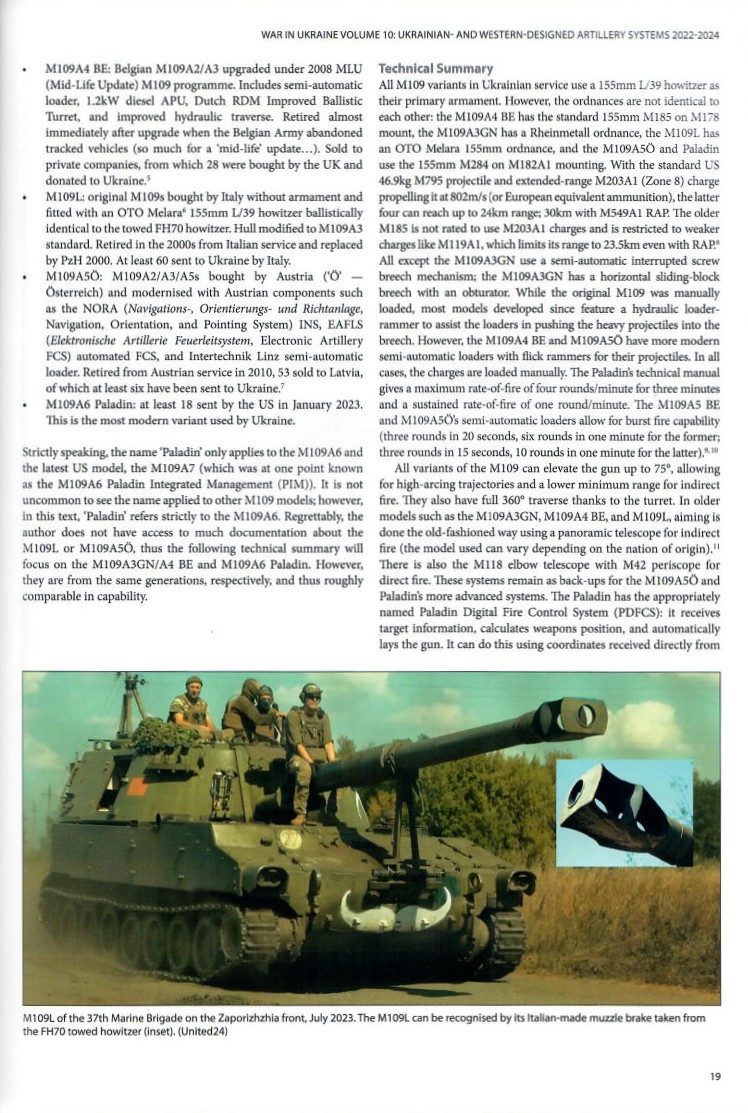
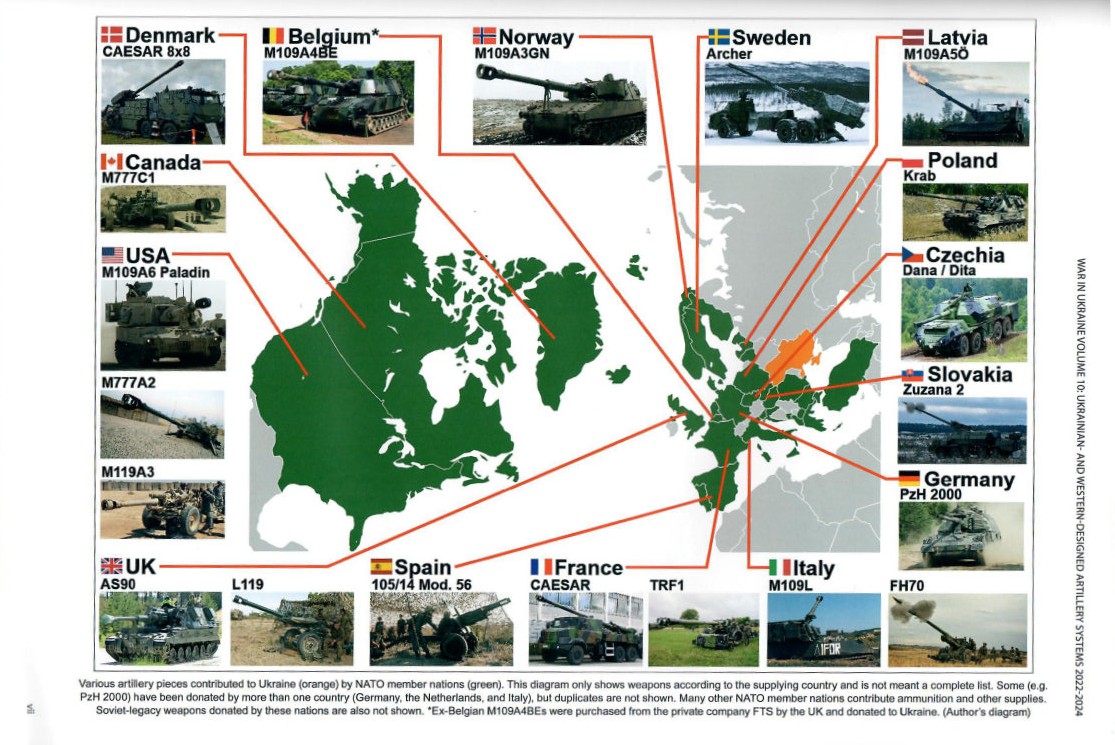
The M777 “Tripple Sevens”, or “Tri Sokiri” (‘Triple Axes’ – ‘7’ looks like an ax) as the Ukrainians refer to them, the M109 SPG (including M109A3GN, German M109Gs sold to Norway; М109А5Ö from Austria; and M109A6 Paladins from the US), German Panzerhaubitze 2000 SPG, British AS90 SPG, Polish Krab SPG (“Polonising” AS90 turrets with South Korean K9 chassis), French wheeled CAESAR (Camion Équipé d'un Système d'Artillerie, or "Truck equipped with an artillery system" in English), former Czechoslovakia DANA (both Czechia and Slovakia produce variants of this wheeled artillery system), and Swedish Archer wheeled SPG are covered in great detail, resplendent with detailed color photographs.
This book excels in its photographs and modelers are well rewarded in purchasing this book for modern Western artillery systems being used currently in Ukraine. From the light towed artillery to modern tracked and wheeled SPGs, ideas and inspiration for unique models, vignettes, and dioramas are resplendent. This is an incredible, easy-to-read and comprehend book. The author does a fantastic job of showing how Western allies assisted Ukraine in its artillery fight against the Russian invaders. While many countries believed in the peace dividend brought around by the end of the Cold War, Ukraine has shown the incredible need for artillery on the modern battlefield. Their adaptation of Western artillery systems into their fight is impressive and offers plenty of lessons learned on how to employ artillery with its various ranges, uses, pros and cons. The Ukrainians are nothing if not adaptable and innovative. Western observers should be taking notes as the King of Battle still reigns.
Slava Ukraini!
Profuse thanks to Casemate and IPMS/USA for providing the review sample.


Comments
Add new comment
This site is protected by reCAPTCHA and the Google Privacy Policy and Terms of Service apply.
Similar Reviews