
Tanks on the Battlefield: T-34
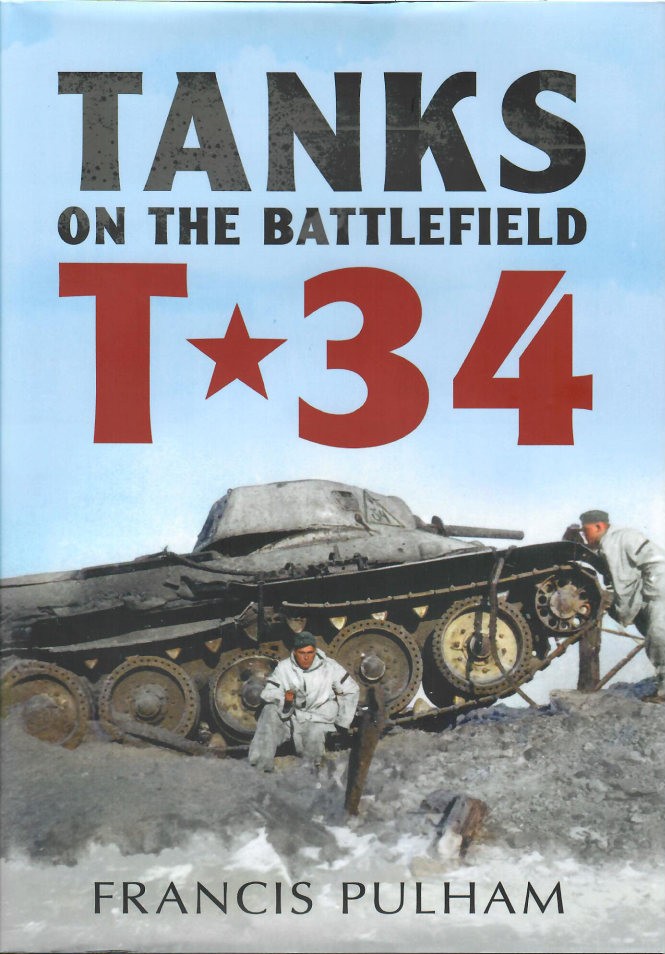
The Soviet T-34 tank is omnipresent with WWII armor. When the German blitzkrieg erupted across Soviet territory, two tanks stunned the Germans, with the primary being the T-34. Its design was robust, armor effective and carried a main gun that could hold its own. Superior German tactics and neophyte Soviet doctrine and training still prevailed, but tank warfare was forever changed in those early encounters. The T-34 gained a fearsome reputation and captured examples were soon put in use against their former owners.
The author, Francis Pulham, continues with his Introduction,
To fully comprehend the T-34’s design and development would warrant a far more detailed study, something that this author has, humbly, attempted in a previous publication: T-34 Shock – The Soviet Legend in Pictures. This book aims to expand the vast and detailed library of photographs of this fearsome war machine, not so much to act as a supplement to previous works, but to establish a new series of picture-based works on the war on the Eastern Front and beyond. This publication aims to display some of the best images of the T-34 ever captured in wartime through the camera lens of its most ubiquitous enemy: the German soldier.
This amazing 208-page hardback book has 282 black and white photographs, and is composed of the following sections:
- Acknowledgments
- Introduction
- Part I: Design and Production
- The T-34’s Design
- Pre-war Serial Production
- Wartime Production
- T-34-85 Design and Production
- Part II: T-34 Gallery
- Part III: T-34-85 Gallery
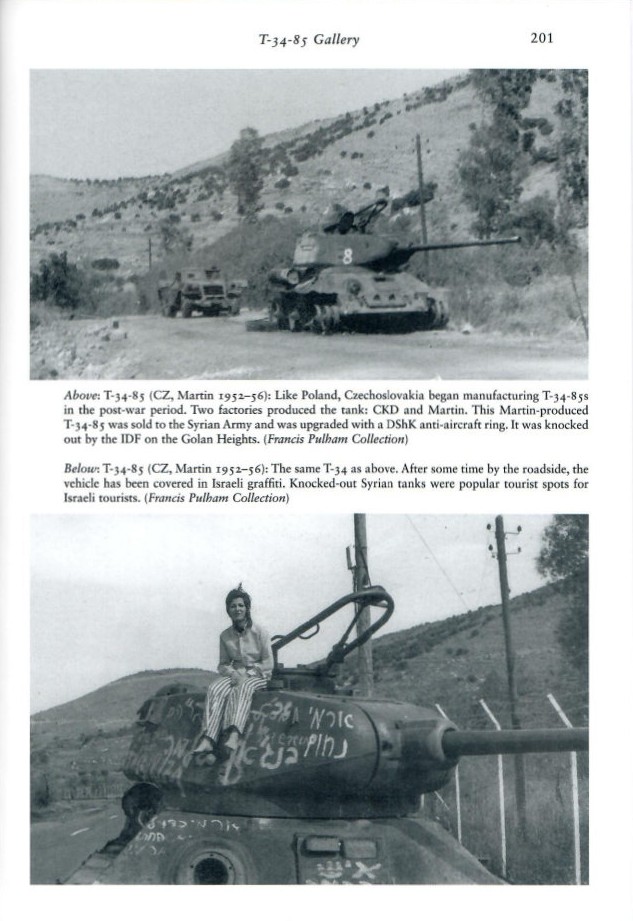
The author does a mind-boggling deep dive into each of the manufacturing factories and their models’ differences. The author mentions the difficulty in researching differences as Soviet records use the naming convention ‘T-34’ for all armed with a 76.2mm gun. Wartime production of the T-34 (76.2mm) is well detailed for the six factories that produced the tank: The Kharkov Locomotive and Tractor Factory (KhPZ); Stalingrad Tractor Factory (STZ); Factory No. 112 Krasnoye Sormovo; Ural Tank Factory No. 183 (UTZ); Chelyabinsk Tractor Factory (ChKZ); the Ural Heavy Machinery Factory (UZTM); and Factory No. 174 Omsk. The T-34-85 production was largely standardized as the Soviets were in a much better position in late 1943. The factories producing the T-34-85 included: Factory 112 Krasnoye Sormovo; Ural Tank Factory No. 183 (UTZ); Factory No. 174 Omsk; and postwar production in Czechoslovakia (CKD in Sokolovo and Martin Factory in modern day Slovakia) and Poland (Bumar Factory in Labedy). The Czech and Polish models were largely used in post-World War II conflicts while the Soviet factories focused on the T-44, briefly, and the T-54/55 tanks for their own use.
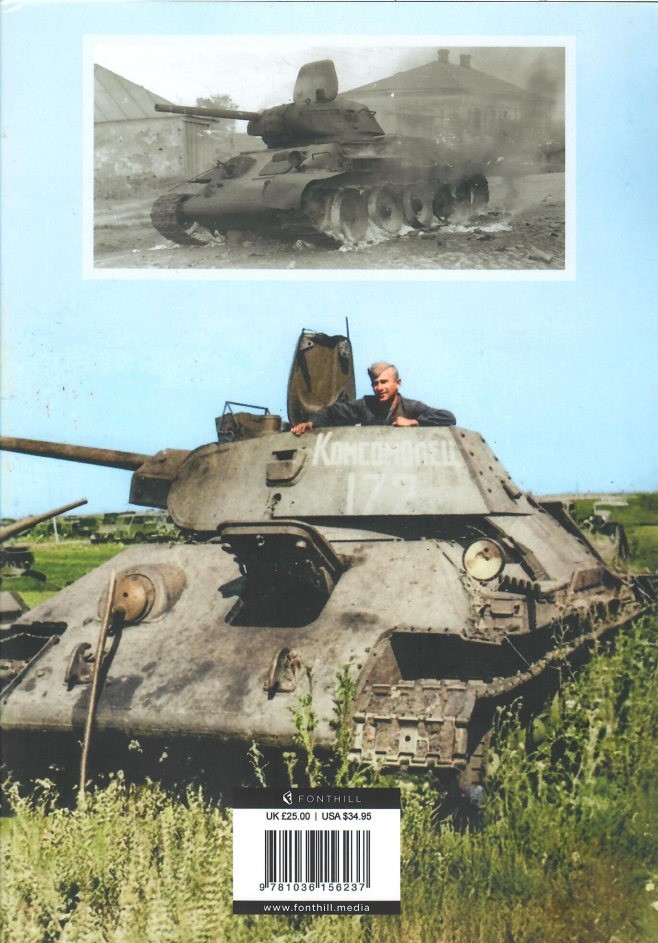
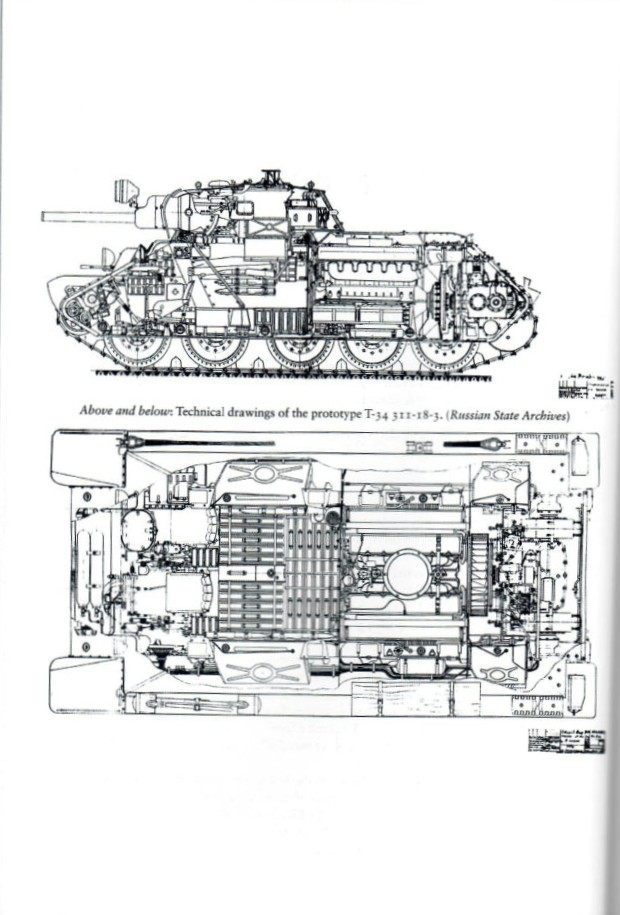
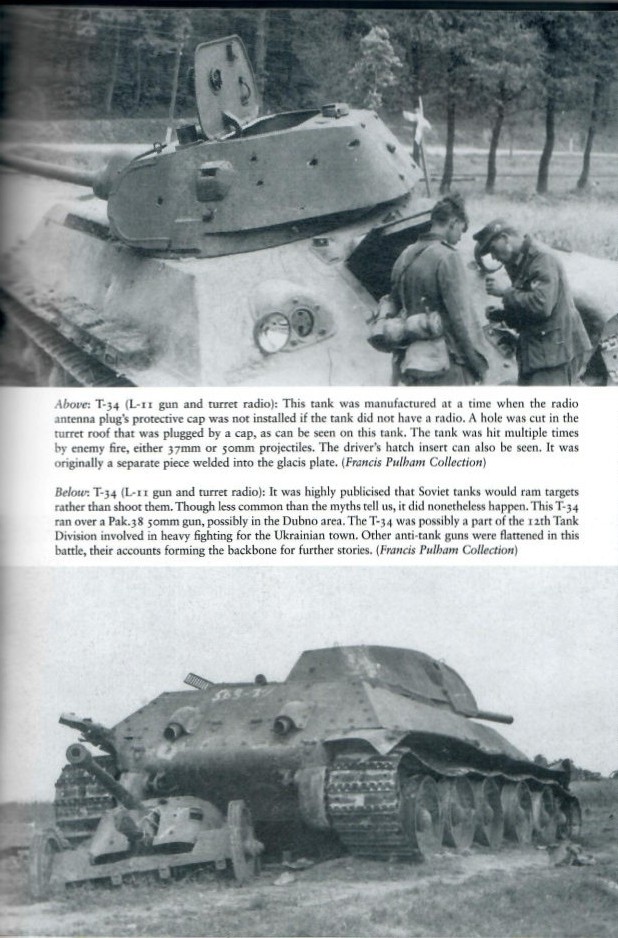
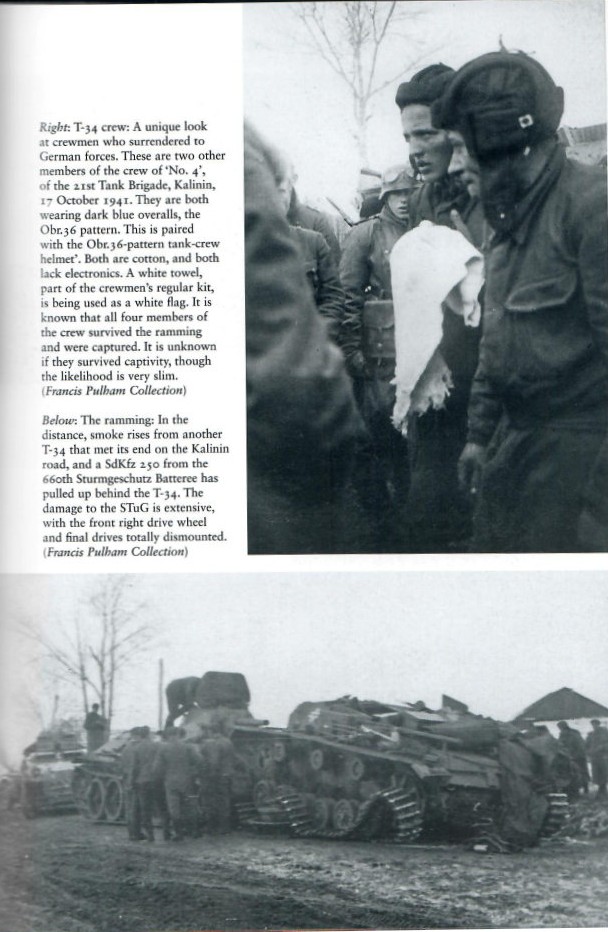
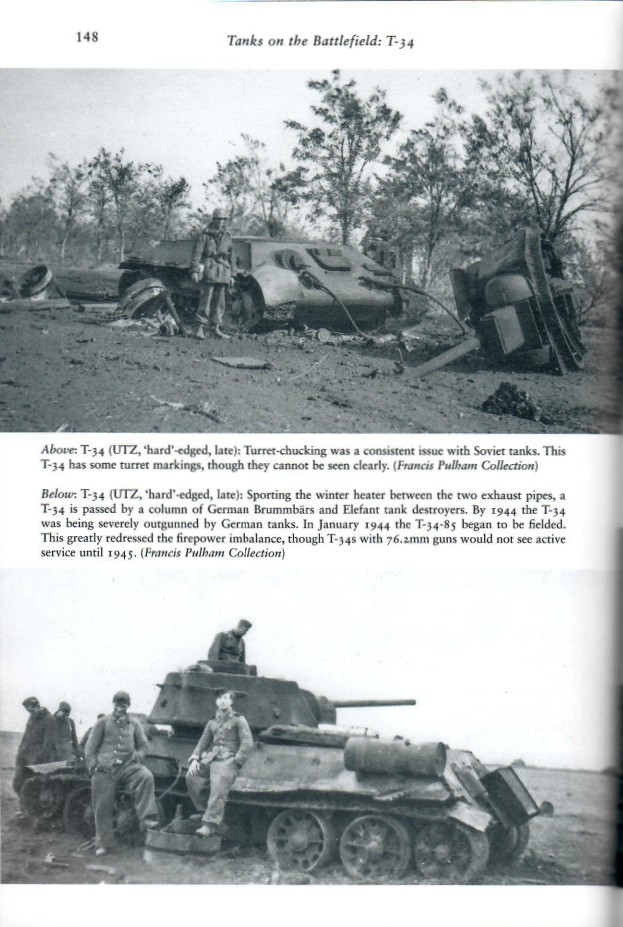
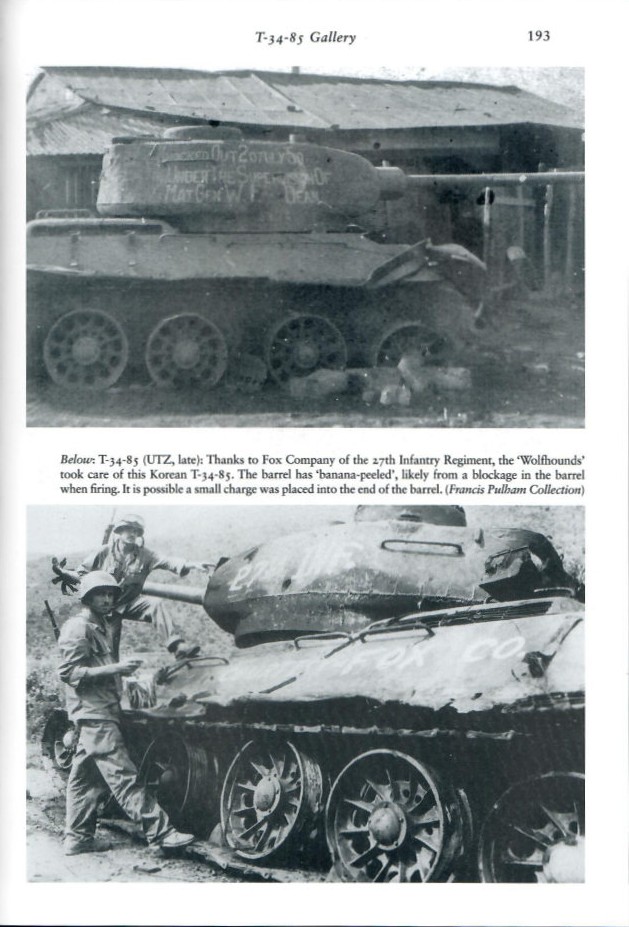
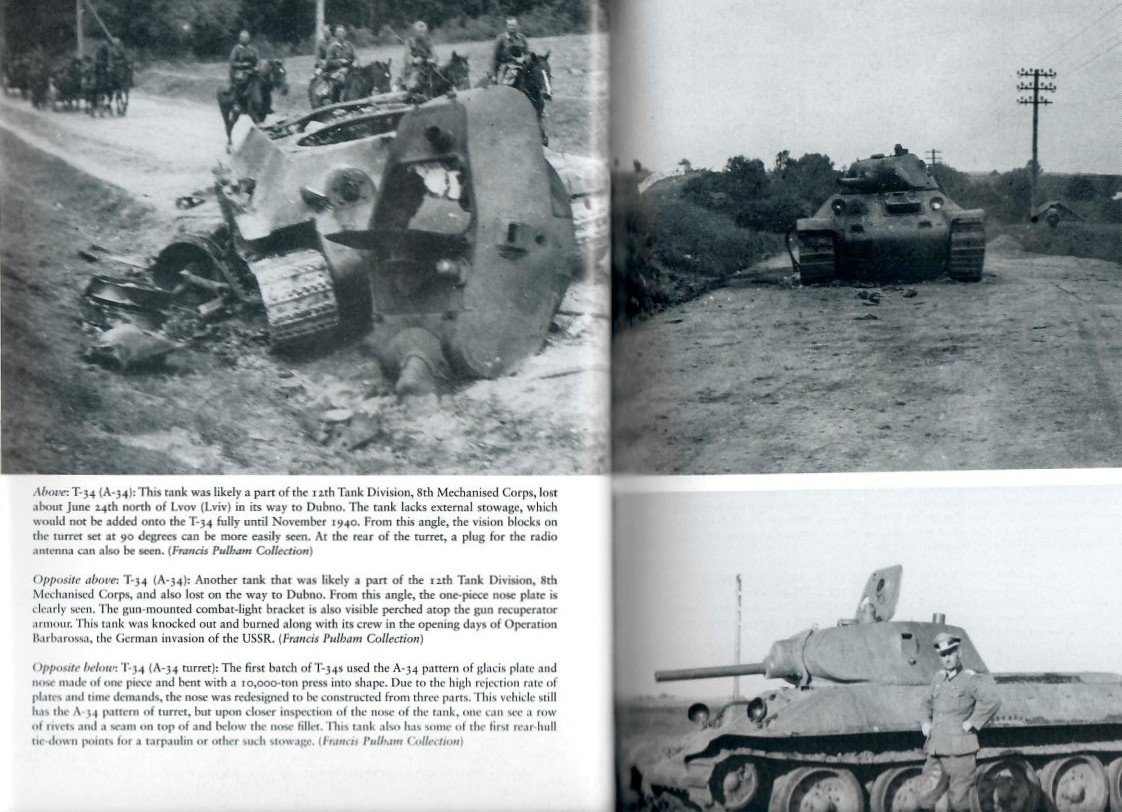
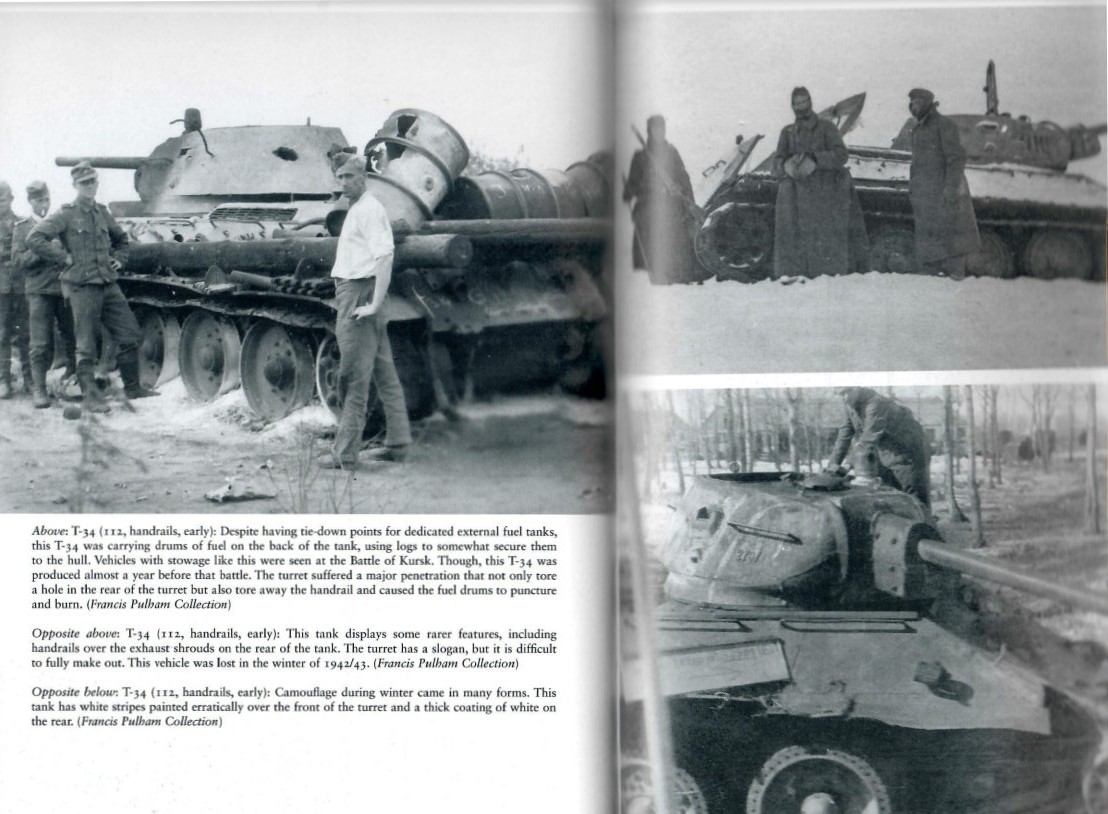
The photographs are worth the price of the book alone and the author’s extensive collection is simply amazing. We are fortunate that he has shared these photographs as they show a lot of detail, even with the quality of photographs from that time period. The captions point out the details and there are numerous gems included. For example, the Soviet prevalence for catastrophic ammunition detonations resulting in turrets being blown are called “turret-chucking” and “turret-flinging” and are today referred to as “lollipopping”. The interior colors are called out in an exploded hull and engine photos on page 140 “Internally, T-34s were painted dark grey, with yellow fuel tanks and cream-coloured fighting compartments with black floors.” Another example is that a T-34 took eight seconds from penetrating hit to being engulfed in fire, giving a stark analysis to how long a crew had to evacuate their struck tank (he mentioned it took him nine seconds to get out of the driver’s position).
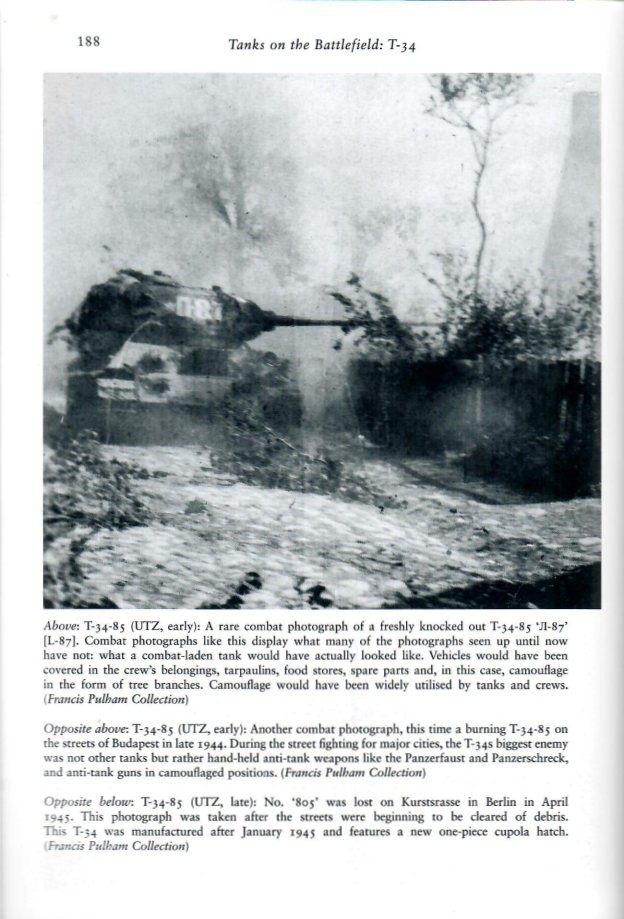
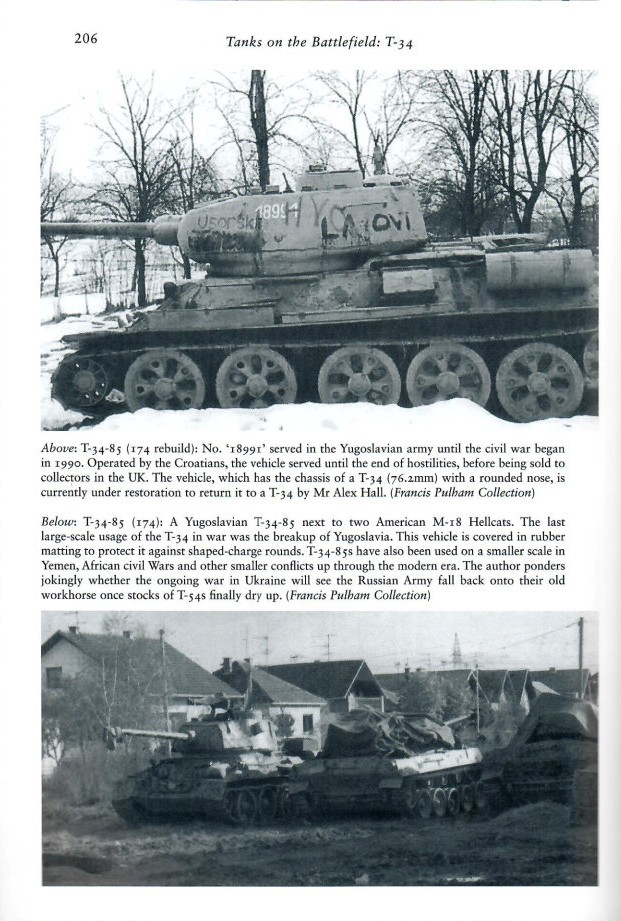
A vast majority of the photos show 150 pages of the T-34, while 31 pages show T-34-85s. That is explainable as the T-34-85 made its presence in early 1944, and most of the photos in the book are from German soldiers’ cameras; by 1944, Germany was fighting for its survival and soldiers had little time to photograph destroyed T-34s during their defensive struggles. The photos of post-World War II are also interesting as the photographers now are American, Israeli and Former Republic of Yugoslavians.
This book is essential to any modeler wishing to build a T-34 in its many guises. A modeler, particularly of the Eastern Front, would be hard pressed to not be inspired by the photos of the T-34 in its environment. The details on tracks, fuel drums, armament, hull and turret differences, road wheels, and attachments are dizzying. There are numerous examples of tanks with mismatched features that would be interesting to model and accompany photos to defend, “a T-34 never looked like that!”. Vignettes and dioramas abound throughout this book, and it will become an essential reference for anyone building a T-34.
T-34s (76.2mm) were built through 1945 and accompanied the newer T-34-85s in the final battles of the Eastern Front. These tanks are still serving around the world (the author jokes that Russia might start sending them to Ukraine to replace the T-55 losses) and can be seen in many different guises. This book will help identify the factory and its details. Having seen T-34s in Bosnia in 1996 (and Eastern European armories in the late 1990s), it is not hard to get excited about them. While they can’t stand up to modern main battle tanks (author makes that clear when T-34-85s came across American M26s in Korea), they do well against forces without tanks. Thanks to this book I have to find a copy of T-34 Shock – The Soviet Legend in Pictures to further my education into the amazing T-34 tank.
Profuse thanks to Casemate and IPMS/USA for providing the review sample.
Comments
Add new comment
This site is protected by reCAPTCHA and the Google Privacy Policy and Terms of Service apply.
Similar Reviews