
TankCraft 46, Panther Medium Tank, German Army, Waffen-SS and Luftwaffe Units, Eastern Front, 1944
Reviewer’s Comments:
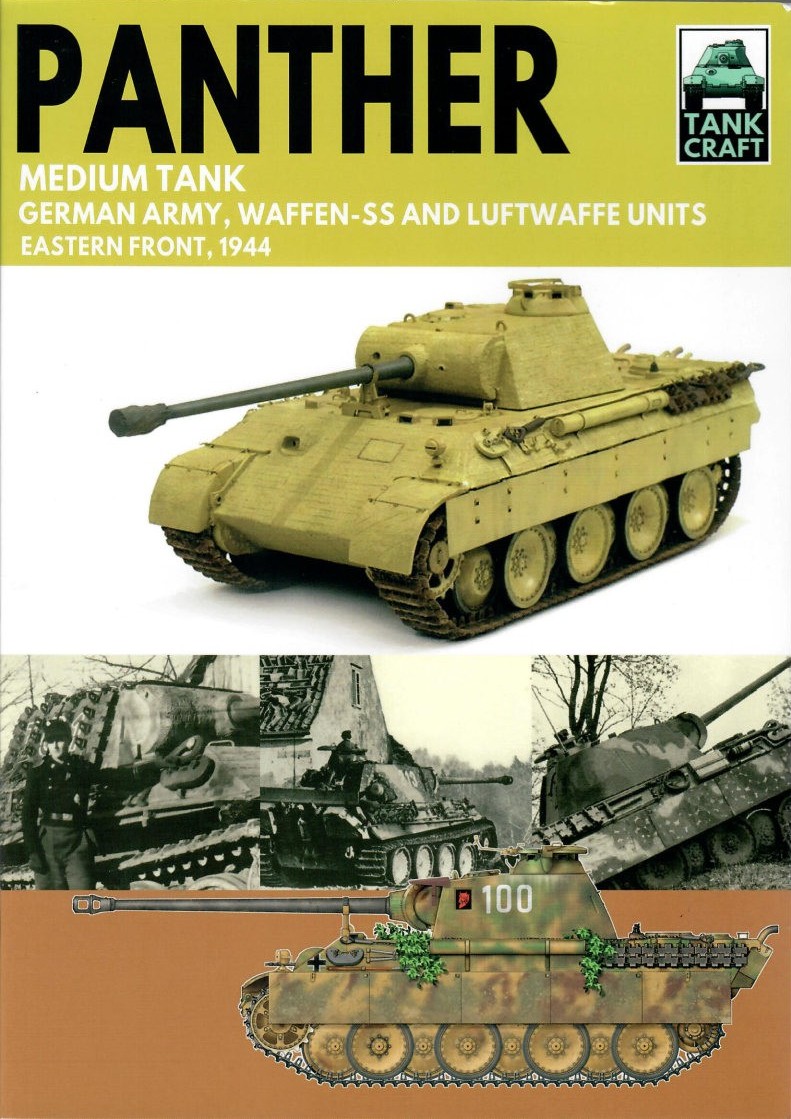
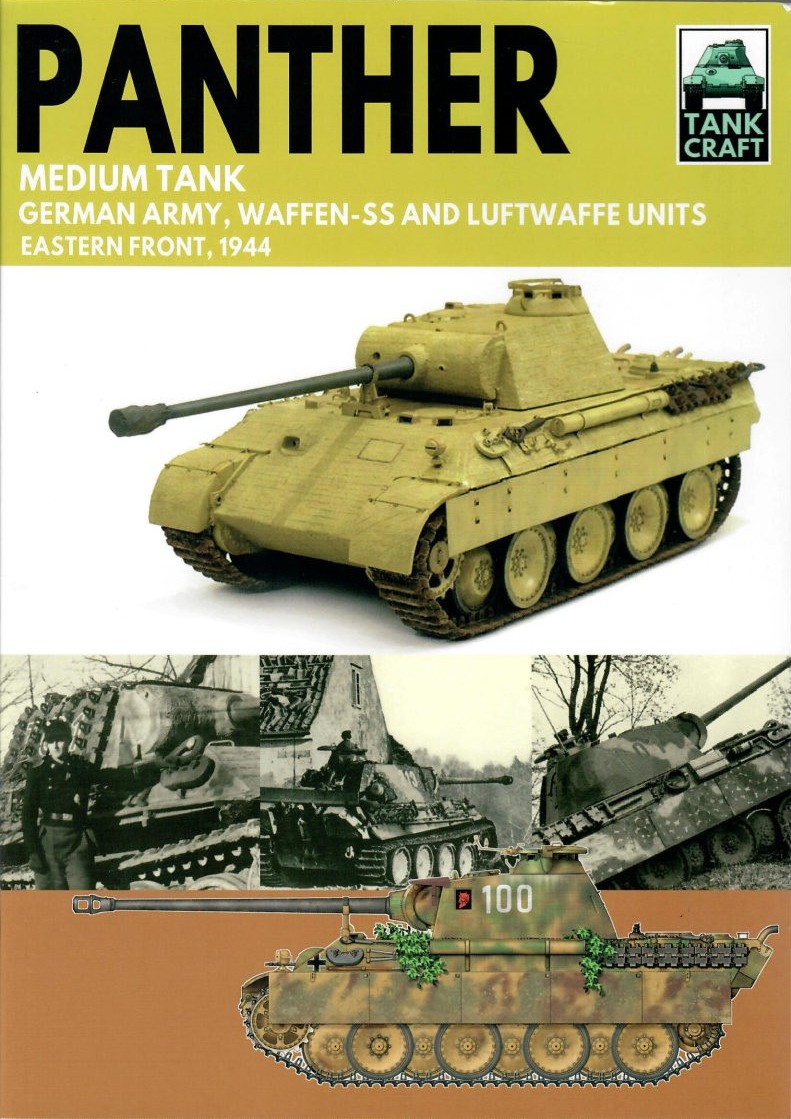
TankCraft 46, Panther Medium Tank, German Army, Waffen-SS and Luftwaffe Units, Eastern Front, 1944 details the Panther tank, officially the Panzerkampfwagen V Panther (Pz. Kpfw. V, Sd. Kfz. (Sonderkraftfahrzeug) 171, during the largely defensive battles on the Eastern Front during 1944. As the author states in the Introduction,
“At the beginning of 1944, the German armies in the East had lost much of the territory that they had overrun in the spectacular advances of 1941 and 1942. In the north, Leningrad was still surrounded but was being resupplied, and the city was no longer under any serious threat. Most of modern-day Ukraine east of the Dnipro River was now in Soviet hands and in the south the Red Army had occupied the Perekop Isthmus, cutting off Generaloberst Erwin Janecke’s 17. Armee in Crimea.
The offensive operations of July 1943 had exhausted many of the Wehrmacht’s best divisions and for the foreseeable future the Germans would be forced to rely on a strategy of holding the front with static infantry formations and closing any gaps with the highly mobile Panzer and Panzergrenadier units.
To strengthen these formations, it was proposed that the majority of Panzer regiments serving in the East would receive a battalion of the new Pzkpfw V Panther tanks which had made their combat debut during Operation Zitadelle and as early as September 1943 orders for the uniform reorganization of the Panzer divisions were issued that stipulated that the first battalion of each Panzer regiment would be equipped with Panthers organized into four companies.”
This book focuses on the Panthers on the Eastern Front in 1944, which is fantastic as it complements already seven published books by the Panthers: TankCraft 3 -Germany Army and Waffen-SS, Normandy Campaign 1944; TankCraft 18 - German Army and Waffen-SS, Defense of the West, 1945; TankCraft 24 - Panther Tanks - German Army Panzer Brigades: Western and Eastern Fronts, 1944-1945; TankCraft 32 - IV. SS-Panzerkorps Eastern Front, 1944; TankCraft – 34 German Army and Waffen-SS Eastern Front Summer, 1943; TankCraft 38 - Italian Front, 1944–1945. With one more Panther book (TankCraft 49- German Army and Waffen-SS Units - Berlin, 1945) in the pipeline, this series is essential to any modeler wanting to model a specific Panther unit or tank.
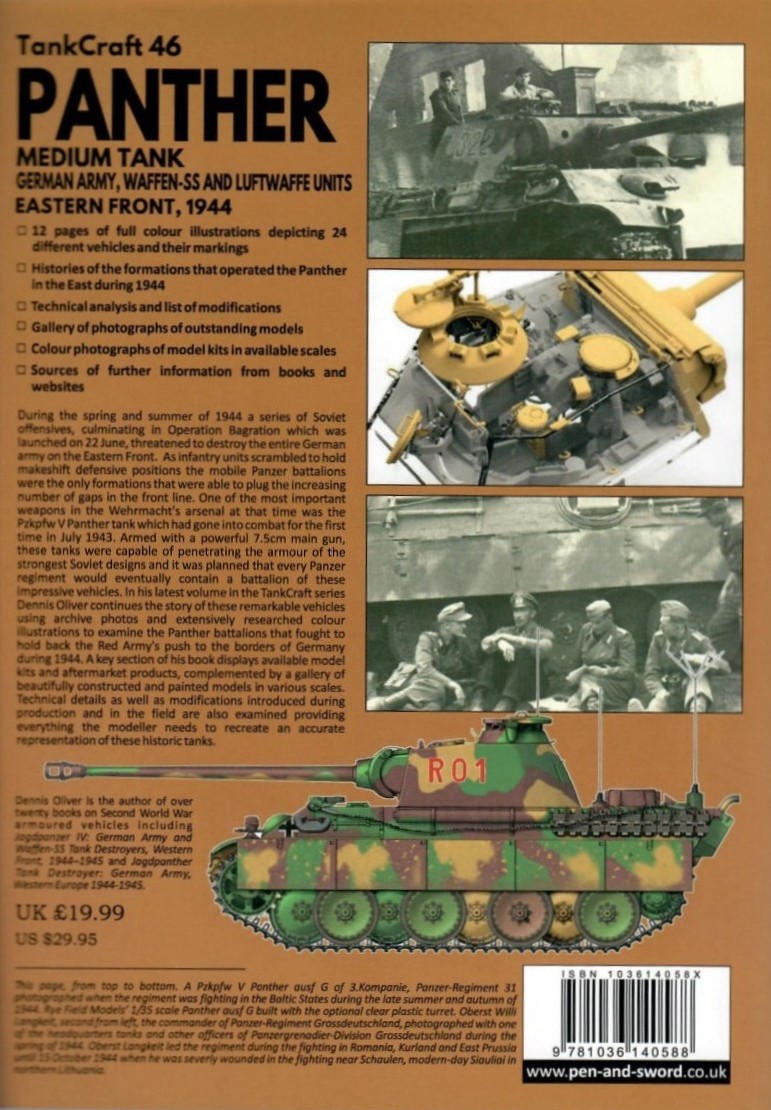
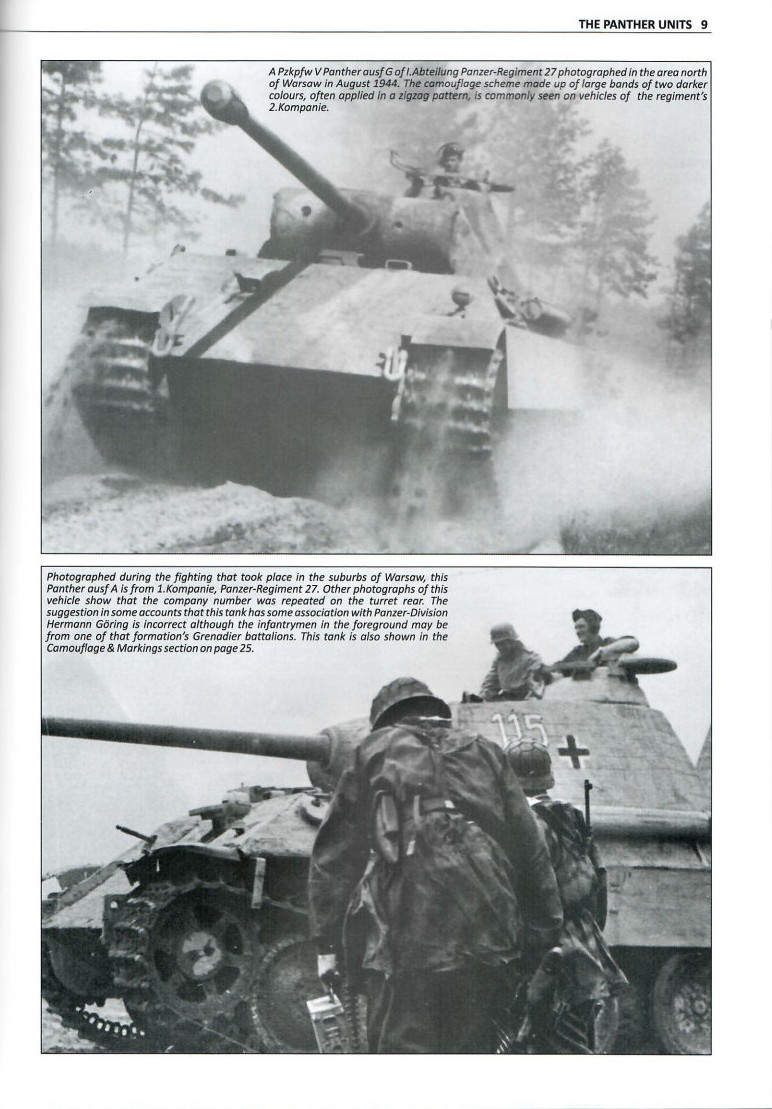
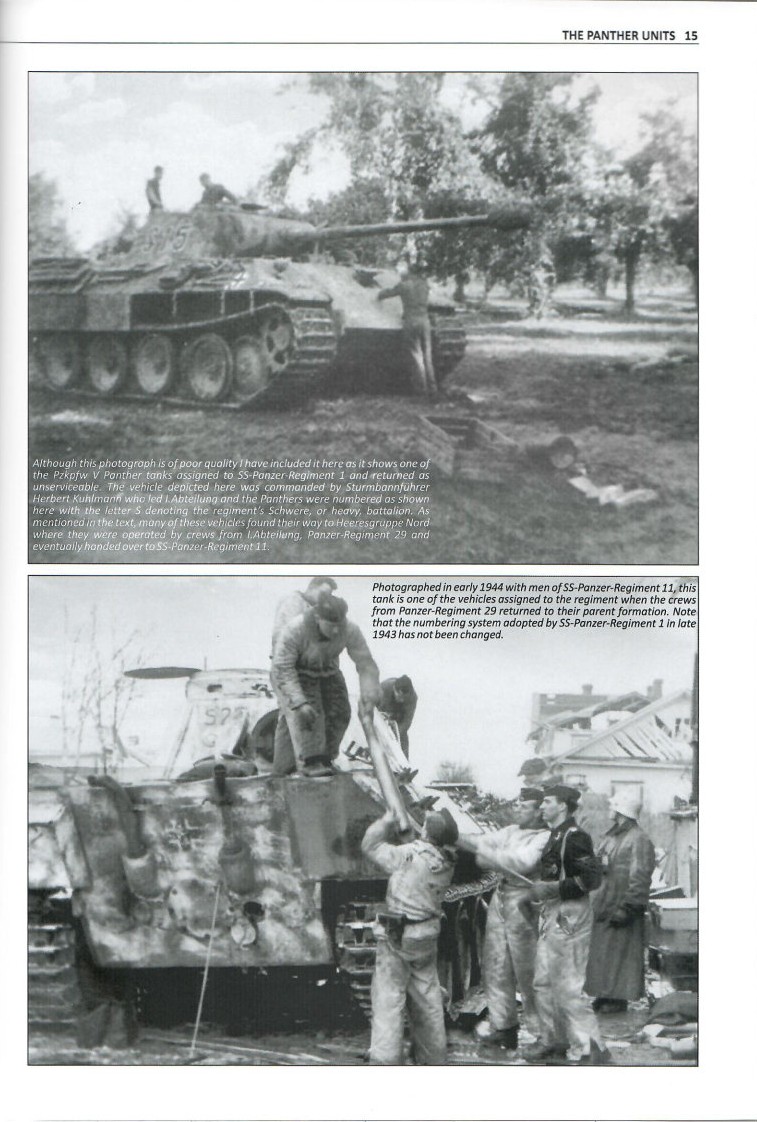
This 64-page book is outlined in the familiar TankCraft format and is loaded with incredible black and white photographs, color illustrations, supporting text and detailed captions, modeling references and a bibliography in the following chapters:
Introduction
The Eastern Front, 1944-1945
The Panther Units
Camouflage & Markings
Model Showcase
Modeling Products
Technical Details and Modifications
The Kriegsstärkenweissungen (War Strength Predictions)
Product Contact Details
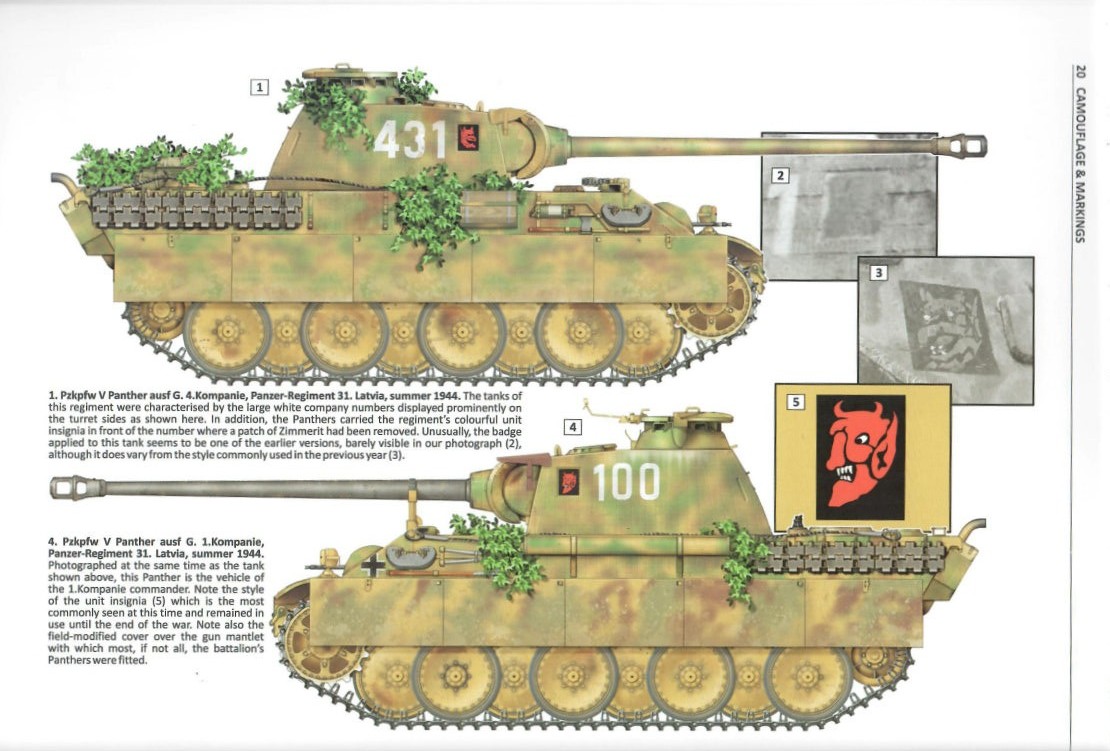
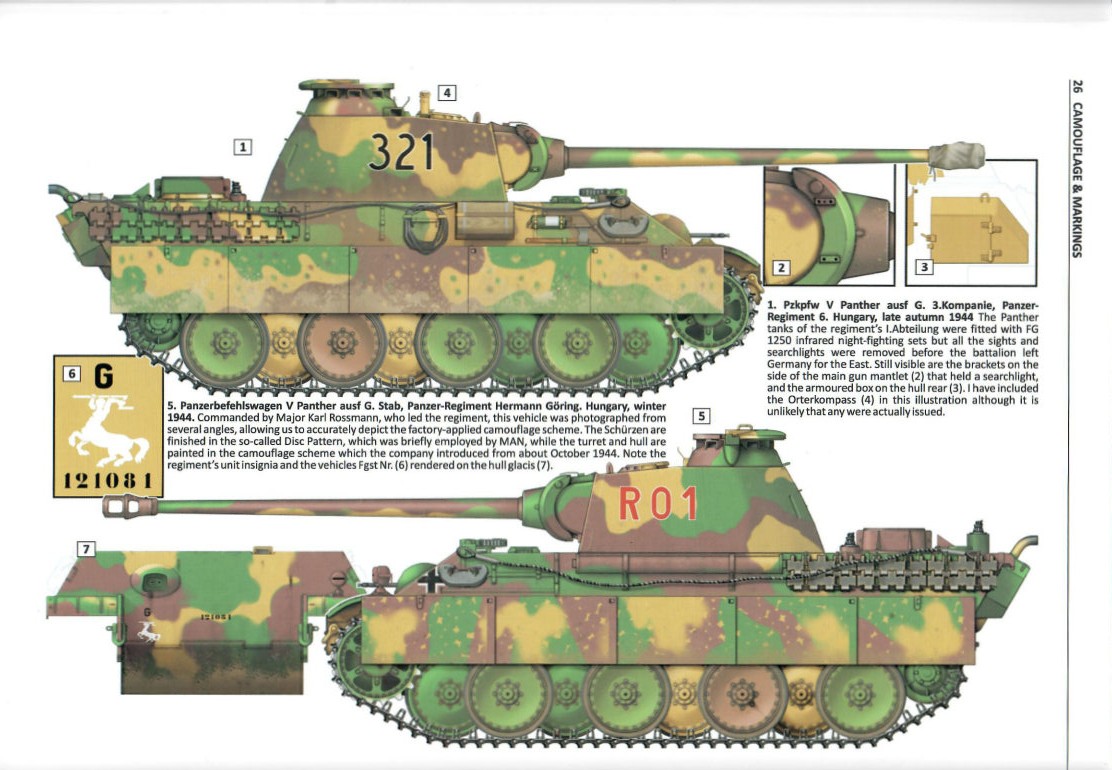
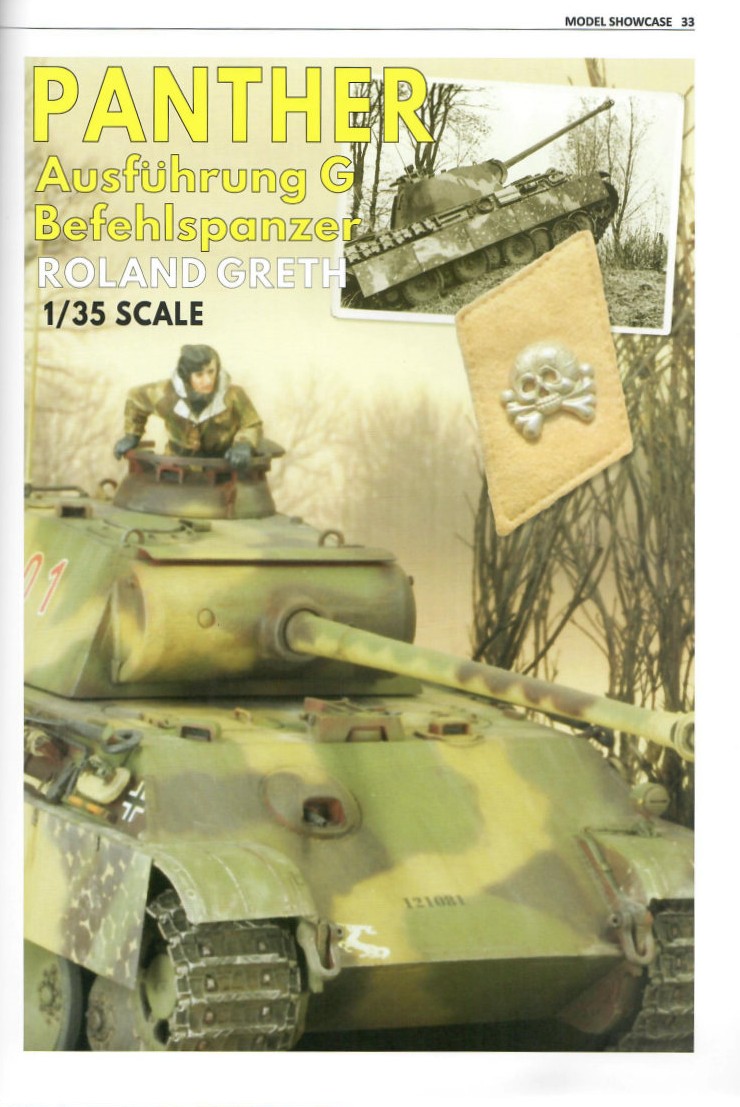
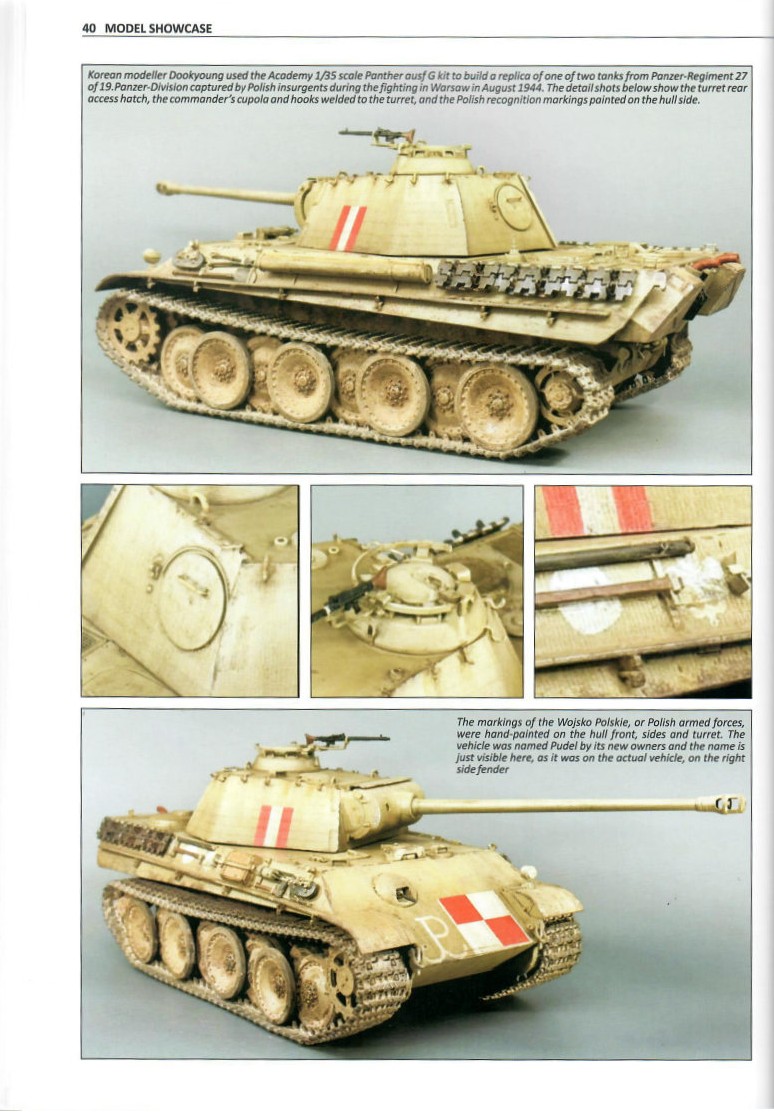
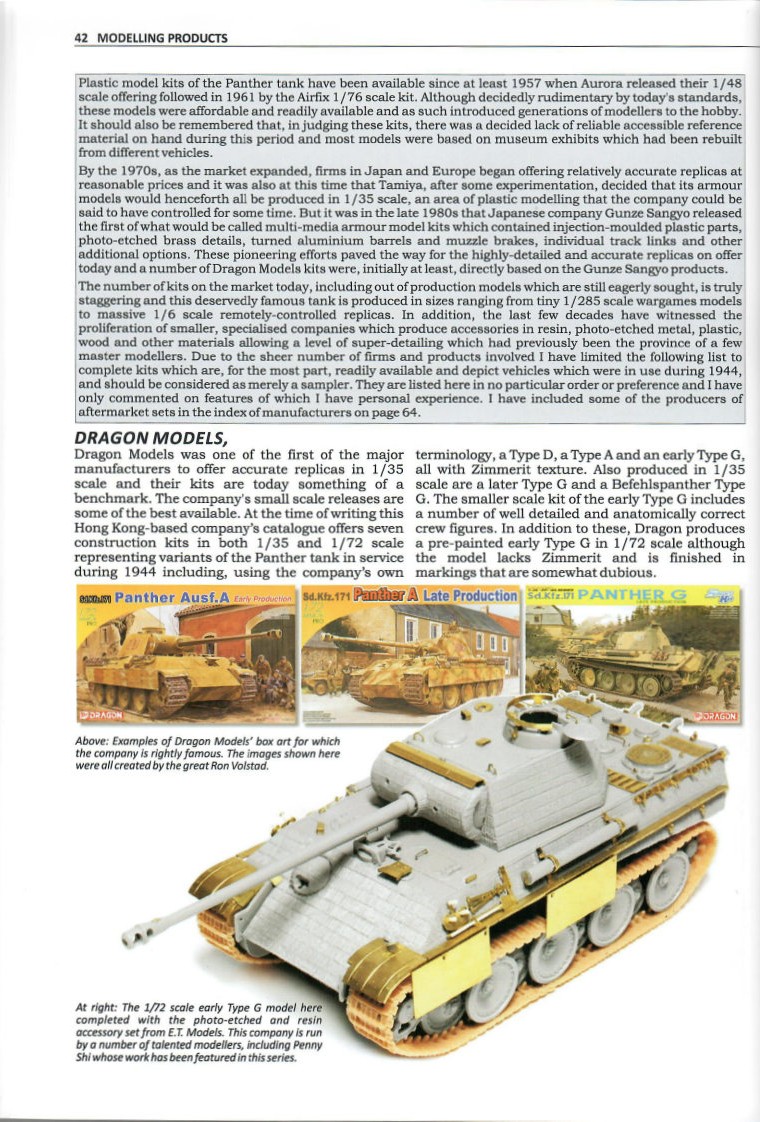
Author Dennis Oliver continues to do an amazing job highlighting the actions, tanks, and units doing the fighting. This is further highlighted for modelers with 24 Panther color profiles over 12 pages, four beautiful model builds (over 13 pages), seven pages of model manufacturers who model the 1944 Panthers, a note on aftermarket details that can be found in the list of Product Contact List on page 64, and the extensive technical details and modifications. This is a treasure trove on what makes the 1944 Panthers (primarily Ausf A and D variants) unique, and the differences within the sub-variants.
While modelers typically know which models are available, the author and this series specialize in what modelers are looking for in terms of detail. Plastic model kits of the Panther have been around since 1957 with Aurora’s 1/48 kit, and Airfix’s 1/76 kit in 1961, and then the first 1/35 kit, Tamiya’s motorized Panther Tank was released in 1962. The quality of Panther kits has vastly improved since those early releases, particularly as they were designed on museum exhibits which had been rebuilt from different vehicles.
The Technical Details and Modifications chapter is amazing with crisp illustrations and photographs and clearly marked arrows and captions to details. The schürzen section has perhaps the most clear and concise description of the two major types of spaced armor used on the Panthers for the Ausf D and G variants. The author explains which Panthers would most likely have Zimmerit applied and in which pattern, according to manufacturer. He also goes on to state that no list is exhaustive as each manufacturer applied Zimmerit in batches based on when they were available, field application, etc. This section is worth the price of the book with the differences in manufacturers, dates and modifications. After reading this chapter, the reader can reference the many beautiful black and white photographs and color profiles to pick out the details.
Dennis Oliver sums it up well,
“Except for the Tiger, the Panther is probably the best known German armored fighting vehicle of the Second World War period, but unlike the Tiger I and Tiger II, whose combined production ran to just over 1,800 vehicles, a total of almost 6,000 Panthers were manufactured by the end of the war and during the battles of 1944, perhaps the most crucial period of the conflict, this powerful tank formed the backbone of the Panzerwaffe.
It is difficult to imagine any other army surviving the staggering losses inflicted on the Germans at Stalingrad, at Kursk and again during the summer of 1944, yet the Wehrmacht was able to mount two major offensives before the war was brought to an end and to conduct a tenacious defense until the very last day of the fighting. In all these operations, the Panther would play an essential role.
This is a great book if you want to learn more about modeling a Panther on the Eastern Front in 1944. Of the almost 6,000 Panthers manufactured, the Ausf G was the most encountered Panther on all fronts during 1944, with 2,953 models assembled before the end of the war. The predecessor, Ausf A, came in second with around 2,200 tanks. This is an easy-to-understand history of the Panther and is replete with references by modelers. I know the Panther Medium Tank, German Army, Waffen-SS and Luftwaffe Units, Eastern Front, 1944 will be on my bench when I build my next Panther. The question is which version and which unit? Thanks to this book, the search will be easier; or perhaps it is easier to build more Panthers!
Thanks to Casemate and IPMS-USA for providing the review sample.
Comments
Add new comment
This site is protected by reCAPTCHA and the Google Privacy Policy and Terms of Service apply.
Similar Reviews