
South African Armoured Vehicles, Volume 1 - A History of Innovation and Excellence
84 pages (8.25” x 11.7”) with 71 color photographs, three black and white photographs, 25 color profiles, 19 tables, one diagram, one color and one black and white map
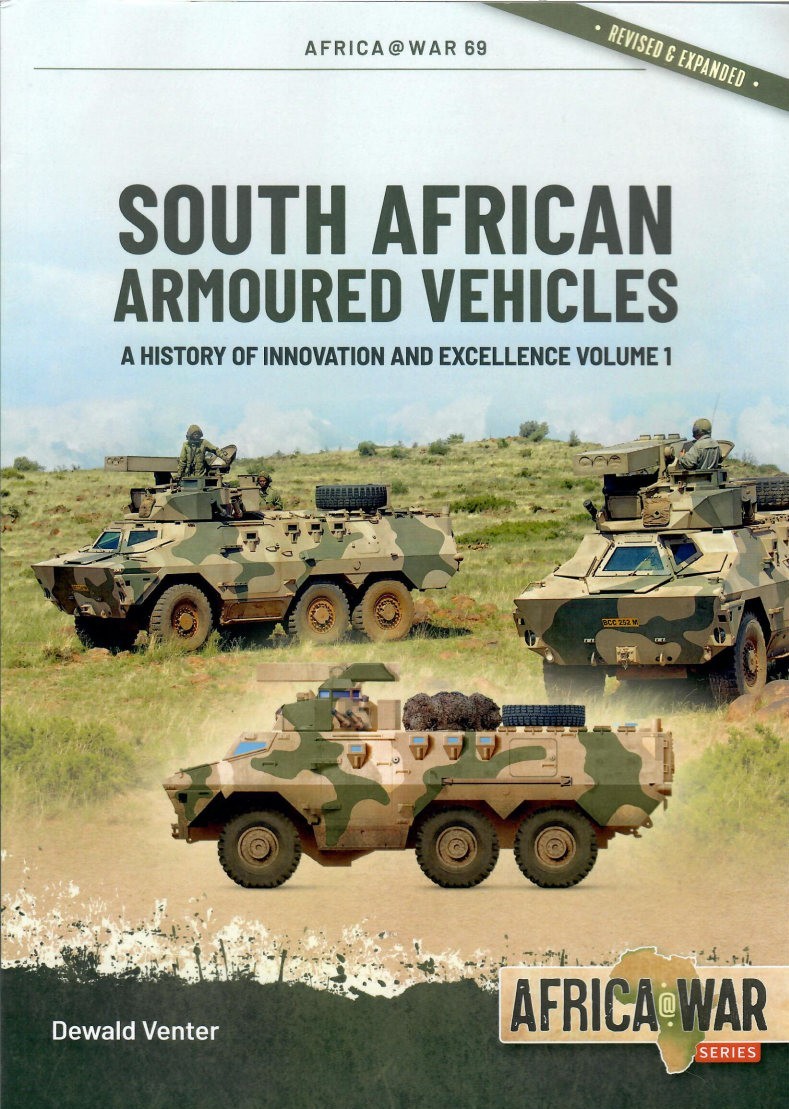
South African Armoured Vehicles, Volume 1 - A History of Innovation and Excellence is revised and expanded from an earlier book by the author, Dr Dewald Venter, South African Armoured Fighting Vehicles: A History of Innovation and Excellence, 1960-2020 (Africa@War No. 36). The author notes that this updated edition is split into two editions. The author continues,
The success of the first edition, with positive reviews from numerous formal reviewers and a 4.7 out of 5-star rating on Amazon from 5 reviewers, was immensely encouraging. It is my hope this second edition will continue to serve as a definitive resource for anyone with an interest in South African armoured vehicles, military history, and the stories of the men and women who designed and operated these incredible machines.
Having an interest in South African armored vehicles and not read Dr Venter’s previous book on the subject, I was keen to read this book. To say I am impressed would be an understatement, the in-depth detail of the subjects, history of development and operational use, crisp photographs, and personal stories make this a very readable account of South African armor and how it came to be.
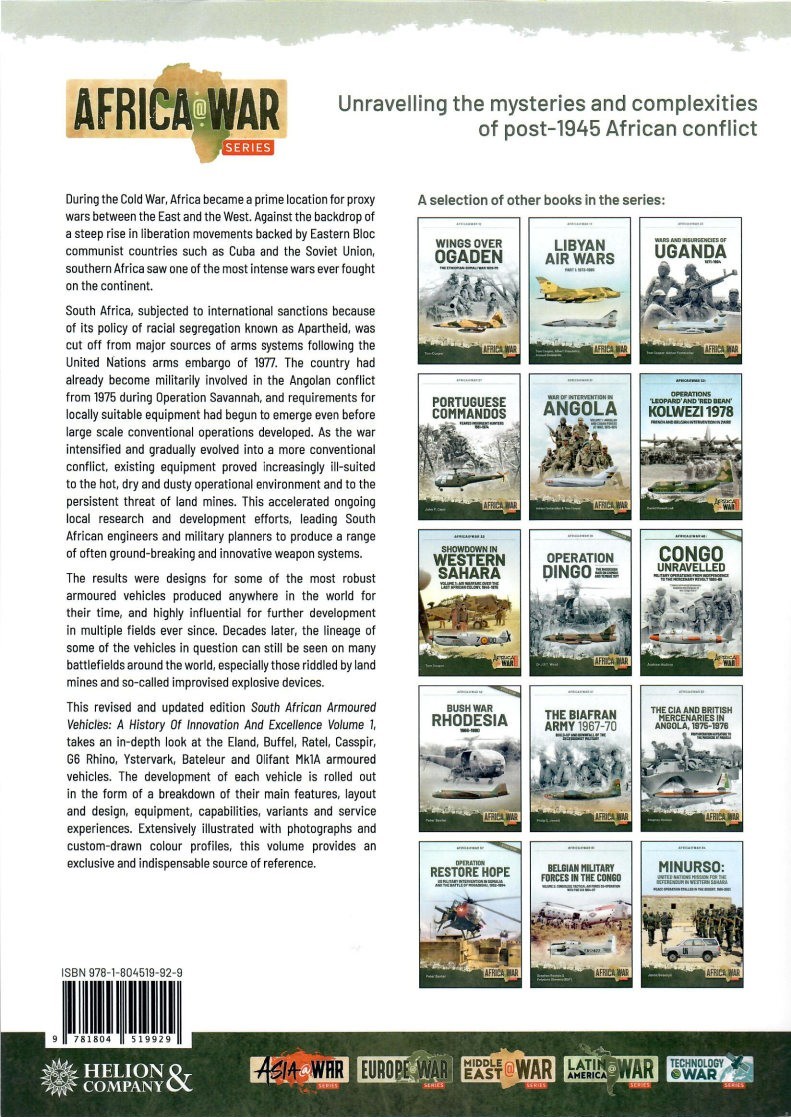
This 84-page paperback book is part of Helion & Company’s @War Series. South African Armoured Vehicles, Volume 1 - A History of Innovation and Excellence (Helion No. HEL2138) is outlined in the familiar @War format with 71 color photographs, three black and white photographs, 25 color profiles, 19 tables, one diagram, one color map, and one black and white map. The book is composed of the following sections:
- Dedication
- Abbreviations and Acronyms
- Author’s Note
- Acknowledgements
- Foreword
- Introduction: Framing South African Armour Development
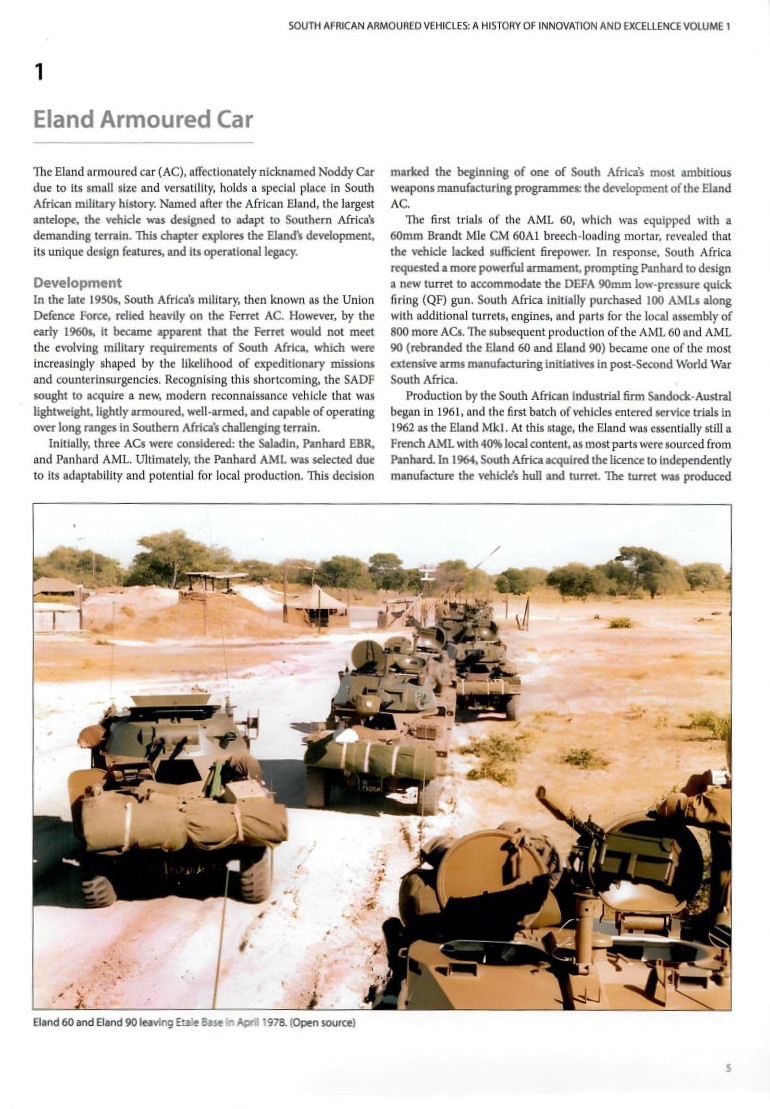
- 1. Eland Armored Car
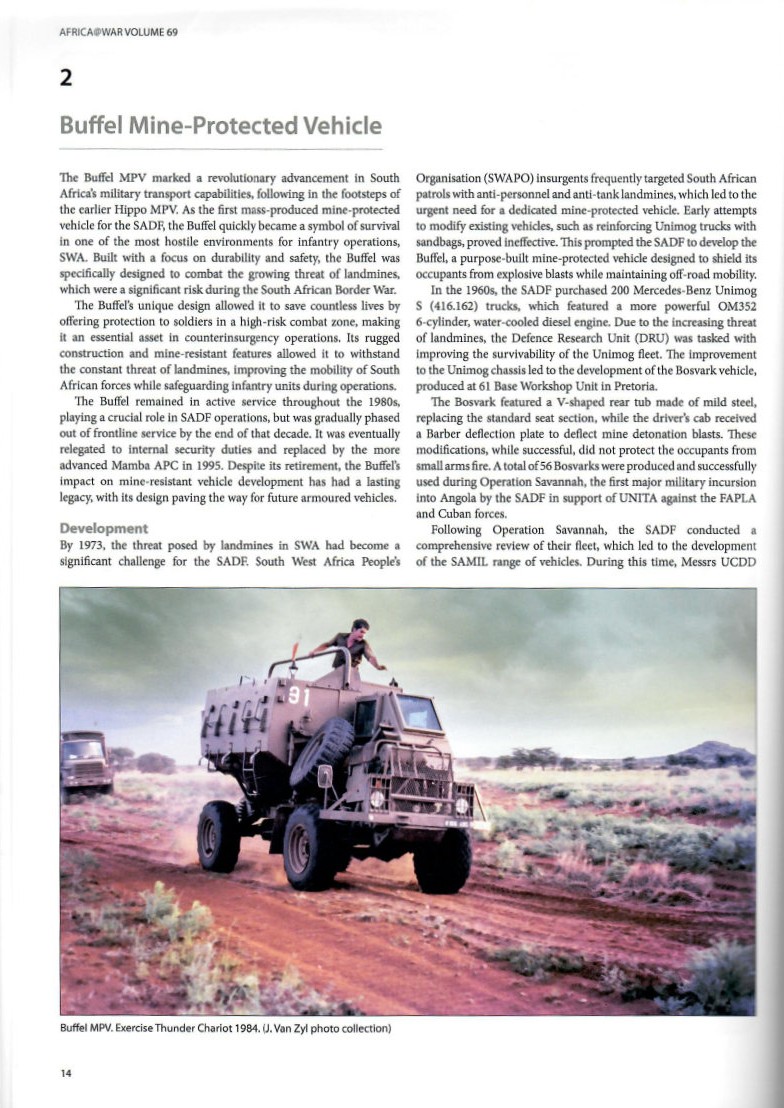
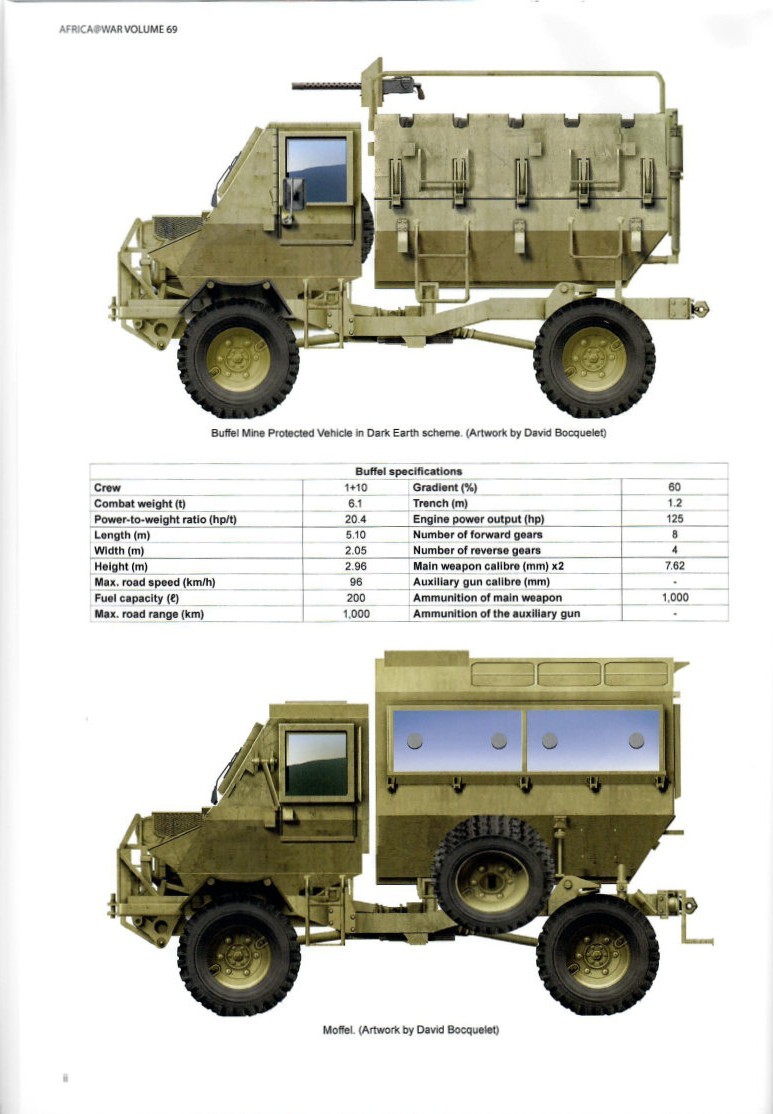
- 2. Buffel Mine-Protected Vehicle
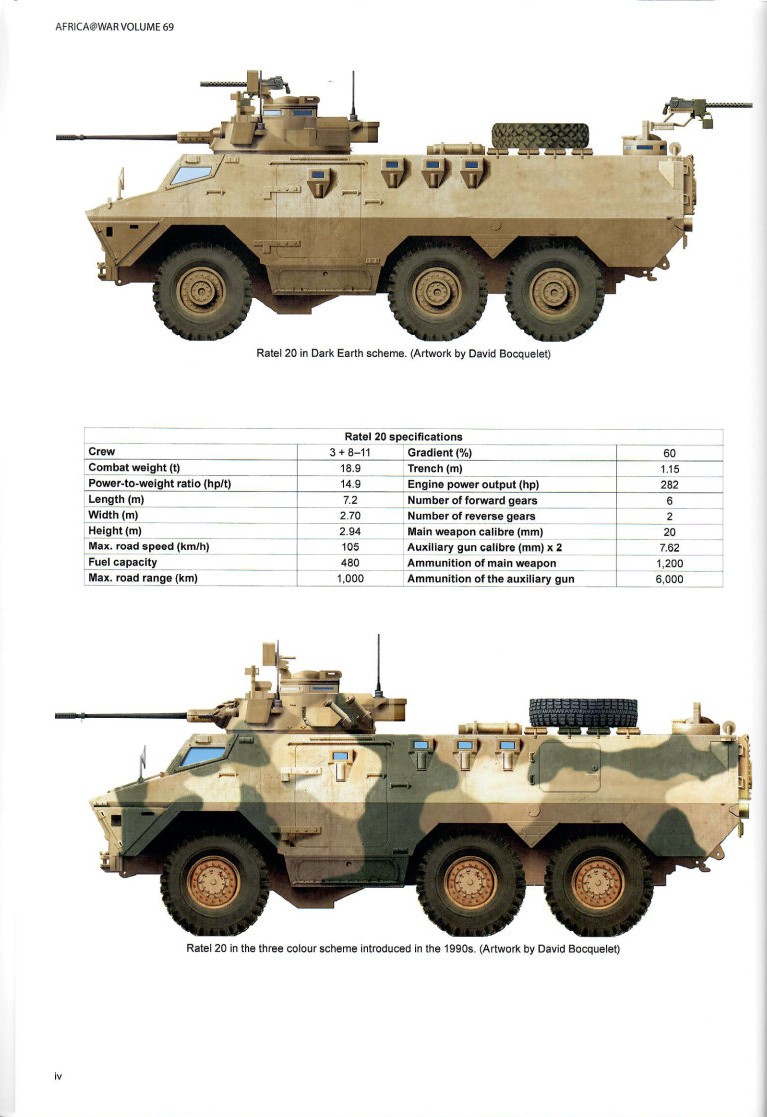
- 3. Ratel Infantry Combat Vehicle
- 4. Casspir Mine-Protected Vehicle
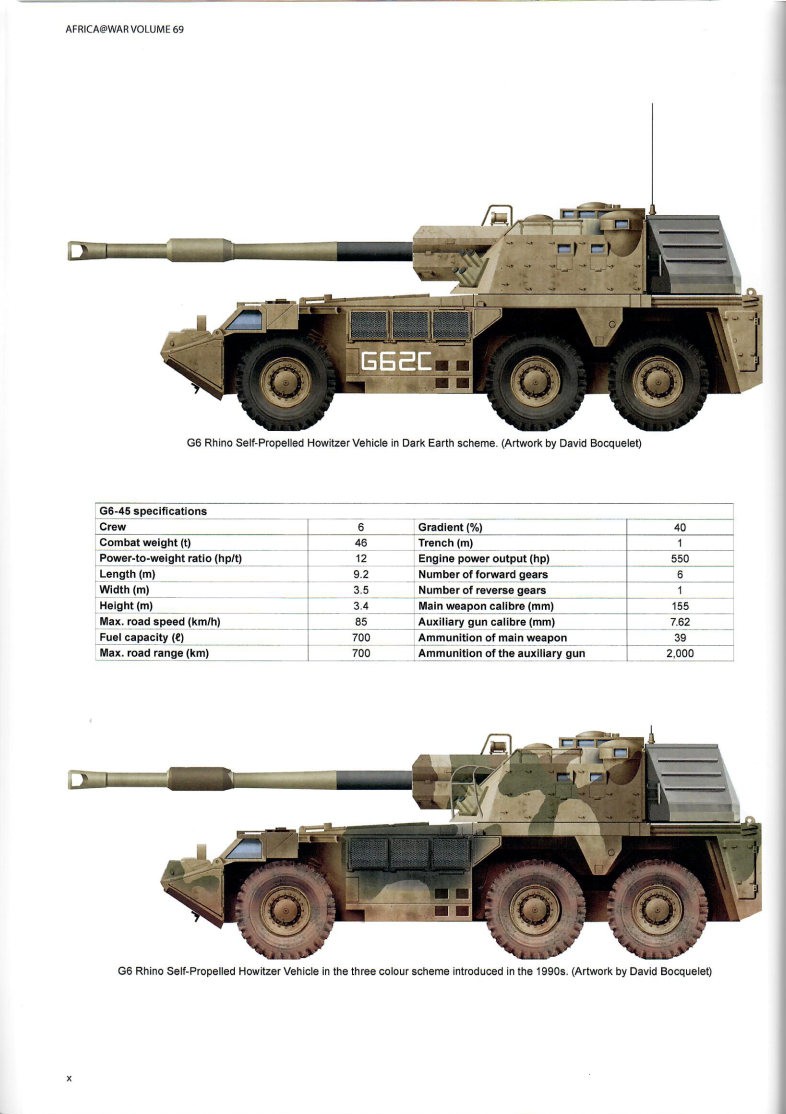
- 5. G6 Rhino Self-Protected Howitzer Vehicle
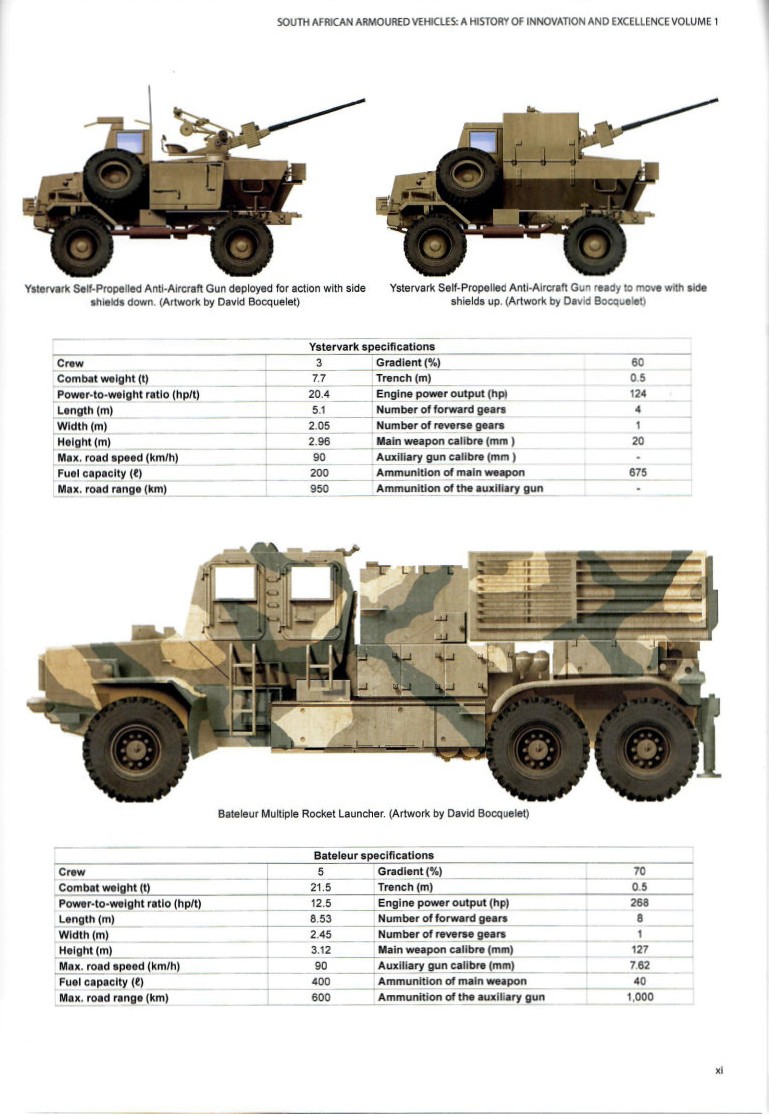
- 6. Ystervark
- 7. Bateleur Multiple Rocket Launcher
- 8. Olifant Mk1A Main Battle Tank
- Bibliography
- About the Author
South African armoured vehicles were born out of necessity post World War II, using largely surplus Allied vehicles. While these vehicles initially met requirements, several factors were present necessitating the South Africans to develop their own vehicles.
From the introduction,
The African battlespace is characterized by its difficult terrain and environmental obstacles. These challenges include poor road infrastructure, limited access routes, vast distances to cover, dense and rugged terrain, and scarce resources for sustainment. Such conditions make movement, combat operations, and logistical support extremely challenging. Furthermore, de Vries notes that there were often expansive open spaces that allowed infiltration, and abundant cover for concealment from both ground and air detection.
In addition to the unique battlespace, South Africa became embroiled in border conflicts during many African nations’ liberation movements as many moved from colonies to self-identity. To add even more complexity, Africa became a hot conflict in the Cold War with Cuban and Soviets backing (and providing active support). Following the UN arms embargo of 1977, due to Apartheid, South Africa found itself even more isolated.
Author Dr Dewald Venter does a great job of combining all these realities into a very easy to understand format that outlines the development of its iconic and unique vehicles. The South African vehicles evolved with mission requirements, from COIN (Counter Insurgency Operations) where ambush and mine use were largely prevalent to full spectrum combat operations, resulting in some of the most robust armored vehicles available anywhere in the world at the time.
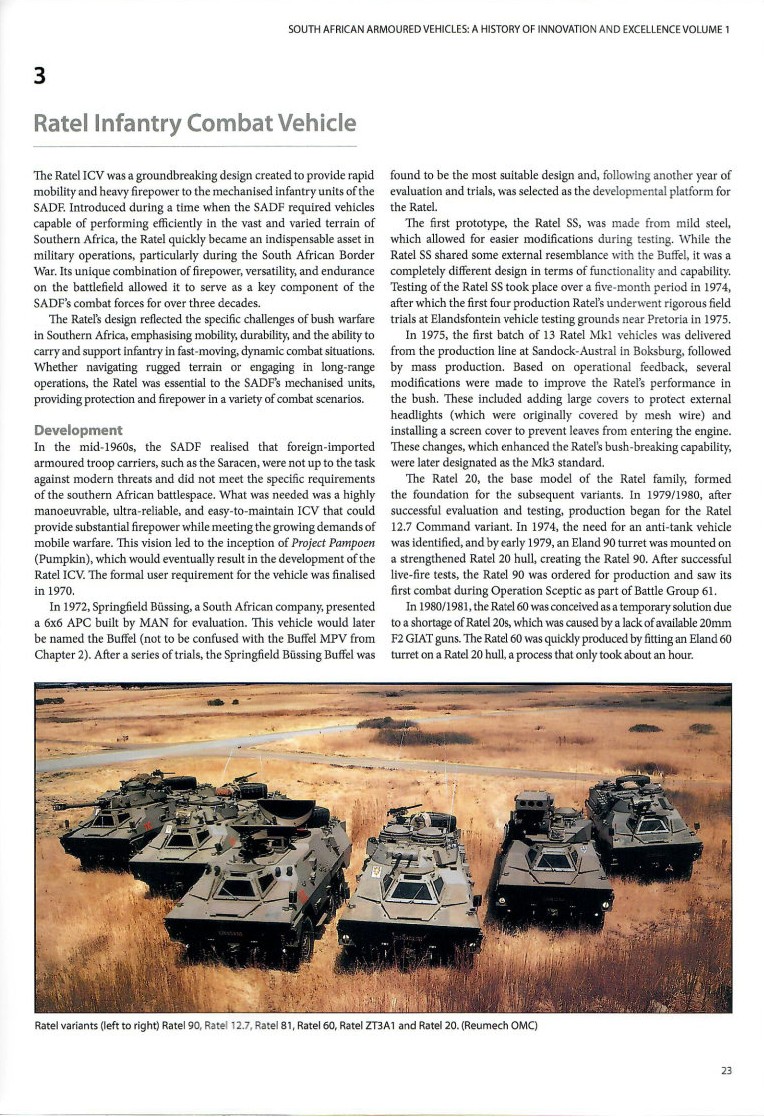
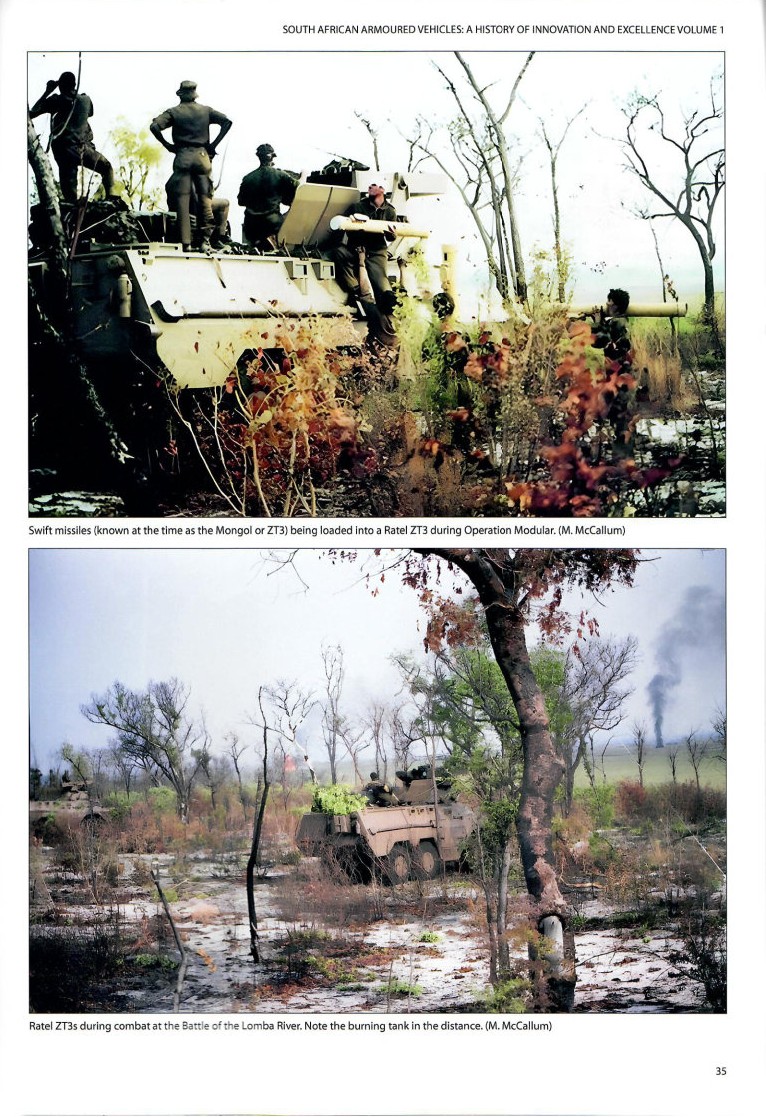
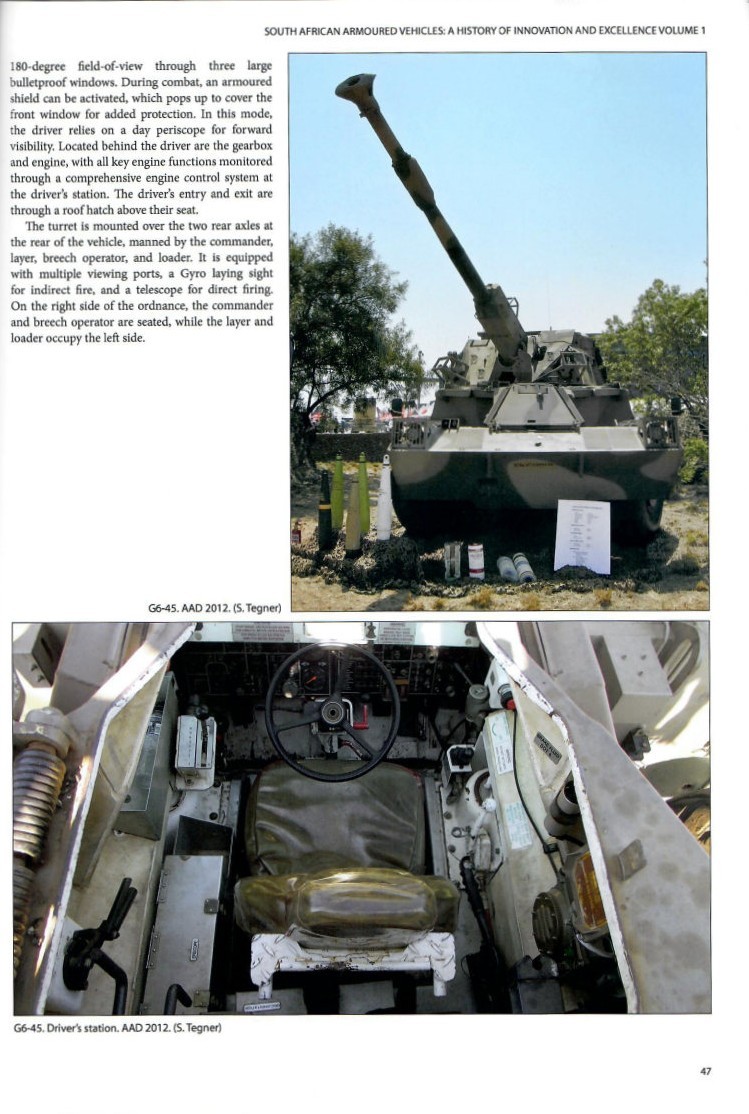
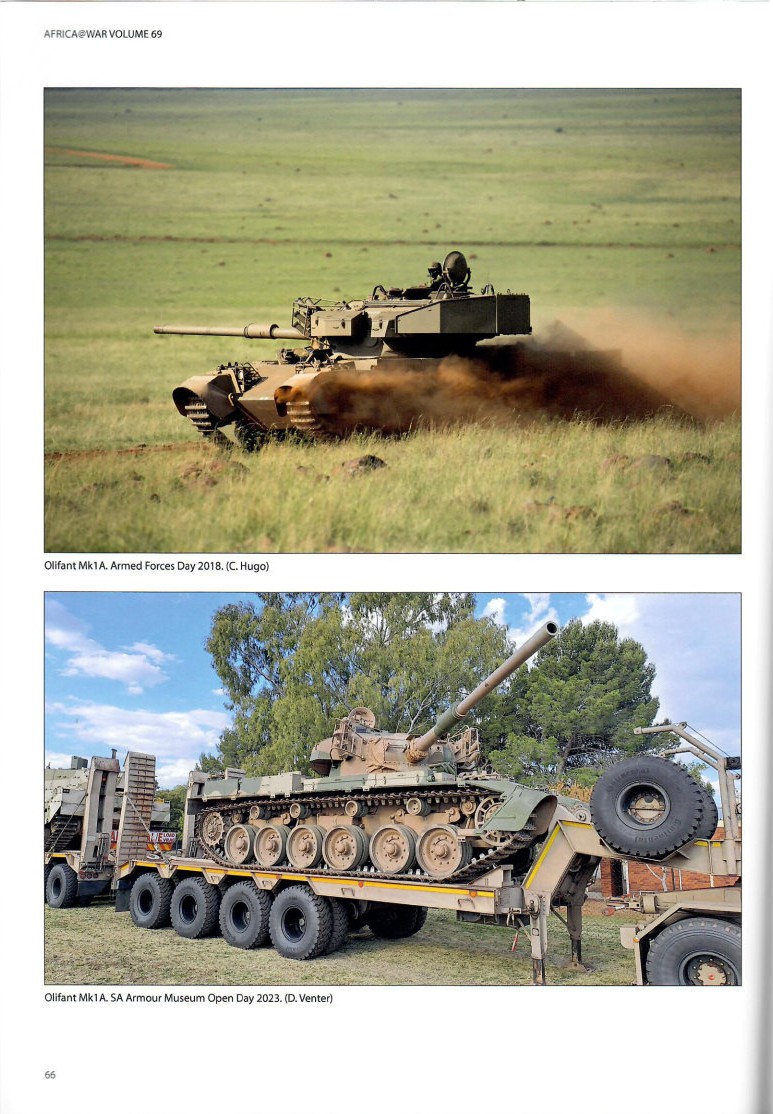
Volume 1 provides in depth looks into the Eland Armoured Car, Buffel Mine-Protected Vehicle, Ratel Infantry Combat Vehicle, Casspir Mine-Protected Vehicle, G6 Rhino Self-Propelled Howitzer Vehicle, Bateleur Multiple Rocket Launcher and Olifant Mk1A Main Battle Tank (started as a Centurion and became something completely more capable and uniquely South African that is still serving as Mk2). Each vehicle is presented with its development, main features, layout and design, equipment, capabilities, variants, and service life. The vehicles are shown in beautiful color photographs and illustrations highlighting the two main camouflage patterns of the unique dark brown earth, the later years of the “Bush War” period (1987-88) with light stone and dark green stripes that was adopted in the 1990s and further modified in the early 2020s.
The interviews with serving personnel and descriptions show the passion of the author for his subjects. I learned new vernacular to prove that military service is universal in its adaptability and humor. For example, South African armored vehicles are built for “bundu bashing” (the process of driving directly through small trees and dense vegetation rather than navigating around them, thus the ability to “break the bush” became a critical advantage to avoid landmine-laden roads and use indirect routes through vegetation). Another example was the Eland 20 named Vuilbaard (Dirty Beard) with its Hispano-Suiza 20mm cannon.
The photographs and profiles are well worth the price of the book, particularly for modelers who want to build a model, vignette or diorama of South African armored vehicles. Unfortunately, only two models are available for any of the vehicles referenced; they are the G-6 Rhino and Oliphant Mk1 Main Battle Tank. Scratch builders can further use Unimogs as the basis for some of the conversions. South African vehicles are unique, and it would be nice if model producers looked at some of these, particularly the Ratel and its many variants. This book is highly recommended.
Profuse thanks to Casemate and IPMS/USA for providing the review sample.
Comments
Add new comment
This site is protected by reCAPTCHA and the Google Privacy Policy and Terms of Service apply.
Similar Reviews