
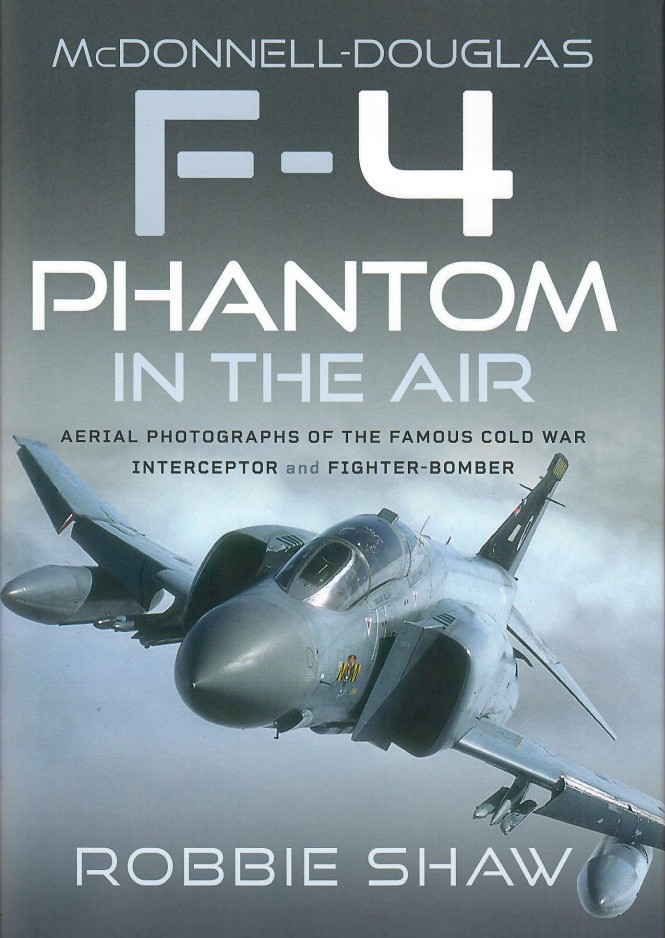
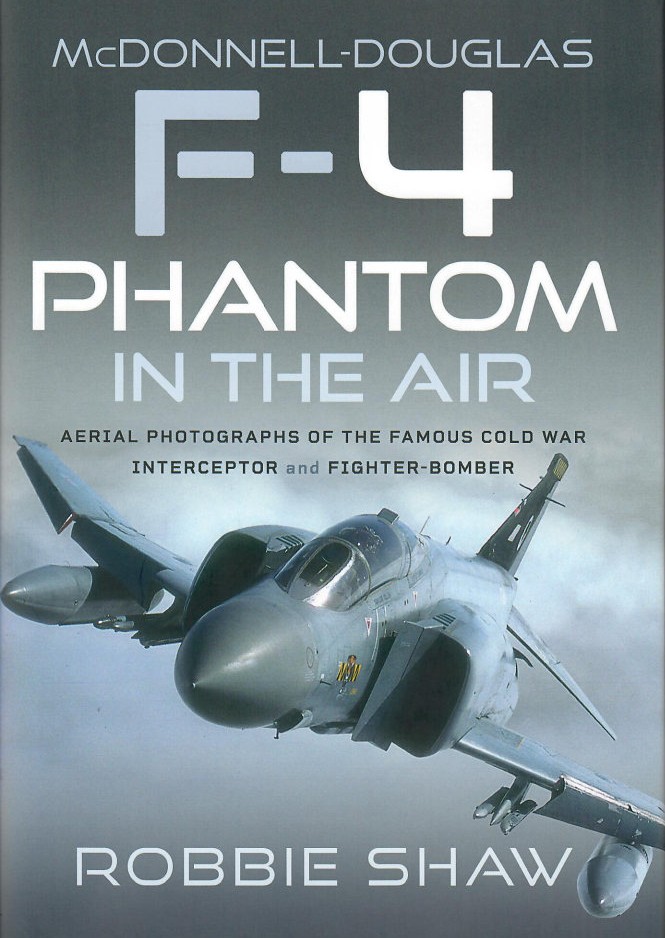
McDonnell-Douglas F-4 Phantom in the Air - Aerial Photographs of the Famous Cold War Interceptor and Fighter-Bomber
Few aircraft have served for as long and amongst many Western nations than the McDonnell-Douglas F-4 Phantom II. It’s first flight was 27 May 1958, and three air forces are still flying this “most charismatic” aircraft. Initially developed as a long-range all-weather fighter for the US Navy (USN). The US Air Force (USAF) “Quickly realized that the Navy had an aircraft that could fly faster, further, and carry a larger weapons load than any tactical aircraft in the U.S.A.F. inventory. Over the next decades, several Phantom variants served with distinction and worldwide not just for the Air Force and Navy, but also the U.S. Marine Corps (USMC).
The Phantom found itself in service with Australia, Egypt, Greece, Iran (initially with the Imperial Iranian Air Force (IIAF) from 1971 to 1979 when it became the Islamic Republic of Iran Air Force (IRIAF), Israel, Japan, South Korea, Spain, Türkiye, the United Kingdom (both the Royal Navy (RN) and Royal Air Force (RAF), and West Germany.
Robbie Shaw has authored over 30 aviation-related books. His interest in aircraft began at age 12 and influenced his decision to join the Royal Air Force as an Air Traffic Controller for 22 years, followed by a further 19 years in the same role at Gatwick. Robbie is also, in his words, “an enthusiastic aircraft photographer” and travelled the world. Among his accomplishments were seven F-4 Phantom flights, six with the RAF and one with the USAF. His experience makes him very qualified for this great book on this amazing aircraft. McDonnell-Douglas F-4 Phantom in the Air - Aerial Photographs of the Famous Cold War Interceptor and Fighter-Bomber is a hardcover book covering 200 color photographs in its 136 pages. This book is composed of the following:
- About the Author
- Preface
- Introduction
- F-4 Phantom Units
- United States – Navy (USN)
- United States – Air Force (USAF)
- Tactical Air Command (TAC)
- Pacific Air Forces (PACAF)
- United States Air Force (USAFE)
- Air National Guard (ANG)
- Air Force Reserve (AFRES)
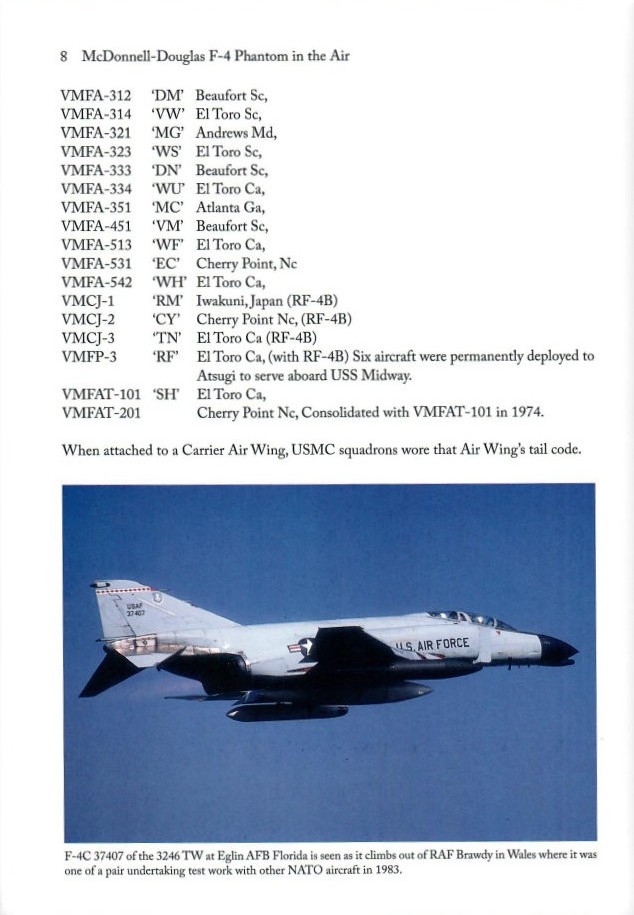
- United States - Marine Corps (USMC)
- United Kingdom – Royal Navy (RN)
- United Kingdom – Royal Air Force (RAF)
- Australia – Royal Australian Air Force (RAAF)
- Egypt – Al Quwwat Al Jawwiya Il Misirya – Egyptian Air Force
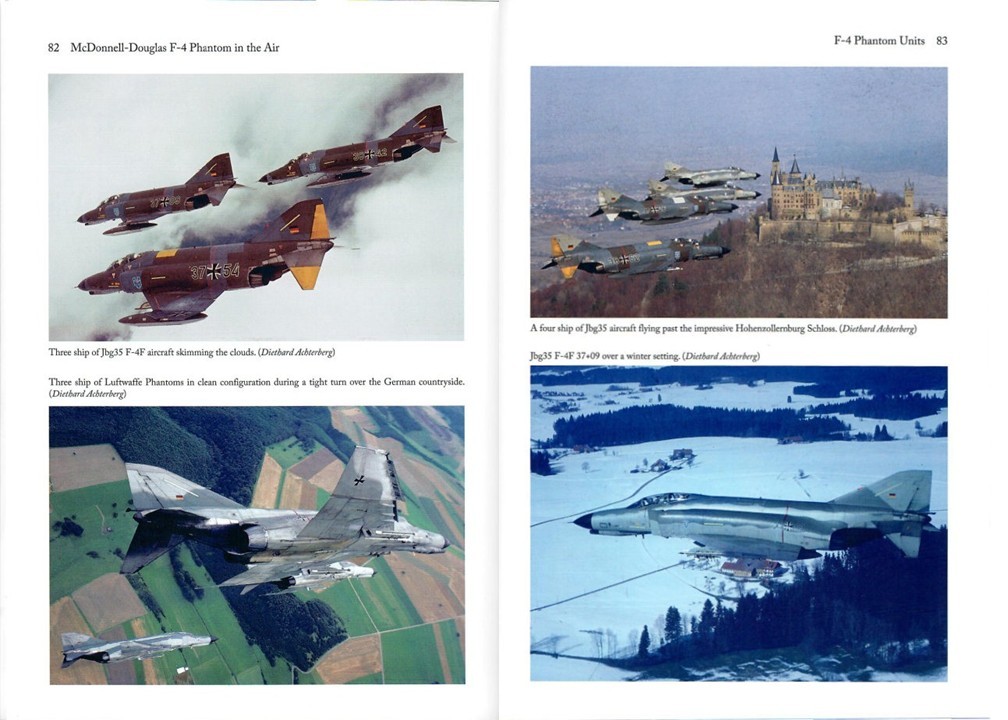
- (West) Germany Luftwaffe
- Greece – Elliniki Polemiki Aeroporia – Hellenic Air Force (Greek Air Force)
- Iran – Islamic Republic of Iran Air Force (IRIAF)
- Isreal – Israeli Defense Force (IDF)
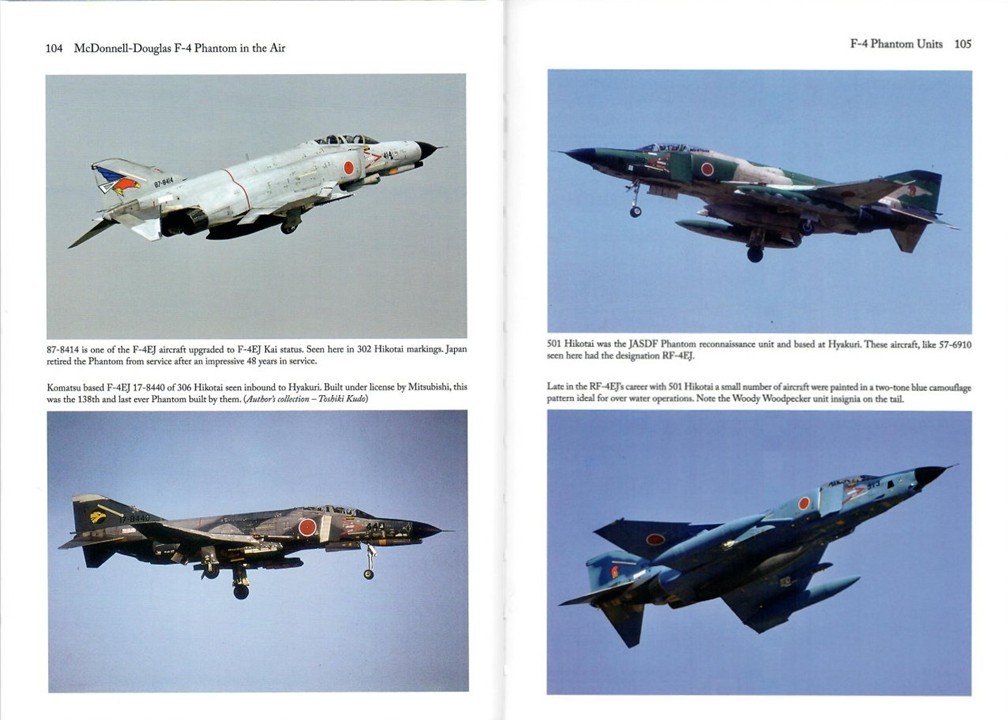
- Japan – Nihon Koku Jietai – Japan Air Self Defense Force (JASDF)
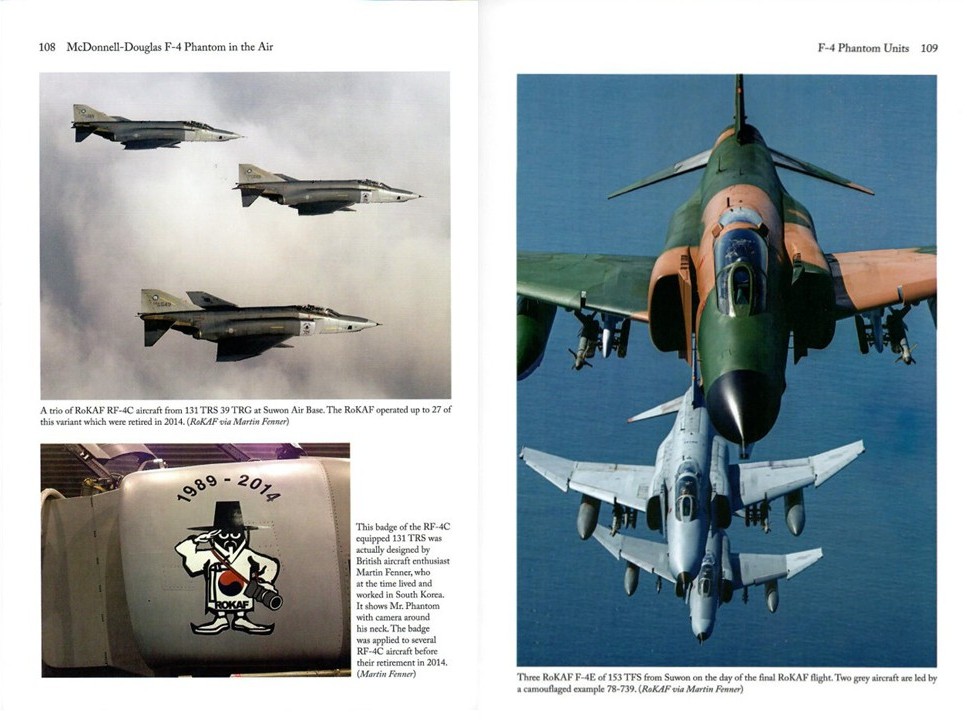
- South Korea – Republic of Korea Air Force (ROKAF)
- Spain – Ejercito Del Aire – Spanish Air Force
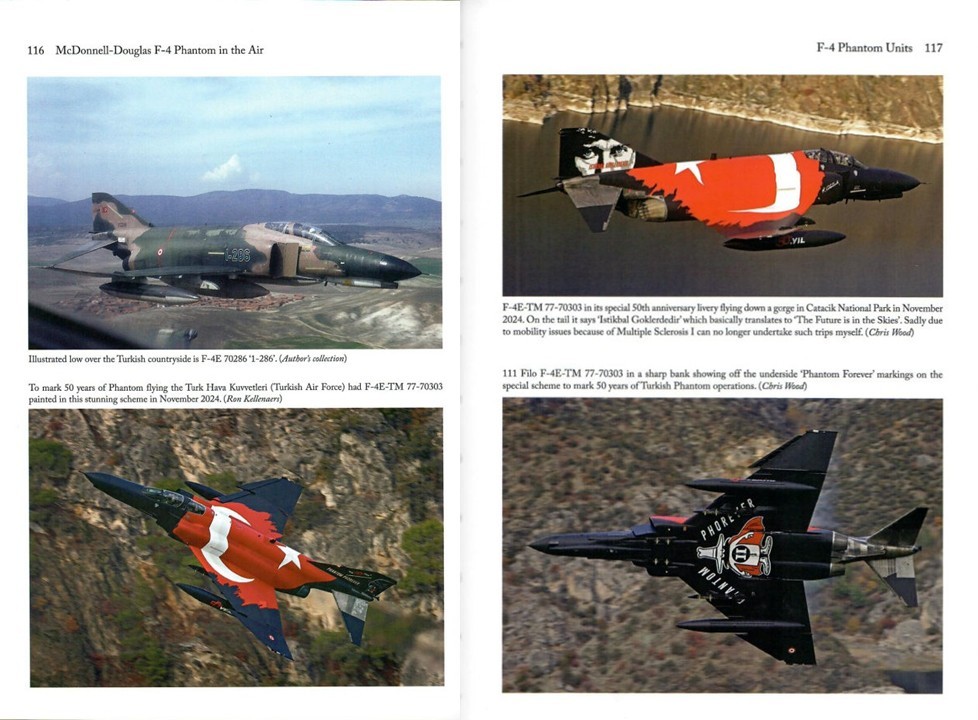
- Turkey – Turk Hava Kuvvertleri (Turkish Air Force)
- Glossary
The Phantom has many monikers, and it is beautifully ugly with its crew of two. With 5,195 F-4 Phantoms built, the book goes into basic detail on the variants on this amazing aircraft that first flew 68 years ago, and is still flying in its twilight in Greece, Iran and Turkey. This book does the legacy of the “Phabulous” Phantom with its amazing color photos.
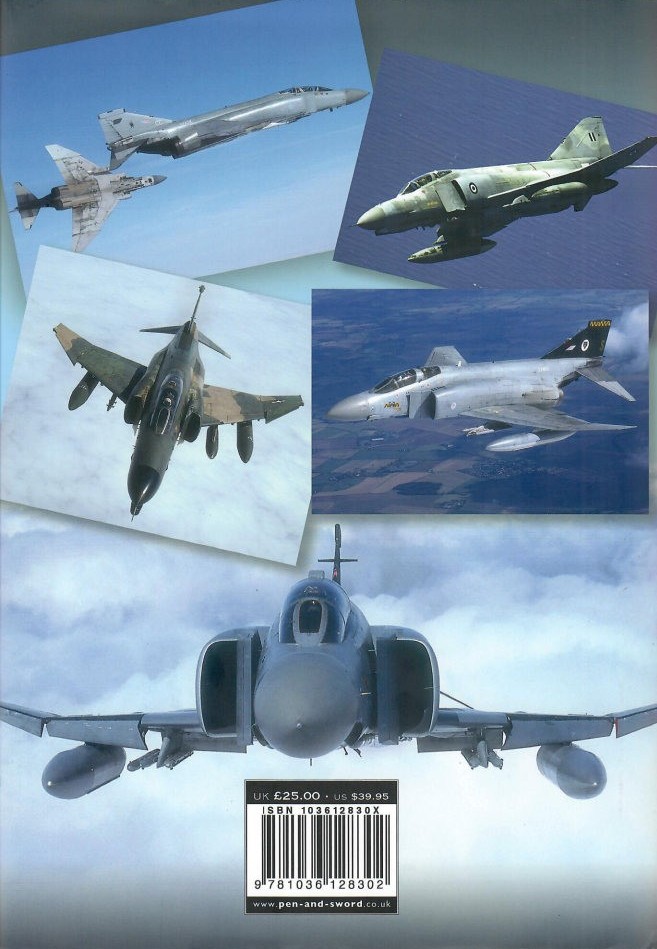
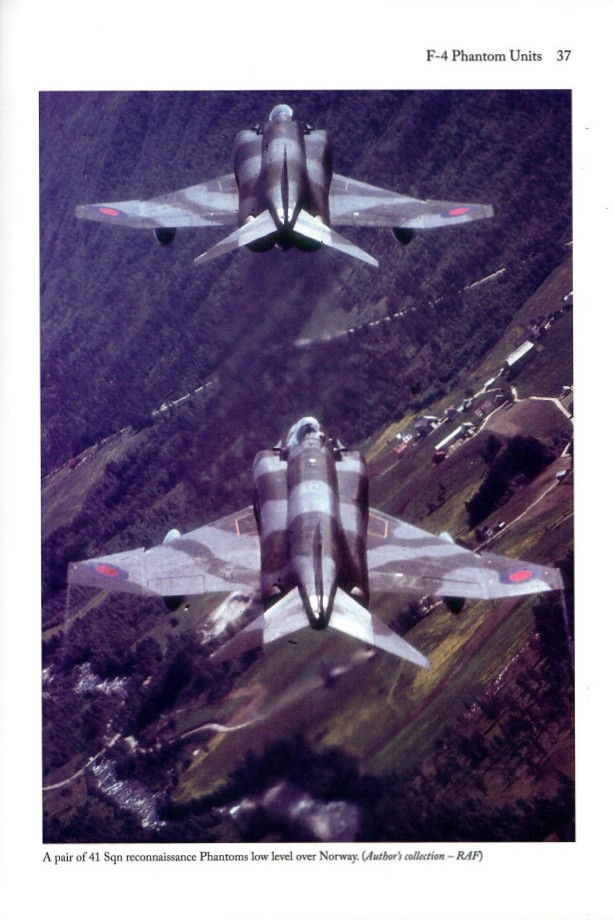
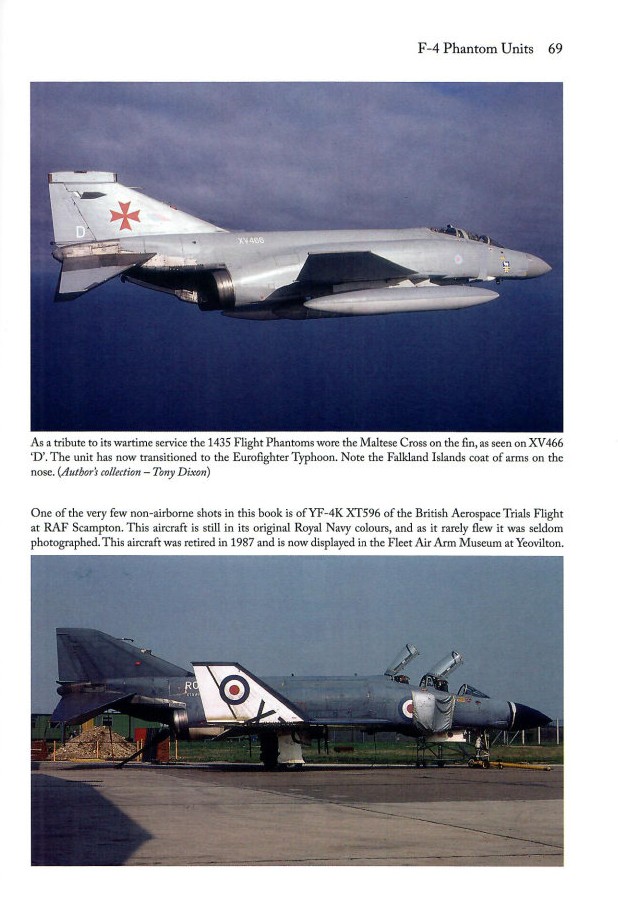
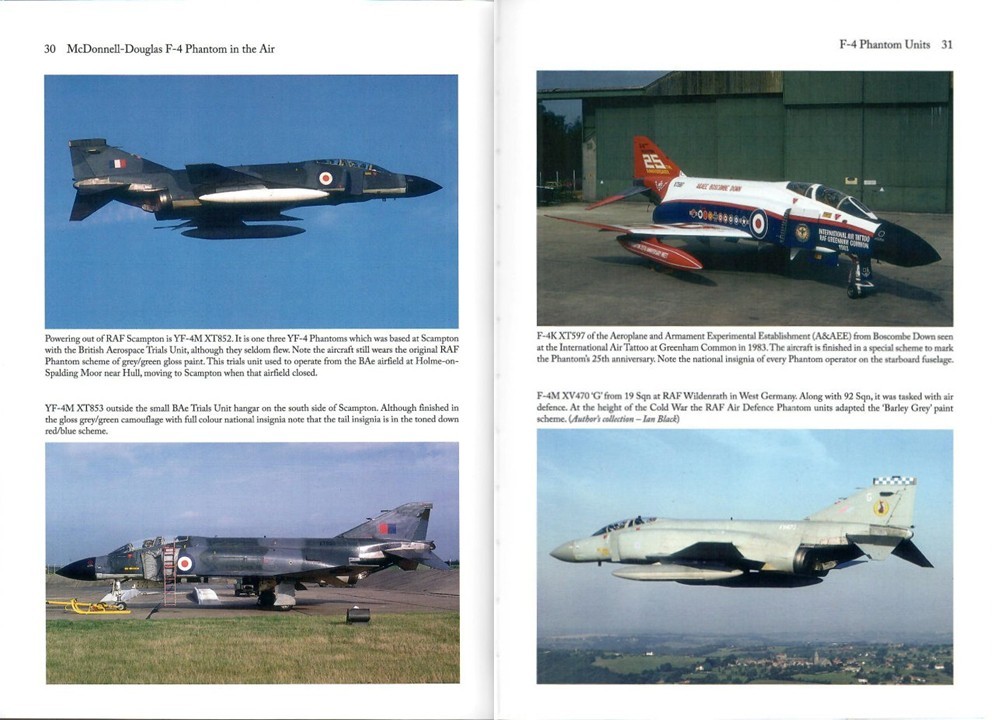
There is a lot to digest, and this book is a great primer on the variants and differences between models and the countries operating them. The camouflage schemes are remarkable, commemorative paint jobs resplendent and aerial photography is simply beautiful. I learned quite a lot. For example, the Royal Navy modified their Phantoms (Phantom FG1 (F-4K) for operations on their carrier HMS Ark Royal, which was smaller than American carriers, and had less powerful catapults. To offset this, the RN had a longer raised nosewheel to compensate for the angled flight deck. While undergoing testing on the USS Saratoga, this created a problem as the jet blast was directed onto the flight deck, causing some metal to buckle. Another item of interest is that the RN and RAF used almost smokeless Spey engines (a notable trademark of Phantoms was their twin smoke trails produced by their General Electric J-79 engines), although that came at a cost of slightly slower speed and lower service ceiling.
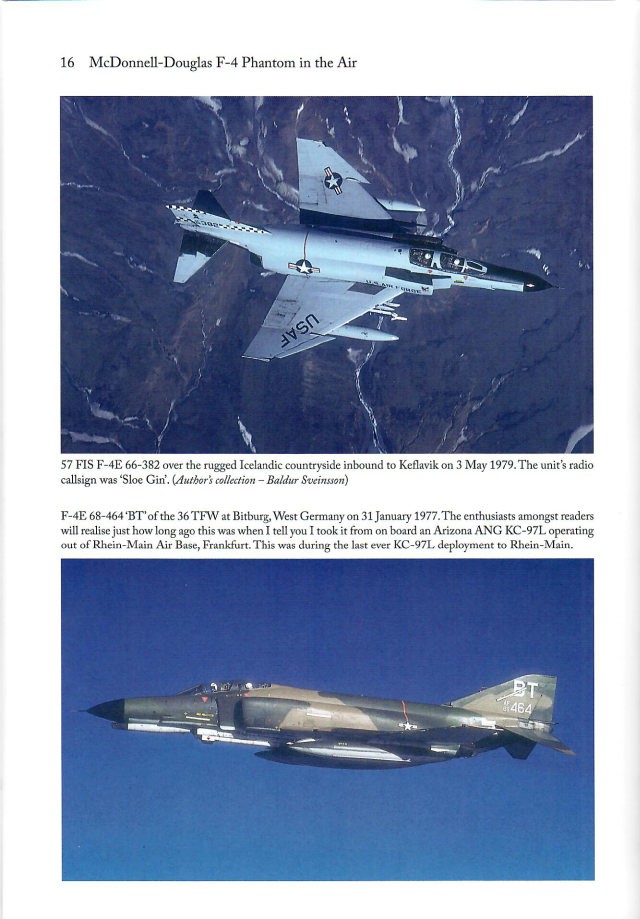
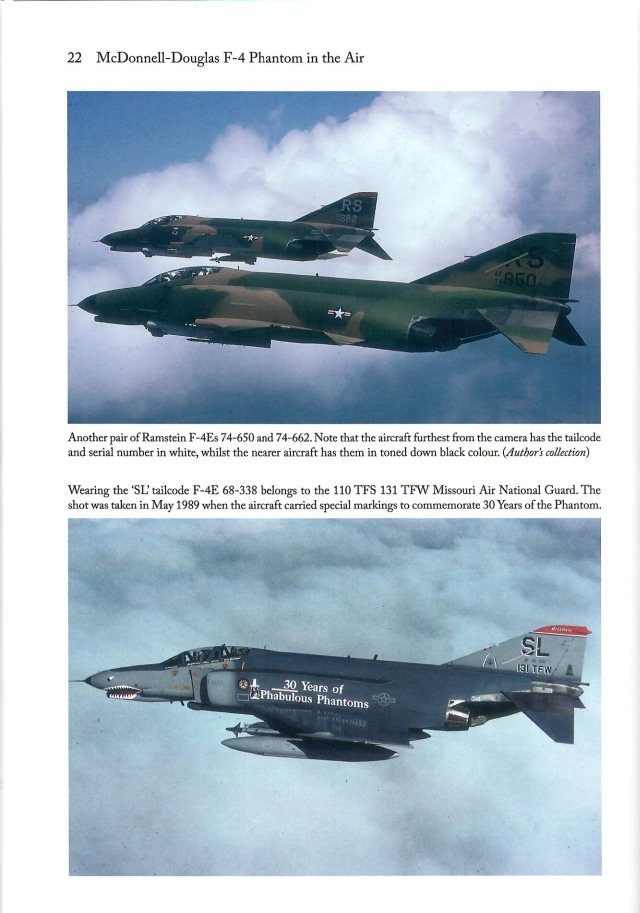
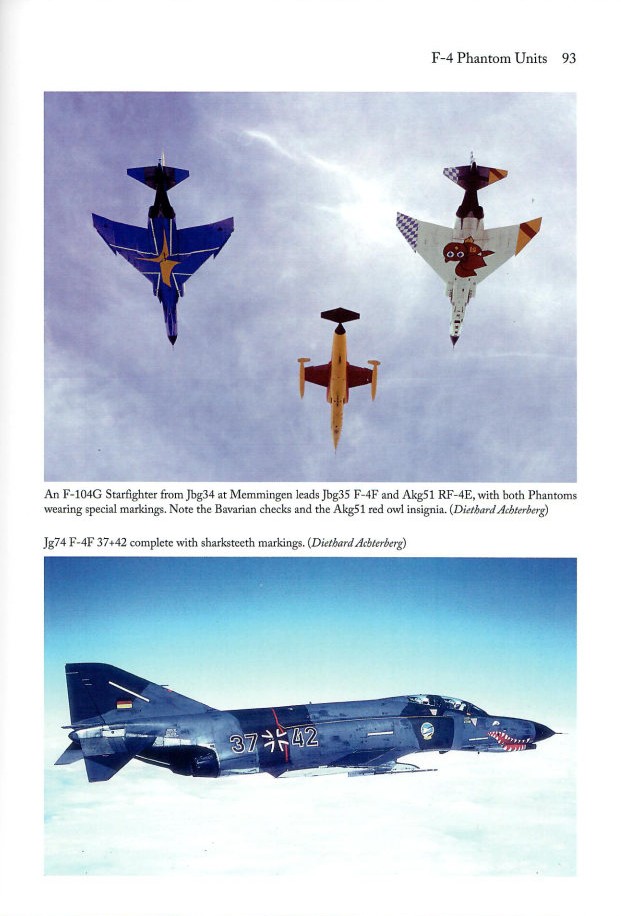
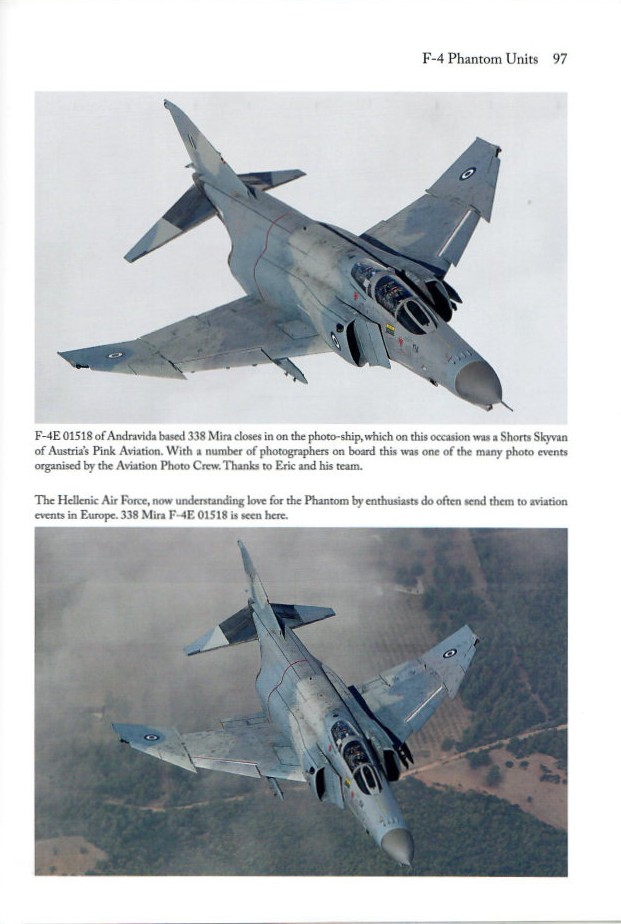
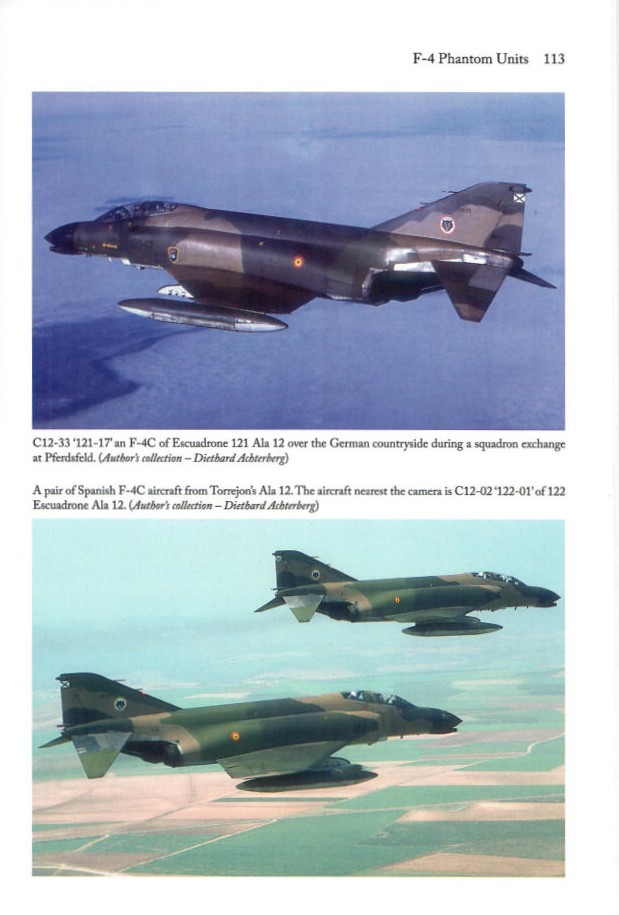
This book is worth its price just for photographs. Modelers will find a lot of inspiration for their “Phantom Phorever” build. While the book is a little light on USN Phantoms, one cannot help but be inspired by the plethora of Phantoms that are organized by country. From the overall gray scheme, to Southeast Asia scheme during and after the Vietnam War, to European One “Lizard”, to Hill Grey II, to a different overall gray (and these are just the US schemes, other countries have even more unique and elaborate schemes, particularly the Japanese), this is an impressive book that will serve modelers well.
I’m sure most airplane modelers remember when they saw, and heard, F-4 Phantoms. My first was an airshow at Nellis AFB in the 1980s, then when climbing Gleiberg Castle near Gießen, Germany in 1997 and watching in wonder as two Luftwaffe F-4s screamed below us, and finally at Langley AFB in 2002 as a flight of another four Luftwaffe F-4s took off on their return to Germany. The biggest problem I found with this book is that I don’t have enough F-4 Phantoms to build as the inspiration found within the pages is incredible.
Profuse thanks to Casemate and IPMS/USA for providing the review sample.
Comments
Add new comment
This site is protected by reCAPTCHA and the Google Privacy Policy and Terms of Service apply.
Similar Reviews