
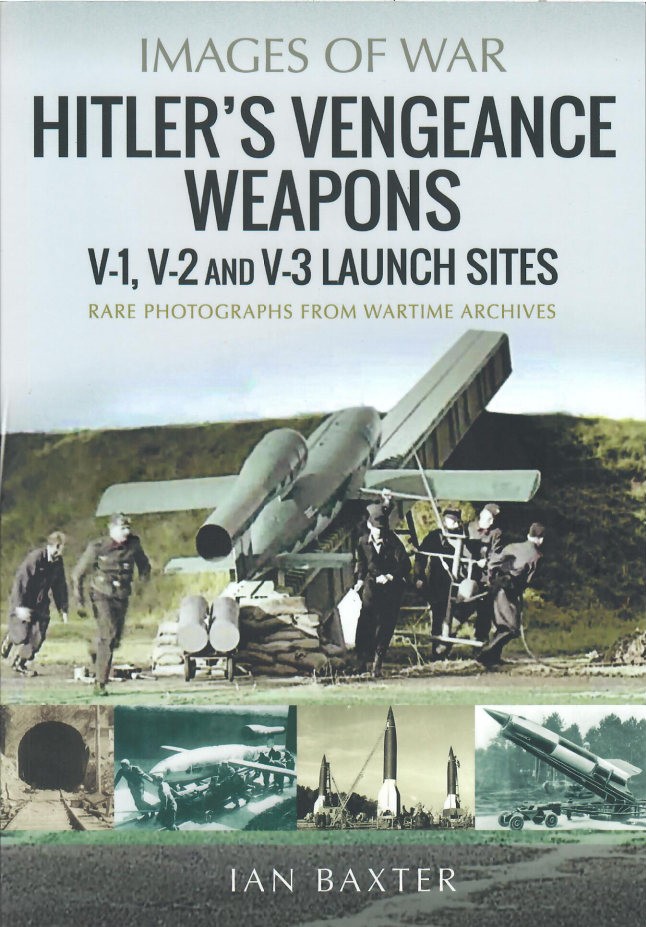
Hitler's Vengeance Weapons - V-1, V-2 and V-3 Launch Sites
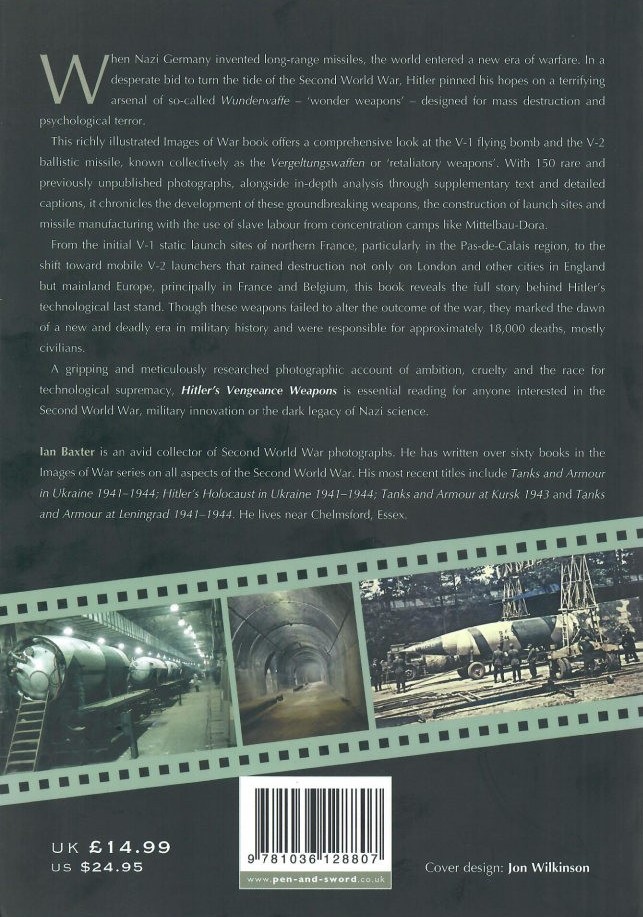
Ian Baxter is a prolific author and has an impressive collection of photographs, many unpublished previously. The book follows the familiar Images of War format with brief introductions for each chapter followed by a lot of photographs to tell the story. Hitler's Vengeance Weapons - V-1, V-2 and V-3 Launch Sites does not disappoint and there is a lot of interesting information and photos in this well written and illustrated book.
“On Monday, 12 June 1944, in the operations bunker, (Luftwaffe Obert Max, Commander of Flak-Regiment 155) Wachtel addressed his commanders, and told them that after months of waiting, the time had come to open fire. ‘Today your waiting and your work will have their reward’, he said, ‘the order to open fire has been issued. Now that our enemy is trying to secure a foothold on the continent, we approach our task supremely confident in our weapons: as we launch them, today and in the future, let us always bear in mind the destruction and the suffering wrought by the enemy’s terror bombing. Soldiers! Führer and Fatherland look to us, they expect our crusade to be victorious…’”
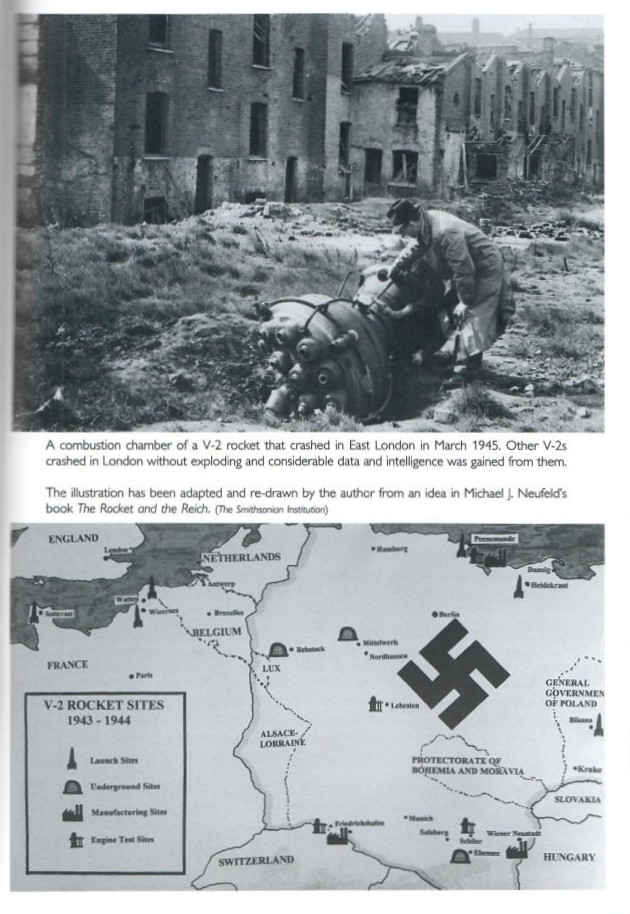
Thus began the V-1 bombing campaign of ‘Target 42’ (London), albeit of the first ten launched (55 V-1 launching sites were to participate with two salvos, then continuous firing through the night of 12-13 June) the following day after delays, five successfully made the 22-minute flight to England. V-2s entered the fight in September, giving no warning to its targets in England, then the low countries.
While very impressive and terrifying weapons, their potential, thankfully, was not fully realized and the resources tied up in the Vengeance Weapon program diverted necessary supplies, materials and personnel from other programs. Like a lot WWII Germany’s desperate miracle weapon ideas, this is a story of mad genius and technological evolution at a huge human cost.
Following the familiar Pen & Sword Images of War series is the story of Hitler's Vengeance Weapons - V-1, V-2 and V-3 Launch Sites, covering 120 pages with 200 black and white photographs. Each chapter starts with a brief history of the topic covered, followed by a lot of photographs to complement the text. This book is composed of the following:
- Chapter One: Rocket Technology
- Chapter Two: Slave Labour Production Sites
- Chapter Three: Secret Installations
- Chapter Four: Launching
- Chapter Five: V-3 Cannon
- Appendix: Launch Sites
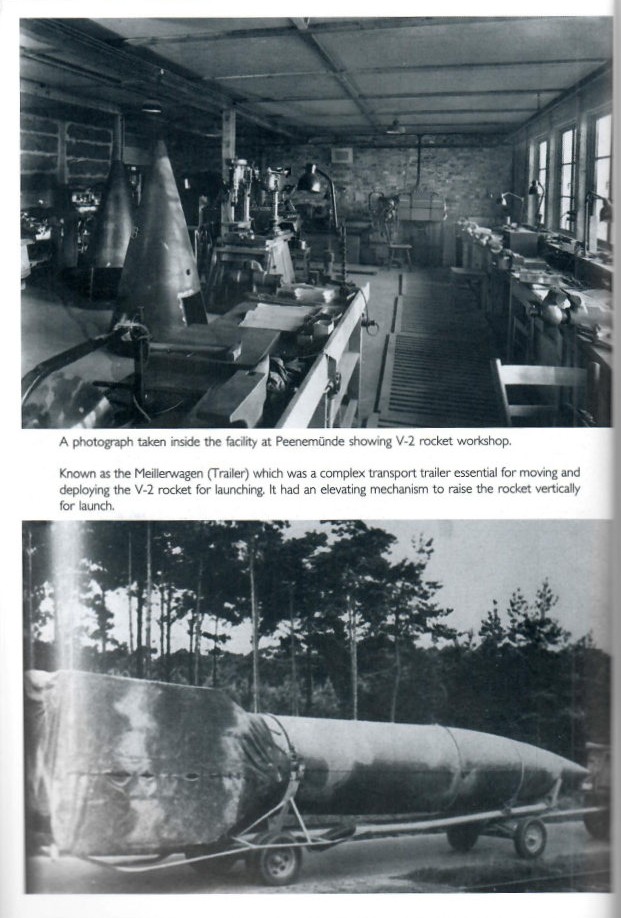
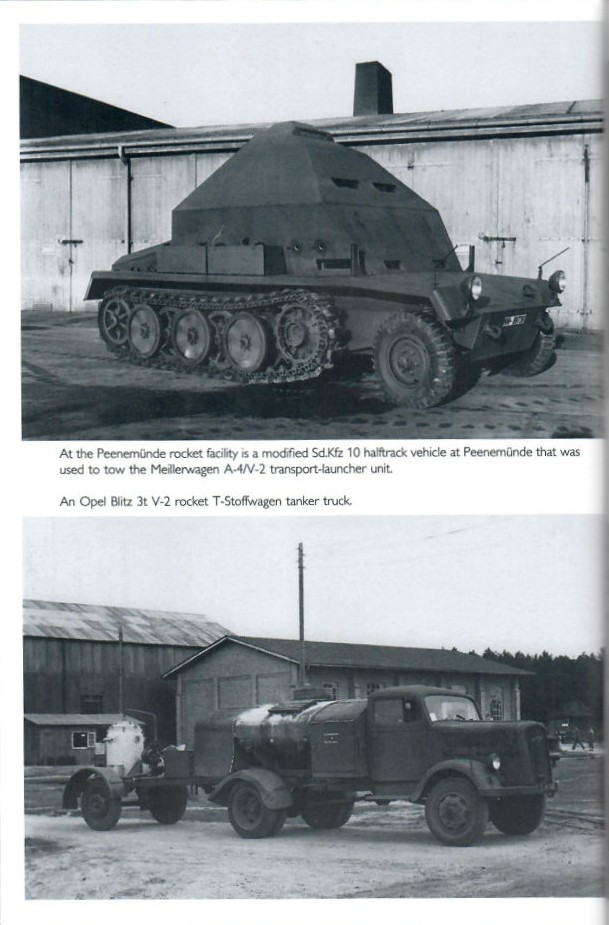
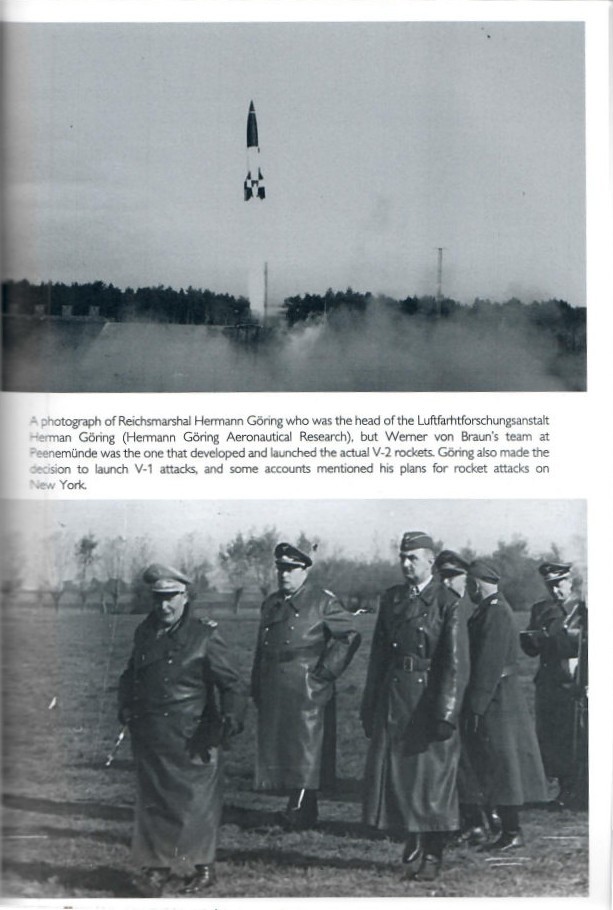
The Germans led rocket technology in the 1930s and the Wehrmacht appointed Reichswehr captain Walter Dornberger to begin development of prototype called Aggregat 1, or A-1. It was during this time that Captain Dornberger hired a young rocket enthusiast named Wernher von Braun and they worked on the new technology at the Army Weapons Department at Kummersdorf, south of Berlin. While the A-1 failed to fly properly, von Braun developed the successful A-2, but it was too small for military use. The larger A-3 followed but was temperamental. Regardless the information learned and moving the research center north to the Baltic Sea island of Peenemünde in 1937 bore fruit with the successful A-4, which evolved into the V-2 (Vergeltungswaffe - "Vengeance”) rocket.
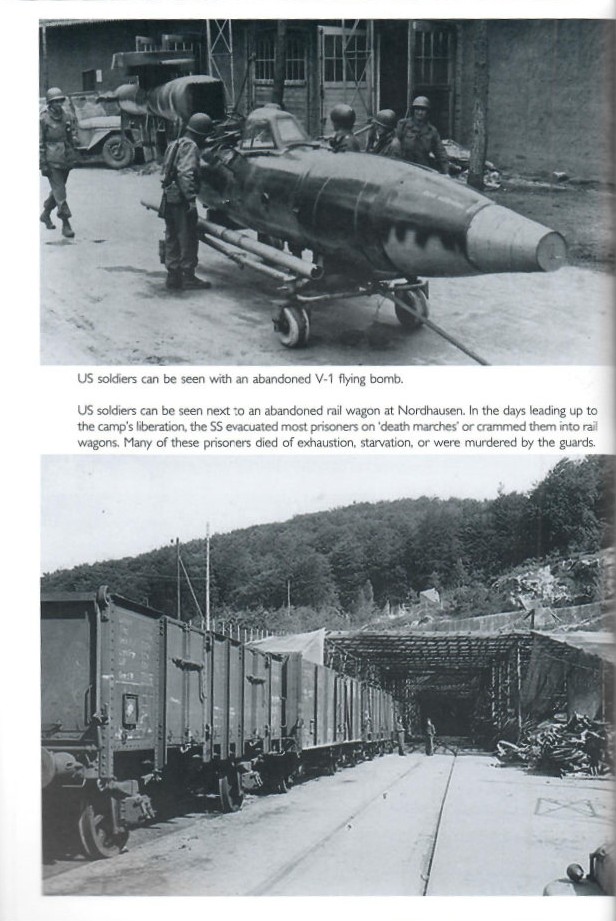
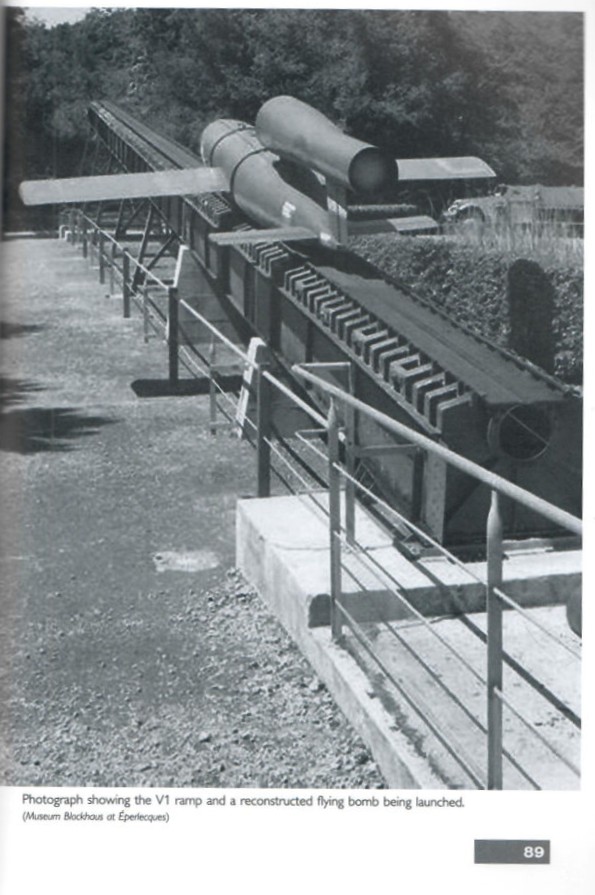
During this same time frame, the Luftwaffe was developing its own rocket with the goal of being much simpler, faster to assemble and cheaper. The result was the small expendable pilotless aircraft, officially known as the FZG 76 (Flakzielgerat (Anti-aircraft Target Device) 76), also known as the flying bomb, V-1 (also known to the Allies as “doodle bug” and “buzz bomb” due to its pulse jet sound).
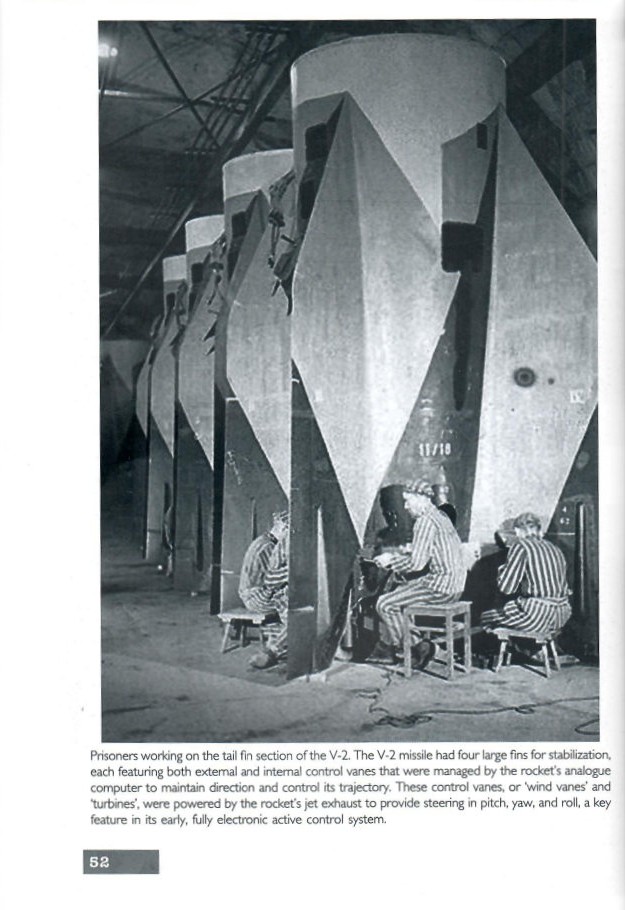
And so, the one of the Third Reich’s favorite past times, competing against each other for scarce resources developed two separate programs. Also in tradition, there were competing thoughts on whether each V-weapon should be launched from hardened or mobile launchers. As over-engineering is also a German trait, several hardened launch sites were built for the V-2 and V-1 at the cost of thousands of slave laborers’ lives. A problem with large “bombproof” sites is that they were identified by Allied air reconnaissance and bombed as part of Operation Crossbow by the Royal Air Force and United States Army Eighth Air Force bombers beginning in May 1943. The bombing campaigns, while costly, prevented the German military from launching V-weapons, thus forcing the Germans to focus on mobile launches.
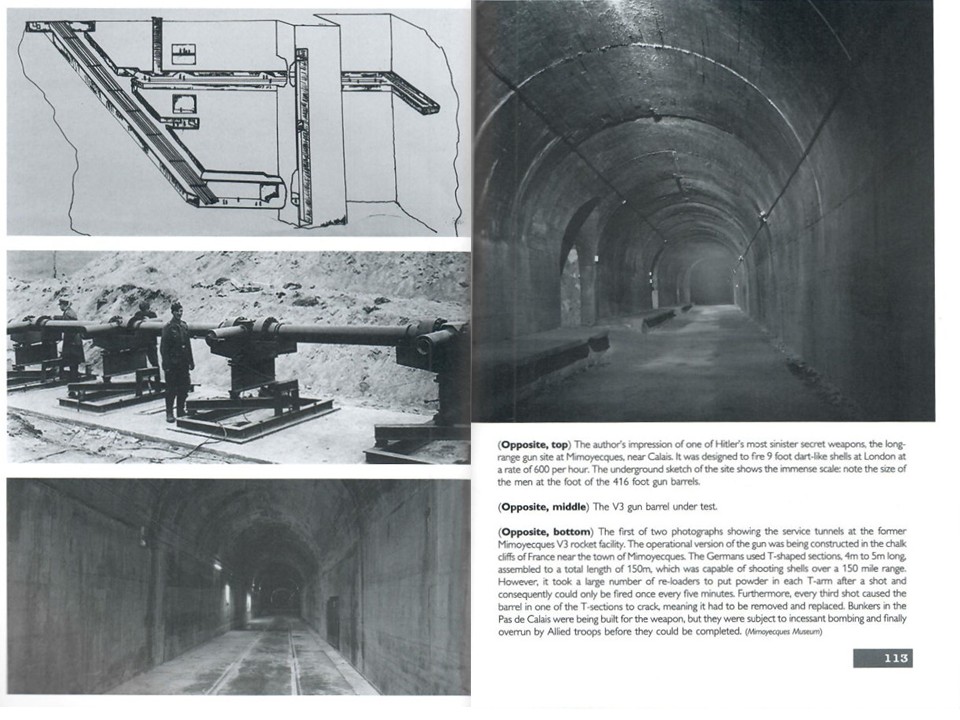
A chapter is also devoted to the lesser-known V-3 Cannon with the range to shoot London, also known as code name Hochdruckpumpe ("High Pressure Pump", HDP for short). It was also known as Fleißiges Lieschen ("Busy Lizzie") by its German crews. Only one site in Northern France was built, but it too fell victim to Operation Crossbow before being put into use. Two smaller guns were made from the larger guns and used to little effect while bombarding Luxembourg during the Ardennes Offensive.
This is an amazing book on the development of the Vengeance Weapons (V-2, V-1, and V-3 in order of combat debut) that served the Wehrmacht, Luftwaffe and Waffen-SS toward the end of their use. The chapters on the hardened structures, slave labor to build the fortifications and weapons, and photographs are exceptional. The appendix lists the launch sites of all three weapon types and several of these sites still exist as museums.
Modelers will find the photographs very useful for the launch systems, weapons themselves and there is plenty of inspiration for vignettes and dioramas, including the sites being liberated by American forces. This book is well worth your modeling money if you have any interest in the V-Weapons. On a personal note, this book really filled in a void in my personal knowledge. As I live 30 minutes from White Sands Missile Range, Birthplace of America’s Missile and Space Activity, there is a personal connection to Wernher von Braun and the V-2 testing that led to the America’s space program. Even more personal, my father distinctly remembers the “buzz bombs” which announced their presence and then went quiet as their rocket motor cut out on its terminal glide path, much more preferable to the unannounced presence of the ballistic V-2. As a child, he suffered an injury in an explosion in England. When we visited the WSMR museum, he froze in the door of the facility housing the cut-away V-2. This book does a fantastic job of describing the innovation, development and use of a new technology that eventually took humans into space.
Profuse thanks to Casemate and IPMS/USA for providing the review sample.
Comments
Add new comment
This site is protected by reCAPTCHA and the Google Privacy Policy and Terms of Service apply.
Similar Reviews