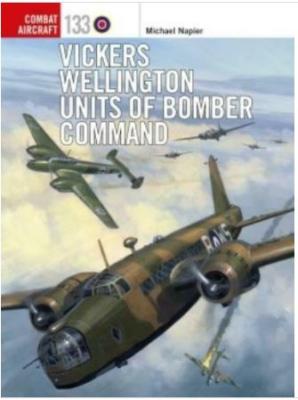
If not for the continued support of companies such as Osprey, IPMS USA would not have the excellent review opportunities we do. Thanks very much to our stateside distributor of these great books, Mr. Wellington. Was not he the guy who’s Army someone else’s’ Army, named Napoleon, at Waterloo? (Answer: yes) And where is “Waterloo”? (Answer: Belgium). I’ve seen that battlefield from both the air and ground (flew over it in an H-53C in a typical European Rainstorm) and it’s not very big as battlefields go. And not once did I associate it with a bomber. Until I put two and two together and got seven (new math). Oh, and it’s not a set of waterproof rubber boots (“Wellingtons”, or “Wellies” as the Brits call them) either.
all 2021
From the Website
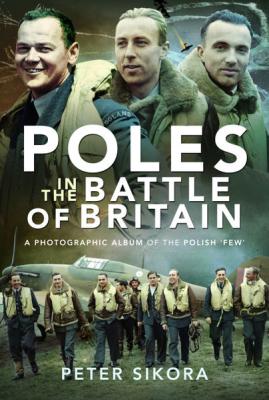
"Peter Sikora makes excellent use of his outstanding knowledge, expertise and passion for history of the Polish Air Force to tell an often-forgotten tale of the Polish Few who fought alongside the British during the Battle of Britain. The author manages to capture in a moving way the reality of life for Polish airmen through personal stories and unique photographs. His work is an important contribution to honouring the memory of those who fought for the freedom of Europe, Britain and their faraway motherland." - Polish Ambassador Arkady Rzegocki.
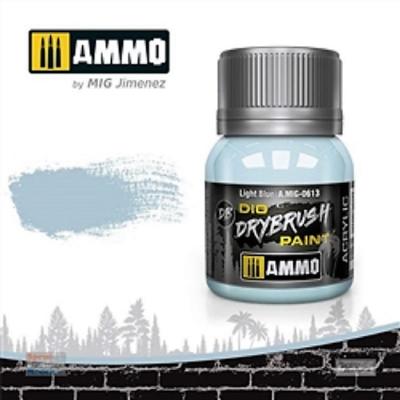
There is somewhat of a recent trend in home furnishing circles that gives renewed life to older furniture and kitchen cabinets. The painting technique of which I speak is dry brushing. The trend has even caught the eye of Bob Vila, once and former host of the PBS series 'This Old House'. Bob is no longer affiliated with the program after lambasting (allegedly) a homeowner for being a lazy twit, but that's a story for another time.
This dry brush technique involves dousing your paint brush into the paint of choice, removing almost all of it from the paint brush bristles and applying the minute amount of remaining paint onto the selected object. In the case of a home improvement project that might be cabinet doors or the odd tabletop but for our purposes this missive will focus solely on scale models.
History
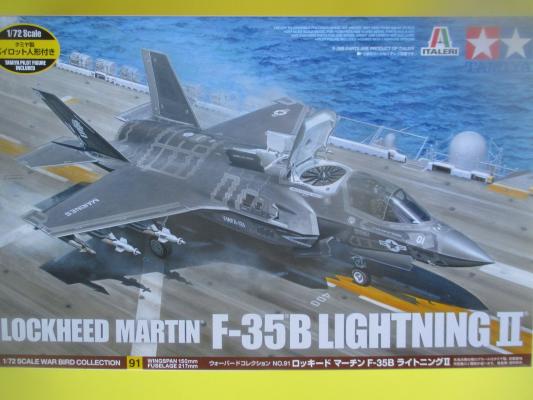
Designed to replace such aircraft as the USAF F-16, A-10, the Navy’s F/A-18, and the Marine Corps ASV-8B STOL aircraft, Lockheed Martin’s Joint Strike Fighter was accepted by the armed services and three versions have been produced so far. Those versions are the USAF F-35A, the Marine Corps F-35B VTOL aircraft, and the Navy’s F-35C carrier fighter. A number of foreign countries have ordered the type. The Marine F-35B provides vertical as well as horizontal thrust. The F-35 is capable of several missions, including air superiority, ground attack, and interception duties. The Marine Corps unit VMFA-121 Green Knights was the first unit to receive F-35’s in 2012, and they have since been issued to USAF and Navy units. Currently, F-35A’s are being used as fighter trainers at Luke AFB, Arizona, where I see them flying almost every day. They are most impressive to see and hear in the air.
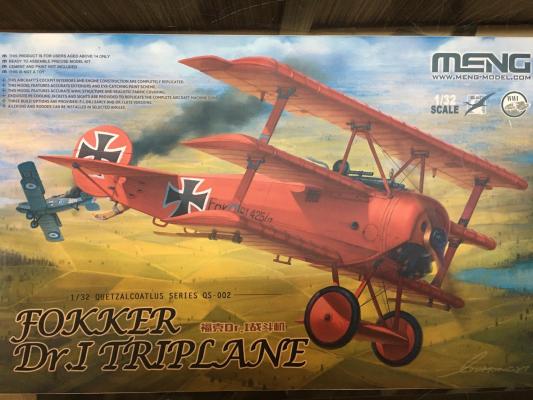
It has been 102 years since the end of WW1 and we still have a fascination with the daring young men and their flying machines. It is amazing that 11 years after the Wright brothers first flew, we had airplanes dogfighting over the battle-scarred fields in Europe. Some of those aircraft were simple single wing models that resembled kites, others were single seat bi-planes and 2 seat cockpits with a pilot and gunner and others were huge 100 + foot wingspan bombers. Then there were the Triplanes, England’s Sopwith came out with the first triplane and the German Fokker soon followed with their Dr-1, of which Manfred von Richtofen, also known as the Red Baron, had made his mount until he was killed in action on 21 April 1918