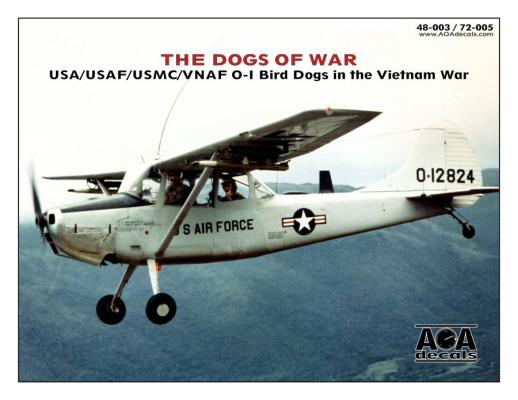
When you mention the Vietnam Air War most people think of the F-4 Phantom or the F-105 Thunderchief, not some slow moving single piston-engine airplane like the O-1 Bird Dog. But this little airplane played a pivotal role in close air support role over South Vietnam. The Model USA kit has been out for sometime but the markings options have been limited, that is until now. Thanks to AOA Decals we now have plenty of marking options.
all 2016
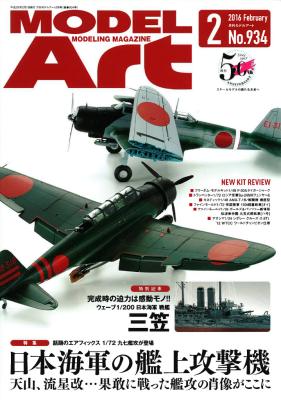
Model Art Issue 934 is typical of other Model Art magazines in that it is written entirely in Japanese, with occasional English words, usually in article titles or in captions. The Model Art magazine is a monthly issue that has evolved from their first issues in 1966 that focuses on all modeling subjects. I’ve attempted to capture the contents below, but please be aware of translation difficulties. There are about 40 pages of advertising, out of the 160 pages, showing what is available and new, always useful for building up that wish list. Nearly all the articles are supported with color photos. A few of the ongoing series are supported with black and white drawings and photos
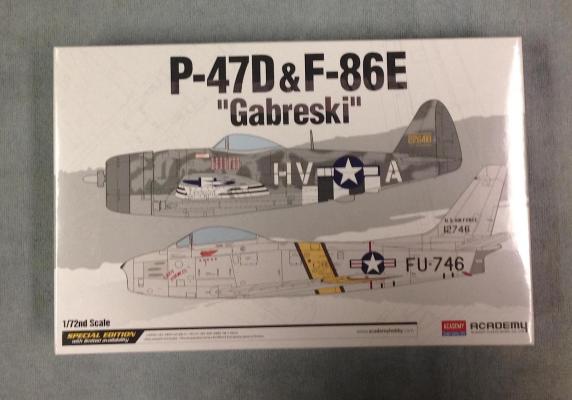
This is a dual kit of two famous aircraft flown by American Ace Francis Stanley Gabreski (nicknamed “Gabby”). Gabreski flew the P-47D in WWII scoring 28 kills, and flew the F-86 in Korea with 6.5 credited kills. He was one of only seven pilots to become an Ace in two wars. It was my pleasure to meet him in person at the IPMS/USA National convention in Chicago in 2001.
Both the Academy kits have fine recessed panel lines and are molded in a light gray plastic. The builds are fairly straightforward with some fit problems. I needed some filler around the leading edges of both airplanes’ wings. The P-47’s cockpit floor seemed to be too low and left a gap between the instrument panel and the top of the fuselage.
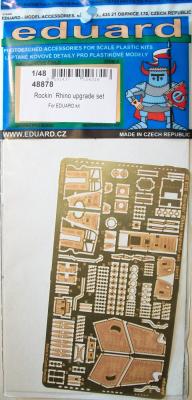
Having the Rockin’ Rhino (F4J Phantom) kit in my stash I was excited to be able to review the upgrade kit. I wanted to see if it would add anything to an already highly detailed kit. Well I was not disappointed as this set really does add a lot of additional and very visible details to this super kit.
The photo etch parts are for the:
- Cockpit surround detail
- Canopy details
- Landing gear doors,
- Landing gear bay interior detail
- Weapon details
In the packet is:
- 2 x Photoetch sheets
- 1 Instruction sheet
I did find two small issues with this set:
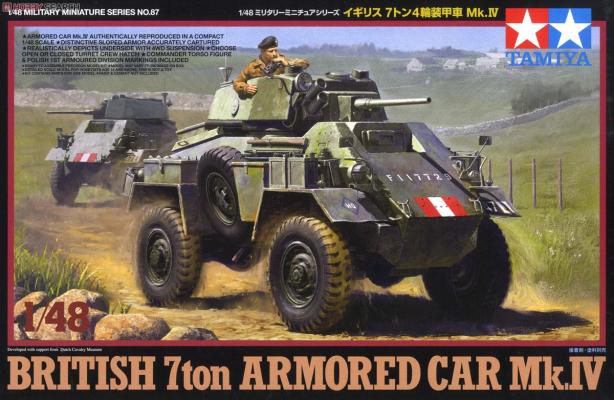
The latest in Tamiya’s range of 1/48th scale military vehicles is what the firm lists as a “British 7ton Armored Car Mk.IV”, while the correct designation is in fact “Armoured Car, Humber Mk.IV”, so I presume the lawyers found that “Humber” was a protected trademark and Tamiya didn’t want to pay for the privilege of using it! These vehicles were to be found all over Italy and NW Europe in British, Canadian, Polish, etc. units, as well as training units in the UK, from 1943 onwards.
Gone are the days when Tamiya incorporated a cast metal hull piece or lumps of metal to attach to the hull interior of their 48th scale military vehicle range. This kit includes only injection molded plastic parts of a dark green color, plus a small decal sheet. No cast metal, no photo etched, no clear injection plastic parts. Detail is good for this scale and there are no visible ejection pin marks that need removing, nor any flash on the parts.
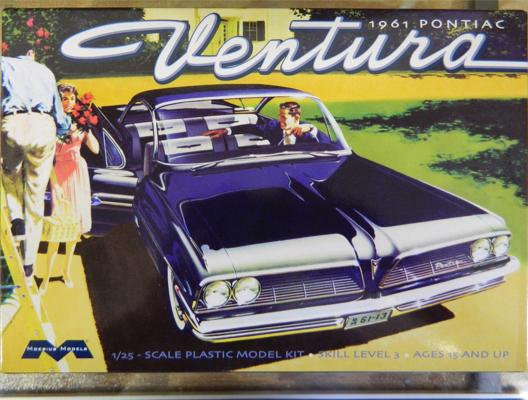
Moebius hits another grand slam with their 1961 Pontiac Ventura kit. Little to no flash, excellent fit, and terrific engraving make this a kit worth building. If there’s a downside to the kit, it’s the poor instruction sheet. While printed on glossy paper, I found the instructions incomplete, incorrect, and lacking in detail. More later.
Engine
The engine comes with only a tri-power setup. This is an option for air filter(s) although not covered in the instructions. There’s the large air filter (#79 & 80) or the individual air filters (#93) that are not mentioned in the instructions. I chose to use the #93s. There are 2 heater hoses shown but placement on the engine is not clear at all.
Interior
Moebius did an interior platform with separate side panels and seats that feature wonderful engraving. Detailed painting instructions make for correct color interior.
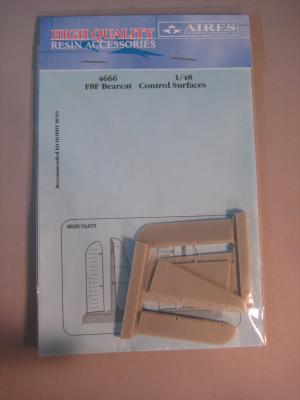
The Bearcat was just too late to join the fight in WWII but was used by the French in Indochina to great effect. It is a sexy and compact naval fighter.
An easy way to add some life to your static model is to reposition the flight control surfaces. I’ve never been able to do this effectively. Well Aires has come to the rescue. The latest release is molded in light grey resin with no flaws anywhere. Two horizontal surfaces and two elevators are included.
Removal of the parts from the pour block is quite easy. The horizontal surfaces are slotted so are drop in replacements for the kit parts. The elevators can then be added and deflected as you see fit with superglue. You may want to pin it to get a more solid join. Don’t forget to move the stick in the appropriate direction. It is really that easy and simple.
Another winner from Aires. This set is an easy addition to make your model come alive. I’m looking forward to other releases such as this from Aires.
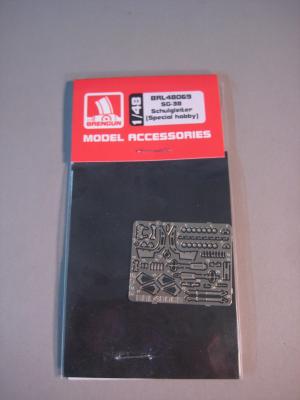
The SK-38 is a small glider produced in Germany before and during the war. It was also produced by the Czechoslovakian government after the war. With the release of the Special Hobbies two kits the modeler can now do this historically significant aircraft.
Brengun has produced a small nickel plated photo etch fret that is designed to enhance the kit. There are limitations that plastic pieces can’t do. That is where the PE comes in. This little fret adds the intricate details throughout the kit. The photo etch replicates the metal parts on the real thing, while the kit plastic does the same for the wooden pieces.
The SK-38 is a simple little glider and kit and with this photo etch set you can replicate the intricate details.
Highly recommended
Thanks to Brengun and IPMS/USA for the review item. You can obtain yours by contacting them directly at www.brengun.cz or your local hobby shop or online retailer.
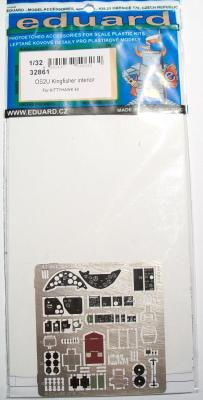
This is a great photo etch set for the Kitty Hawk OS2U Kingfisher Kit. This set adds a lot of extra detail to the interior of the kit and makes it really stand out.
The phot etch parts are for the:
- Bulkhead details
- Instrument panel and various control details
- Bomb fins
- Machine gun and ammo box details
- Seat details
- Main cabin floor details
- Radio rack details
In the packet is:
- 1 Photo etch sheet
- 1 Colored photo etch sheet
- 1 Instruction sheet
Summary
This is a one of the best Photo etch sets I have used and is a must for the Kitty Hawk Kit, as it makes it into a great model with lot of additional interior details for this aircraft. I really think the machine gun and instrument details alone are worth getting this set for.
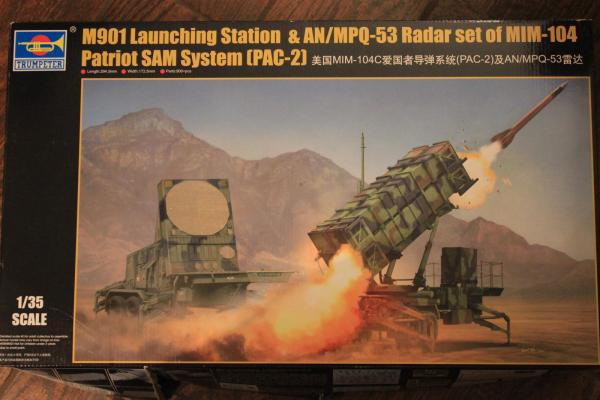
The PAC-2 Patriot is a surface-to-air missile system, whose primary purpose is to intercept ballistic missiles in the terminal phase of flight. This new offering from Trumpeter is the first injection molded kit of the Patriot Missile system in 1/35 scale. The kit includes the Transporter Erector Launcher Trailer, 4 missile containers, a missile and the AN/MPQ-53 Radar set trailer. There is only one option for displaying both trailers and that is the deployed position with the outriggers down and the missiles raised.
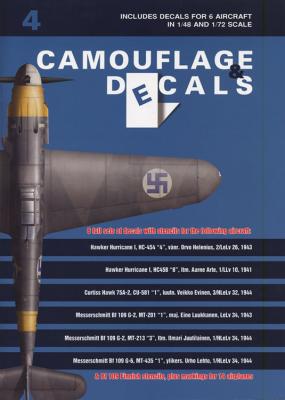
This 16-page booklet continues the series that contains 1/72 and 1/48 decals, profile images, and descriptive camouflage information covering a number of different fighter aircraft in Finnish service during WWII. The text, photos and graphics come from the excellent “Finnish Fighter Colors” books, also published by MMP.
This volume cover six aircraft in detail:
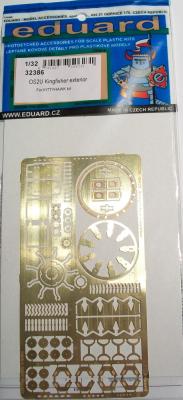
Another very nice photo etch set, this time for the Kitty Hawk OS2U Kingfisher Kit. This set adds a lot of extra detail to the exterior of the kit.
The photetch parts are for the:
- Engine details
- Side and main float details
- Bomb fins
- Bomb Pylons
- Wing light surrounds
In the packet is:
- 1 large photo etch sheet
- 1 Instruction sheet
Summary
This is a must have set for the Kitty Hawk Kit as it makes it into a great model with lot of additional exterior details for this aircraft. I really think the engine details alone is worth getting this set.
Thanks go to Eduard for providing this set to review and IPMS USA for allowing me to review it for them.
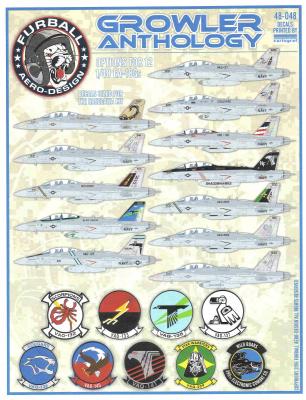
As the Navy transitions away from the venerable EA-6B’s into the new EA-18G Growlers, the planes have started to get more elaborate markings and kits have become available to replicate the plane. Hasegawa took their excellent F-18F kit and has issued several iterations. Maybe it is just me but most of the aftermarket decal companies have been slow to respond to some of these new releases. Fortunately for us modelers, Furball Aero-Designs is not one of those and has great new releases. This one is for the Hasegawa kit and includes a whopping 12 wonderful growlers and has enough decals to actually build two full planes.
Master Models once again provides IPMS USA with examples of machine-shop excellence… We are extremely thankful to Piotr for providing examples of his work to review.
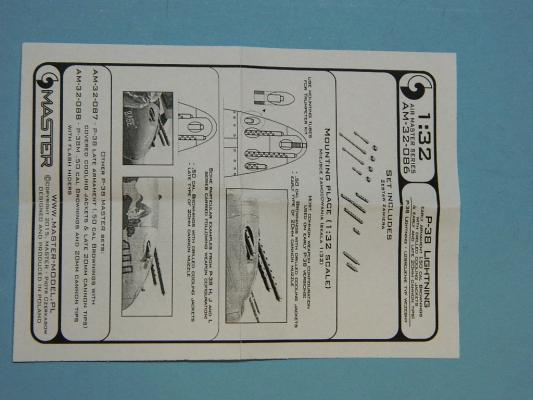
As you can see by the product photographs, these .50 caliber browning machine gun barrels are exquisite works of art. Designed to fit one of the two 1/32 Lighting models currently available, you receive four different length .50 caliber barrel assemblies, and two separate types of 20MM cannon barrels which were utilized on some variants of the Lightening.
What is really impressive about this set is you are provided with the drilled cooling jackets, which I challenge anyone to do at home with tubing and your personal micro drill set! I know I can’t… so this is one area (of several) where Master Models’ products shine.
Besides the cooling jackets, you are provided with hollow barrels, and mount rings,
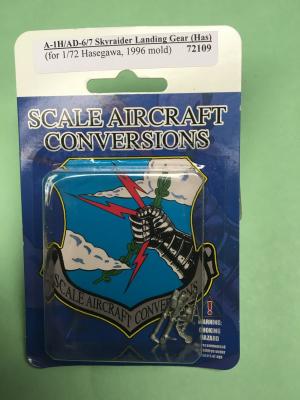
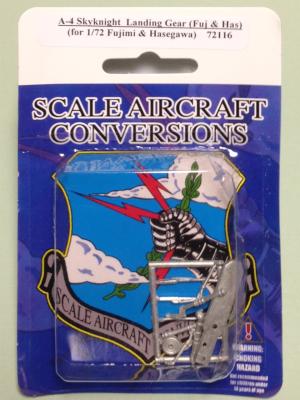
As with many of SAC’s sets, this set provides a one for one replacement for the kit parts. It consists of just five parts, two main landing gear struts, two retraction struts and a tail wheel. The parts are nicely cast and have just as slight cast line where the mold halves met, but this is easily cleaned up with either a fine sanding stick or a metal wheel in your Dremel tool at low speed. The retraction struts are very thin, so be careful in handling them as white metal is much more pliable than the plastic kits parts, but unlike the kit parts, the metal parts do not spring back to their original shape if bent or moved around, they stay in the shape you last put them in.
Thank you Airscale Model Aircraft Enhancements for sending these excellent decals for review. Thank you to the IPMS Reviewer Corps for letting me review them! I am honored to contribute back to the scale-modeling community.
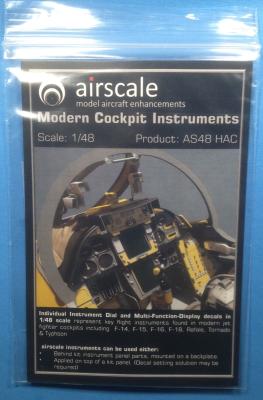
Airscale Model Aircraft Enhancements’ tagline is “High resolution cockpit detailing for aircraft modelers” and this decal sheet is an excellent example of their philosophy. A compact 3 1/16 x 2 3/8 inch (60 x 80 mm) sheet is richly populated with a wide variety of high-resolution modern jet aircraft instrument gauges and screens. All decals have minimal carrier film. A thin transparent acetate sheet, about 2 inches square, is included for adding instrument cover glass.
Thank you Furball Aero-Design for sending these excellent decals for review. Thank you to the IPMS Reviewer Corps for letting me review them! I am honored to contribute back to the scale-modeling community.
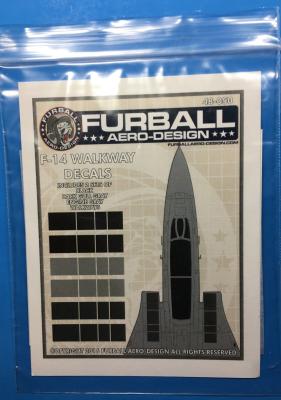
Six F-14 sets of over-the-intake walkways are provided on a 4 x 4 ¼ inch (100 x 110 mm) sheet. The decals have minimal carrier film. There are two sets in each of three colors: black, dark gull gray, and engine gray. Decal opacity is excellent. Test decals worked very well with Microscale solutions and plain water. The decals are thin and durable, snugging down nicely without coaxing. I did not try stronger solutions like Solvaset, but I do not believe that such solutions would be needed. In short, these simple decals work, and work well.
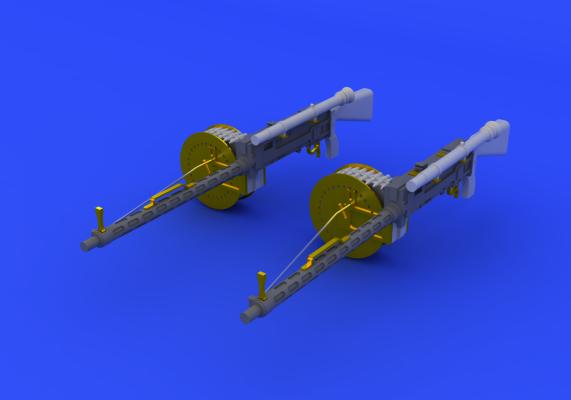
A little background. The LMG Model MG 14/17 machine gun was a 7.92mm gun used on aircraft and Zeppelin in WWI. The 17 designation means that the gun was the 1917 version of this particular weapon. MG-14/17's were used very widely on German multi-seat aircraft throughout 1917 and 1918, particularly as the weapon for the rear gunner/observer on two seat planes.
Eduard has produced a resin and photoetch replacement for kit parts representing this gun. Inside the package, you get parts for two guns. The resin parts consist of the stock, the gun itself, the ammo drum and the sight. The photoetch parts consist of the gun sight, handle, the sides of the ammo drum, the supports for the gun sight and the trigger assembly.
This set is provides replacement gear for either the Hasegawa or the Fujimi A-4 kits. As I had a number of the Fujimi A-4 kits, I selected the TA-4J kit for installation. In comparing the metal parts to the kit parts, the set includes two different nose gear struts; one matches the Fujimi strut, so presumably the other is intended for the Hasegawa kit.
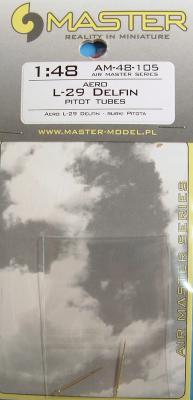
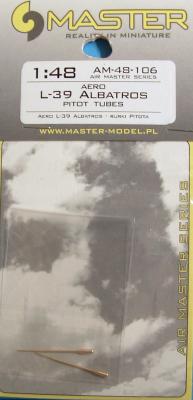
Master Model continues to provide delicate turned metal parts which not only provide greater detail closer to scale, but in the case of pitot tubes, are far more resilient during handling. For the modeler who chooses to take a model to a show or club meeting, indestructability is a consideration during the modeling process.
The MPM/Special Hobby 1/48 L-39 Albatros is back on the market after a long hiatus. The kit provides the aircraft’s two pitot tubes as separate moldings which are then glued to the leading edge of the wing. The pitot tubes are rather non-descript and require clean up to use. Master Model fortunately has released this set of two tubes as replacements. These are nicely turned pieces with all of the subtlety of the real tube. To use them, the modeler just needs to drill a hole in the wing after assembly of the wing and slide the tubes into the hole when the model is finished. There is plenty of base stock for attachment to the wing.
Thank you Airscale Model Aircraft Enhancements for sending these excellent decals for review. Thank you to the IPMS Reviewer Corps for letting me review them! I am honored to contribute back to the scale-modeling community.
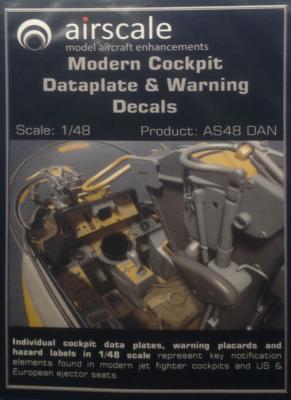
Airscale Model Aircraft Enhancements’ tagline is “High resolution cockpit detailing for aircraft modellers” and this decal sheet is an excellent example of their philosophy. A compact 3 1/16 x 2 1/8 inch (54 x 80 mm) sheet is richly populated with a wide variety of high-resolution modern jet aircraft data plates and warnings. All decals have minimal carrier film.
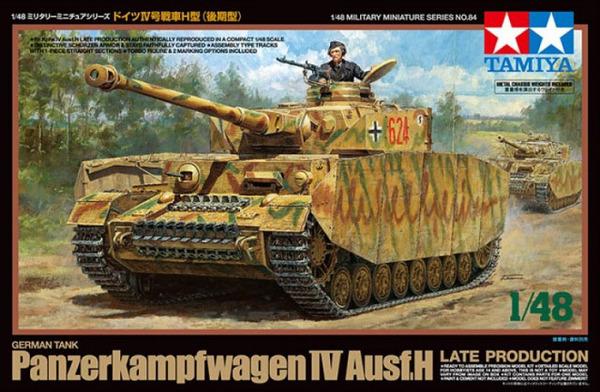
Tamiya’s ever growing line of 1/48 armor kits has added one of the most produced armored figting vehicles of the Second World War, the Panzerkampfwagon IV, with this release being the ausf H version. The kit is molded in Tamiya’s standard desert yellow plastic. The tracks are plastic link and length type, and the only multi-media in the kit is two steel weights for the lower hull. Originally Tamiya 1/48 armor kits came with die cast metal lower hulls, but that has been replaced with a plastic hull in this release, with the two weights being a compromise. There is no zimmerit texture on the hull parts, a necessity for a German armor kit of this time frame. Tamiya recommends either buying their zimmerit tools and applying your own, or using the self adhesive vinyl zimmerit that they produce. I chose the latter for my build.
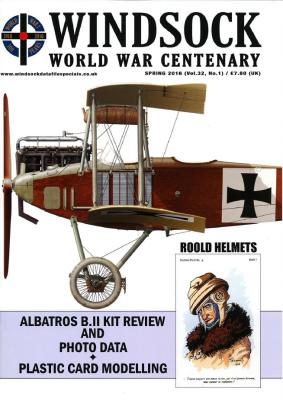
The Spring 2016 edition of Windsock World War Centenary is the first edition of Volume 32. This edition’s cover story features an enlarged version of Ronny Barr’s Albatros B.II 675/15 side profile.
The Wingnut Wings Albatros B.II is covered in the Kit Reviews section along with period photos from the Harry Woodman collection. The third in a series by the late Harry Woodman focuses on an unpublished update to his rare Scale Model Aircraft in Plastic Card that is a must have. This feature provides updates to the original and is supplemented with plenty of archival material and color photos.
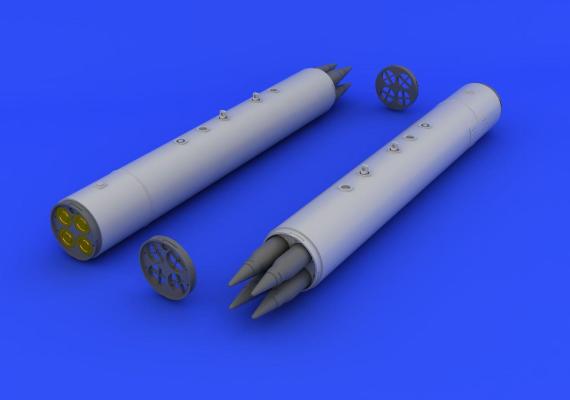
Eduard continues their additions to the 1/32 scale line of armament with a pair of resin Lau-10 Zuni Rocket pods. These pods carried our 5” rockets with folding fins. There are multiple warhead configurations for these rockets. This set comes with one option which look s like standard high explosive. The set comes with fourteen perfectly cast resin pieces, a small photoetch fret and a set of decals for both pods.
Prep work is pretty straightforward as casting blocks need removed from the main body, the front and back body ends and the rocket heads. Cast into the back body end are representations of the end of the rocket and its find. There are attached with super glue and fit is good. One thing to note before committing to paint is that the resin does need a good scrubbing with soap, etc. to get rid of mold release. I added the ends, washed and primed the parts with Alclad gray primer.