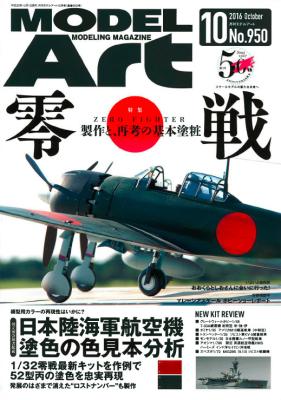
Model Art Issue 920 is typical of other Model Art magazines in that it is written entirely in Japanese, with occasional English words, usually in article titles or in captions. This issue deals specifically with the F-86 in Japanese service, painting the Streak Eagle version of the F-15, Orange Hobby’s F-35 kit and a comparison build of the Mercedes-Benz 300SL from Tamiya. Plus, there are lots of advertisements showing what is available and new, always useful for building up that wish list.
One of the lessons that I’ve learned over my years of modeling is that it is wise to use the tool best suited for the job at hand. I have a number of high quality tools and many of them have the label, “Xuron” on the handle.
My latest acquisition is the Xuron Tk 3600 Photo Etch Took Kit. The Xuron webpage featuring the TK 3600 states that this kit was designed for scale model builders working with delicate photo-etch. Is there any other kind of PE? The kit contains three tools for cutting, bending and holding PE parts.
Model 9180ET Professional Photo-Etch Scissor cuts the PE, Model 450 TweezerNose™ Plier holds the PE, and the Model 575 Micro Bending Plier bends it.
Xuron offers an excellent set of hobby tools, cleverly disguised as ‘Field Service Tools’ for electricians and technicians. This set is presented in a fabric pouch, which has three pockets for the tools, and two additional pockets to store a ruler, a set of files, picks, scribers, and other small hand tools.
Xuron’s description of the product: “The tri-fold pouch includes a Model 410T Micro-Shear® Flush Cutter with a refined tip for access into restricted areas, Model 440 Mini-Scissor for slitting cable jacketing, and the Model 450 Tweezer-Nose pliers for tightening pins, forming connectors or holding wires.”
For the hobbyist it might be more beneficial to identify the tools in this fashion: The Model 440 Mini-Scissor can be used to snip PE parts from the carriers, as well as those tiny plastic parts from their carriers without damage to the parts.
Walk into any modeler’s hobby room and you will find a library. Scan through the publications and titles on the shelves and you will find a book or publication on “airbrushing”. Airbrushing is an essential skill for almost all modelers and those modelers need to develop a high level of competency to use and master this basic tool.
Kalmbach has released a new publication by Aaron Skinner entitled, “Airbrushing for Scale Modelers” that provides a comprehensive guide to airbrushing from “basic” to “advanced”.
You probably recognize Aaron’s name as he is the senior editor for FineScale Modeler and also a very well-known modeler. In this publication Aaron guides the reader through airbrushing basics and then uses “project models” to demonstrate airbrushing techniques.
First off I am not a big fan of ebooks. Sorry but I am old school and prefer the feel of the paper itself. However, I am a big fan of info on the internet and do have a few ebooks on my Kindle so there is always a chance for me.
That said, Mr. Marmo’s book on making your own decals really interested me as I have a bunch of decals I need to make for certain projects and even though I shelled out for a nice laser color printer and picked up some decal paper I really didn’t know where to start so let’s take a look at what Richard says.
This book is a description of the changes in equipment, uniforms, and tactics of the allied troops from the landing at Normandy to VE day on May 8, 1945. Experience, technological improvements, and the seasoning of troops in battle brought about these changes. The book is mostly in text with supporting photos and color plates of soldiers’ uniforms and equipment. The book primarily focuses on infantry, but there are also sections on armor and field artillery. The book emphasizes tactics and use of equipment.
The book has sections on the US infantry, Free French Forces, the British/Canadian Army Group and the British 79th Armored Division.
Osprey is a publishing house in the United Kingdom that should be a household name to the swarms of us. Osprey continues to expand their Fortress series with the 109th book in this installment. The Fortress Series examine the fortifications and defense structures of opposing forces. In this case the Atlantic wall which at the time was the most fortified defense in Europe. This “wall” proved successful in forcing the allied forces to find an alternate route after several scuffles forced them back.
For the Fortress series, the chapters are organized as follows:
Osprey is a publishing house in the United Kingdom. This book at the time of this review is slated for an October 20, 2015 release date but from what I have read and see history buffs and modelers alike will not be disappointed. It is packed with useful information and illustrations covering every era of warfare and the uniforms and clothing that was used in those conflicts.
For this book the chapters are organized as follows:
Osprey is a publishing house in the United Kingdom that should be a household name to swarms of us. Osprey continues to expand their Duel series with the 68th book in this installment. The Duel Series examines the relative strengths and weaknesses of two adversaries across a particular conflict. This particular volume turns its attention to the US Navy Carrier group’s aircraft versus the IJN Yamato class battleships.
For the Duel series, the chapters are organized as follows:
UMM continues to make and issue tools that their owner John Vojtech has developed and used to make his award winning models. The UMM™ 3D Center Locating Tool Jig is one of those tools. What you get is two pieces of aluminum bolted together so that the bottom forms a v-shaped notch and the top forms a straight edge aligning with the point of the notch. The purpose of the tool is simple, find the exact center of a round or square object. This is extremely handy when you need that center for drilling out holes or attached things exactly on center.