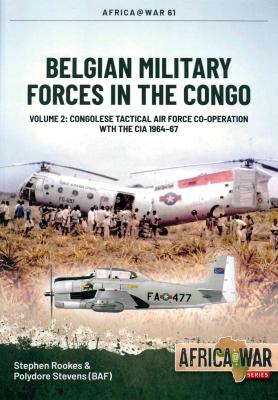
This is the second volume of the Belgian Military Forces in Belgium. The first book, “Belgian Military Forces in the Congo, Volume 1: The Force Publique, 1885-1960”, covered the events of Belgium’s 75 years in their Congo colony, leading to the official withdrawal of Belgian forces. Volume 2 picks up in 1964 after the newly independent Republic of the Congo-Kinshasa’s (later renamed Democratic Republic of the Congo-DRC) brief, bright future was overcome with internal factions, and the independence movement spreading through Africa (with several backed by Marxist forces). While Belgium wanted to remain hands-off, it quickly became apparent that they needed to step in to protect Belgian and Congolese interests.
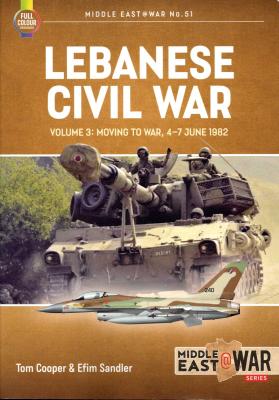
Helion & Company publishing produces specialized military history books. Part of the “Middle East at War” series, Lebanese Civil War, volume 3 (third of a five part series) book covers a short period from 4 to 7 June 1982 known as the “Moving to war”. The publication is 96 pages of full color, black & white photographs, diagrams as well as artist illustrations.
The book starts out with abbreviations that will be found in the following pages and a map of Lebanon showing the control zones. Text and illustrations are laid out in chronological order covering all the groups on both sides of the conflict.
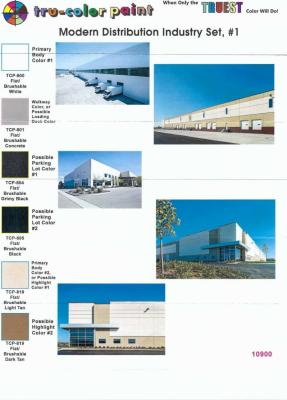
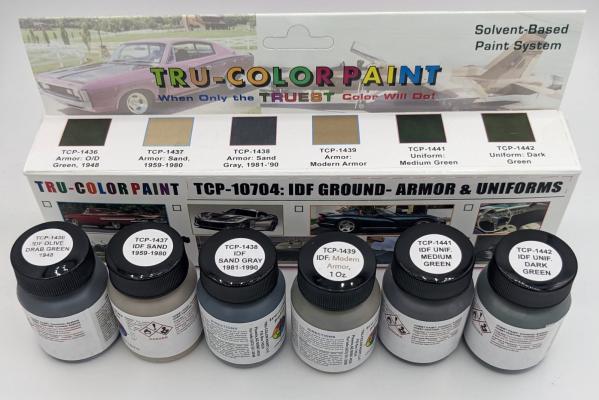
Rick Galazzo and Scott Cohen started Tru-Color Paint in Phoenix, Arizona, in 2008, based on their experience in formulating paint for the commercial market. They reformulated the former Accupaint formulas and created this paint line. It is refreshing to see that in today’s day and age with model kits and supplies moving overseas, that these paints are made in the USA. They have five paint lines including automotive, aircraft, naval and military colors, including many sets to make a project easier by having all the colors in one box. Another huge bonus for me is that Scott Cohen wrote a personal letter explaining the paints for review, a request for new paint color suggestions, and genuinely supporting modelers and IPMS. Based on all this, I was eager to try these paints for myself.
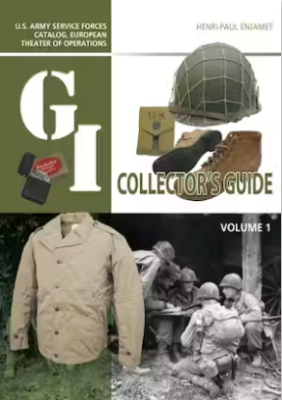
Henri-Paul Enjames started collecting uniforms and equipment of the American soldier in Europe during the 19 43–1945 period. He was fascinated by the power of the United States Army and how it supplied soldiers with the most modern equipment and uniforms. His collection includes items in the best possible condition, many with readable markings providing information about manufacture dates and models. He used a 1943 Quartermaster Corps supply catalog to organize and show his collection. His intention with this book is to gather as much information as possible on the uniforms and equipment of the American soldier in Europe to illustrate authentic items.
Enjames’ Collection is shown in high-quality color photographs of the actual items with captions of the articles name, number, and years of use. Additional text provides background on the equipment illustrated.
The chapters are organized similar to the 1943 QMC Supply Catalog:
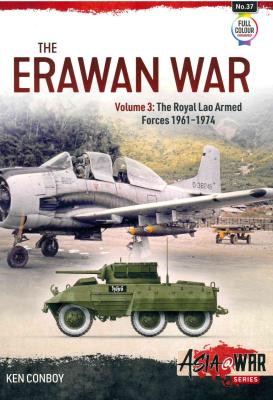
I reviewed the Erawan War, Volume 2 - The CIA Paramilitary Campaign in Laos 1969-1974 that was posted in January 2023. I was impressed so much with Ken Conboy’s style, research, and approach that I asked to review the third volume in his series on the Erawan War. And I was not disappointed. While the first two volumes focus on American efforts, largely though the CIA, this volume focuses on the Laotian perspective and their many wars, infighting, international relations, and coups. Despite the efforts of the French, Americans, South Vietnamese, Thai, and Filipino advisors and military, the Laotian country followed the other Southeast Asian countries in their forceful conversion to communism.
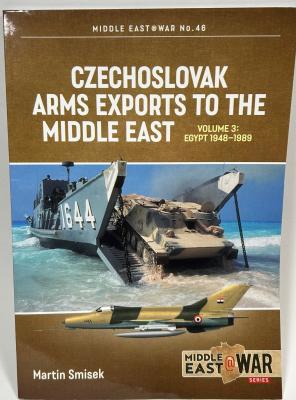
The book is volume 46 of Helion & Company’s Middle East @ War series and, as noted in the title, is the third volume of its coverage of Czechoslovak Arms Exports to the Middle East focusing on arms exports to Egypt between 1948 and 1989.
Starting in the mid-1950’s and continuing on and off up to the collapse of the Eastern Bloc in 1989, the Czech arms industry exported a wide variety of weapons to Egypt, including ammunition, small arms, artillery, tanks and aircraft. It was also heavily involved in training many pilots, ground personnel and technicians, conducting courses both in Egypt and Czechoslovakia.
Rick Galazzo and Scott Cohen started Tru-Color Paint in Phoenix, Arizona, in 2008, based on their experience in formulating paint for the commercial market. They reformulated the former Accupaint formulas and created this paint line. It is refreshing to see that in today’s day and age with model kits and supplies moving overseas, that these paints are made in the USA. They have five paint lines including automotive, aircraft, naval and military colors, including many sets to make a project easier by having all the colors in one box. Another huge bonus for me is that Scott Cohen wrote a personal letter explaining the paints for review, a request for new paint color suggestions, and genuinely supporting modelers and IPMS. Based on all this, I was eager to try these paints for myself.
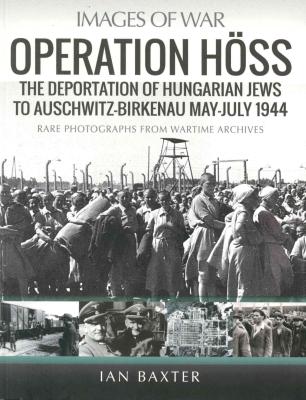
Ian Baxter is a prolific author and has an impressive collection of photographs, many unpublished previously. The book follows the familiar Images of War format with brief introductions for each chapter followed by a lot of photographs to tell the story. After reading Ian’s book on Heinrich Himmler, the Architect of the Holocaust, I wanted to read, and learn more, about the mass deportation of some 438,000 Hungarian Jews. Ian Baxter did not disappoint. He illustrated how the Nazi final solution had become even more efficient and brutal in 1944 after the Hungarian change in government at the behest of the Germans. The Hungarian Jews, who until that time, were temporarily protected, were now open to joining their Jewish neighbors throughout Europe. Operation Höss was named after Rudolph Höss, the longest serving commandant of the Auschwitz camp system from 4 May 1940 to November 1943.
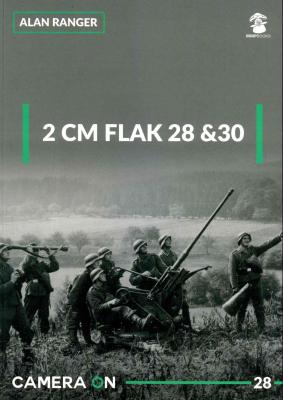
Alan Ranger is a former British Royal Engineer, engineer, collector of World War II militaria and original period photographs, and prolific author. Alan started his publishing days with Model Art of Japan this is his 28th book in the Camera On series (he already has another four in production), typically focusing on weapon systems and vehicles. The beauty of this book is the photos were taken by German soldiers during their wartime service, not typically posed and polished propaganda shots.
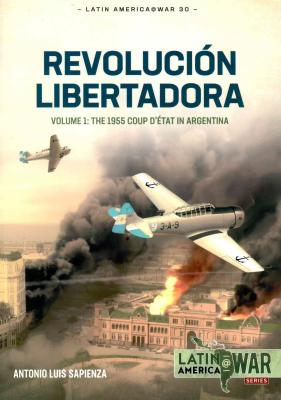
“On Thursday, 15 June 1955, thousands of people as usual were on the streets of downtown Buenos Aires. Some curious citizens had heard something about an air parade, and they were in the Plaza de Mayo looking up at the sky. At around 12:40 p.m., some Naval Aviation North American AT-6, PBY-5A Catalina and Beechcraft AT-11 planes appeared on the horizon, But they were not there for a parade; they were there to simply bomb Government House in an attempted coup against Juan Domingo Perón. This raid left behind more than 300 dead, 600 wounded and dead everywhere. The Army units that should have been mobilized to support the uprising never did. The coup attempt was aborted within a few hours. But unlike the bombing of the city of Guernica in 1937, the planes that bombed and the pilots who flew them were national forces. Perón would be finally overthrown three months later by the so-called Liberating Revolution.”