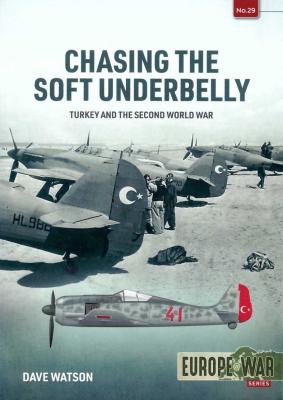
“On Thursday, 15 June 1955, thousands of people as usual were on the streets of downtown Buenos Aires. Some curious citizens had heard something about an air parade, and they were in the Plaza de Mayo looking up at the sky. At around 12:40 p.m., some Naval Aviation North American AT-6, PBY-5A Catalina and Beechcraft AT-11 planes appeared on the horizon, But they were not there for a parade; they were there to simply bomb Government House in an attempted coup against Juan Domingo Perón. This raid left behind more than 300 dead, 600 wounded and dead everywhere. The Army units that should have been mobilized to support the uprising never did. The coup attempt was aborted within a few hours. But unlike the bombing of the city of Guernica in 1937, the planes that bombed and the pilots who flew them were national forces. Perón would be finally overthrown three months later by the so-called Liberating Revolution.”
If you have won an award at an IPMS contest and it was an engraved wooden plaque, chances are it was made by Bases by Bill. Bill and Wes Wedeward have been supplying custom awards to shows for several years including the 2018 and 2019 IPMS National Conventions.
The awards are available in several sizes with 1st, 2nd and 3rd place and special award options available. The bases are made out of the finest hardwoods and use laser engraving and can have hand painted color accents.
Bill supplied us with 2 examples. The first is a 4” x 3” rectangular award and the other one is 8.5” at the base and 6.25” tall with a rounded top. The engraving is perfect with all words easily readable.
He also sent me pictures of several other options they have done in the past.
Pricing varies by the size of award, details, type of wood, etc. and from what I can see on their site their prices are very competitive especially for the quality of their products.
After the Battle (ATB) publications is a long lived publishing company that was recently acquired by Pen and Sword. For many years ATB published the quarterly magazine called, After the Battle. It recently was discontinued, but their many books use the same format of comparing photographs contemporary to the Second World War with modern views, hence the then and now moniker. They consistently publish articles and books of a very high quality. The images are superb, both contemporary and modern. They will be missed.
Tibet covers the size of the American Southwest, with an average elevation of 14,000ft (4,380m), surrounded by some of the highest mountain ranges in the world with the Himalayas to the south, the Karakoram to the west, and the Kunlun to the north. The terrain of north and western Tibet is barren mountain desert, the northeast province of Amdo resembles the Mongolian steppes, the southeast province of Kham drops slightly in altitude and the topography, according to the author,
“devolves into exaggerated slopes, impossibly narrow valleys, and gnarled conifers normally associated with Chinese watercolors. It is the central plateau, however, that has become synonymous with Tibet…it is a harsh, rocky land of hypnotic beauty where, because of the altitude, light seems to intensify colour and detail.”
This is an amazingly detailed book authored by a Polish Ph.D. in Law, living in Japan, writing about Japanese advances in the eastern Indian Ocean. As if that isn’t intriguing enough, author Michał A. Piegzik covers a little known (at least to most Americans) subject in a much larger backdrop of Allied defeats in the early Pacific War, focusing on ABDA (American, British, Dutch, Australian) forces as they reeled from Japanese attacks in Thailand, Hong Kong, Singapore, Dutch East Indies, the Philippines, Java, and Burma.
Cliff Lord served in Britain’s Royal Signals during the 1960s as a cipher operator in England, Germany and on active service in Aden and the East Aden Protectorate. After the Army, Cliff worked in Paris for the Washington Post and later moved to New Zealand working as a computer operator, a communications network controller for Air New Zealand, and Team Leader International Operations for the Southern Cross fiber optics trans-pacific cable before retiring. He is Honorary Historian for Royal New Zealand Corps of Signals. Cliff has written nine books on military history and insignia.
This is a new riveting tool from UMM-USA and adds to its growing line of modeling tools. The single wheel tool allows you to emboss fine rivet lines on plastic, resin, soft wood, and thin metal sheets. The black handle, about the thickness of a Bic pen, fit well in my hand and was comfortable to use.
I experimented with the tool on several different types of styrene and an old plastic kit. I used a thin plastic ruler on the flat surfaces and found that it was easy to emboss a row of rivets. On some pieces of pieces of styrene I had to put more pressure on the tool due to the hardness of the styrene. On curves surfaces I used a thin metal straightedge from an old drafting class – labeling tape would also work well.
I found the tool easy to use and I was impressed by the rivet lines produced. I look forward to using it on some of my older kits where there are no rivets.
This is a new tool that was added to UMM-USA’s line of modeling tools this fall. The tool consists of a thin double-edged saw blade and black plastic handle. It is intended to be used with resin parts and thin styrene.
The tool is used similar to a full-sized keyhole saw. While it can be used like a standard saw, cutting from the edge in, its principal use is to cut a hole inside a part. I experimented by drawing out a rectangular panel on scrap styrene, drilling pilot holes at each corner and then using the saw to cut from hole to hole, creating a rectangular opening. The corners were then cut out using a sharp Xacto knife.
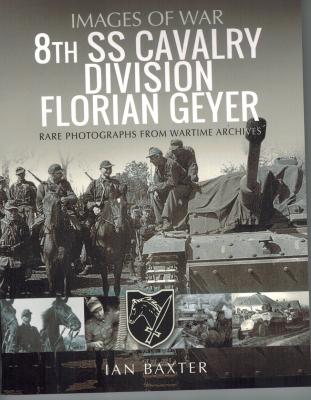
Ian Baxter is a prolific author and has an impressive collection of photographs, many unpublished previously. The book follows the familiar Images of War format with brief introductions for each chapter followed by a lot of photographs to tell the story. At first, I was hesitant to review this book as a lot has been written about this period of well-documented evil that was the Nazi era. However, I wanted to read and see Ian Baxter’s perspective on Heinrich Himmler, the Architect of the Holocaust.
Ian Baxter did not disappoint, and his opening paragraph sums up the book,
AMMO by Mig has released a new line of acrylic paints for railroad modellers called the Rail Center. There are 41 railroad specific colors in the series, with twelve box sets:
- Ammo.R-1000 Spanish Renfe Locomotives
- Ammo.R-1001 Dutch Locomotives
- Ammo.R-1002 British Locomotives
- Ammo.R-1003 German DB Locomotives
- Ammo.R-1004 German DR Locomotives
- Ammo.R-1005 Germany DRG-DB Steam Locomotives
- Ammo.R-1006 Via Rail Canada Locomotives
- Ammo.R-1007 Classic American Railroad Companies – Locomotives Vol. 1
- Ammo.R-1008 Classic American Railroad Companies – Locomotives Vol. 2
- Ammo.R-1009 British Freight Cars
- Ammo.R-1010 American Freight Cars
- Ammo.R-1011 German Freight Cars
The paints depart from the familiar Ammo by Mig 17ml eye drop containers and are packaged in 15ml cylinders with stirring balls.