

Paul Bradley
Reviews By Author
|
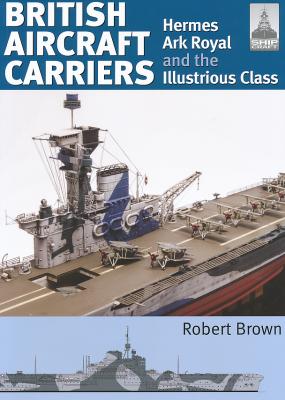
British Aircraft Carriers: Volume 1 - Hermes, Ark Royal and the Illustrious ClassPublished:
The Shipcraft series will be familiar to many, but for those who aren’t, the idea behind the books is to provide concise information about a specific subject, providing heavily illustrated reference material and in-depth modelling information including line drawings and color profiles. This latest 64-page paperback volume in the series features a bevvy of British aircraft carriers from the 20s through the 40s, specifically, HMS Hermes, HMS Ark Royal and the Illustrious Class. These ships were the first British carriers designed as such from the beginning, as opposed to others ships that were converted either on the stocks or post-build. Hermes, indeed, was the first in the World to be so designed, although her completion took so long that she wasn’t the first to actually enter service… more |
|
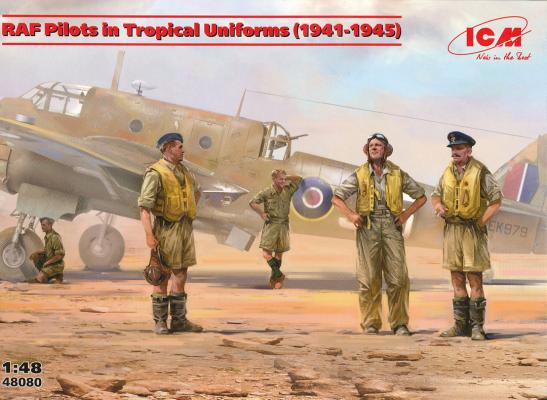
RAF Pilots in Tropical Uniforms (1941-45)Published:
Not to be confused with RAF Pilots in Tropical Uniforms (1941-45) in 1/32, this all-new figure set depicts five RAF servicemen in tropical rig and will be suitable for dioramas and vignettes in North Africa, the Middle East, Italy and the Far East for that time period. The standard ICM white box comes with a colour slip cover with boxart of the figures posed in front of a North Africa-based Beaufort. The box contains a single medium grey plastic runner with 31 well-detailed and well-moulded parts. No decals are included, though it might have been nice to have some RAF wings and rank insignia to add where appropriate. A single full-colour painting guide with part numbers and colour callouts for ICM paints is all that is included (or indeed necessary!) in the box. Belying… more |
|
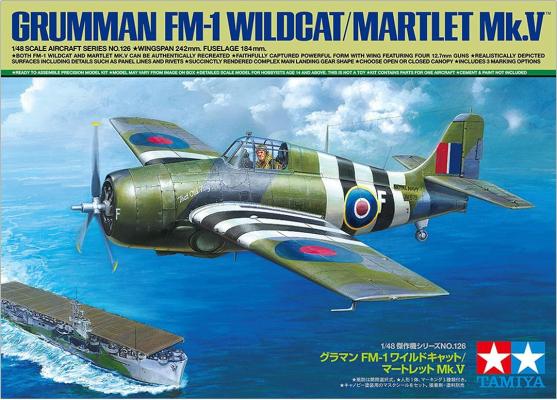
Grumman FM-1 Wildcat/Martlet Mk.VPublished:
Strictly speaking, the name of this kit is incorrect. Grumman didn’t build the FM-1 – Eastern Aircraft did. Additionally the FAA option in this kit features Normandy Invasion special recognition markings for June 1944, by which time the type had become the Wildcat Mk.V, and not the Martlet. Such pedantry aside, this is a nicely packaged re-issue of Tamiya’s well-received F4F-4 Wildcat kit of 1994 – was it really that long ago?! – featuring some new parts and some modified parts. That kit - #61034 – has been reviewed online many times, but the common view is that it is a nicely engineered kit, featuring good detail, and fine recessed panel lines, but with slightly exaggerated raised rivets in places, an incorrect solid cockpit floor, and an incorrect centre fuselage… more |
|
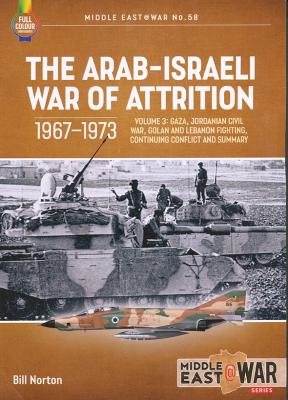
The Arab-Israeli War of Attrition, 1967–1973: Volume 3Published:
Given the current situation in the Middle East, this is not an easy review to write; if nothing else, this publication proves that there is nothing new in the World. The long-standing enmity between Arab and Israeli politicians has festered since the foundation of Israel in 1947. Aside from the continuing Arab terrorism during the period between the 1967 and 1973 Wars, there was a less-known ‘low-level’ conflict, known as the War of Attrition, where nation-states on both sides positioned themselves as best they could for the next war. The locations of this conflict ranged from the Israeli borders, with cross-border raids being carried out by both sides; to the skies over disputed territories as the Israeli Air Force hammered the Arab air forces; to the sky and ground… more |
|
The Dieppe Raid: The Allies’ Assault Upon Hitler’s Fortress EuropePublished:
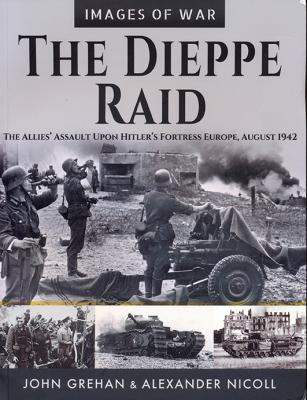
During the early months of 1942, there was much pressure on the Western Allies – especially from the Russians - to ‘do something – anything!’ to relieve the unrelenting bad news on all fronts. The British were struggling in North Africa and the Far East, Japan was running roughshod over the US in the Pacific while the Canadian Government was under pressure at home. The result of these pressures was to lead to one of the most ill-conceived operations of WWII – Operation Jubilee, the raid on the northern French port of Dieppe, which had been heavily fortified by the occupying German armed forces. The resulting operation in August 1942 was an unmitigated disaster, costing the lives of thousands of Canadian and British troops, sailors and airmen with very little to show. This… more |
|
Spotlight On NAA P-51 MustangPublished:
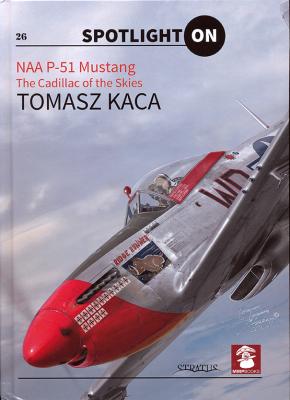
This book is the 28th in MMP’s Spotlight On series, and consists of 23 full-color plates showing 23 different famous P-51 Mustang fighters, splendidly depicted by Polish aviation artist, Tomasz Kaca. Each plate shows the aircraft in question in the air above a variety of landscapes and featuring various WWII theatres. Each plate is accompanied by a short caption naming the aircraft and its identity, the pilot and his unit. There are no other words in the book, not even an introduction. While the plates are splendidly rendered, I have two issues with the book. Firstly, the plates are split across the spine of the book and while it is easy enough to ‘break’ the spine so it lays flat, it does rather spoil the effect. Perhaps this type of book is better served by a landscape format… more |
|
US Navy Helicopters Acrylic Colors SetPublished:
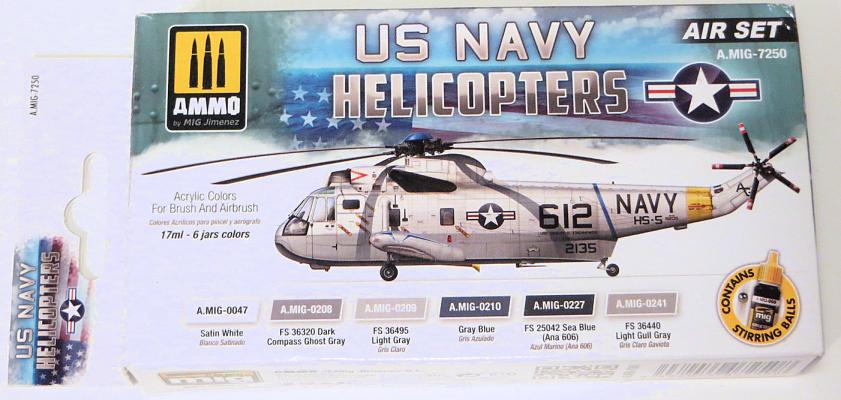
This is another paint set by the prolific Ammo by MiG concern out of Spain. I’m sure many of you already use these acrylic paints and so are familiar with their ease of use with both brush and airbrush. The featured colors come in the familiar yellow-capped 17ml dropper bottles and include the necessary colors to paint the SH-2 Seasprite, SH-3 Sea King or SH-60 Seahawk, and many other post-war US Navy helicopters. The colors themselves look good for the applications required, and have, apparently, been slightly lightened for scale effect. Each bottle contains a small stainless steel ball bearing to aid mixing, which is a great idea that ought to be copied by other manufacturers. The paints are water-soluble, odorless and non-toxic; they can be thinned using distilled water, but… more |
|
AVRO Lancaster and Others Night Bombers Air Acrylic Colours SetPublished:
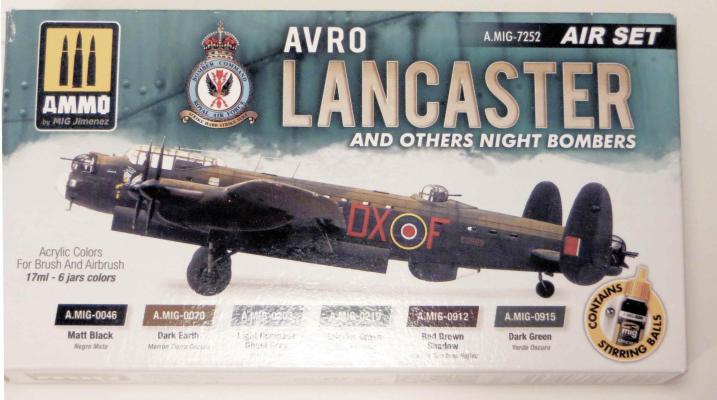
This is another paint set by the prolific Ammo by MiG concern out of Spain. I’m sure many of you already use these acrylic paints and so are familiar with their ease of use with both brush and airbrush. The featured colours in this set come in the familiar yellow-capped 17ml dropper bottles and includes colours needed for many of your favorite RAF bombers flown during World War II. The colours have, apparently, been slightly lightened for scale effect. The names of the paints don’t match the proper British Standard names, because – as with many modern paint ranges - AMMO is trying to match the colours required with what’s in its range. In this case, I feel the Dark Green is too vivid and too light, so I added some very dark grey to darken it and flatten it down. The Dark Earth… more |
|
Northrop F-5 Freedom Fighter and Tiger IIPublished:
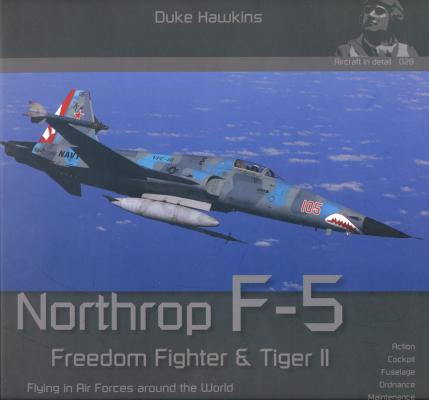
The Northrop F-5 is a compact, highly agile fighter jet developed some 60 years ago. The aircraft’s quality is demonstrated by the fact that six decades later it is still in active service in many air forces in both the original F-5A and updated F-5E forms. This latest book of the ‘Duke Hawkins’ series – number 28 -- features a complete portrait of the F-5E. With 128 pages and over 320 color photos, there is great detail of both in- and outside: every part of the fuselage, wings, landing gear, vertical and horizontal tails. It also contains some high-quality and spectacular action photographs from aircraft in service with the US Navy, US Marines, Swiss AF, Taiwan and Brazil. There is also coverage of the Iranian Sa'eqeh, which is an F-5 modified with twin vertical tails. … more |
|
Hawker Typhoon, The RAF's Ground-Breaking Fighter-BomberPublished:
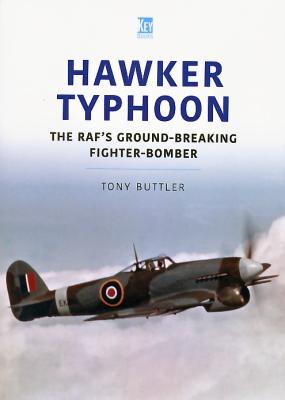
Although designed as a fighter to replace the Hawker Hurricane, the Typhoon found fame as a ground attack aircraft and as a rocket-firing tank buster. In this small, mainly photographic volume, acclaimed British author Tony Buttler concisely outlines the development and career of this charismatic aircraft from its inception at the start of World War II to its service demise in 1946. A short span for sure, but the impact of the Typhoon was, as Buttler explains, outstanding. Many of the photos have been seen before, but the author is also able to draw on the archives of Aeroplane magazine, now owned by Key Publishing, to add some depth with photos that perhaps have not been published since the war. The quality of the images is mostly very good, and reproduction is excellent. Most… more |