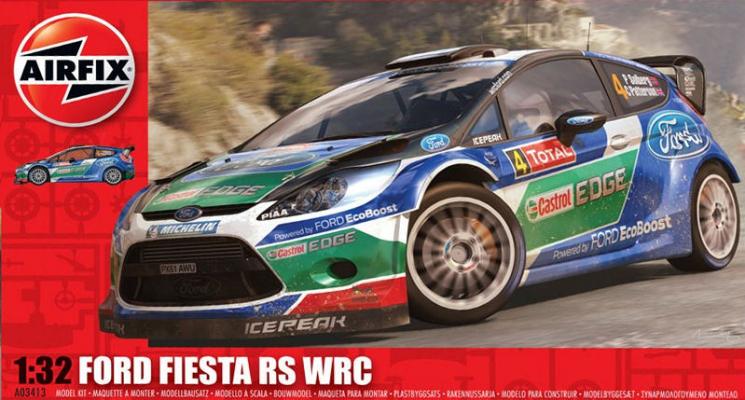
I must admit to being a huge WRC (World Rally Championship) fan. Like the Formula 1 World Series, the WRC races take place in different countries around the world each season. Races alternate between various surfaces: tarmac, gravel, dirt, snow/ice, and often multiple surfaces within the same race. The racers consist of two person crews, driver and navigator/co-driver, representing either a “works” team or being an “independent”. With the occasional exception, the top three finishers in each race come from the “works” teams, as due to the big money behind such teams, they are able to afford the most advanced cars, the top driver talent, and the highly trained and disciplined mechanics necessary to sustain a car over the course of an individual race and the entire season. For the past many years, the Big Guns have been Subaru, Citroen, and Ford.
What's New
History
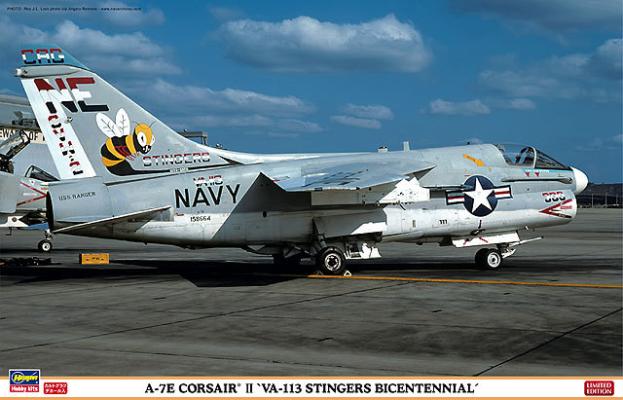
The Ling-Temco-Vought A-7 Corsair II is a carrier-capable subsonic light attack aircraft introduced to replace the Douglas A-4 Skyhawk. The A-7 was one of the first combat aircraft to feature a head-up display (HUD), an inertial navigation system (INS), and a turbofan engine.
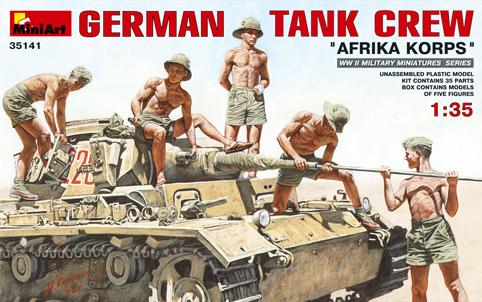
This set consists of five figures all conducting some basic tank maintenance. The figures come on two sprues with 35 parts. The box art and instructions on the back of the box show the figures as completed. The first figure is a commander watching the others work, the second is either entering or exiting the right side turret hatch, the third is running the barrel cleaner up the barrel, the fourth appears to be cleaning the turret machine gun, and the last is helping guide the barrel cleaner into the barrel. The poses are well done and depict a reasonable amount of action.
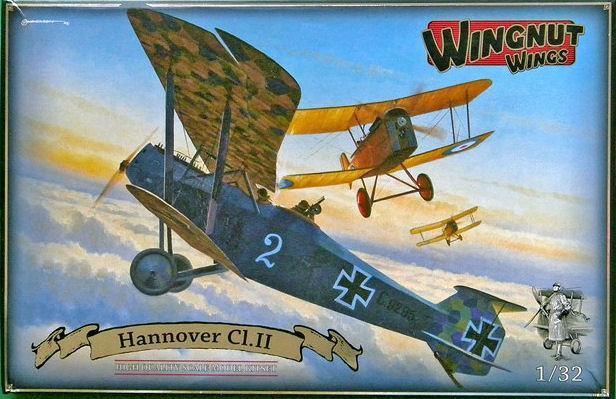
In 1917, the Deutsche Luftstreitkräfte issued an official requirement for a high performance, two-seat fighter needed primarily for low-level tactical support of ground troops, and that also would be capable of serving as a two-seat escort fighter for reconnaissance aircraft. Hannoversche Waggonfabrik AG responded with a novel design for a lightweight multi-purpose aircraft that eventually became known as the CL.II. The company was a respected manufacturer of railway wagons that had secured licenses after the war began to build aircraft for Aviatik, Halberstadt, and Rumpler. The CL.II was their first indigenous design and one that had a distinctive appearance when compared to its contemporaries. It proved to be a success in multiple rolls, not the least of which was outmaneuvering and besting some RFC fighters that it battled.
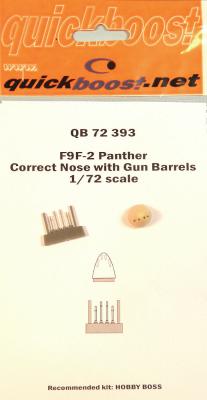
Quickboost has done it again. They have produced a terrific correction for the nose of an F9F-2 Panther. As per their usual, the resin casting is crisp and accurate. The nose is cast in tan resin and the guns are grey resin.
Care must be taken when removing the guns from the casting block as they are super fine and can snap easily.
The nose has the recesses for the guns that are deep enough to insert them. One must cut the nose off the Hobby Boss F9F-2, which this nose is designed for, at the proper line. The line is molded on the kit so there is no guessing.
As with all the Quickboost kits for the F9F-2, this is a must. I have reviewed all of their aftermarket kits for the Panther and am looking forward to building the ultimate 1/72 one. I would highly recommend this kit and all of the other Quickboost parts if you want to make the Panther truly accurate.
The first thing to realize when building a resin kit is you have to read and reread the instructions. Paul Fisher does an excellent job of not only writing the instructions but also adding tips, painting instructions, and any other needed information for the build.
This is another one of those cases of “is it a book with accompanying decal sheet, or is it a decal sheet with some very in-depth accompanying instructions?”
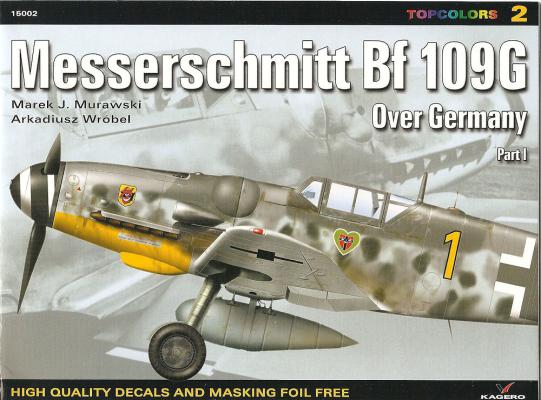
I have read/reviewed/used several other Kagero products in the past, but this is the first of the Topcolors series I have had a chance to examine.
The booklet itself is produced to a high standard. It has stiff, glossy card-stock covers and the contents are all printed on heavy paper with a matt finish. I was intrigued by the line on the cover: “High Quality Decals and Masking Foil Free.” There was a decal sheet in the book, but no masking foil. After some searching of the mailing packet and some scrutinizing of the website, it seems this is the tag line used in the entire series and doesn’t necessarily apply to every volume. This particular volume only has the decals included. Others in the series may or may not have masking foils as well.
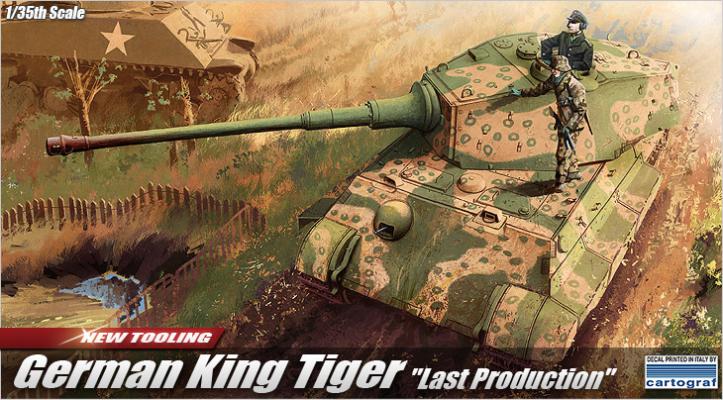
The Tiger II "Königstiger" (Bengal Tiger) was the most powerful combat tank produced and deployed during World War II. Up to the end of the war, the Allies did not introduce anything that could effectively counter it on the battlefield. The Tiger II combined a powerful and effective gun with thick, sloped armor that was virtually impervious to any Allied tank or anti-tank gun. The Tiger II was armed with a long-barreled 88mm L/71 gun and had 150mm frontal armor and 80mm side armor. Front and side plates were sloped and interlocked, which created a strong defense against Allied firepower. This tank was known as the King Tiger and Royal Tiger.
Background
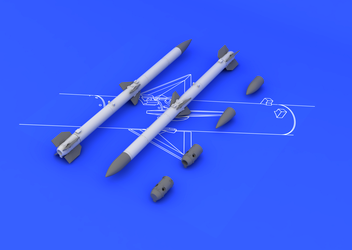
The AIM-120 Advanced Medium-Range Air-to-Air Missile, or AMRAAM, is a modern beyond-visual-range air-to-air missile (BVRAAM) capable of all-weather day-and-night operations. Designed with the same form-and-fit factors as the previous generation of semi-active guided Sparrow missiles, it is a fire-and-forget missile with active guidance.
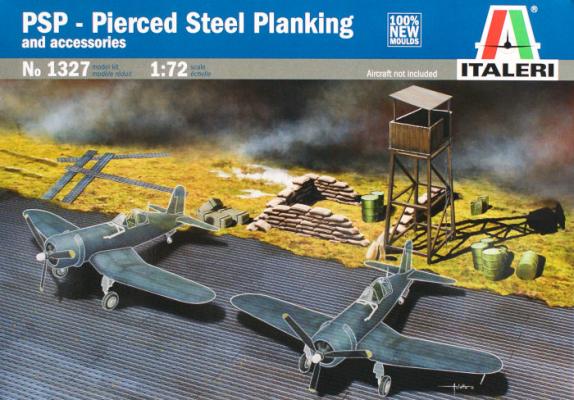
This is a most unusual kit to review. It is of PSP – Pierced Steel Planking used during WW II to build runways quickly. It was also called Marsden Mat.
These runways were used mostly in the Pacific theatre of the war. They were assembled quickly by Seabees on the islands of the Pacific as the Allied forces got closer to Japan. They were usually painted olive or black and the steel showed thru as wear took its toll.
This kit consists of a 9.25 by 13 inch base molded in light grey plastic. Most of the base of PSP has some ground cover to show the accessories. The accessories are a lookout tower, sandbags, extra PSP, 55 gal. oil drums, and several petrol cans.
I first sprayed the whole base with a dark grey/black primer. I then drybrushed OD over the PSP and then lightly drybrushed steel to show the wear. I painted the ground surfaces several shades of sand. I used Vallejo acrylic paints on the painted surfaces.