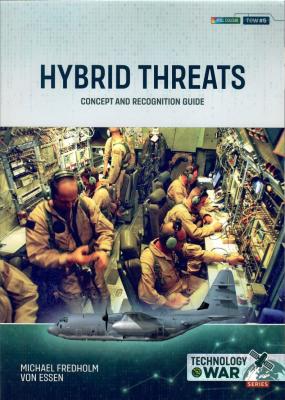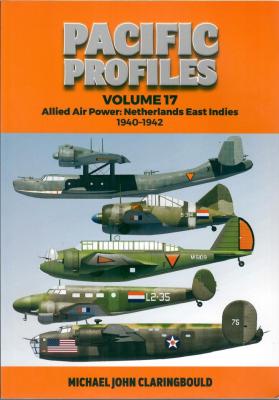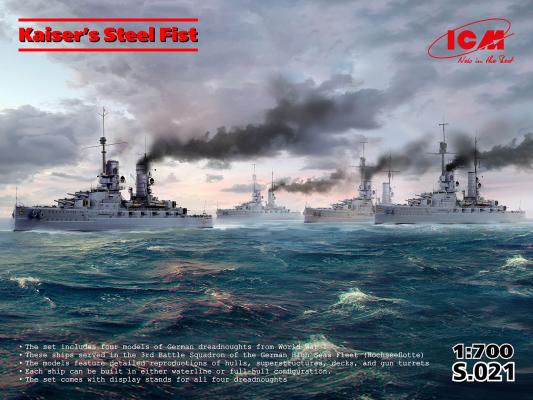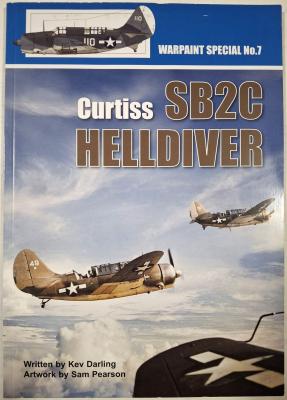
From the Pen and Sword Books website:
What's New
Historical & Reference Notes
From ICM's own description:
In the Box
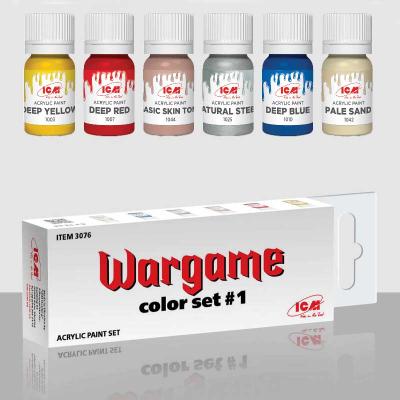
The ICM Afrika Korps acrylic paint set contains six bottles, 12 ml each. The paints are water-based. The box contains these paints:
- Middle Stone (1060)
- Offwhite (1028)
- Leather Brown (1053)
- German Field Grey (1070)
- Silver (1024)
- Green Ochre (1059)
Application and Experience
The following instructions on how to use the paints can be found on the side of the box:
Illiad Design has recently released an aftermarket decal set covering the T-33.
This decal sheet covers a total of 5 aircraft, and you are provided with enough markings as to be able to model all of them. You are still expected to use the stencils provided with the kit. You have your choice of
- T-33A in American markings in a very attractive SEA camo
- T-33A (the instructions call it a T-22A) from Pakistan in an overall grey-green
- CT-133 RCAF markings in Dark Sea Gray/Dark Green over PRU Blue with a Snoopy drawing in the fin
- T-33 in Luftwaffe in RAL 6014, 7012 and 7001
- CT-133 in wraparound gray and green in low viz Canadian markings.
They are an amazing selection of markings. I particularly liked the T-33 in SEA camo with shark teeth. The instruction sheet says it was the only T-33 to receive SEA camouflage.
The non-profit UK based group known as the Great War Aviation Society publishes A new magazine, Contact!, is now available in both print and digital download. The first two issues of Contact! Are available for a free digital download on their website. Their journal, Cross & Cockade International, is also published four times a year. Issues are available in English as printed [Softbound, A4 (8.27” x 11.69”), 72 pages [Including Covers] as well as digital copies (or both). The Society also provides a free newsletter (sign up on their website) and occasionally publish WWI themed books like the Sopwith Dolphin monograph I reviewed earlier for IPMS USA. This Journal is the sister of the US Journal, Over The Front. The Great War Aviation Society also hosts a lecture series available through Zoom. If interested, you will need to register early as the call is limited in attendance.
This book tells the story of the development, aircraft specification and service history of the F-35 and all its variations.
The book is lavishly illustrated with photographs and line drawings, many of which are stunning, and I have not seen anywhere before.
The history covers all areas from concept and development to meet the needs of the modern air forces. It shows the various prototypes and programs that directly lead to the F-35.
The chapters on the engines were very interesting and provided a lot of information.
The various chapters on the various operators give insight into the variations for the air forces modifications for their missions. This gives great insights and how they incorporated them into their existing squadrons.
I highly recommend this book as it gives as many details as available on the F-35 in the public domain. Thank you to IPMS USA and Pen and Sword for allowing me to review this great book.
The AH-1W Super Cobra was the US Marines’ attack helicopter. Designed and developed by Bell, it entered service with the US Marine Corps (USMC), Marines have been flying the AH-1W Super Cobra since 1986. The last AH-1W was delivered in 1998. and was retired in October 2020 after 34 years of service. The AH-1Z Viper, which is also manufactured by Bell Textron, replaced the Super Cobra. It is also a brand new tooled kit in 2025.
The Super Cobra was the first attack helicopter to qualify both the Sidewinder air-to-air missile and the Sidearm anti-radiation missile. Both missiles can use the same LAU-7 rail launcher. Sidearm has a range of more than 15km. AIM-9L Sidewinder is an all-aspect, short-range, air-to-air missile has a range of 15km.
Box Art / Packaging
HobbyBoss present a 100% new tooled German Panzerjagerwagen in 1/72nd scale in their normal rigid top opener box. The contents are well packed and protected with additional foam wrapping on sprues which contain delicate parts. The condition of the contents as delivered were excellent with no parts off sprue, no broken parts and nothing warped due to inadequate packing.
The kit itself depicts the rail mounted Panzer IV which was generally mounted on a BP 44 armored train and would normally be seen mounted with the dozer blade in forward position. Technically the only part of the Panzer IV used here was the turret as the casemate it was paired to was not a Panzer IV chassis but was specifically designed for the BP 44 train.
The Kit
The kit is comprised of 6 sprues in total, Sprue A x 2, which contains all the parts for the railroad base.
Paul R Hare
The non-profit UK-based group known as the Great War Aviation Society publishes their journal, Cross & Cockade International, four times a year. Issues are available in English as printed [Softbound, A4 (8.27” x 11.69”), 80 pages plus centerfold] as well as digital copies (or both). A new magazine, Contact!, is now available in both print and digital download. The Society also provides a free newsletter (sign up on their website) and occasionally publishes WWI-themed books like the Sopwith Dolphin monograph I reviewed earlier for IPMS USA. This journal is the sister of the US Journal, Over The Front. The Great War Aviation Society also hosts a lecture series available through Zoom. If interested, you will need to register early as the call is limited in attendance.
The Sd.Kfz.251 half-track armored personnel carrier was the primary-armored transport vehicle of the German Wehrmacht. It was developed by the company Hanomag in 1938, based on the artillery tractor Sd.Kfz.11, with serial production starting in the summer of the following year. The Sd.Kfz.251 armored personnel carriers were produced in four main variants—Ausf. A, B, C, and D—and there were 23 different versions for various army needs, differentiated by their armament and equipment. The 251/1 variant was the standard transport vehicle for the German motorized infantry, capable of carrying one squad of soldiers. These combat vehicles were in service with the German Army throughout World War II and were used in all theaters of combat, with a total of 15,252 units produced in various series and modifications. Among other armored personnel carriers produced during World War II, they were second only to the American M3 in terms of quantity.