
German Albatros D.I - D.III WWI Paint Set
Originally founded in 1968, Squadron / Squadron Signal / MMD is back in business again after bankruptcy and are now based out of Ringgold, Georgia. Their web page was re-activated in January 2022 for plastic kits. A retail store was opened in 2025 at their Ringgold address and is open from 10:00 am to 3:00 pm Monday through Friday. They have invited The Chattanooga Scale Modelers Club to meet at their warehouse, which occurs on the third Monday of the month. If you can’t make it, be sure to check out their YouTube channel where Brandon and guests are live every Wednesday night. Brandon Lowe and his father, Russ Lowe, re-acquired the Squadron Tools Product Line and are now marketing them once again.
In case you were not aware, 2024 saw Squadron join up with Jeff Herne’s developed Scale Colors acrylic paints with the official release on January 22, 2025. The standard size is 15ml in clear dropper bottles with a pressed-on nipple and currently a black cap. These dropper bottles are quite similar to packaging from Vallejo, AK, Hataka, and Reaper and they do fit in the large carrying / storage cases made by Vallejo. The initial release of this paint line were referred to as Squadron Scale Colors acrylic paints, but now are referred to simply as Squadron Colors acrylic paints. I would also note that the original line under Jeff Here’s Scale Colors is now eight years old, so there is significant knowledge on how they will perform. You will also find a stainless-steel mixing ball already included in the dropper bottle to assure paint consistency after shaking. These are pre-thinned, water based acrylic paints intended for airbrushing. Airbrush pressure is recommended to be between 12 and 20 psi. Squadron does provide a .pdf file on their website with a listing of all their paints and pigments with product number, name, and “internet” color. The .pdf also lists a Squadron website with specific hints and tips about their paint.
The paint can be thinned with water [I would only used distilled water] or isopropyl alcohol [IPA] but I would strongly suggest using Squadron’s thinner. If you decide to venture elsewhere, you risk obtaining poor results. Please note that thinning with IPA will cause the paint to dry much quicker than you may anticipate and could lead to a pebbling or “orange peel” effect as the paint dries before it hits the target plastic. I have only used the Squadron produced thinner [SCW 001] in this review in keeping with using a branded thinner with a specific brand paint, i.e.: Vallejo paint, I use Vallejo thinner.
Squadron increased their paint line by 47 colors with the release of The Great War Series at the 2026 IPMS Nationals in Fort Wayne. This includes four British WWI paints, seven French WWI colors, and 36 German WWI colors. This review focuses on two generic German WWI colors and three Albatros Werke G.m.b.H. built D.I-D.III colors [Ostdeutsche Albatros Werke, or OAW, built aircraft colors will be another review] which include:
- SCA 900 German Metal Primer Gray-Green
- SCA 901 German Gray
- SCA 902 German Albatros D.I – D.III Red Brown
- SCA 903 German Albatros D.I – D.III Dark Green
- SCA 904 German Albatros D.I – D.III Light Green
My test mule is the Hobby Craft 1/48 Polikarpov I-16 wing. I know its not German unless you are part of the ‘What If’ SIG, but it serves the purpose. I did wash these parts in Dawn dish soap, thoroughly rinsed, and then wiped them down with IPA. I primed with Mr Hobby Mr Finishing Surfacer 1500 Black [left], Mr Hobby Mr White Surfacer 1000 [upper right], and light grey Tamiya Surface Primer [lower right]. All primers and paints were shaken with a Typhoon paint mixer which is a refurbished industrial vortex mixer. All four paints were sprayed straight out of the bottle with a Grex airbrush at 12.5 psi on a Gaahleri Turbox Mini compressor. I would recommend spraying a series of thin coats, waiting a few minutes between coats, to build up the color to avoid getting to much paint on a single area and having it drip. Clean up was with Squadron Scale Colors Thinner SCW 001 followed by IPA.
It may not be easy to see in the photograph, but the SCA 901 German Gray varied a bit between the different primers on the first spray effort, although not nearly as much as the SCA 946 British Clear Doped Linen in an earlier review. The black primer was just a shade darker than the white and grey primers. I don’t believe this is necessarily a bad thing as you can do different shading based on the primer. I would note that I did not note any odor while spraying Squadron Colors paint although I did spray in a large paint booth. If you have any safety concerns, Squadron does provide the industry standard MSDS (Material Data Safety Sheet) that you can study at your leisure.
The photograph shows the WWI German Metal Primer Gray-Green [SCA 900], WWI German Gray [SCA 901], and the German Albatros D.I – D.III 3-color set [SCA 902, SCA 903, SCA 904] sprayed over the black, white, and light grey primers [left to upper right to lower right]. The paints all dried to a semi-gloss finish to the touch in a few minutes. I waited for an hour and masked with Tamiya tape to get a hard edge although I would normally wait 24 hours before attempting to mask fresh paint [I would note that Squadron recommends a minimum of 2 hours prior to masking]. I experienced no paint pull-up or damage, so color me impressed.
Squadron Colors are not designed for brush painting, but it can be done. The key is to build up very thin layers over time. I was able to brush paint the German Metal Primer Gray-Green with several very transparent layers to build the opacity up. It is definitely time consuming compared to air brushing though as I would wait ten minutes for the previous layer to dry enough [your results may vary].
Color accuracy is also a concern for the Great War. Squadron used two editions of the Methuen Handbook of Colour along with the Albatros Windsock publication series and was assisted by WWI enthusiast Stuart Malone. Albatros Windsock did publish Windsock Fabric Specials for von Richthofen’s Flying Circus: Colours and Markings of Jagdgeschwader No. 1 and WWI British Aeroplane Colours and Markings. A color spectrophotometer was then used to verify the Squadron colors to the reference and Squadron adjusted until they matched. A color spectrophotometer is a precise analytical instrument that measures the interaction of light with a given sample. This provides a spectral fingerprint with a numerical value based on the amount of light absorbed, transmitted, or reflected. The downside is some colors do not have a solid reference. In this case with over 600 colors, you can start with a documented color and mix with other Squadron colors to get to the color you wish.
I ‘discovered’ Jeff Herne with his Scale Colors acrylic paints at an IPMS/USA Nationals event a few years ago and decided to try out his paints at that time, and I really liked them. I was glad to see when he joined forces with Squadron for what is now a tremendous number of offerings for modelers with over 600 individual colors and paint sets available. The semi-gloss coat sprays well straight out of the bottle and dries in minutes [full cure will be longer]. Squadron also sells clear coats to achieve a flat or gloss finish. I really enjoyed this German generic set of two colors and the German Albatros D.I – D.III set in The Great War Series Squadron Colors paint set and would not hesitate to recommend them to anyone for ease of use.
Highly recommended!
My thanks to Brandon Lowe, Squadron, and IPMS/USA for the chance to review this great product.


Reviewer Bio
Frank Landrus
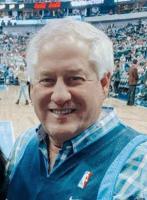
Frank retired from the Ophthalmic industry with over thirty-six years of Research and Development experience. Frank's first model kit was a 1959 Hawk 1/72 US Marines Vought AU-1 Corsair and has been building models for over sixty years. Frank's first encounter with IPMS was attending a North Central Texas ScaleFest show in 1984. Frank soon became more involved in Make-N-Take activities and became the IPMS Western Coordinator for Make-N-Takes [West of the Mississippi River]. Make-N-Takes quickly became a local model contest and airshow staple reaching a high of reaching over 1,300 children before the COVID shutdown. Frank has volunteered to assist in contest judging since 1985 and is currently the Nationals Head Figure Judge until he is dead or they find someone better.
Comments
Add new comment
This site is protected by reCAPTCHA and the Google Privacy Policy and Terms of Service apply.
Similar Reviews