
Nachtjagd Over The Eastern Front
From the Air War Publications website:
The story of Luftwaffe night fighter airmen and their operations on the Eastern Front is one that defies the traditional stereotype of the Germans as well-organised and meticulous planners. Instead, it emphasises their successful improvisation in the face of unanticipated problems and a very tough Soviet opponent.
Initially, Luftwaffe night fighting in the East was conducted in an ad hoc fashion, with success dependent on improvisation, and the luck and skill of individual crews. No night fighters were assigned to the German invasion of the Soviet Union in June 1941, so for the first year-and-a-half, the Luftwaffe paid scant attention to nocturnal air defence. The number of Soviet night incursions increased dramatically in 1942, and by year’s end the Germans began to organise small, dedicated night fighter units to combat them. 1943 marked the significant expansion of the night fighter force, with the provision of radar trains and the latest Ju 88 and Do 217 night fighters. This enabled it to better combat the constant Soviet supply runs to partisans behind the German front, increasingly heavy bombing attacks, and the almost ever-present ‘night witches’ conducting harassment missions in their pesky single-engine biplanes.
Luftwaffe night fighter units on the Eastern Front were forced to cover thousands of kilometres of frontline and rear areas with a limited number of aircraft and crews. Despite the many challenges they faced, the Luftwaffe personnel engaged in these operations persevered, and several pilots rose to prominence, claiming the same degree of success as their Western comrades-in-arms.
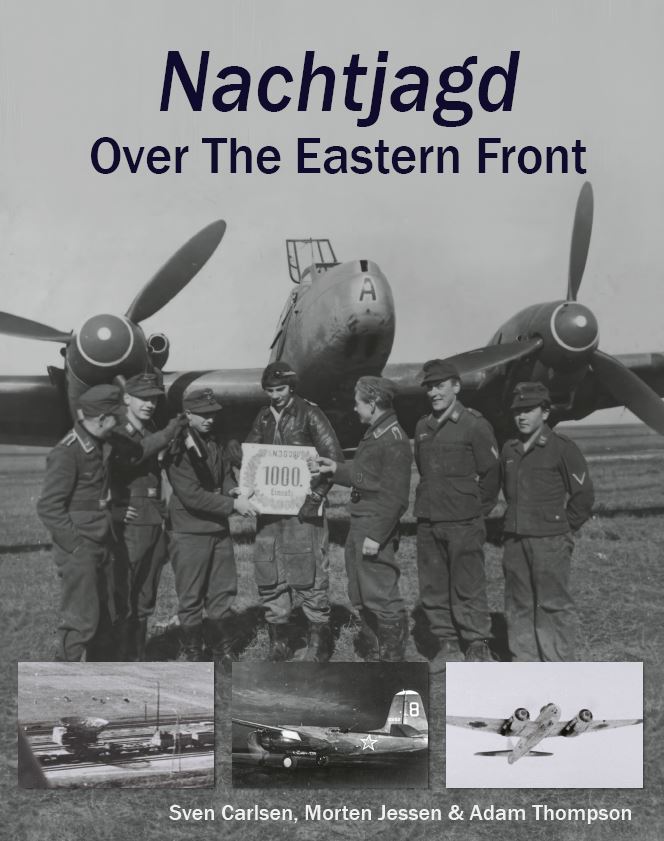
“Nachtjagd Over The Eastern Front”, published by Air War Publications, is an impressive 316 page volume distinguished by its depth, organization, and thoroughly researched content. Air War Publications, a Danish company known for both printed books and “eArticles,” aims to help readers “discover history through a broad range of subjects, with interesting stories ranging from those of famous fighter pilots to the unknown soldier whose story has not yet been told.” This book is an excellent example of that mission in action.
The table of contents is extensive and well structured, covering everything from background context to sector-specific operations, radar employment, tactics, camouflage, personnel, and detailed appendices. The book spans the period from 1939 to May 1945, and the inclusion of dates at the top of each chapter page is a thoughtful feature that helps anchor events in time.
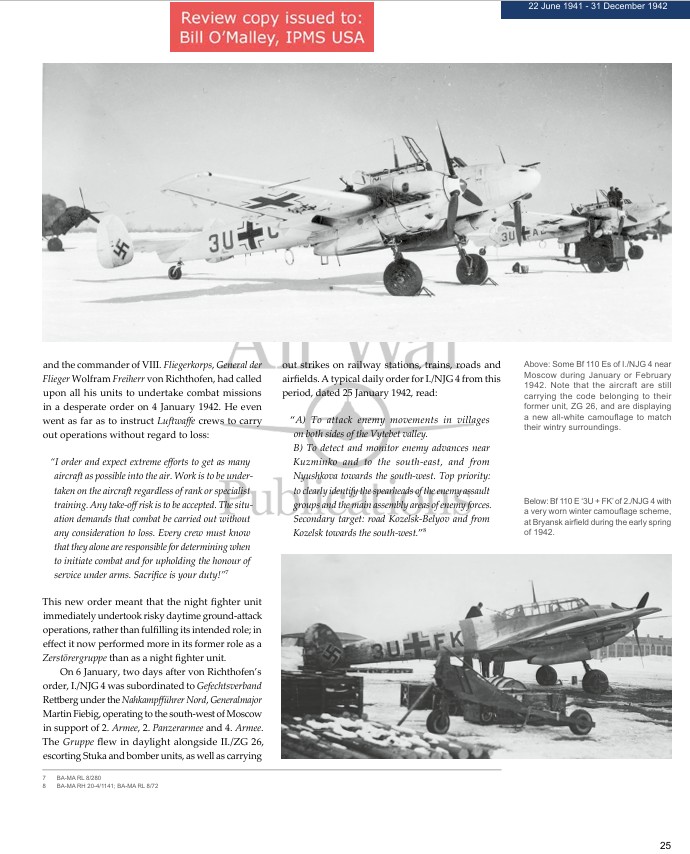
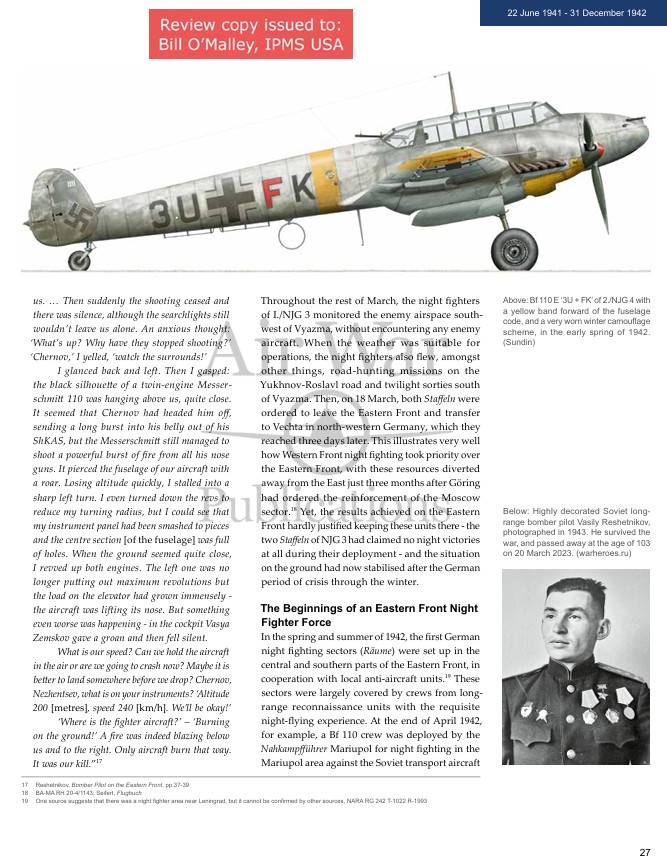
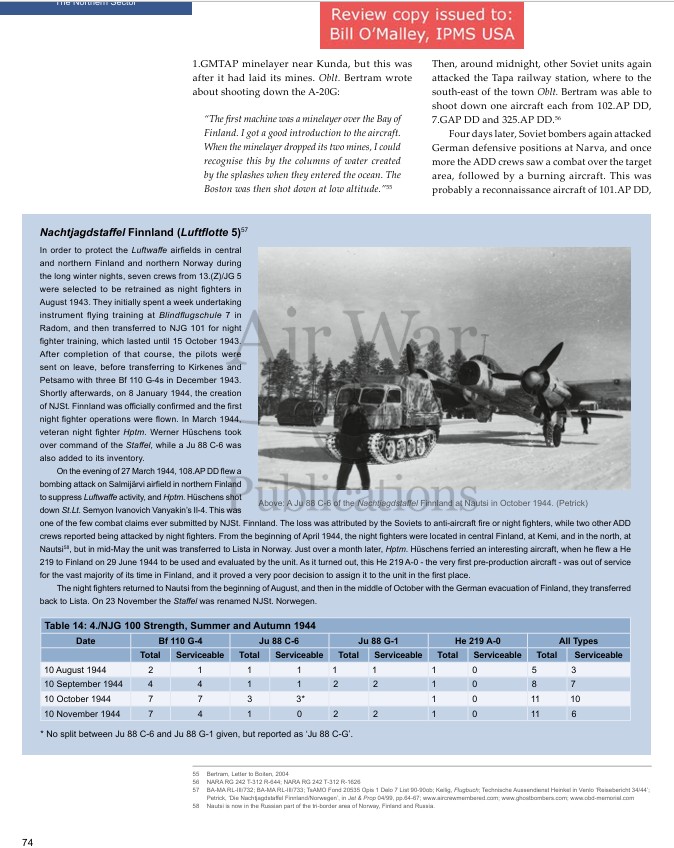
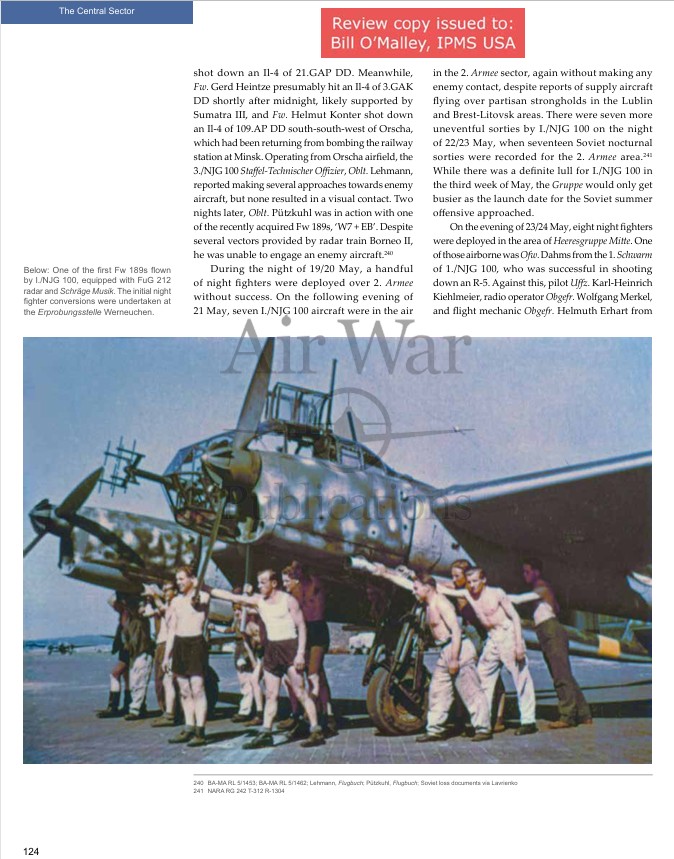
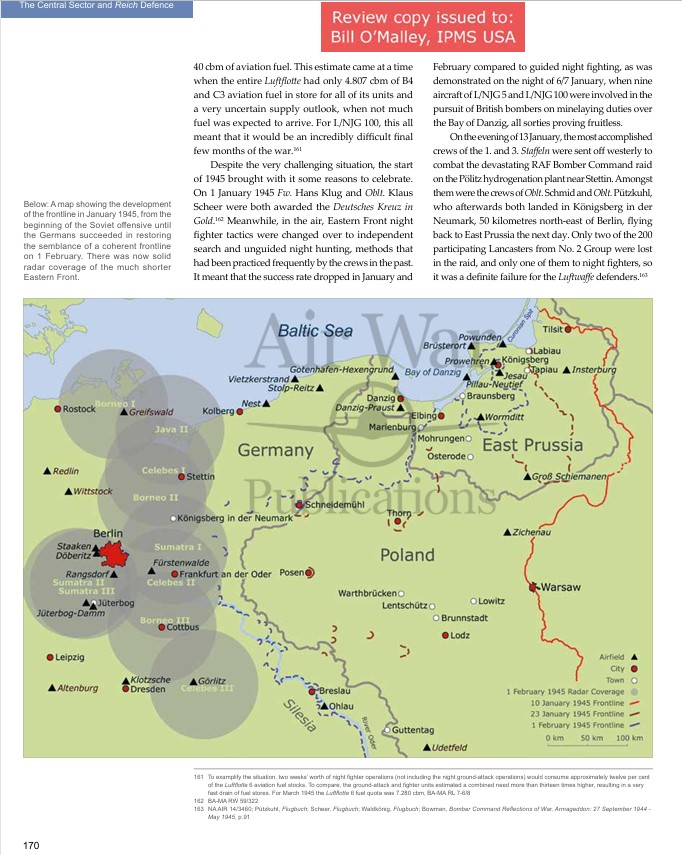
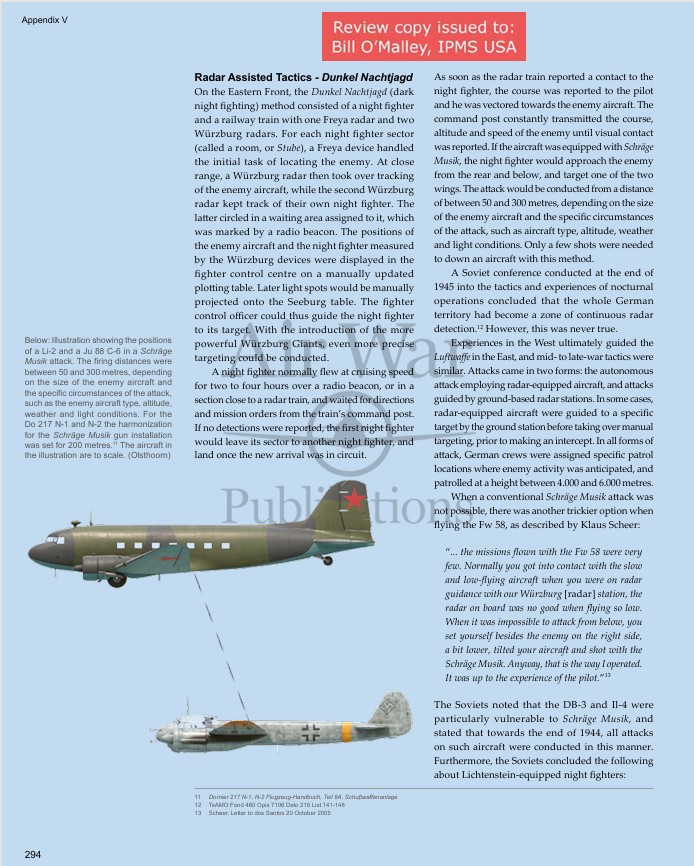
The volume is rich with information: movements and activities of night fighter units, special operations, tactical descriptions, personnel accounts, camouflage and markings, maps, statistics, and loss tables. For both historians and modelers, the content is exceptional. The book includes 242 black-and-white photographs, 12 color aircraft profiles, 22 color maps, 19 illustrations, and numerous appendices. Many of the photographs—especially those showing unique camouflage schemes or aircraft adapted for night fighting roles—are fascinating. I found myself particularly drawn to details such as the HE 111 bomber converted for night fighter use, the coordination between aircraft and ground-based radar units, and the comparison of Lichtenstein SN 2 radar performance with earlier FuG 202 systems. The material is so engaging that it is genuinely difficult to stop reading.
As a modeler, I would have welcomed even more color profiles, though the many photographs that include camouflage notes are greatly appreciated.
My review copy was digital, and although fully functional, the watermark (and repeated IPMS owner’s name) on each page occasionally obscured text, maps, or photographs. A clean hard copy edition would certainly enhance the reading experience. Even so, the book’s organization, clarity, and sheer volume of information make it an outstanding reference.
I highly recommend “Nachtjagd Over The Eastern Front” to history enthusiasts and modelers seeking authoritative, meticulously researched material. I will certainly be watching for future releases from Air War Publications. Thank you for an enjoyable and exceptionally informative reading experience.
My sincere thanks go to Sven Carlsen, Morten Jessen, Andrew Arthy, and Adam Thompson for creating this remarkable work, and to Bill O’Malley of IPMS/USA for the opportunity to review it.
Reviewer Bio
Tomasz Menert

I grew up in Poland and immigrated to the US 35 years ago when I was in my twenties. Ironically, I majored in English here, but I have fond memories related to my interest in aviation. What spiked my interest in reviewing items were the books on some familiar subjects. For example, I received a glider pilot license in Poland and one of the books Pablo Bouleo mentioned in the 'stash' is from MMP (PZL-104 Wilga 35A, Single No. 46). In my glider training, the plane towing us was the PZL-104 Wilga! So, anything around Polish subjects like PZL Combat Fighters, etc., would land you a quick and thorough review just because I had an exposure to some of the topics. Not to mention an uncle who flew a total of over 4000 hours in Mig-21s. Therefore, I want to thank you both for giving me the opportunity to join this review. group.
Comments
Add new comment
This site is protected by reCAPTCHA and the Google Privacy Policy and Terms of Service apply.
Similar Reviews