
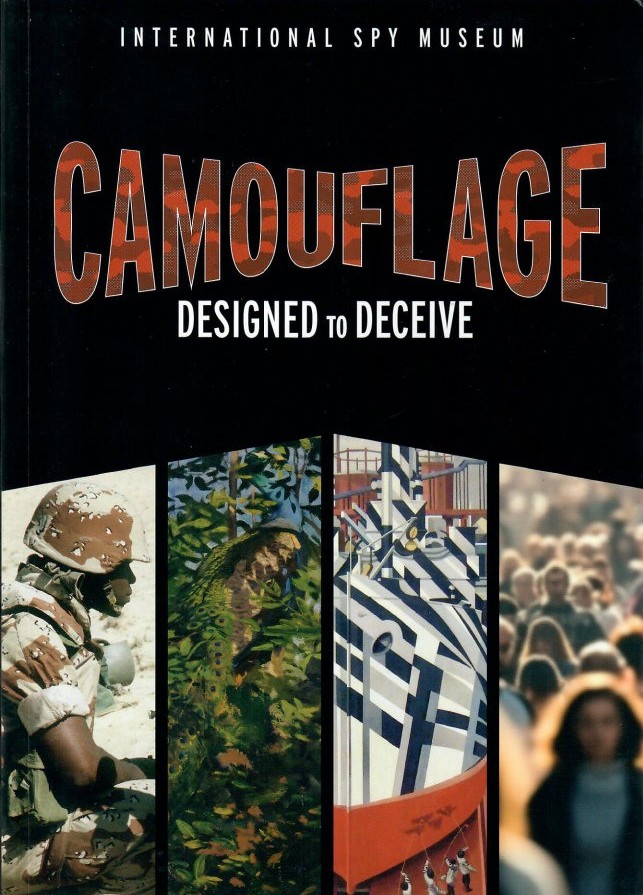
Camouflage - Designed to Deceive
The first paragraph in the Introduction sums up the book well,
Barry Faulkner was an artist from New Hampshire whose best-known paintings are two prominent murals in Washington, DC, in the Rotunda for the Charters of Freedom in the National Archives. Few people have any idea that Faulkner was also a co-founder of the American Camouflage Corps, an alliance of artists and architects in World War I who served as camouflage experts (referred to then as camoufleurs) with the American Expeditionary Forces (AEF) in France. Years later he remembered that, during the war, French soldiers said that camouflage was the only French word that American soldiers could pronounce correctly.
What follows is an amazing book on camouflage, and its tenets, as defined by the International Spy Museum in Washington, DC. The book is a companion piece to the new exhibit of the same name. While not a book for modelers per se, it provides an amazing overview, and background on camouflage in the natural world and man’s application to blend in instruments of war and spy craft. It is an amazing book that goes beyond photographic presentation and explains how camouflage works, its evolution, and the future of camouflage, particularly in our ever-increasing world of surveillance.
This 112-page paperback has 62 color photographs, 46 black and white photographs, and 35 illustrations/paintings/computer-generated images. The book is composed of the following seven sections:
- Introduction
- Disappear
- Distort
- Disguise
- Deceive
- Conclusion
- Acknowledgments
As mentioned in the opening paragraph, camouflage was already used in French society as slang pertaining to practical jokes, theatrical makeup, and the trickery of criminals. During the first year of World War I, its meaning evolved to include military duplicity. Its first attributed use in English appeared in British print in 1917 in the London Daily News, as “The act of hiding anything from your enemy is termed ‘camouflage’.”
American artist Abbott Handerson Thayer published an article in 1896 that described “counter shading” (sometimes known as Thayer’s Law) in which he announced his observation of the technique of “a cluster of confusing visual effects he called the ‘laws of disguise’” in the animal world. He noted the art practice of shading to produce an image on a flat canvas and his approach to countershading. He announced the coloration scheme of shading of light colors on top and dark colors on bottom to make images stand out, and countershading of dark colors on top and lighter colors on bottom to make images flat and less solid. His experiments on duck decoys, sweet potatoes, and even a Venus de Milo statue resulted in the objects being all but invisible at a moderate distance when positioned on the ground.
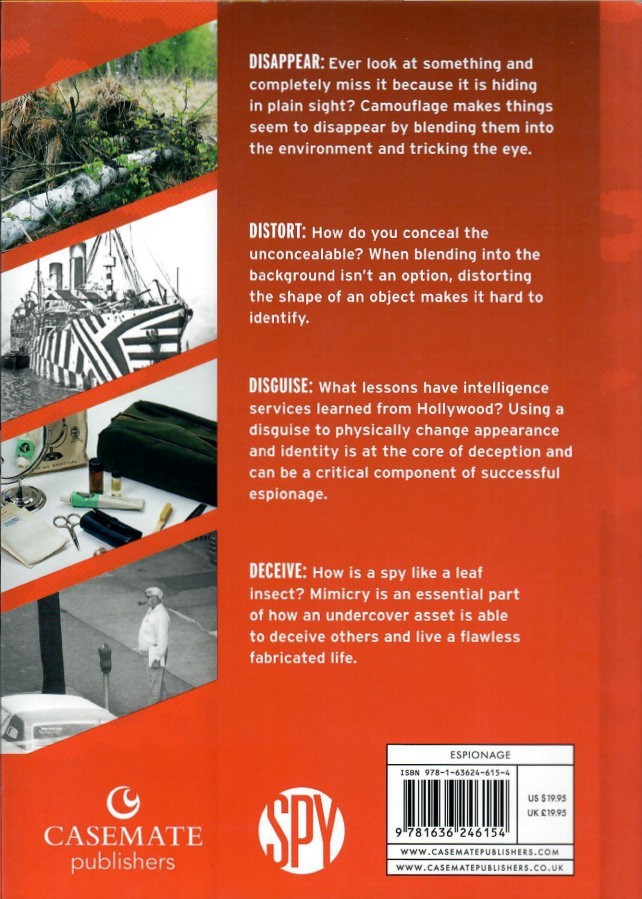
In true Spy versus Spy tradition, new ways of making things vanish, as well as methods to detect them, are forever in development. The book identifies four tenets of camouflage: Disappear, Distort, Disguise, and Deceive. Each chapter does a great job of defining the tenant and gives relevant examples and information.
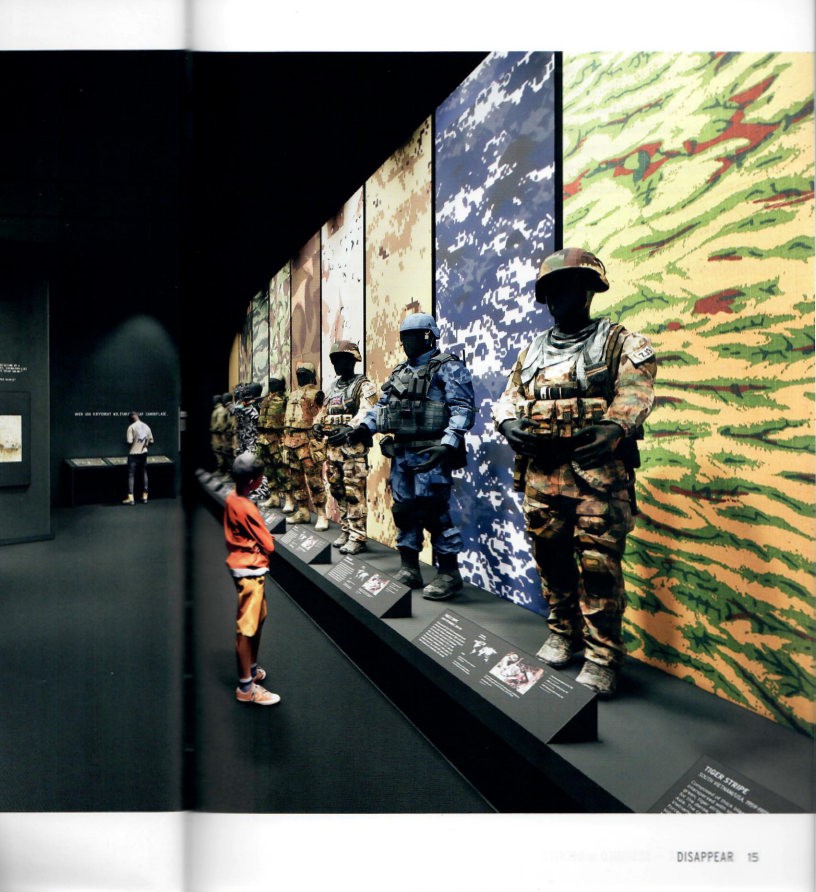
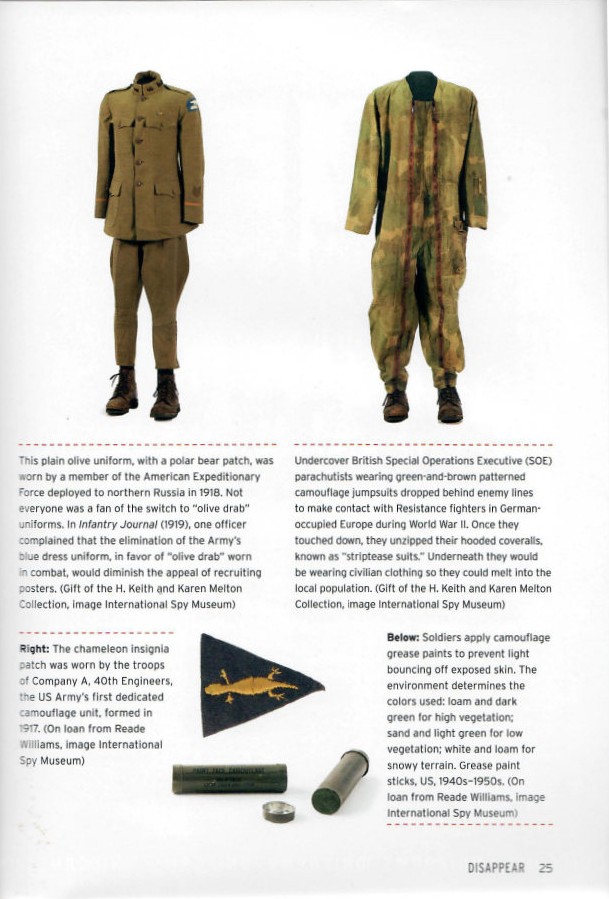
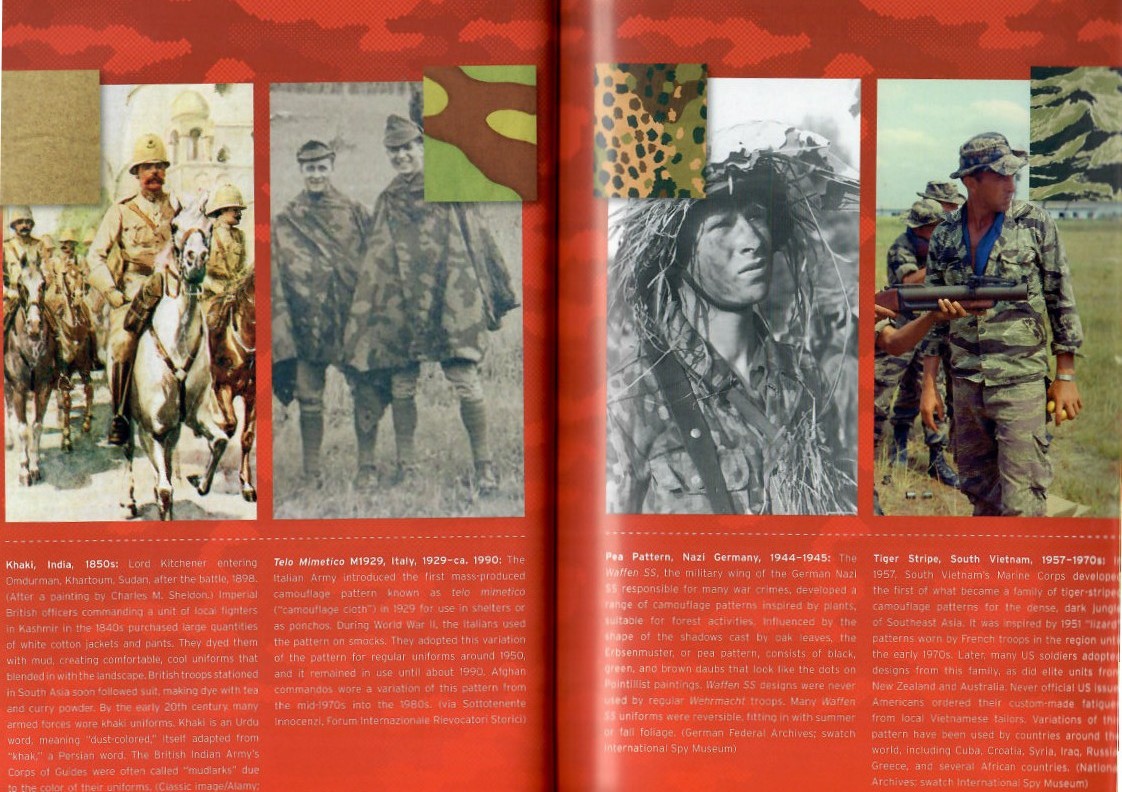
Disappear owes its background to the Naturalists of the 19th century, who studied the natural world (with nods to Greek philosopher Aristotle and his studies of octopus behavior and camouflage). As mentioned before, Abbott Hendeson Thayer earned the title, The Father of Camouflage, based on his understanding of scientific theory, particularly Concealing Coloration and Countershading. Uniforms are a perfect example of these theories and explain the transition from colorful uniforms so generals could see and command their armies to the subduing of uniforms to blend in and survive in increasingly industrial, efficient killing battlefields. Camouflage nets are also an efficient method of breaking up shapes and shadows.
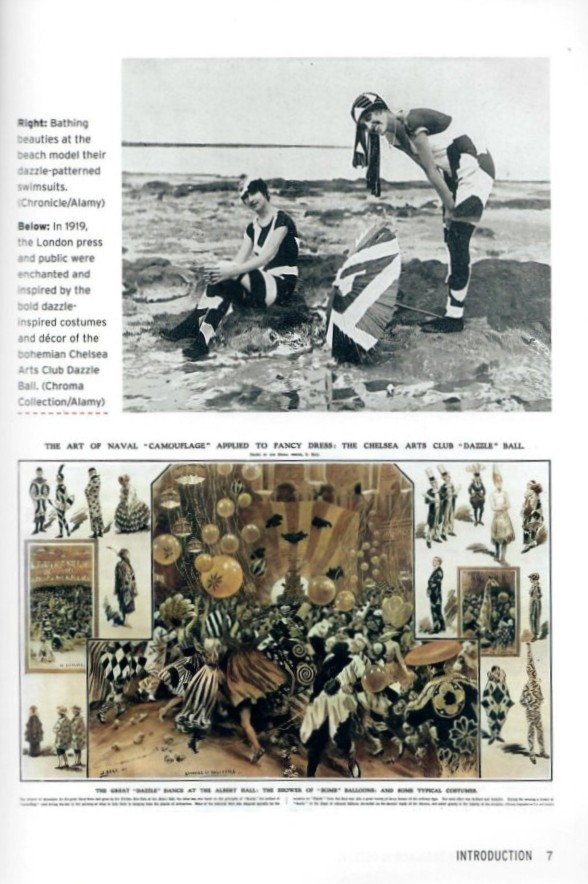
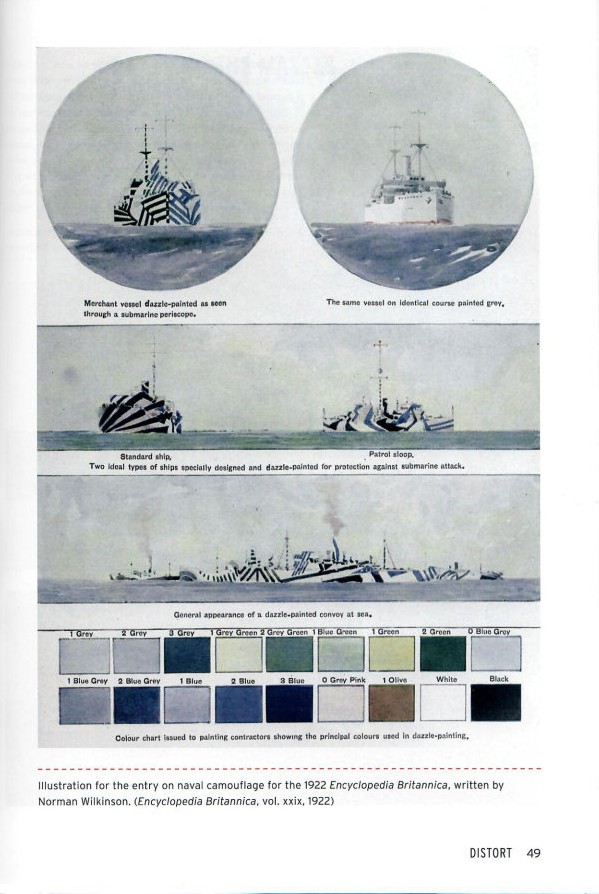
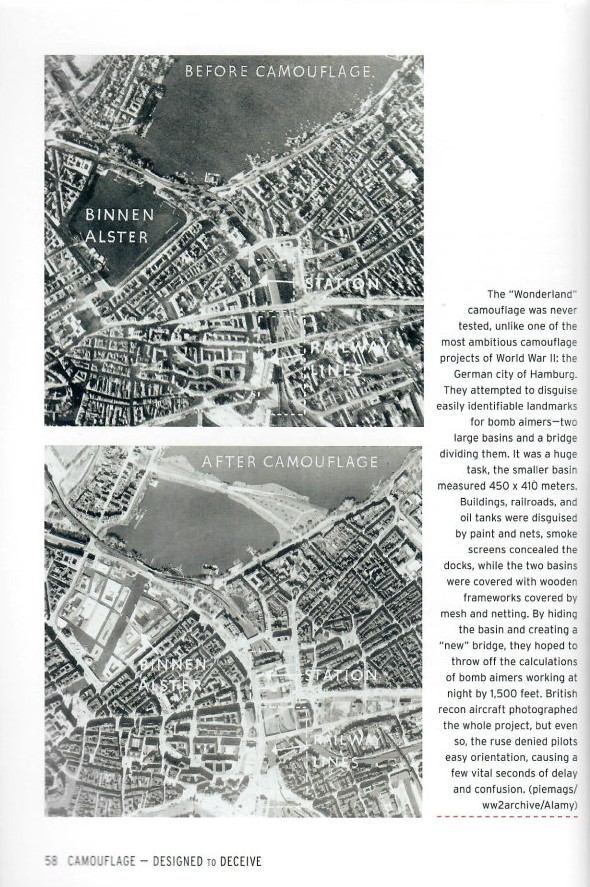
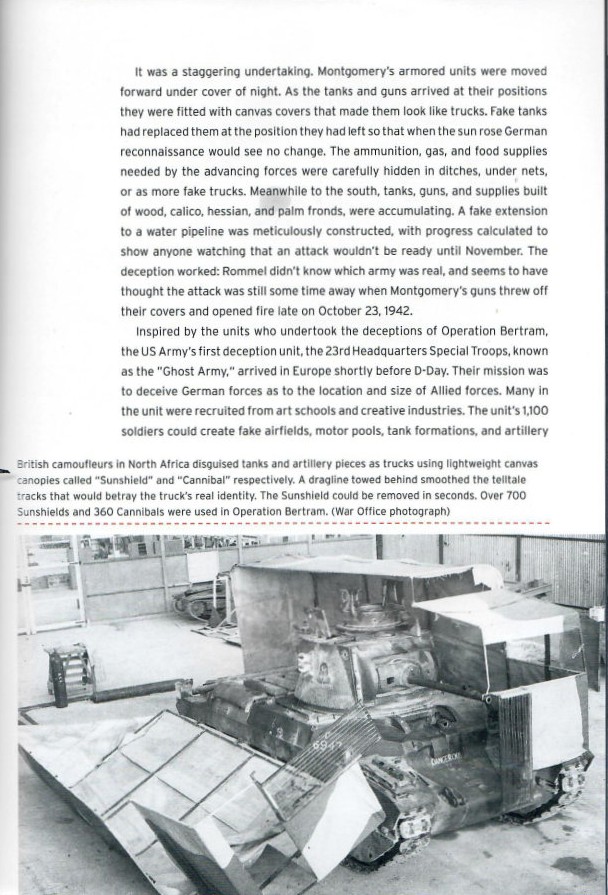
Distort is a camouflage designed to fool the human eye and other sensors. Abbott Henderson Thayer again was the first to observe camouflage in nature, he called “ruptive” (now known as disruptive) that allows colors to blend into their background, and “dazzle” such as zebras whose direction and speed are hard to gage at a glance. The most famous example of dazzle is the “dazzle painting”, also known as “razzle dazzle” and used primarily on ships to confuse U-Boat commanders, if for only a few critical moments. Other famous examples are the American, British, and German use of tents and nets to camouflage manufacturing plants, airfields and even parts of cities, such as Boeing Plant 2’s 26 acres being camouflaged under nets, on which a neighborhood was built. The project was so successfully designed and built that it took hundreds of thousands of dollars to dismantle after World War II. Some of those who designed and built the ruse would later use their skills at Disneyland. Distort was also used to great effect during Britain’s Operation Bertram, in which tanks were camouflaged as trucks to deceive the Germans as to the British main force in the Battle of El Alamein.
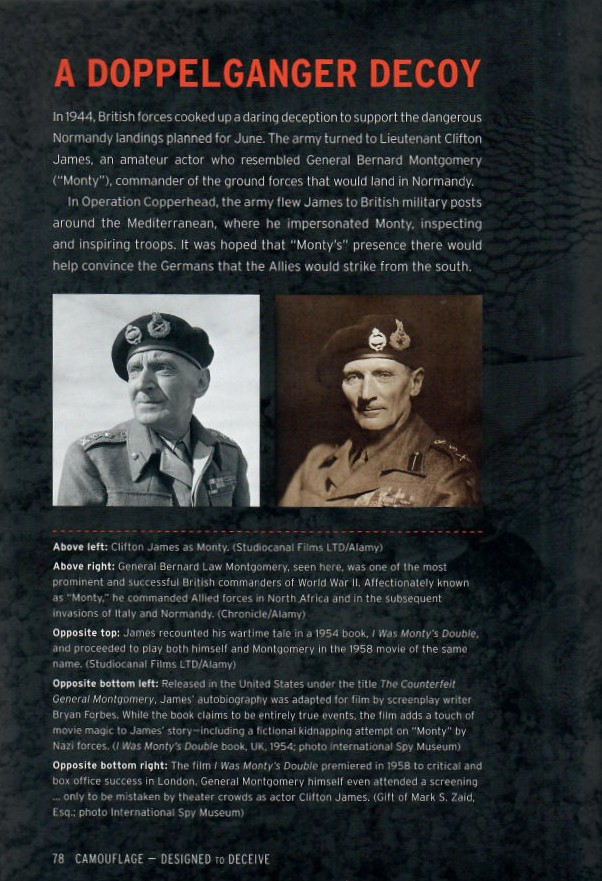
Disguise does a fantastic job of highlighting how humans have changed their form over the ages to blend in. Of particular interest are the World War II use of American movie professionals in changing appearance for clandestine missions to the use of disguises in the CIA operation to rescue five American diplomats from the Iranian storming and hostage taking of the American Embassy. CIA Agent John Chambers was instrumental and used his skills afterwards to make masks for the Planet of the Apes movies.
Deception is using mimicry as camouflage and can be used through visual appearance, and/or movement, and behavior. There are fantastic examples of successful American agents blending into their hostile environments from Berlin to Afghanistan.
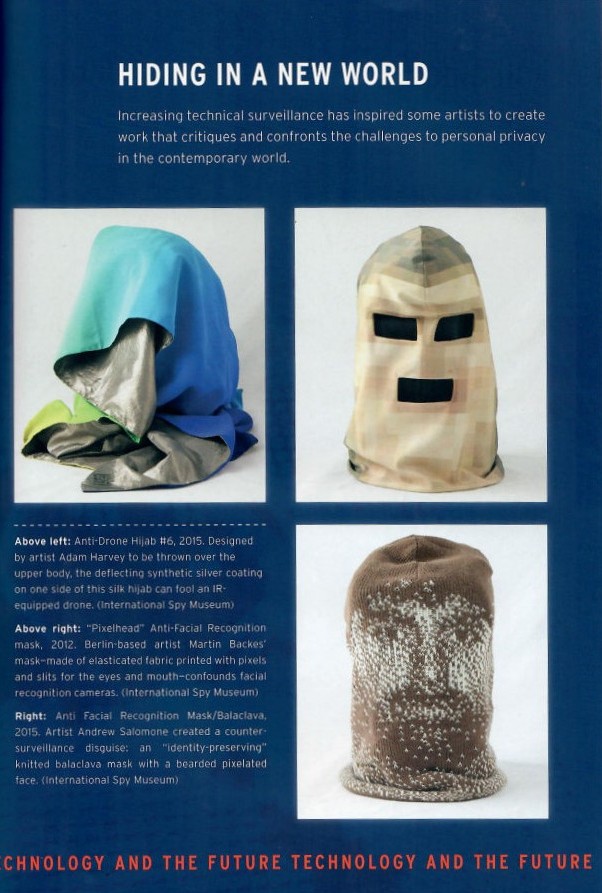
The book opens the future on what is possible and how to evolve in an increasingly sophisticated world of surveillance. As surveillance gets more pervasive, especially by governments, camouflage will have to evolve. Data is being created and collected at unprecedented rates. Hiding in plain sight will become more difficult, and creative solutions will have to be found and employed.
“Camouflage is becoming aestheticized in culture, fashion, and art – not as a symbol of war, but of disappearance. Designers are exploring garments that respond dynamically to environments, shifting colors and texture in real time. The future of camouflage is not a coat of paint or a patterned fabric – it is a dynamic, intelligent system that manipulates perception at every level: biological, digital, psychological, and societal. As surveillance becomes more invasive and visibility more dangerous, camouflage will be reimagined as a form of resistance, a shield, and a strategy for survival. In the coming decades, to hide will not simply be to evade detection – it will be to reclaim autonomy in a world that is always watching.”
Reading this book really changed the way I view models, vignettes and dioramas. Not just for its photographic examples, but the thought behind why vehicles, etc were painted and camouflaged in certain ways. The evolution of camouflage also helps with the time period and will affect how I paint models going forward. This book also makes me want to visit the International Spy Museum again to see this exhibit. If I didn’t already have this book, I would pick it up at the gift shop. Better yet, pick it up now and see how it affects your next model.
Profuse thanks to Casemate and IPMS/USA for providing the review sample.
Comments
Add new comment
This site is protected by reCAPTCHA and the Google Privacy Policy and Terms of Service apply.
Similar Reviews