
The Bosnian Serb Army at War 1992-95
From the seventh chapter subchapter, “The VRS and Terms of the Peace Treaty”,
On 14 December 1995, a peace agreement was signed in Paris. After three and a half years of war, peace came to Bosnia and Herzegovina. This former Yugoslav state was divided into two entities: the Muslim-Croat Federation and Republika Srpska, on a scale of 51:49 in division of BiH territory.
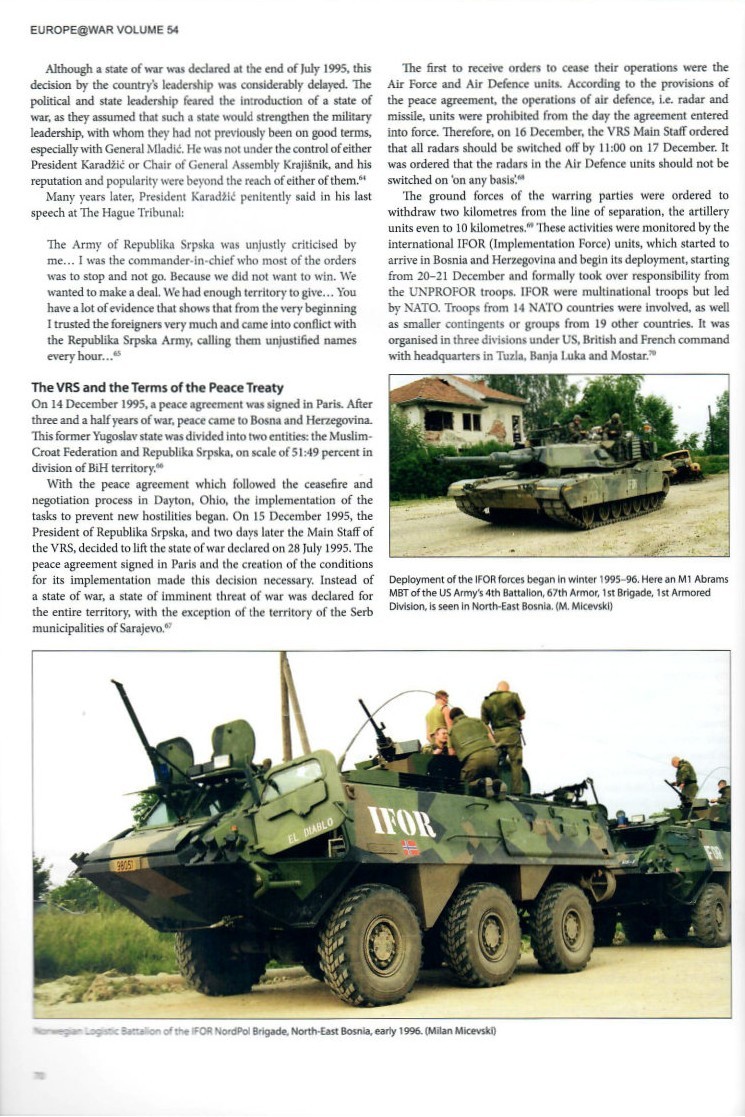
The ground forces of the warring parties were ordered to withdraw two kilometers from the line of separation, the artillery units even to 10 kilometers. These activities were monitored by the international IFOR (Implementation Force) units, which started to arrive in Bosnia and Herzegovina and begin its deployment, starting from 20 to 21 December and formally took over responsibility from the UNPROFOR troops. Troops from 14 NATO countries were involved, as well as smaller contingents or groups from 19 other countries. It was organized into three divisions under US, British and French command with headquarters in Tuzla, Banja Luka, and Mostar.
The above quote is from page 70 of this very detailed and informative book. The previous 69 pages did an outstanding job of setting the stage for the scene flashed around the world as the US First Armored Division crossed the Sava River on the longest pontoon bridge built since World War II thirty years ago. As an engineer lieutenant with the Ready First Brigade, First Armored Division, I was present as NATO moved into Bosnia and Herzegovina. With the hindsight of thirty years and a Serbian author, I wish that I had this book before crossing the Sava River. This book has clarified and challenged a lot of the notions I had at the time, and time has shifted my perception of the conflict. Author Bojan Dimitrijević is to be commended for breaking down this very complicated and complex war.
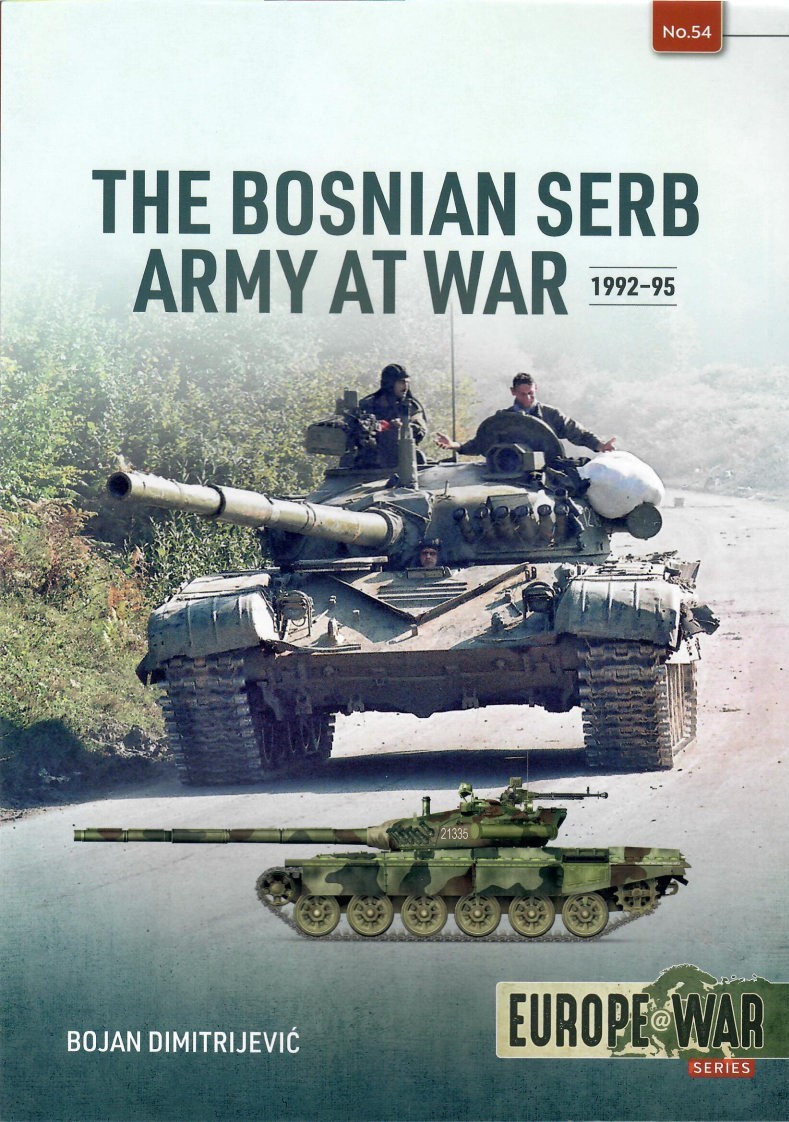
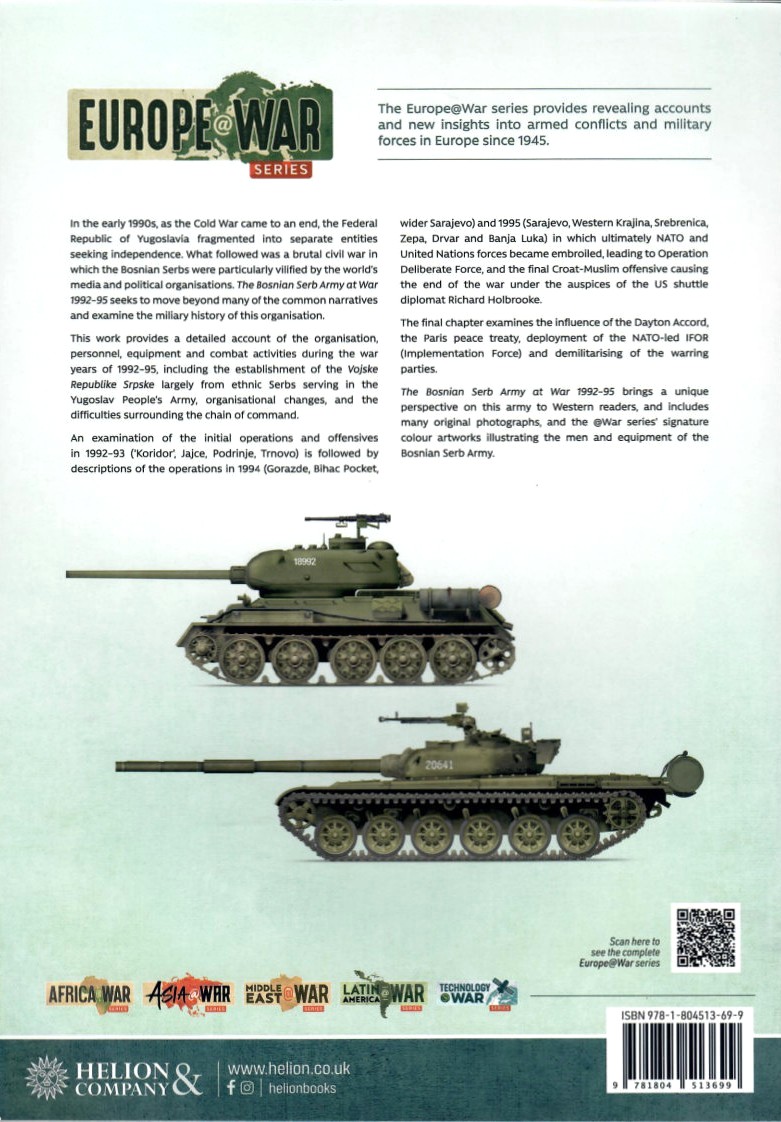
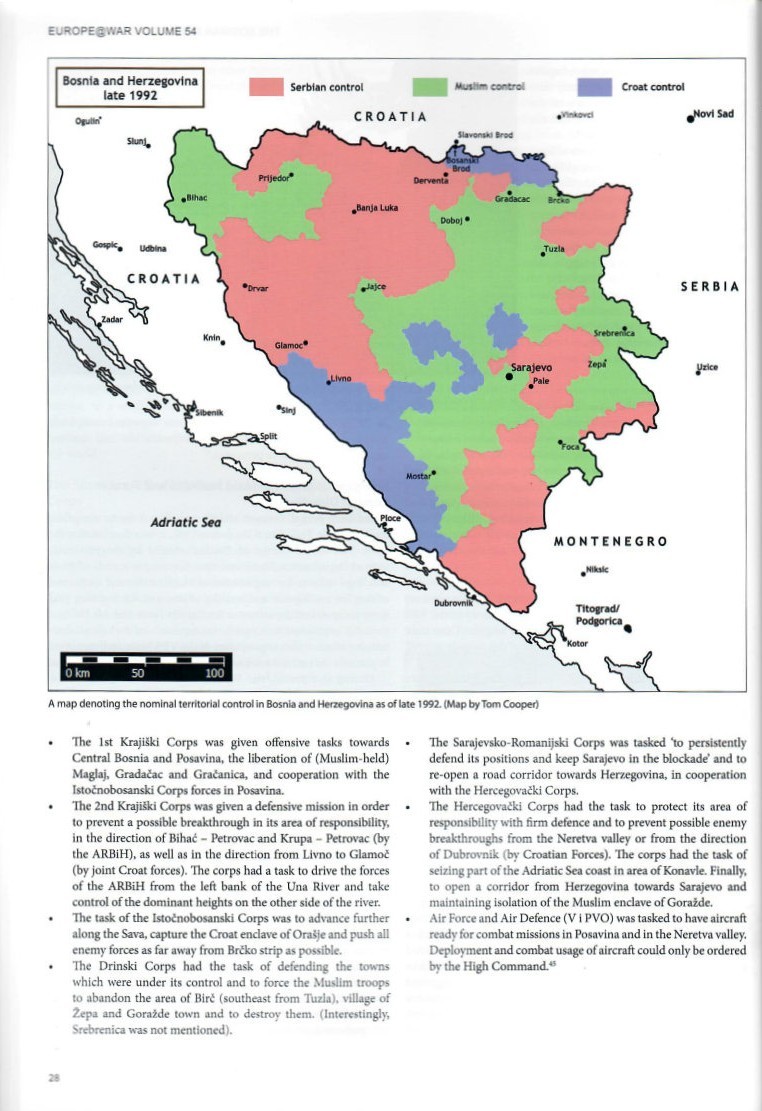
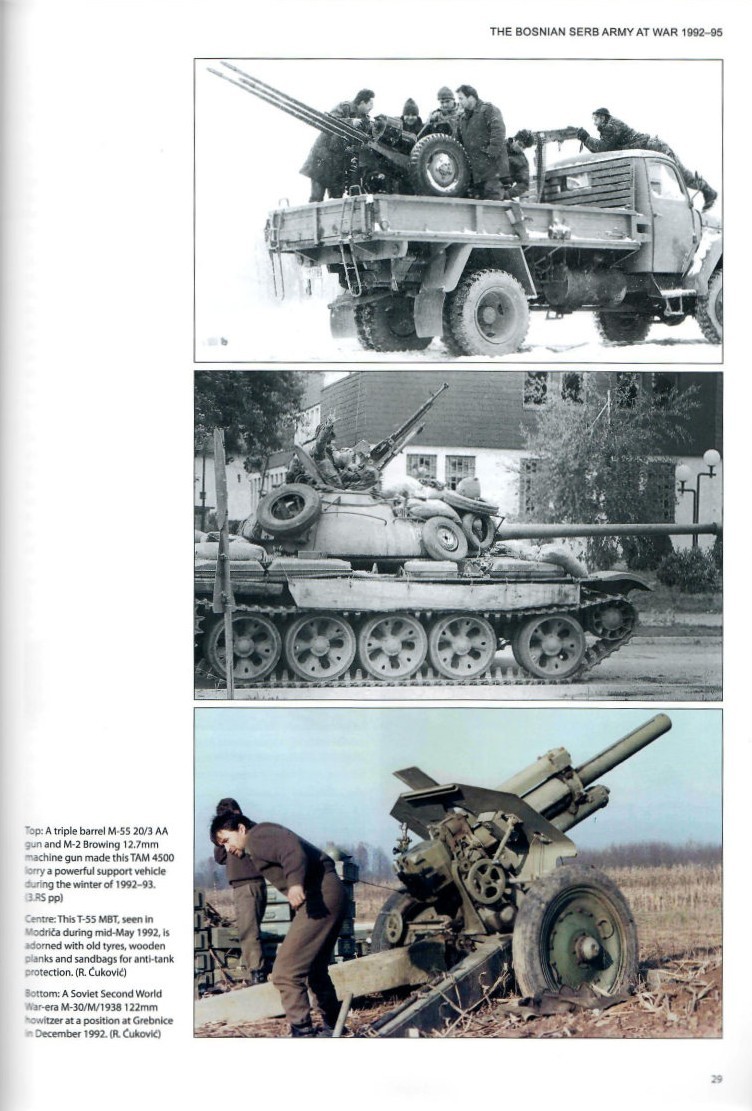
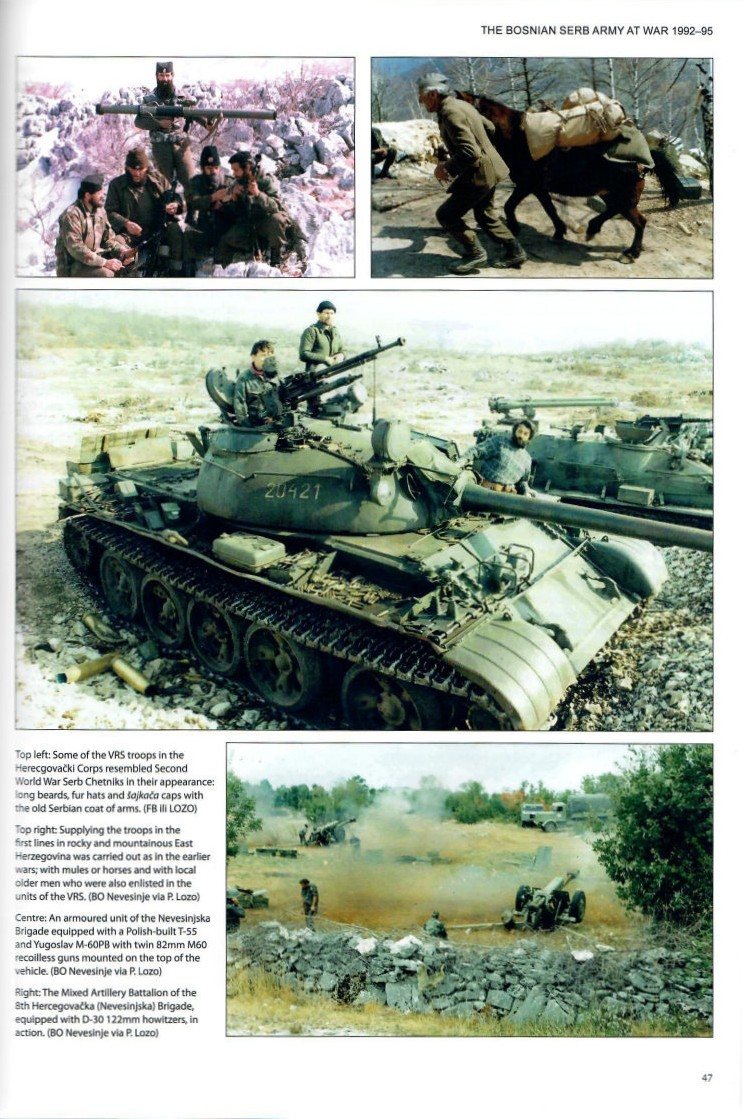
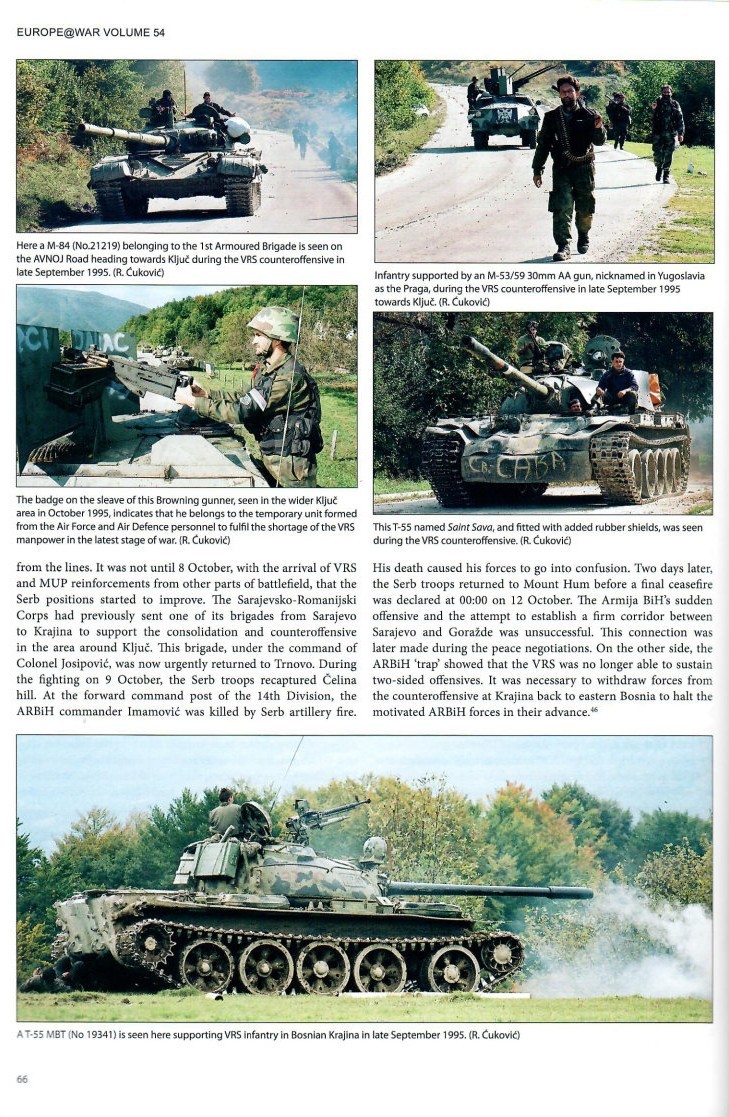
This 88-page book is part of Helion & Company’s @War Series. The Bosnian Serb Army at War 1992-95 (Helion No. HEL1750) is outlined in the familiar @War format: 43 black and white photographs, 125 color photographs, 24 color profiles, five color maps. The book is composed of the following sections:
- Abbreviations and Acronyms
- Acknowledgments
- Introduction
- From Yugoslav People’s Army to Bosnian Serb Army
- The Army of Republic of Srpska – A Look Inside
- 1992 – Successive Offensives
- 1993 – Serb Politics Misses the Chance for a Military Victory
- 1994 – The Turning Point
- Early 1995 – The Last Victories of the VRS
- Summer 1995 – NATO (sic) Air Power & Peace Negotiations
- Conclusion
- Appendix: Structure of the Vojska Republike Srpske 1992-1996
- Bibliography
- Notes
- About the Author
After 73 years of existence, Yugoslavia fractured apart in 1991. Two republics broke away when the Socialist Republics of Slovenia and Croatia decided to leave the federation, followed by the easternmost Socialist Republic of Macedonia at the beginning of 1992.
"The federal government in Belgrade could have let Slovenia go, but the secession of Croatia – where a large part of the population consisted of Serbs – made armed conflict inevitable. The war in Slovenia was sharp and short, lasting from 27 June to 2 July 1991, but in late August and early September 1991 the conflict in Croatia escalated into full-scale hostilities, with months of fighting and massive military and civilian casualties.
Under diplomatic pressure from the European Community (EC), a ceasefire in Croatia came into force on 3 January 1992; at that time, up to a third of Croatia – mainly the areas along the border with the Republic of Bosnia and Herzegovina – was under control of the Serbs, who proclaimed on 19 December 1991, an independent Republic of Serb Krajina.
In February 1992, the deployment of a United Nations (UN) peacekeeping force – the United Nations Protection Force (UNPROFOR) – began with the aim of separating the warring parties in Krajina/Croatia and partly in Bosnia and Herzegovina.
Simplistically stated, the lines were drawn and the republics separated, with Serbia and Montenegro retaining the JNA (Yugoslav National Army) as the Federal Republic of Yugoslavia. Bosnia and Herzegovina (BiH) was the central republic and, as such, soon found itself in the middle of the conflict, both figuratively and literally. Due to Yugoslavia’s politics and potential enemies, the JNA was primarily deployed to the country’s borders, with infrastructure including munitions factories, command and control, airfields and service academies and schools were developed primarily in the center of the country. When war came, the area found itself in a unique position with the infrastructure, but not with large, well-armed military units, except for their air force. Ironically, the same international community that tolerated and supported the dissolution of Yugoslavia, decided that Bosnia and Herzegovina should be its own state. Thus, the stage was set with Croatia, the Federal Republic of Yugoslavia and the locally supplied militias along ethnic lines vying for control of their respective goals.
In 1992, while the lines were being drawn along ethnic lines, primarily Croatian, Muslim, and Serbian, military officers and service members were allowed the opportunity to return to their birthplaces or remain where they were stationed. Many non-Serbs remained in Serbian units. The author does an amazing job describing the conflict as it broke out and evolved from 1992 to 1995.
This is not an easy book to digest as politics, names and places are foreign to most readers, and this is where the author did well in breaking the key players out and describing them. The rift developing between Serbia and BiH Vojska Republic Srpske (VSR) was exacerbated as the war continued, and international pressure was applied. The author did not shirk from the atrocities committed. While the world audience was shown VRS atrocities, those committed by Croatian, HVO (BiH Croats), and Muslim forces were largely unreported. This book provides a uniquely Serbian viewpoint that has been missing until now. As I stated at the beginning, I learned a lot that I could not find during my reading on Balkan history prior to entering Bosnia and Herzegovina’s Posavina Corridor that linked the Western and Eastern VRS.
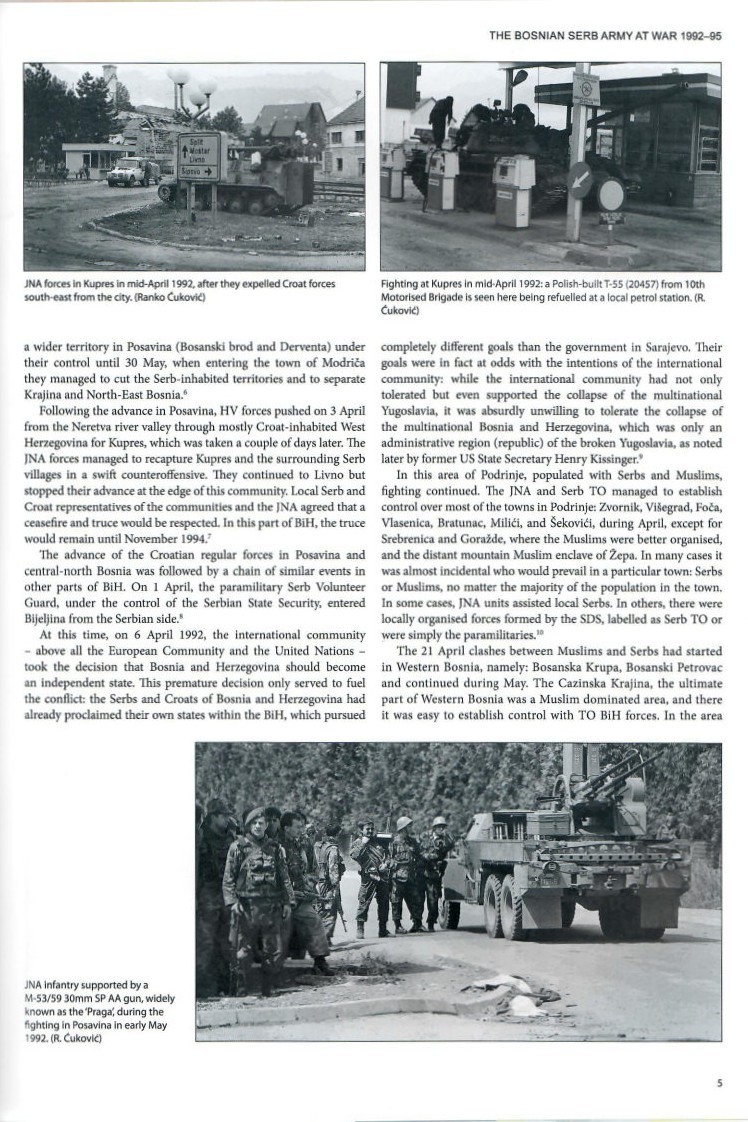
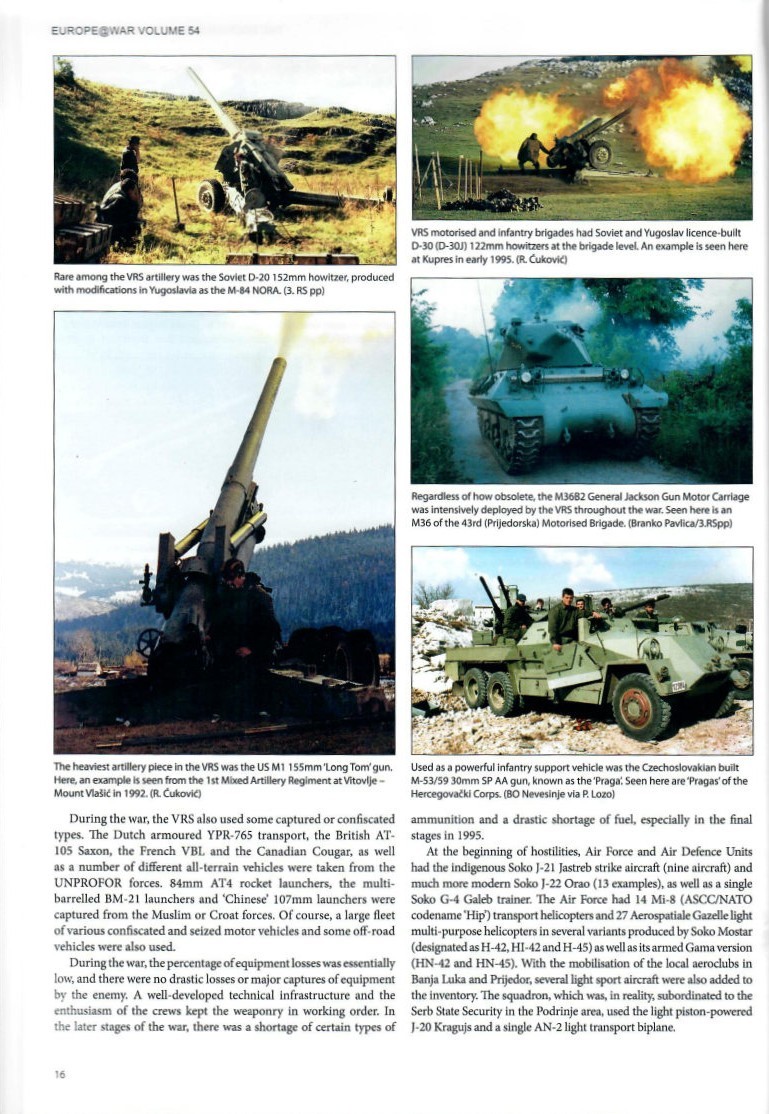
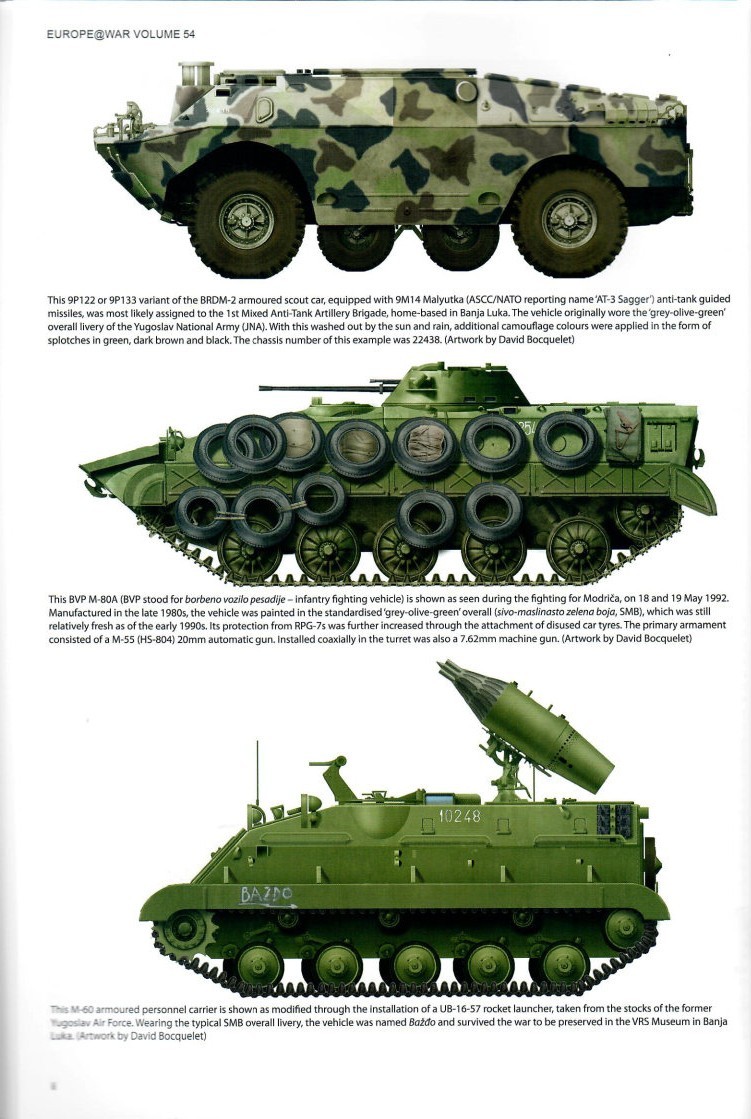
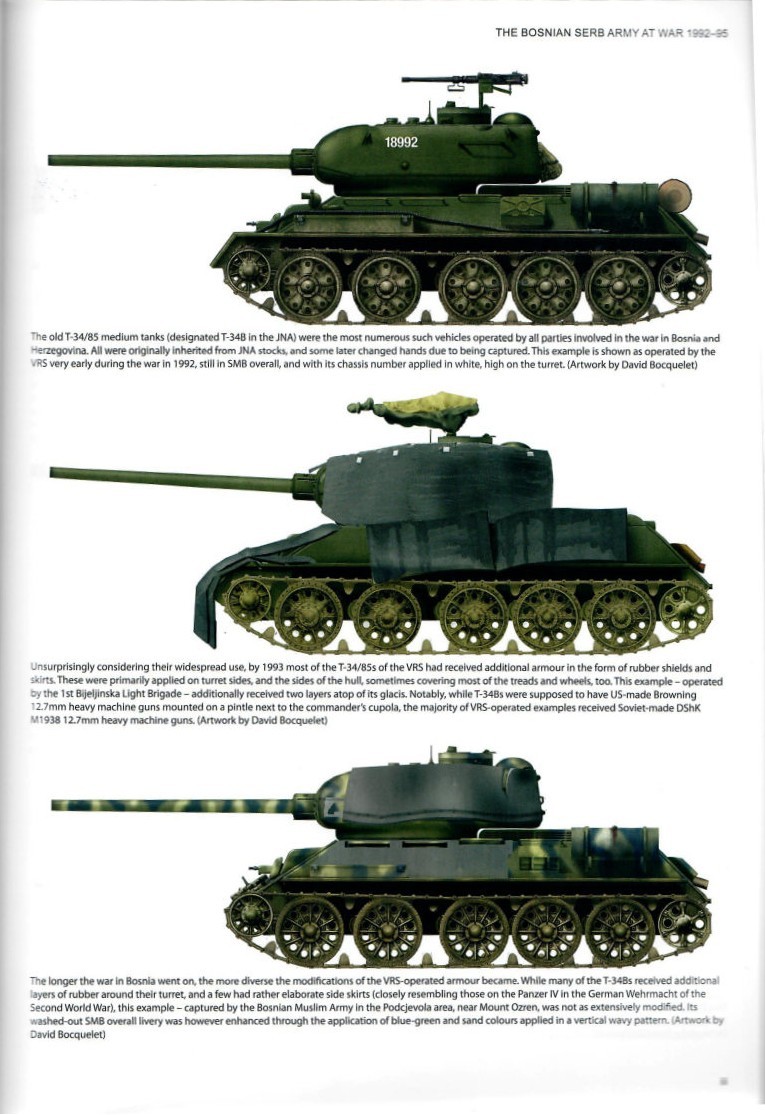
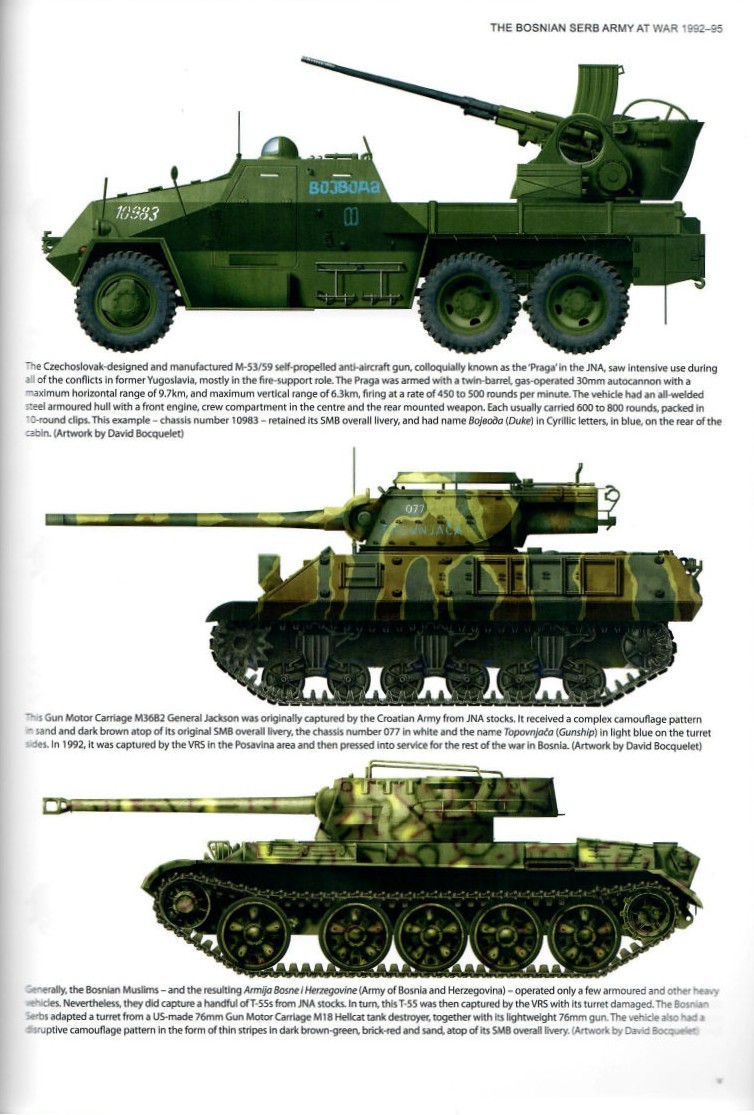
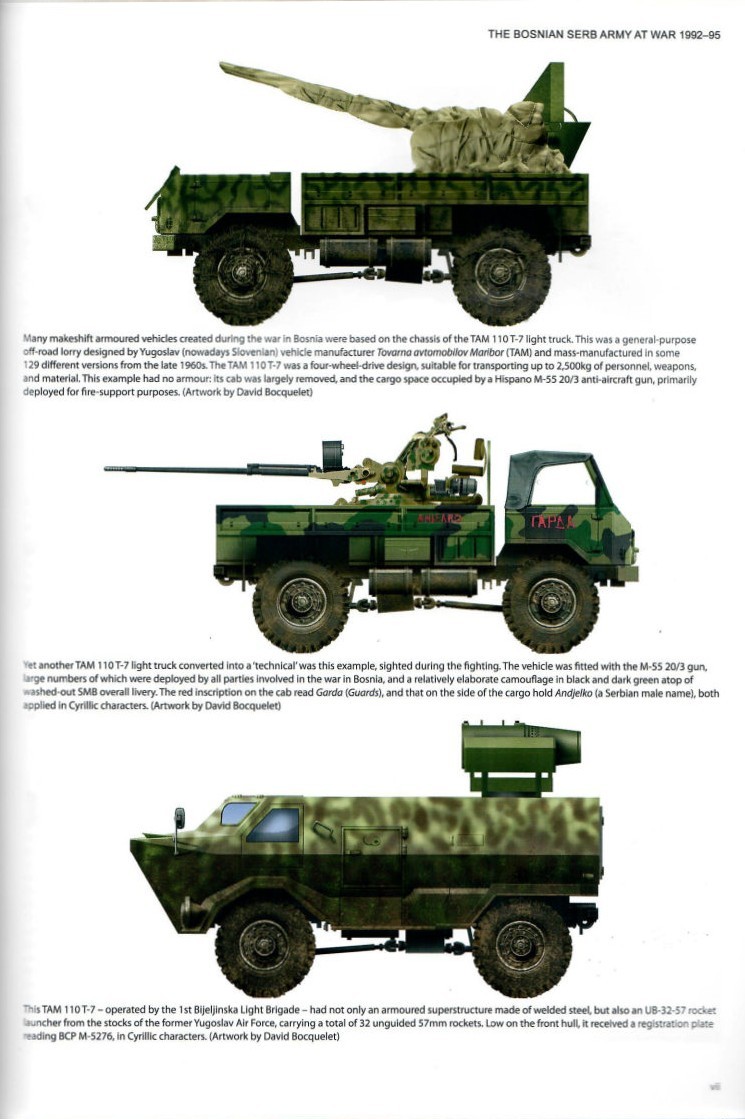
This book excels in its photographs and modelers and historians will not be disappointed. There are a lot of details in the modern color photographs. One of the key things we experienced was the lack of helmets worn by the combatants. It was largely the lack of discipline with the front-line units, who often worked in shifts. The uniforms provide great references for figure painters and modelers for vignettes and dioramas. Model builders will not be disappointed. Yugoslavia was supplied by both the Warsaw Pact and western countries, primarily America after World War II. Armored fighting vehicles, tanks and supporting vehicles include BRDM-2, BMP M-80 (based on the Soviet BMP), indigenous M-60 APC, T-34/85 (designated the T-34B), T-55 (both Polish and Czech), T-72, Yugoslav M-84, Czech M-53/59 SPG known as the ‘Praga’, multiple variants of the TAM light truck, American M18 Hellcat, M36B2 Jackson, and a whole host of makeshift ‘do-it-yourself’ armored vehicles. Artillery runs the gambit from WWII Soviet field pieces to the 9K52 Luna (Frog-7).
This is a well-balanced book that doesn’t portray a one-sided propagandized VRS. It is not an easy book to digest, but well worth it if you’re interested in the Balkan conflicts of the 1990s. There is a lot of blame to go around for this war, and the author did a good job of making the reader think and ponder. My only suggestion would be the inclusion of maps of specific campaigns, fights, and battles. While several of the location names are burned in my memory, there are many more areas of BiH that I had to look up to understand the context. Some would say the world was easier to understand during the Cold War. This book proves that the underlying issues will continue to simmer until the pressure becomes too great. As history showed us, the world got hot again after the Cold War.
Profuse thanks to Casemate and the IPMS/USA for providing the review sample.
Comments
Add new comment
This site is protected by reCAPTCHA and the Google Privacy Policy and Terms of Service apply.
Similar Reviews