
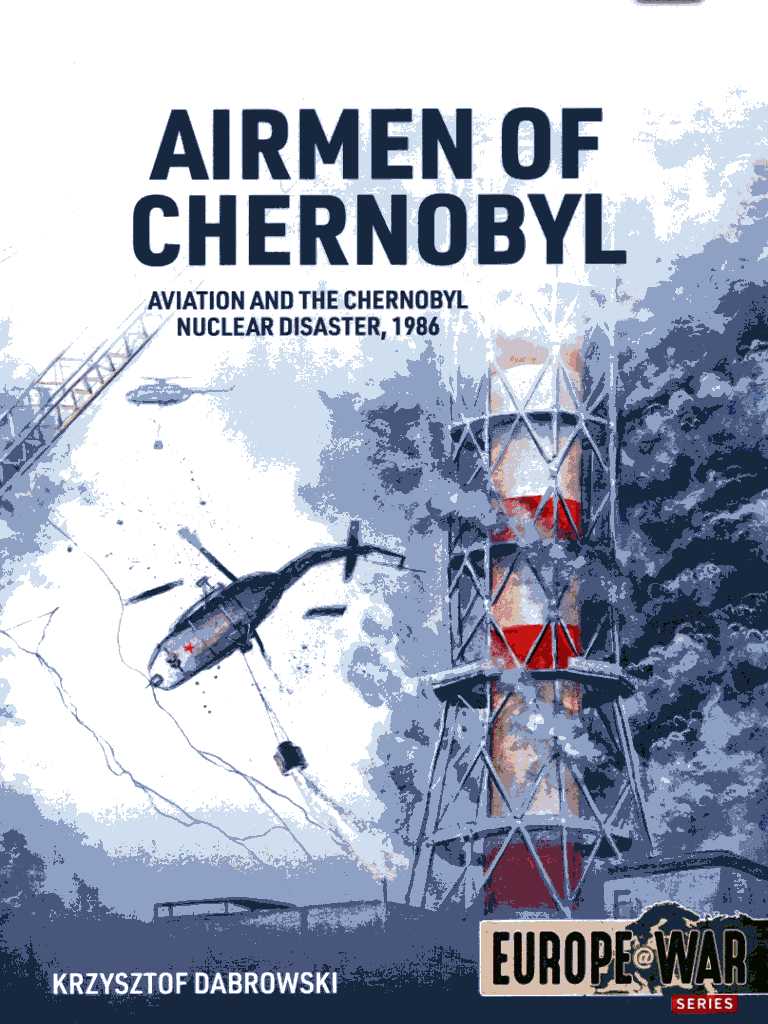
Airmen of Chernobyl, Aviation and the Chernobyl Nuclear Disaster, 1986 (Europe@War #59 Series)
From the publisher’s website:
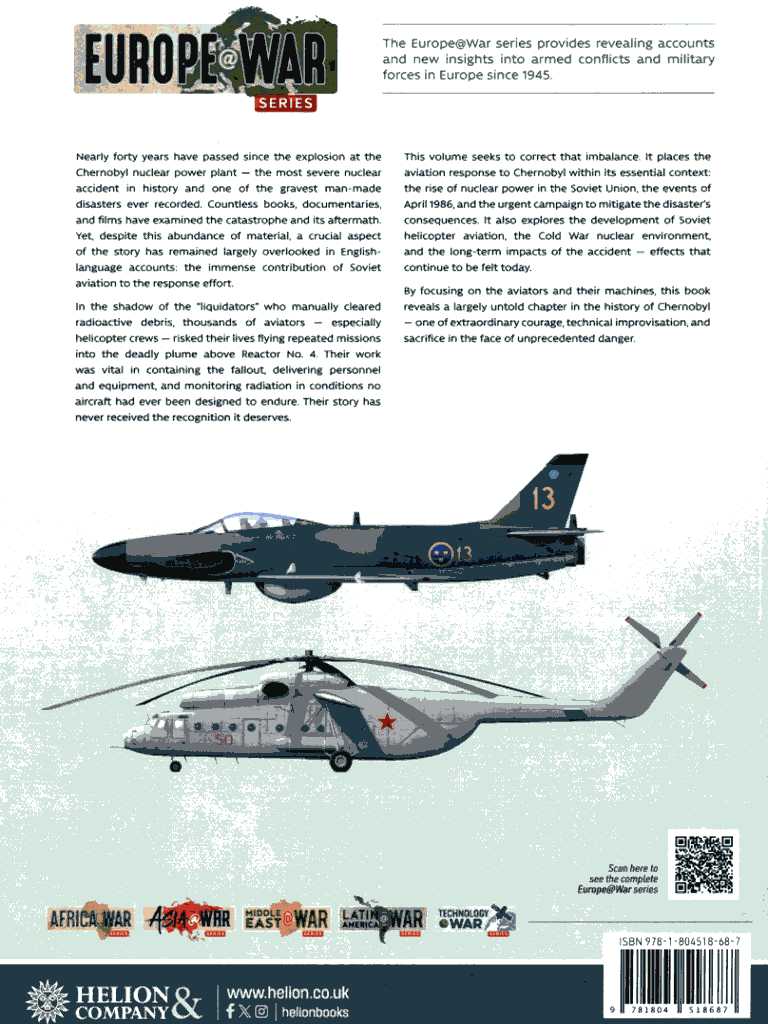
Nearly forty years have passed since the explosion at the Chernobyl nuclear power plant - the most severe nuclear accident in history and one of the gravest man-made disasters ever recorded. Countless books, documentaries, and films have examined the catastrophe and its aftermath. Yet, despite this abundance of material, a crucial aspect of the story has remained largely overlooked in English-language accounts: the immense contribution of Soviet aviation to the response effort.
In the shadow of the “liquidators” who manually cleared radioactive debris, thousands of aviators - especially helicopter crews - risked their lives flying repeated missions into the deadly plume above Reactor No. 4. Their work was vital in containing the fallout, delivering personnel and equipment, and monitoring radiation in conditions no aircraft had ever been designed to endure. Their story has never received the recognition it deserves.
This volume seeks to correct that imbalance. It places the aviation response to Chernobyl within its essential context: the rise of nuclear power in the Soviet Union, the events of April 1986, and the urgent campaign to mitigate the disaster’s consequences. It also explores the development of Soviet helicopter aviation, the Cold War nuclear environment, and the long-term impacts of the accident - effects that continue to be felt today.
By focusing on the aviators and their machines, this book reveals a largely untold chapter in the history of Chernobyl - one of extraordinary courage, technical improvisation, and sacrifice in the face of unprecedented danger.
The book “Airmen of Chernobyl” is an illustrated edition about Chernobyl Nuclear Disaster that took place in the Soviet Union in 1986.
The volume includes the following chapters:
- Abbreviations and Acronyms
- Acknowledgements
- Preface
- Nuclear Power in the Soviet Union
- Chernobyl Nuclear Power Plant and the city of Pripyat
- The fateful night
- Responding to the catastrophe
- Helicopters in the Soviet Union
- Over the reactor and beyond
- Chernobyl and Nuclear War
- Dealing with disaster
- Chernobyl’s after-effects
- Appendices
- Technical Data of main Soviet Helicopter Types
- International Nuclear and Radiological Event Scale (INES)
- Bibliograph
- Endnotes
- About the Author
The book starts with explanation of abbreviations and acronyms used throughout the book, which I found quite handy while reading it.
There is a very interesting, although brief, description and facts about the beginning of nuclear physics research, especially in the Soviet Union. The nuclear reactor operation is explained very well, especially to those who are not familiar with this very technical topic. I found it very interesting to discover information about nuclear accidents in the Soviet Union that preceded the Chernobyl disaster. The book is very logically organized and it is easy to follow the sequence of events that took place in 1986. There is a chapter describing the firefighters’ and pilots’ heroic attempts to subdue the fires and effects of the nuclear reactor explosion. The lives of many did end sadly. Next, the book moves through the different phases of the disaster and its aftermath. I found some information about the Russian authorities appalling because many ignored signs of trouble and did little to prevent the future catastrophe. The author describes the fear of personnel working at the nuclear power plants being held responsible for mistakes that were actually results of faulty designs of the plants. Those individuals were often afraid to speak out so problems were hidden and never fully understood or resolved.
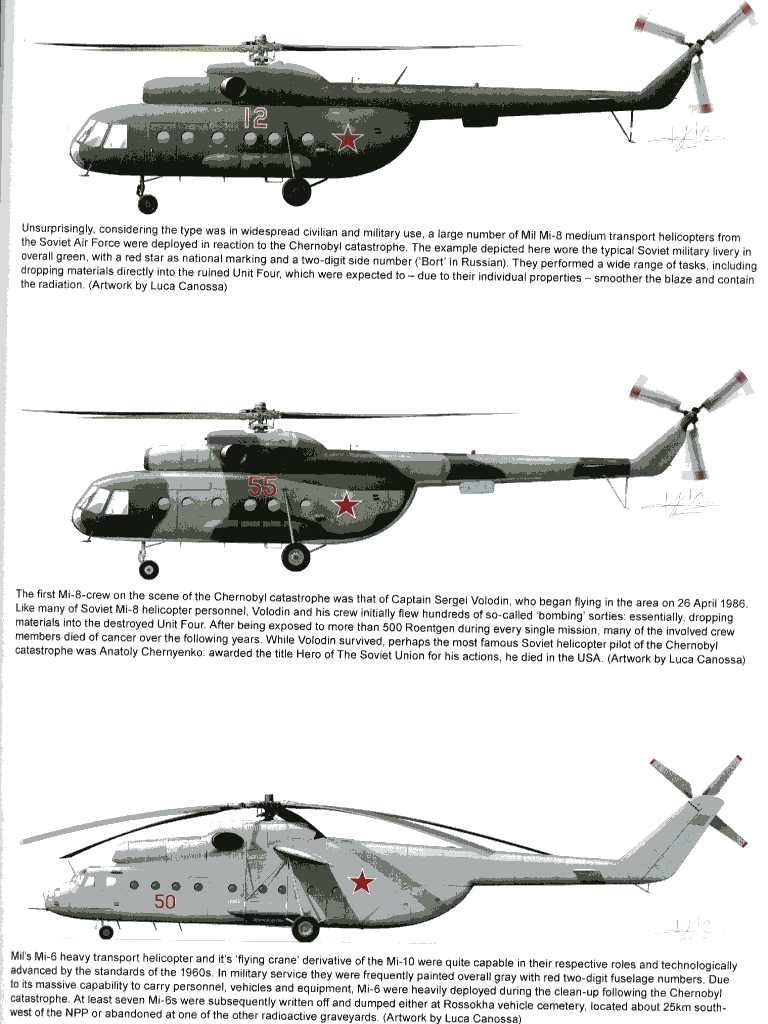
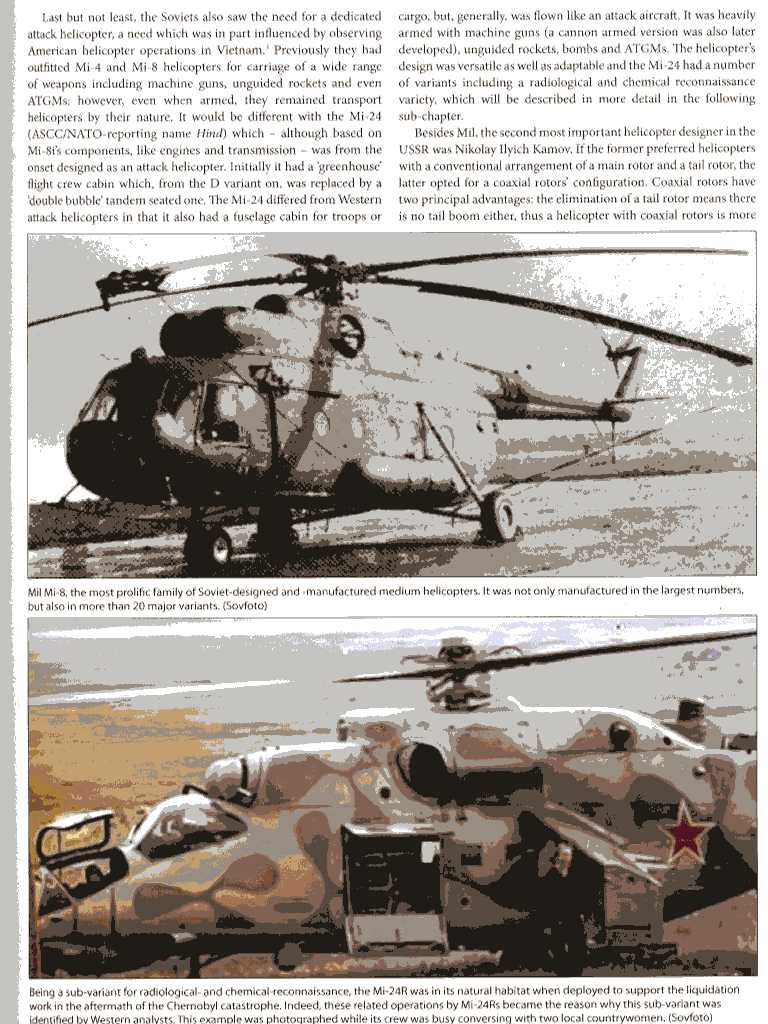
The book’s content then moves to the aviation element that participated in responding to the disaster. There are four color side drawings of aircraft from the period and descriptions of what they were used for during that difficult time. It was thought-provoking to learn about the effects of radiation on these flying machines. The descriptions also provided insight into the 1980’s technology and its limitations when faced with such dramatic events as nuclear disasters. Chernobyl disaster after effects such as health effects, environmental impacts, social and political ramifications are very well described by the author. Despite the fact that the subject of the book is a terrible event, I found the reading material quite fascinating. It helped me understand the limitations of scientific research and design of nuclear power plants. It also answered some questions I had about the disaster that started on April 26, 1986. I lived in Poland during that time with a pregnant wife. I still remember the Polish communist authorities demeaning the severity of the event and even a denial of its impact on people. Now, everyone knows that radiation affected many countries of Europe. I want to thank the author for sharing his knowledge about Chernobyl and presenting us with very enlightening content. Impressive work, Mr. Dabrowski.
My sincere thanks go to Helion & Company for providing this copy for a review and IPMS/USA for allowing me to review it. I truly appreciate the material provided in this book.
Reviewer Bio
Tomasz Menert

I grew up in Poland and immigrated to the US 35 years ago when I was in my twenties. Ironically, I majored in English here, but I have fond memories related to my interest in aviation. What spiked my interest in reviewing items were the books on some familiar subjects. For example, I received a glider pilot license in Poland and one of the books Pablo Bouleo mentioned in the 'stash' is from MMP (PZL-104 Wilga 35A, Single No. 46). In my glider training, the plane towing us was the PZL-104 Wilga! So, anything around Polish subjects like PZL Combat Fighters, etc., would land you a quick and thorough review just because I had an exposure to some of the topics. Not to mention an uncle who flew a total of over 4000 hours in Mig-21s. Therefore, I want to thank you both for giving me the opportunity to join this review. group.
Comments
Add new comment
This site is protected by reCAPTCHA and the Google Privacy Policy and Terms of Service apply.
Similar Reviews