
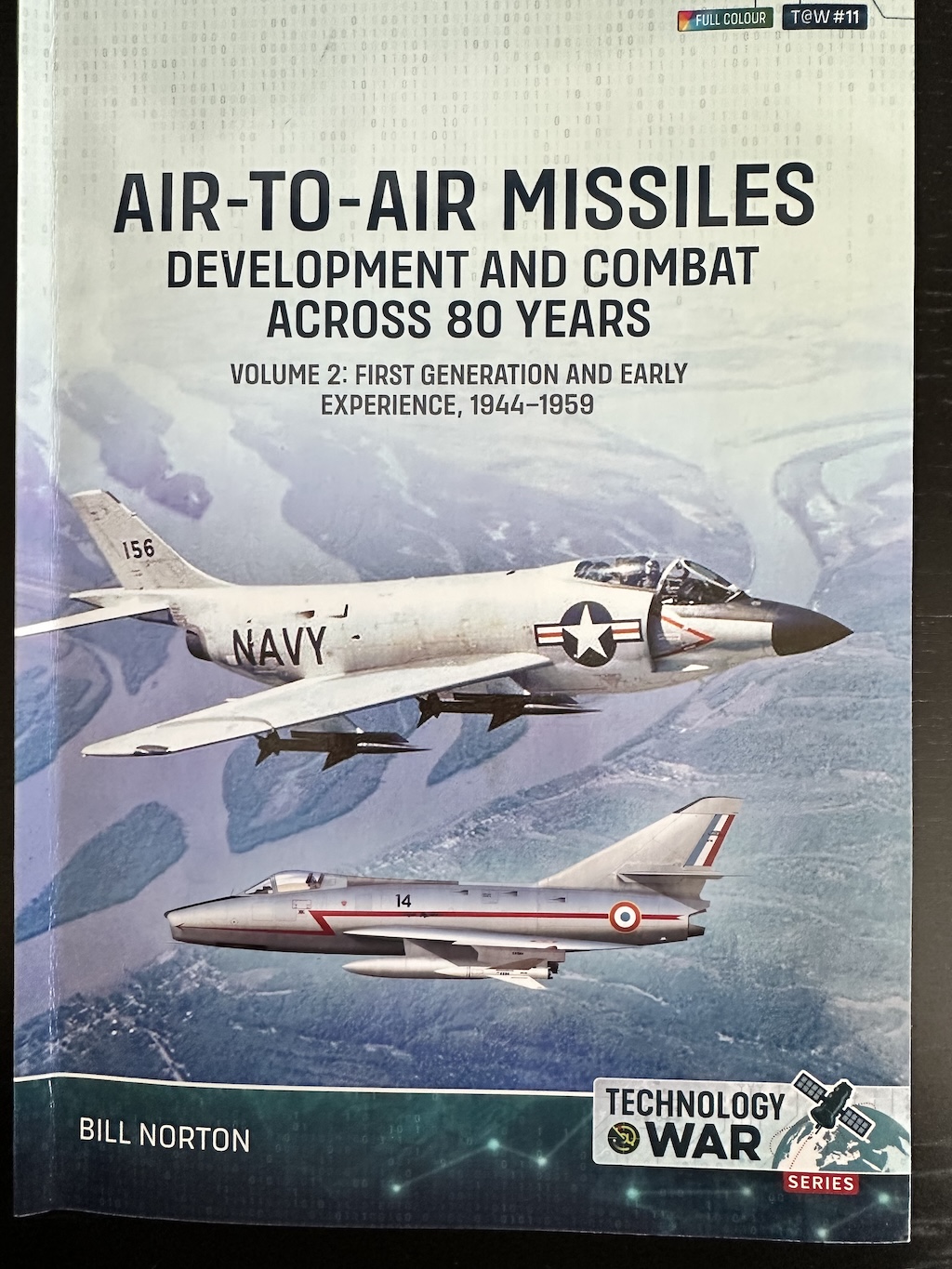
Air to Air Missiles, Development and Combat Across 80 Years, Volume 2: First Generation and Early Experience, 1944-1959
This is the second in a six-volume history of air-to-air missiles (AAM). In the first volume (see my review on this website), the author Bill Norton laid down the basic terminology and operating concepts used in designing and employing these weapons. In this second volume, He begins a generational examination of the weapons by their countries of origin. The book is divided into three sections. In the first, the efforts of Germany, Great Britain, and the United States during the latter part of WWII are covered. Although no guided AAM was fielded before the war ended, their progress in propulsion and guidance systems laid the groundwork for what would happen in the post war period. Germany certainly got close with their X-4 missile, guided by wire controls that trailed the missile after launch.
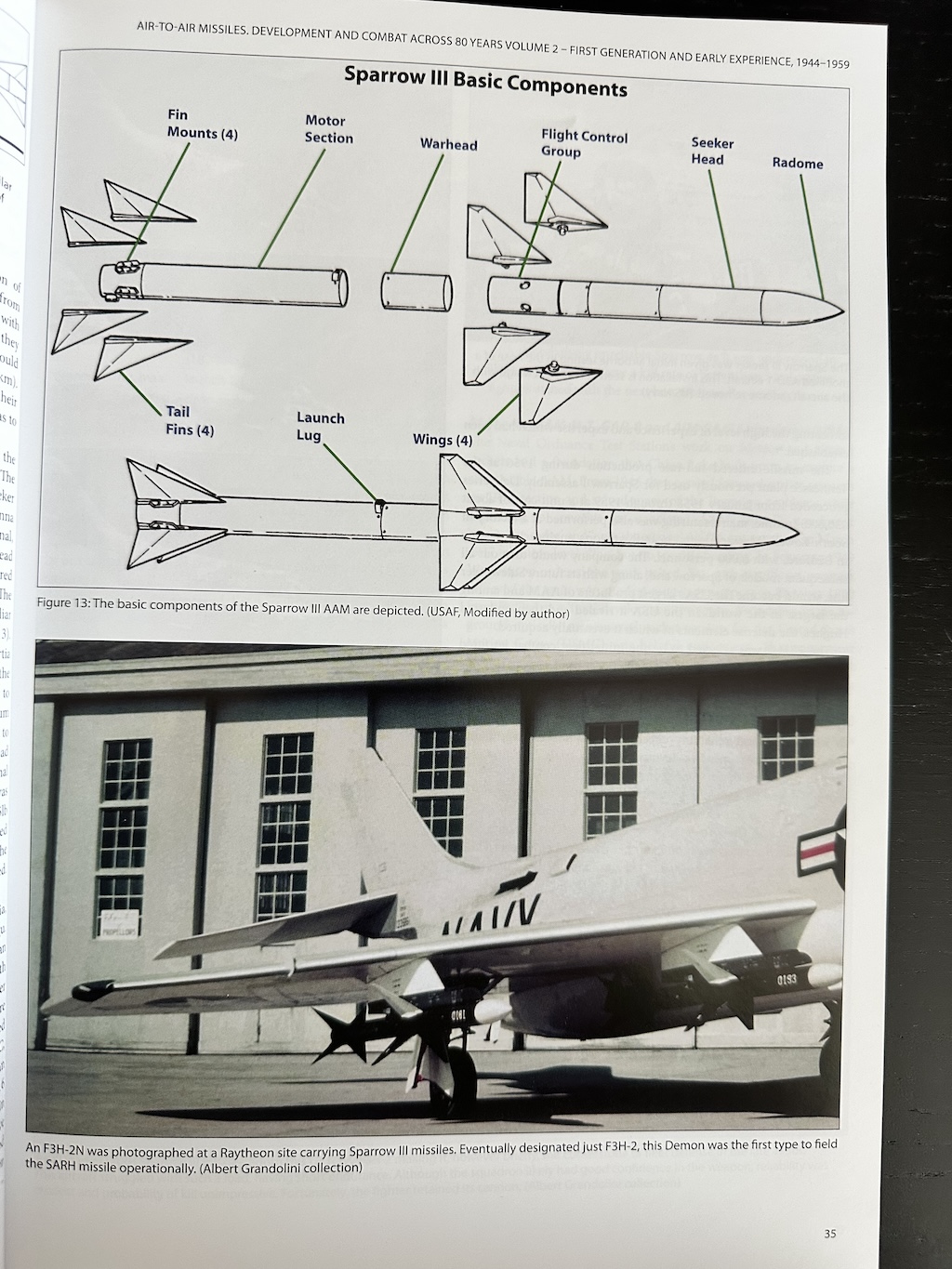
The post-war period through 1959 is covered in chapter two. Eight countries that worked on developing AAMs missiles are systematically examined. The most important are the US, USSR, and Israel. Early success was made by the US in developing weapons that most aircraft modelers would know, including the Falcon, Sidewinder, and Sparrow AAM. While the last two were not the equal of their modern cousins, they were some of the most copied, especially the sidewinder. The USSR made good progress by converting surface-to-air missile technologies to AAM. Of interest was the K-5 missile that shared commonality with the German X-4 developed during WWII. Israel appears to have developed an indigenous AAM, the Shafrir, without the benefit of samples from other countries. In short, the decade following WWII produced true AAM missiles, both heat-seeking and radar-guided. The kill probability of these weapons was not as high as we have come to expect, but they did change the course of aerial warfare.
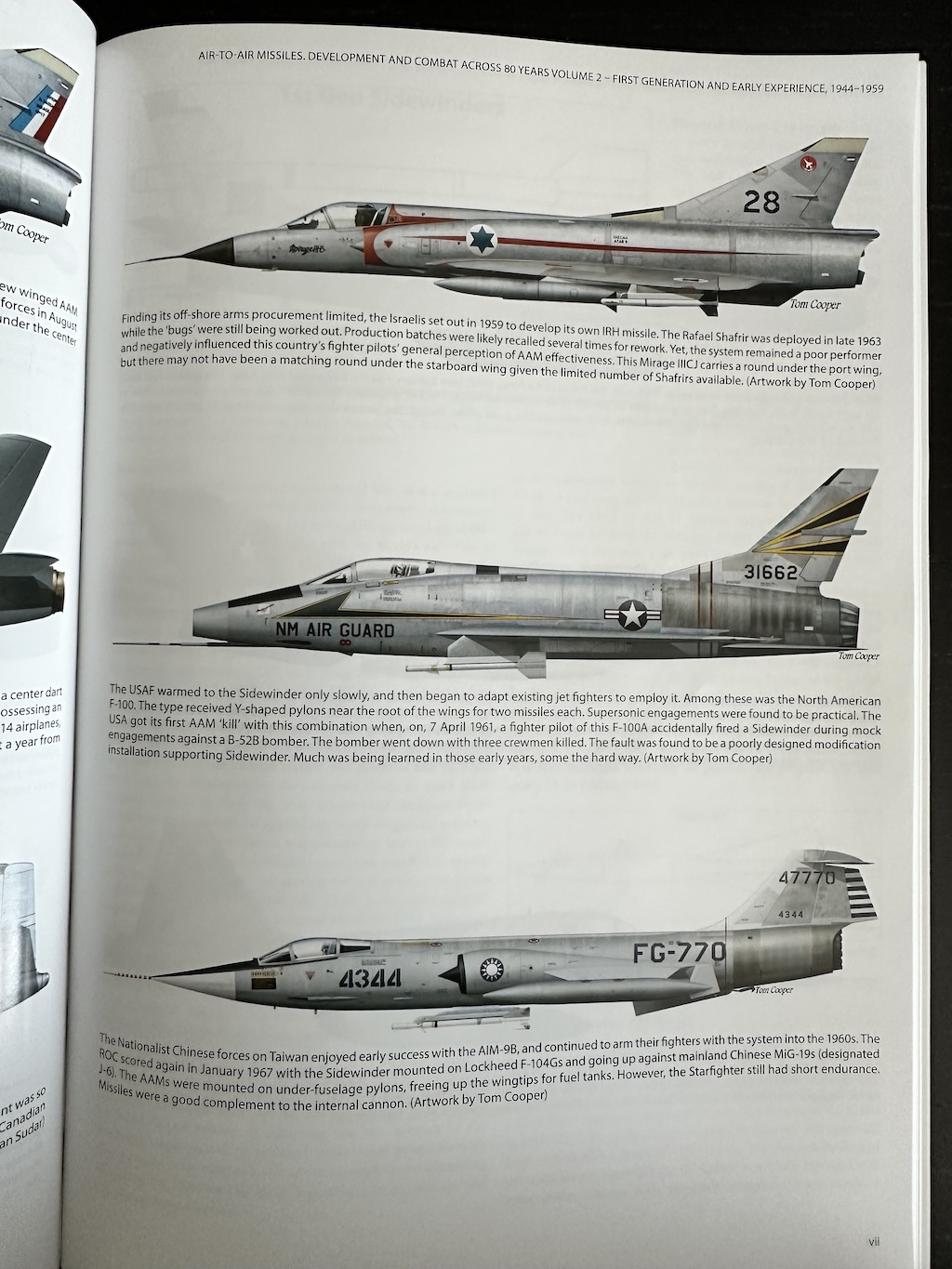
Chapter three covers just how that change happened. The first AAM missile kills were made on September 9, 1958, when F-86 Sabres of the Republic of China (ROC) downed five Mig 15s of the Peoples Republic of China (PRC). The weapons used were the American Sidewinder heat seeker. In the process of those battles, the PRC obtained some sidewinder rounds and the race to copy them began. Meanwhile, in the United States, the first shootdown by an AAM was a fratricide incident in 1961. The result of a Falcon launching itself after an electrical failure that downed a B-52 and killed three aircrew. Also covered are India-Pakistan war in 1965 and Ethiopia -Somalia war of 1977. Although outside the timeframe of the book, the weapons used were first-generation AAMs.
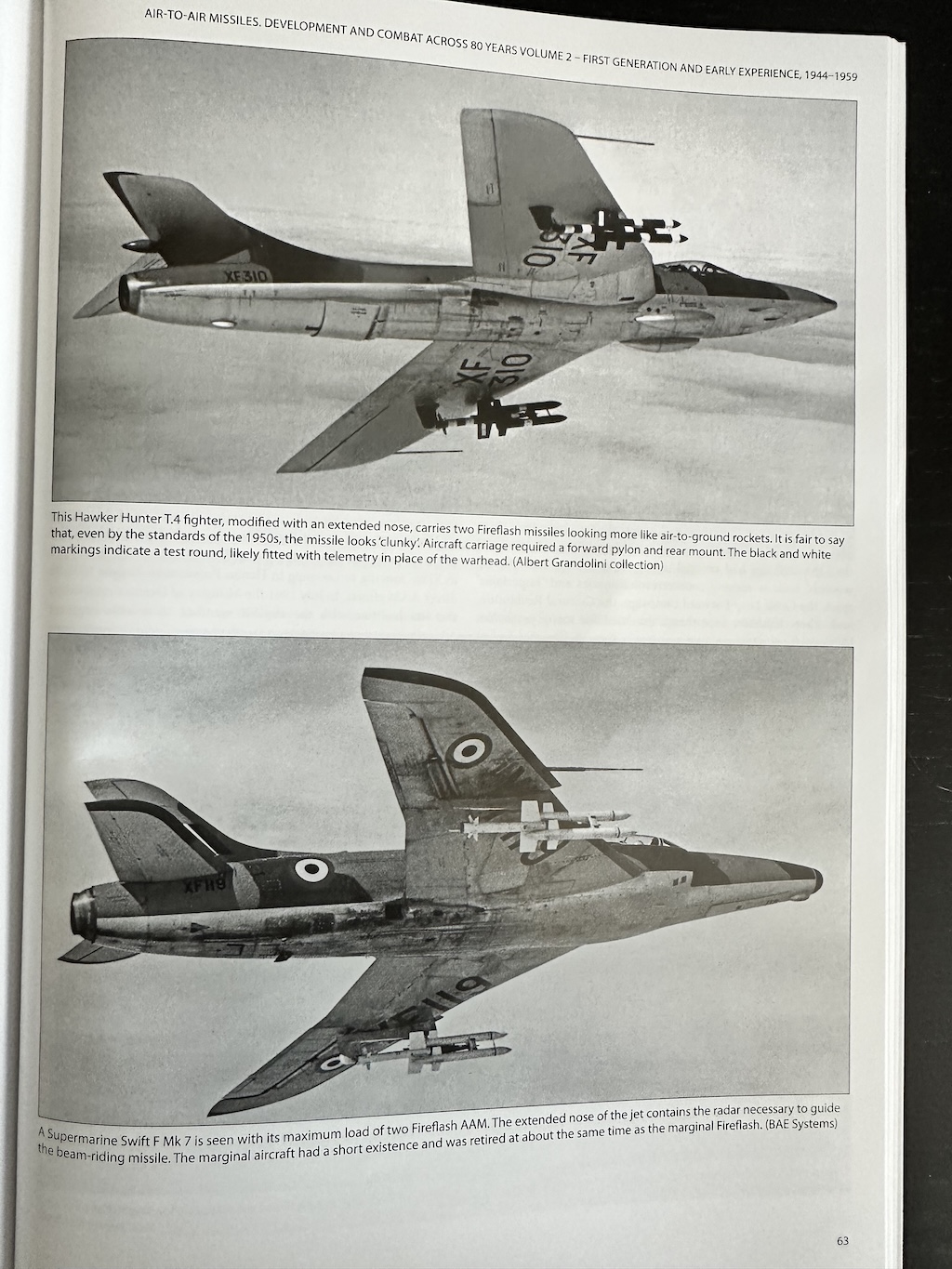
For modelers, this book gets to stuff we like. Photos of the weapons, scale drawings of the different missile generations and colors artwork paring aircraft with the AAM they carried. Of special note are the test aircraft, including FW 190, F-82, and early American Navy jets that tested and carried some of the first AAM into operational service. There are a lot of potential model projects in this book.
Thank you to Casemate for the sample volume and to IPMS for sharing it with me.
Comments
Add new comment
This site is protected by reCAPTCHA and the Google Privacy Policy and Terms of Service apply.
Similar Reviews