Quickboost has provided modelers with a means to attach P-51 propeller blades to the spinner for the Hasegawa kits in a repeatable manner. The resin pieces were cast in a fine grain resin without flaws and with very little clean up. What one has to do is to remove the casting gates off the bottom of the spinner and the blade setting tool. I used a disc sander for that and a snip to remove the blades and shaft from the casting block.
Quickboost has continued to issue sets that make building the Hasegawa A-1 Skyraider easier and with better details. This time around Quickboost presents a set with completely assembled pylons, the centerline, the fuel tanks (2) and the wing pylons (12). The parts are cast in the usual fine grain, gray resin with no defects and very little clean up.
With the plastic kit the wing pylons are assembled from two parts and with the fuel tanks and centerline pylons you’ll have to glue on the sway brackets. The plastic parts have seam lines that have to be removed, possible glue smears to contend with and the fuel tank pylons have punch out marks that have to be removed.
Introduction
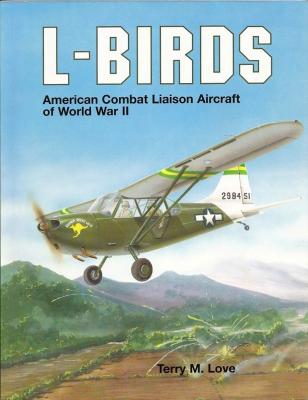
There have been many books published on the Vought F4U Corsair over the years, so why, you might ask, has another one appeared? The reason is that this is not only a comprehensive history of the development and combat career of the Corsair, but it is also a very complete modelers’ guide to all Corsair kits in 1/32, 1/48, and 1/72 scale. I don’t know why they left out 1/144, as there has been at least one kit issued in this scale. In any event, this is a really complete history of the type, and it explains the developmental problems and how they were solved, with the Corsair evolving into not only an outstanding fighter but also a highly effective close support aircraft, with a production life beginning in 1941, and continuing until 1952, when the last Corsair, an F4U-7, was rolled out of the Dallas plant.
Contents:
- Protecting the Motherland’s Airspace – modeling a 1/48 Chinese MiG-19s
- Boulton Paul Defiant Mk.1 – building and detailing a 1/48 Classic Airframes kit
- Vickers Wellington Mk.X Coastal Command – building and detailing the Trumpeter 1/48 kit
- Scale Modelworld 2010 – photo feature
- Fw 189A-2 – building the new Great Wall Hobby 1/48 kit
- Air Born – New Product/Publication Releases
- B-17G – building Revell of Germany’s 1/72 kit
This publication has become a premier showplace for some wonderful model aircraft. The publication’s cover banner “SHOWCASING THE VERY BEST IN SCALE AIRCRAFT MODELLING” is an accurate promise. Everything David Goudie said in his review of Issue Number 32 can be said of Issue Number 34. It is Quality…I’d go so far to declare it as High Quality.
Quickboost just keeps adding to their line of resin aircraft accessories. The latest addition is for the Tamiya Mosquito. It is up to their usual standards; molded in grey resin, smooth, seamless and bubble free. One thing of note is that they are really easy to remove from the mold block because of a nice perforation. It only took me a couple of minutes with my saw blade to remove them. Another plus is that the exhausts are bored out, which would be a real pain if you tried to do it on the kit part.
The exhausts that come in the Tamiya kit look alright and would make an acceptable model but the Quickboost replacements are superior because of how they are bored out which makes for more realism, especially in a photo. These exhausts are very easy to install, and they just fit right in.
Description:
1 pair of intake FOD covers designed for the Academy MiG-29A. And will also work on the Academy MiG-29UB (dual controlled two place trainer).
Inspection:
Packaging is the typical orange-labeled Quickboost clear envelope along with a piece of card stock and a simple instruction note sheet.
Description:
2 resin 265-gallon tip tanks and mount fairings. Ex-KMC mold. For the Revell/Monogram kits.
Inspection:
Packaged is in a clear face, white backed, poly bag stapled to a folded card along with a note sheet. It was clear the vintage KMC molds seem to be holding up pretty well despite the years. Upon opening the package I found the resin almost flawless, detecting only a few pinholes and heavy pour stubs. The details include nice gas caps and mounting points on the tanks. The wing tip fairings appear to be a tad small otherwise they look fine. Squadron included a note warning of “possible resin shrinkage” installing these fairings will require minor surgery of the kit, the wing tips will need to be trimmed to the panel line while remembering you must compensate for ‘resin shrinkage’.
A little quick history. As the Germans got deeper into trouble at the end of WWII, the started trying more and more desperate things to try to stem the inevitable. One of these was to "up" gun the Me262 with a 50mm Mauser Mk 214A V3. That is what this kit depicts. Now to what's in the box: life for this kit started out in the Trimaster range many years ago (late 1980's or so) and the molds went to DML/Dragon who got rid of the white metal with plastic and now on to Dragons bargain line, Cyber-hobby. At the time of the initial release, the Trimaster kits were the most detailed Me262's around with, at the time, revolutionary photoetch included and extensive detailing.
Quickboost just keeps adding to their great line of quality resin aircraft accessories. The latest addition is for the Academy P-38 Lightning. It is up to their usual standards; molded in off-white resin, smooth, seamless and bubble free. One thing of note is that they are really easy to remove from the mold block because of a nice perforation. It only took me a couple of light passes with my saw blade to make them fall away instead of launching into the air becoming snacks for the carpet monster. Another plus is that the gun muzzles are bored out which would be a real pain if you tried to do it on the kit part.
History: The Junkers Ju 188 was a German Luftwaffe high-performance medium Tactical bomber/Reconnaissance aircraft built during World War II.
Review:
The quality of the casting is perfect and bubble free. The tips of the exhaust pipes are hollowed out for added realism. Most resin parts are likely to need more work on them than the more normal injection molded plastic parts that you may be used to. Why you ask, well Resin is a much harder material then the standard molded plastic in your kit. This is what gives it the fine details you are looking for. In some cases the greatest challenge can be cutting the part from the casting block without damaging it. I have found that it is better to cut away the bulk of the casting block, leaving just a small amount behind so that it can be trimmed away with a hobby knife.