Scott retired from the commercial nuclear industry with over thirty years of experience in Maintenance, Engineering, and Training. Prior to that he served on two aircraft carriers during his time in the U.S. Navy. He has been building models for over 50 years with his first kit being purchased with money from his grandparents for his sixth birthday. With a stash that consists of more aircraft than anything else, Scott still enjoys building a little bit of everything (including but not limited to tanks, cars, show cars, military vehicles (aside from tanks), ships, figures, real space, and some science fiction), which keeps his stash growing. Scott and his wife Fern reside in southwest lower Michigan, not far from South Bend, Indiana, and have three adult children and currently three grandchildren as well as a small dog and a large cat.
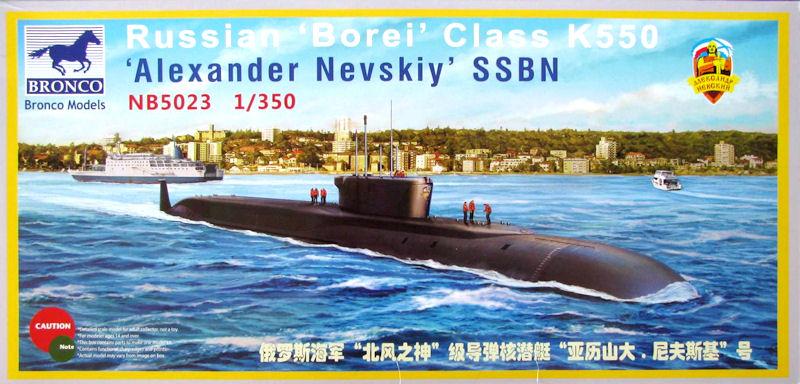
Named after the Russian saint Alexander Nevskiy, the second ballistic submarine in the Borei-class is just now entering service after several delays during her construction, which began when the keel was laid in March of 2004. Although there were budgetary issues that hampered completion, there are also reports of issues regarding the missiles that were to be carried aboard the new class of submarine that is meant to replace the Delta and Typhoon classes. Original plans were to arm the submarine with “Bark” missiles, but these were later cancelled and replaced with “Bulava” missiles. The Alexander Nevskiy is supposed to be very similar to the Yury Dolgoruky, the lead boat in the Borei-class.
The submarine is reported as having a displacement of 14,720 tons surfaced and 24,000… more
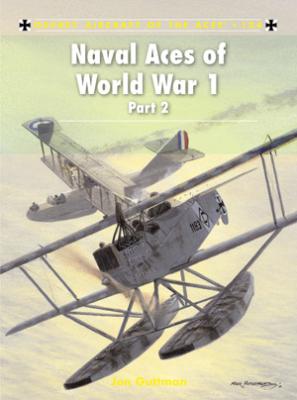
Published: Book Author(s): Jon Guttman (Illustrated by Harry Dempsey) Company: Osprey Publishing
In this new offering from Osprey Publishing, author Jon Guttman writes about the pilots who flew with the Royal Naval Air Service (RNAS), as well as those who flew against them. As a former carrier sailor, my interest in naval aviation quickly drew my interest for this review. The pilots who flew during the “Great War” also hold a special fascination for me, as this new technology was being introduced with few realizing how it would eventually change the world, and how wars would be fought in the future.
This offering by Osprey is written in seven chapters, which are titled “Sky and Sea”, “Zeebrugge Hornets’ Nest”, “The Marine Feld Jastas”, “Detached Duty”, “Aces over the Baltic”, “Action over the Adriatic”, “Allies in Camels”, followed by Appendices. There are ninety-five black… more
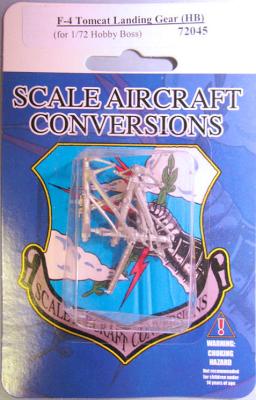
The F-14 Tomcat will likely be the greatest fleet defender known by my generation. Although retired now, the F-14 was ready from the start to carry an array of weapons including the AIM-9 Sidewinder, AIM-7 Sparrow, AIM-54 Phoenix (the ultimate missile of the US arsenal, which is also now retired), various bombs, and an internal 20mm Vulcan cannon. The 64 foot, 1.5 inch long wings could be swept to 38 feet, 2.5 inches or overswept for storage to 33 feet 3.5 inches. The plane was 62 feet, 8 inches long and 16 feet tall weighing 40,104 pounds empty, and 74,349 pounds at maximum takeoff weight. Powered by a pair of Pratt & Whitney TF-30-P414A turbofans (with 20,900 pounds of thrust each), the F-14A never reached its full potential, as the D-model would later with General Electric F110-… more
As a little something different, I am going to begin this review with a story relating to my introduction to the USS Independence LCS-2. Over Thanksgiving week in 2010, my family and I were traveling to Virginia Beach to spend the holiday with my in-laws (no jokes here, they really are great people). When we first arrived in the Hampton Roads area, we stopped at my favorite hobby shop in the country, at least of all the ones that I have been in. There on the end of an aisle was a brand new release from Trumpeter of the USS Independence (kit 04548), a new littoral combat ship with a trimaran hull. Although I am a former carrier sailor, I had to have this kit in my stash, as it was incredibly state of the art in its appearance. While talking to the owner of the store when I was checking… more
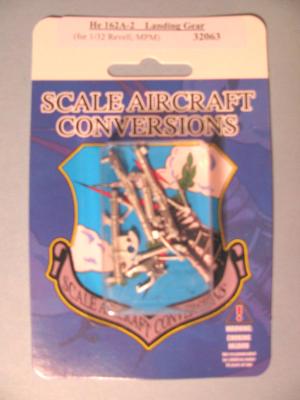
First flown in December of 1944, the Heinkel He 162 Volksjager (people’s fighter) was known as the “ninety day wonder” as it went from an Air Ministry requirement to prototype in a mere three months. Like the other jet fighters of the day, it relied upon the BMW 003 turbojet engine, which was highly demanded as the Second World War drew to a close. The plane was 29 feet 8 inches in length, had a wingspan of 23 feet 7 inches, and stood 8 feet 6 inches tall. The A-2 variant carried a pair of 20mm MG 151 cannons with 120 rounds per gun. Depending on the source, between 238 and 320 of these aircraft were built. Something that I found unique is that the Volksjager, which is often referred to as the Salamander, was built under the code name “Sparrow”, which is what the Heinkel company called… more
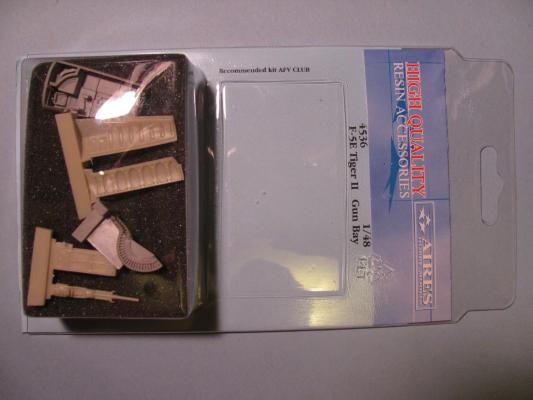
Being that this detail set is denoting the gun bay of an F-5E Tiger II, I will begin with a little history of the M39A2 cannon, which is represented in this set. This weapon was developed by the Springfield Armory in the late 1940’s, and was based upon the German Mauser MG 213. The design was a five-shot revolver firing 20mm by 102mm projectiles at a rate of 1500 rounds per minute at a velocity of 3300 feet per second. The M39A2 was first released in 1964, but the M39 guns themselves entered service in 1952, and were mounted within the F-86H, F-100, F-101A and C, as well as the F-5 variants. Ford and Pontiac are among the companies who manufactured the M39 cannons, and some 35,500 have been produced. The M39A2 itself weighs 178.5 pounds and is just over six feet in length.
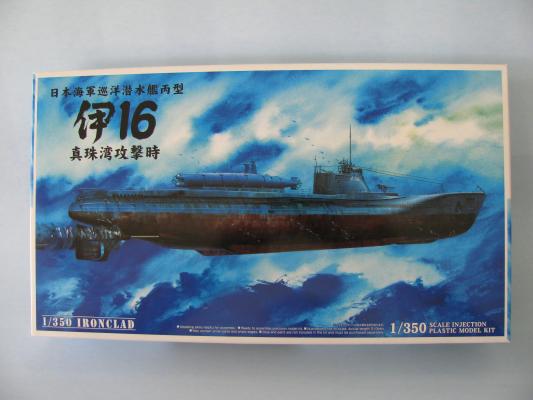
The Imperial Japanese Navy Cruiser Submarine I-16 was constructed at Mitsubishi Shipbuilding in Kobe, and was then towed to Kure Navy Yard for completion, as well as commissioning in 1940. She was the lead boat for a class of five submarines that included the I-18, I-20, I-22, and I-24, which were Type C1 boats. The design of this class was based on the Junsen-type, and they were developed from the type KD6. These boats were designed to carry either the Ko-hoteki midget submarine or Kaiten suicide torpedo.
I-16 and her sister boats each displaced 2595 tons surfaced and 3618 tons submerged, were 358 feet, 7 inches long, 29 feet, 10 inches at the beam, and had a draft of 17 feet, 7 inches. The boat could travel at a maximum speed 23.6 knots surfaced, with a range of 14,000… more
The Parabellum LMG 14 was introduced in 1914 by the German company Deutche Waffen und Munitionsfabriken, and was based on their MG 08 gun. Rather than using a belt feed system, the LMG 14 utilized an enclosed drum magazine to hold the same 7.92 mm ammunition as its predecessor. Other modifications for the LMG 14 included a lighter casing and the use of air instead of water for cooling the barrel. The gun had a rate of fire of 700 rounds per minute, and was used mostly on bombers, scout planes, and zeppelins. There were attempts to synchronize this particular gun with the propeller on initial Fokker E.1 planes, but this was later abandoned due to issues with the reliability of the LMG 14.
Not researching what I had requested to review for this particular item caught me… more
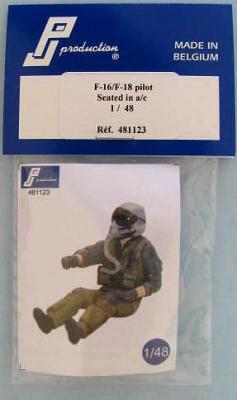
I typically start my reviews with a brief history of the item that I am reviewing, but in this instance, the item represented is a pilot for either an F-16 or an F/A-18. What I will tell you is that the latest 1/48 scale figure offering by PJ Production from Belgium is a nicely designed figure wearing an HGU-55 helmet along with a standard flight suit, G-suit, and Nomex gloves. The figure comes with a single left arm and two different right arms, as the controls are different for the Falcon and Hornet (the Falcon has its control stick located on the right console where the Hornet is centered in front of the pilot).
There are a mere five parts for this particular figure, consisting of the legs, torso, and head, and the aforementioned three arms. I appreciated the way that the… more
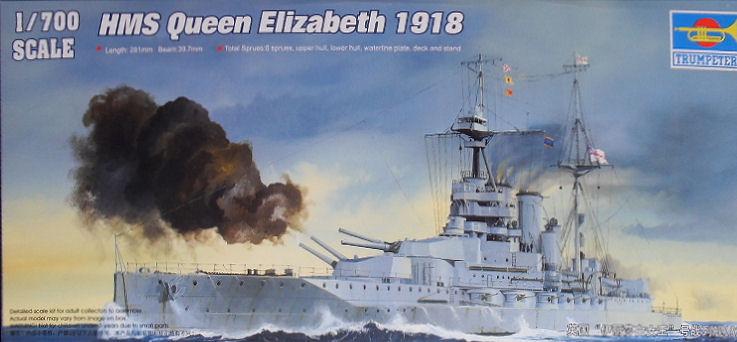
Lead ship of the Queen Elizabeth-class of dreadnaught battleships, the HMS Queen Elizabeth was named after Elizabeth I of England, and would see service in and survive both of the World Wars. Launched on 16 October 1913 in Portsmouth, Hampshire, this ship was commissioned in 1915 and was not decommissioned until 1948, when she was scrapped. The ship as built had a displacement of 33,020 tons, a length of 640 feet 10 ½ inches, a beam of 90 feet 6 inches, and a draft of 30 feet 6 inches. Propelled by a total of twenty-four boilers (using oil instead of coal), her four turbines could move the ship at twenty-four knots as a top speed, or for 8600 nautical miles at 12.5 knots, or for 3900 nautical miles at 21 knots. Her main armament consisted of eight fifteen-inch guns, as well as sixteen… more