

Jim Coatney
Reviews By Author
|
J2M3 Raiden ‘Jack’ (with Concept Notes)Published:
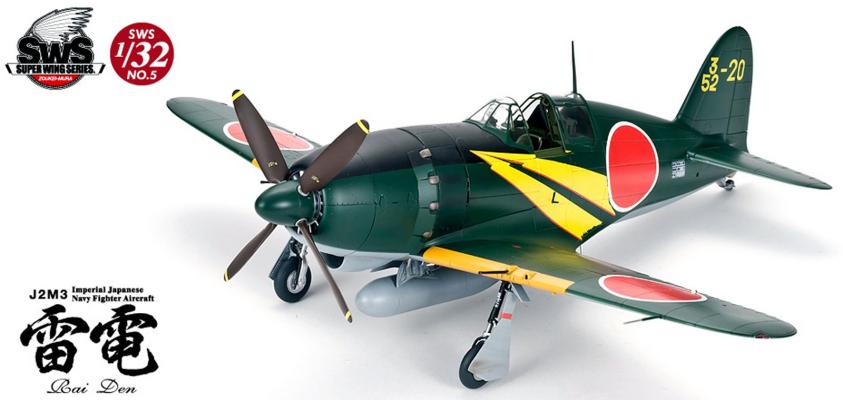
NOTE: The Concept Notes have MSRP of $22.00 Part 1: OverviewThe fifth Super Wing Series kit from Zoukei-Mura (ZM) is the Mitsubishi J2M3 Raiden (Allied code name ‘Jack’). I have the Hasegawa kit of the same aircraft in my stash, but when ZM kit arrived, I was very surprised at the size of the box. The kit box is substantially larger than the Hasegawa box, and it is full of plastic. Lots and lots of plastic. The lift-off box top is beautifully rendered in glossy artwork featuring the J2M3 of Lt. JG Yoshihiro Aoki, with views of the actual model on the sides. Inside there are nine individually wrapped sprues of light gray plastic and two sprues of clear, with a total of 247 parts. There is a single decal sheet, a small sheet of paint masks, and… more |
|
PB4Y-1 USN "Calvert and Coke" with Two OptionsPublished:
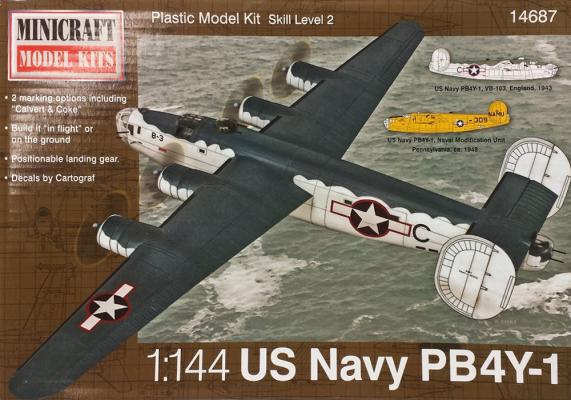
The Consolidated PB4Y-1 was the navy version of the B-24 Liberator. Whereas the Army Air Corps used letter designations to identify the various versions of the B-24 (B-24D or B-24J for example) the US Navy used the same designation (PB4Y-1) for all models until the single-tail PB4Y-2. This means that the glaze-nosed B-24D and the turret-nosed B-24J were both called PB4Y-1 in Navy parlance. The kit reviewed here is the PB4Y-1 version of the B-24D. Minicraft’s kit comes in a small, sturdy, top-opening box. The cover illustration is of a US Navy PB4Y-1 from VB-103, England, 1943. Inside are four sprues, two in light gray, and two in clear. There are thirty-eight light gray parts and thirteen in clear. The fuselage is for a B-24J, but a replacement nose, molded in clear, is… more |
|
F-4E/F Phantom IIPublished:
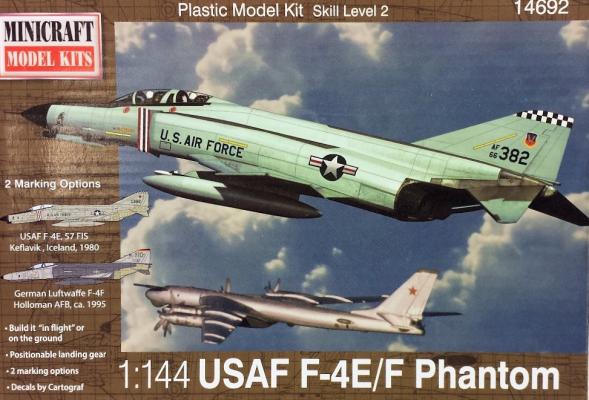
The McDonnell Douglas F4 Phantom II needs no introduction, so I’ll skip over the history of this famous aircraft and simply specify that the F-4E has an extended nose to house an internal M-61 Vulcan cannon. The “E” was the most built variant, with almost 1400 units completed. F-4Es, in addition to use by the USAF, were sold to Germany (as the F-4F), Greece, Iran, Israel, South Korea, and Turkey Minicraft’s F-4E comes in a small, sturdy, top-opening box. The cover illustration is of an F-4E from the USAF 57 FIS, Keflavik, Iceland. Inside are three sprues, two in light gray, and one in clear. There are thirty-three light gray parts and one in clear. As would be expected with the low parts count, the instructions are simple and clear, with assembly broken into eight basic steps.… more |
|
de Havilland Vampire FB.5Published:
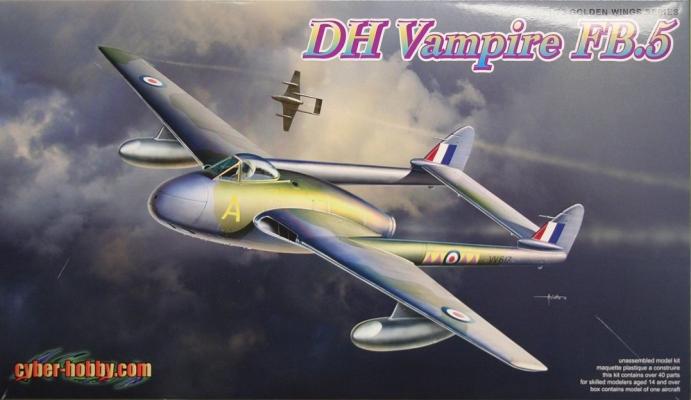
Although too late for World War 2, the de Havilland Vampire served in front-line RAF squadrons until 1953 and in training squadrons until 1966. The Vampire was the RAF’s second jet-powered aircraft, after the Gloster Meteor. Over 3200 copies were manufactured in numerous variants. The FB.5 was a single-seat fighter-bomber, of which over 1000 were built. It was powered by a de Havilland Goblin II turbojet, and it could reach a maximum speed of 550 mph. Cyber Hobby’s new Vampire comes shortly after their Meteor, Sea Venom, and Sea Vixen, as they continue to build on their line of post-war aircraft. As a new tooling, the kit makes extensive use of slide-molding. The kit comes in the standard Dragon/Cyber Hobby top-opening box, with images on both the box top and bottom. Forty-five… more |
|
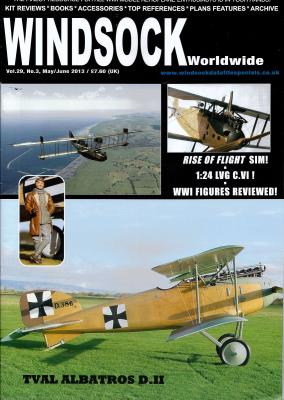
Windsock Worldwide Vol.29, No.3Published:
Albatros Productions publications, particularly their Winsdsock Worldwide and Datafiles, are indispensable reference materials for any serious modeler of World War One aircraft, and also for anyone with a deep interest in the history of aviation history. The May/June 2013 (Vol.29, No.3) issue is their latest release of the Windsock Datafile line. The magazine consists of thirty-four pages (including covers) in medium thickness glossy paper. Other than the back cover and inside back cover, there is no advertising. The rest is all wonderful content. Production quality is excellent. The cover shows pictures that hints towards the content inside; TVAL’s beautiful new Albatros D.II, a screen shot from the flight simulator Rise of Flight, an image of… more |
|
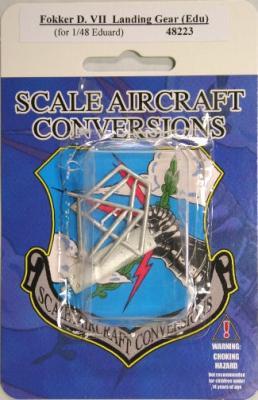
Fokker D.VII Landing GearPublished:
Scale Aircraft Conversions (SAC) has been producing drop-in white metal landing gear replacements for a growing range of kits since 1990. White metal offers substantially more strength than the styrene kits parts, which is a useful benefit for kits that are heavy or where the gear is especially fiddly. In this case, we are looking at the main gear and tail skid that fit the Eduard 1/48 Fokker D.VII. Eduard does a nice job making the kit’s landing gear struts to scale, but this also means that they are very thin and fragile. In addition, Eduard’s attachment points are often very shallow and benefit from pinning the struts in place to strengthen the join. Up step the SAC replacement struts. The D.VII parts come packaged in the standard SAC blister pack, with the parts loose… more |