
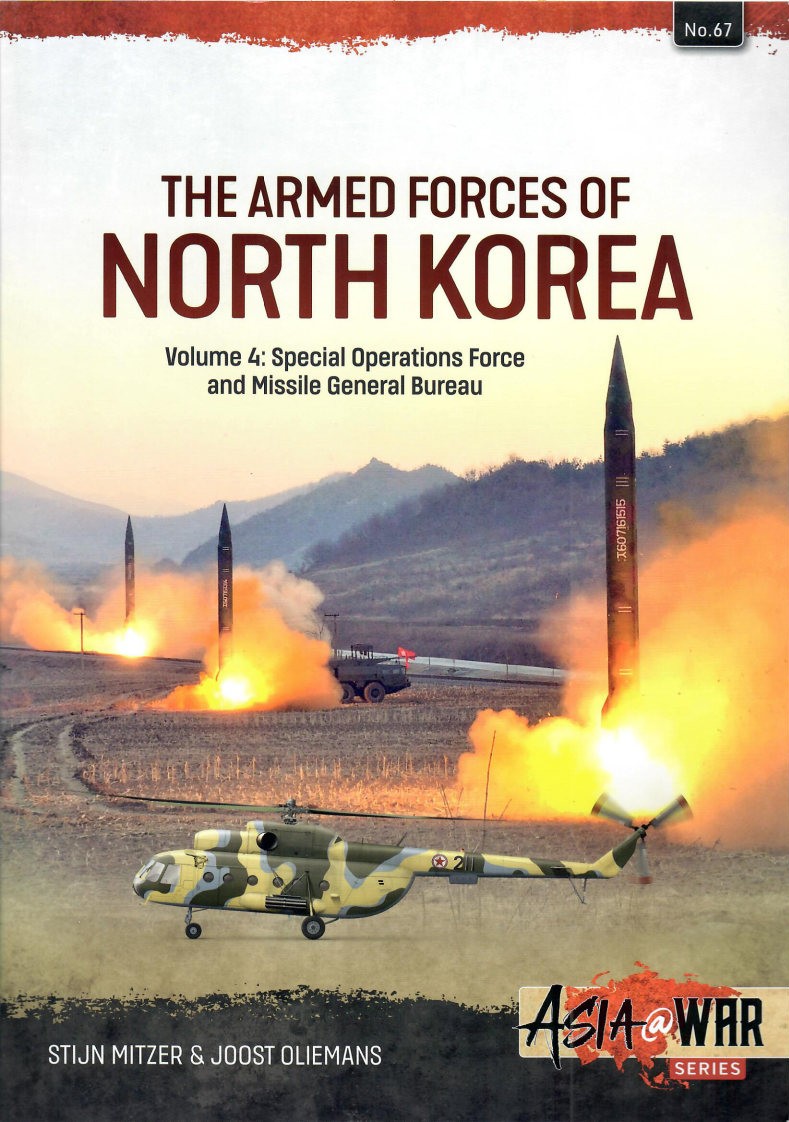
Armed Forces of North Korea, Volume 4: Special Operations Force and Missile General Bureau
From the Introduction -
Tuesday, 6:02AM (GMT+9), 29 August 2017
Residents on Hokkaido, Japan’s northernmost island, wake to an emergency alert on their phones. The morning dark is washed from their faces as blue-tinged screens alight. Sleepy-eyed, in bedrooms or on early commutes, they stare disbelievingly at the message as around them alarm sirens begin their unearthly wail:
Missile launch. Missile launch. A missile has been launched from North Korea. Evacuate to a building or underground.
Though the country had over the previous decades slowly grown accustomed to the menace periodically emerging from its walled-off resting ground on the upper Korean peninsula, 2017 had been a year unlike any other.
North Korea had found a new way to antagonize its neighbors and remain relevant on the international scene, and influence not only the region, but the world, given its economic and political influence nowadays was insufficient to do otherwise.
This is the fourth volume of The Armed Forces of North Korea. The previous four books are:
- Volume 1, Part 1: Korean People’s Army Ground Forces (reviewed on the IPMS/USA website)
- Volume 1, Part 2: Tanks and Artillery (reviewed on the IPMS/USA website)
- Volume 2: Korean People’s Army Air and Anti-Air Force
- Volume 3: Korean People’s Army Navy
This volume is a continuation series, part of the larger book, The Armed Forces of North Korea – On the Path of Songun, a 240-page hardcover book (released in 2020 and no longer in print) into smaller volumes makes sense as it is easier to digest, and if a modeler or historian wants to focus on one aspect, this series makes it easier to do so. These separate volumes have been updated with recent information and photos dating to 2025.
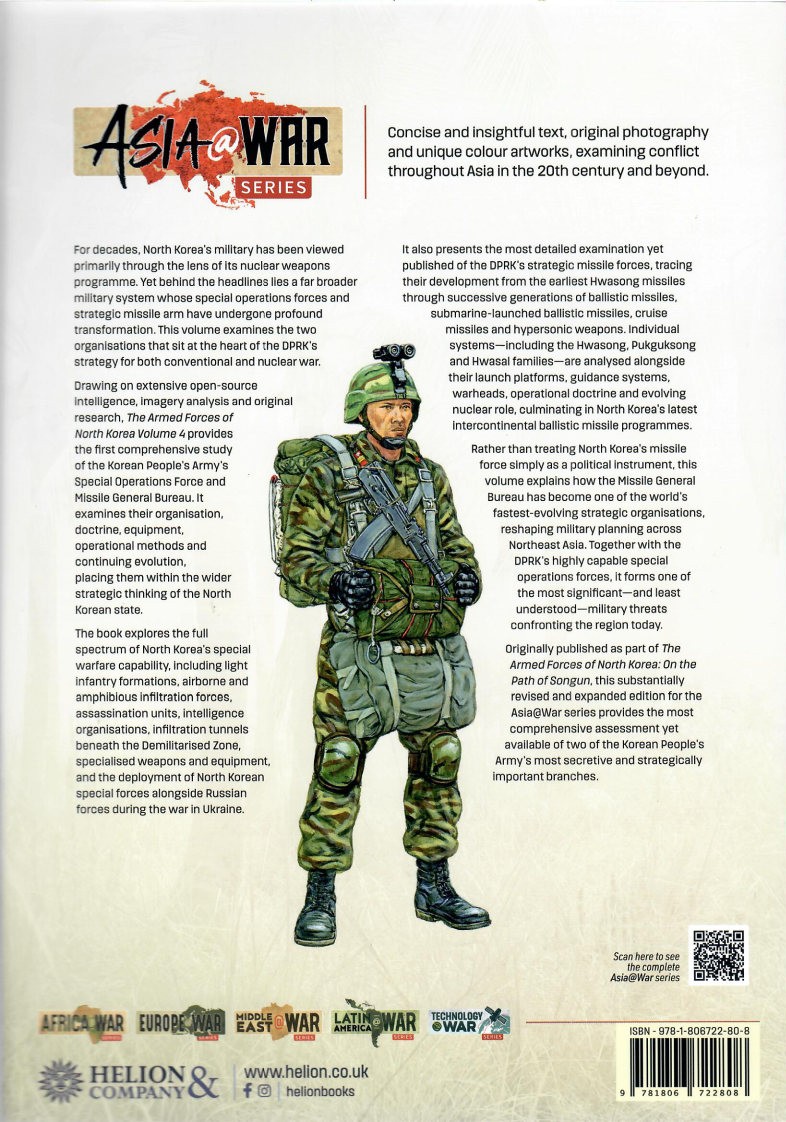
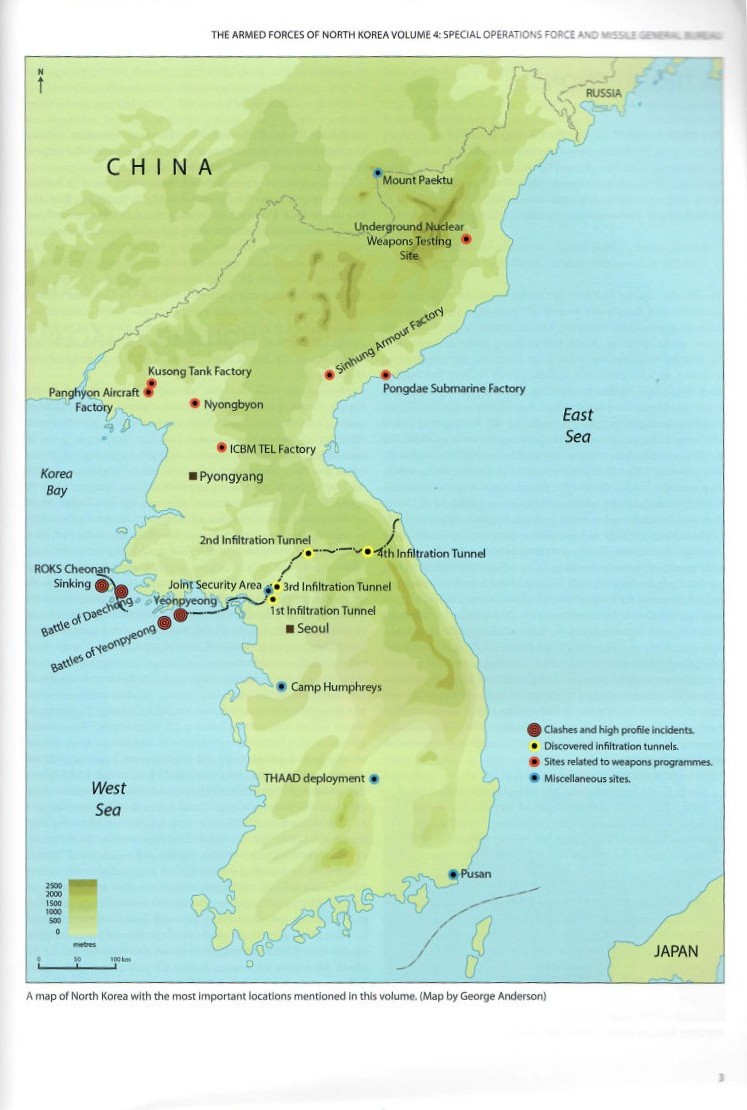
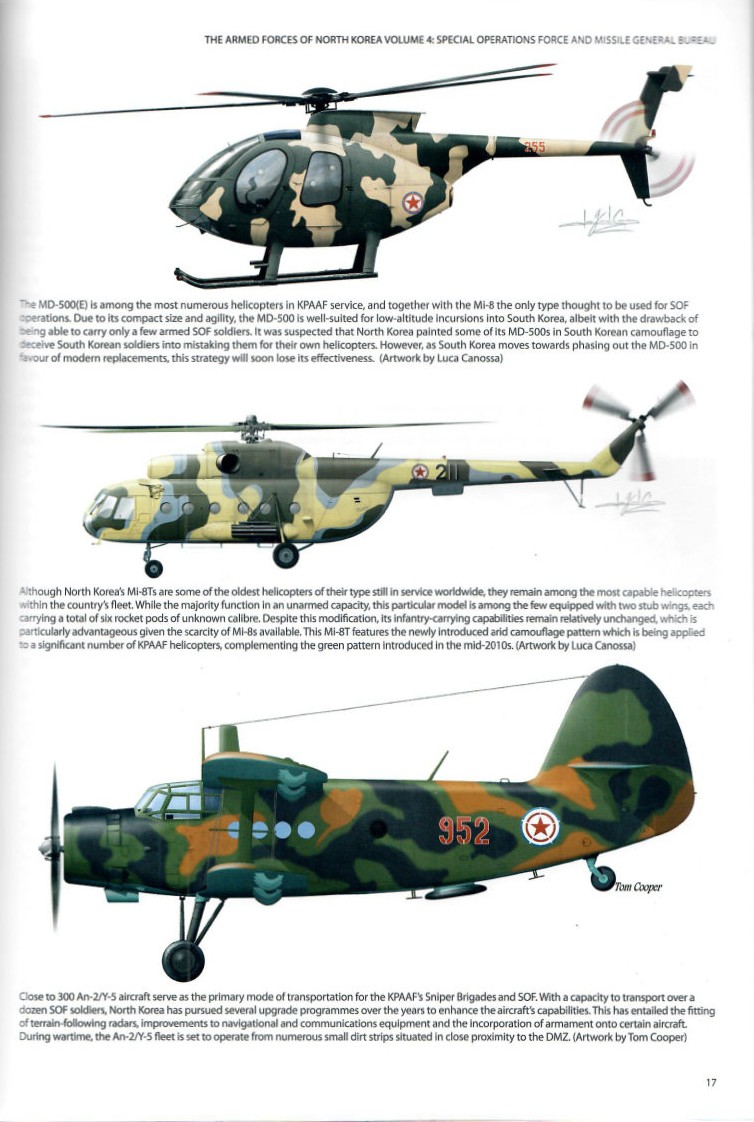
This 96-page book is part of Helion & Company’s Asia@War Series (No. 67) Armed Forces of North Korea, Volume 4: Special Operations Force and Missile General Bureau (Helion No. HEL2272) is outlined in the familiar @War format with 190 color photographs, one black and white photo, six color profiles, and one color map. The book is composed of the following sections:
- Abbreviations and Acronyms
- Preface
- Introduction
- Special Operations Force
- Missile General Bureau
- Concluding Remarks
- Bibliography
- End Notes
- About the Authors
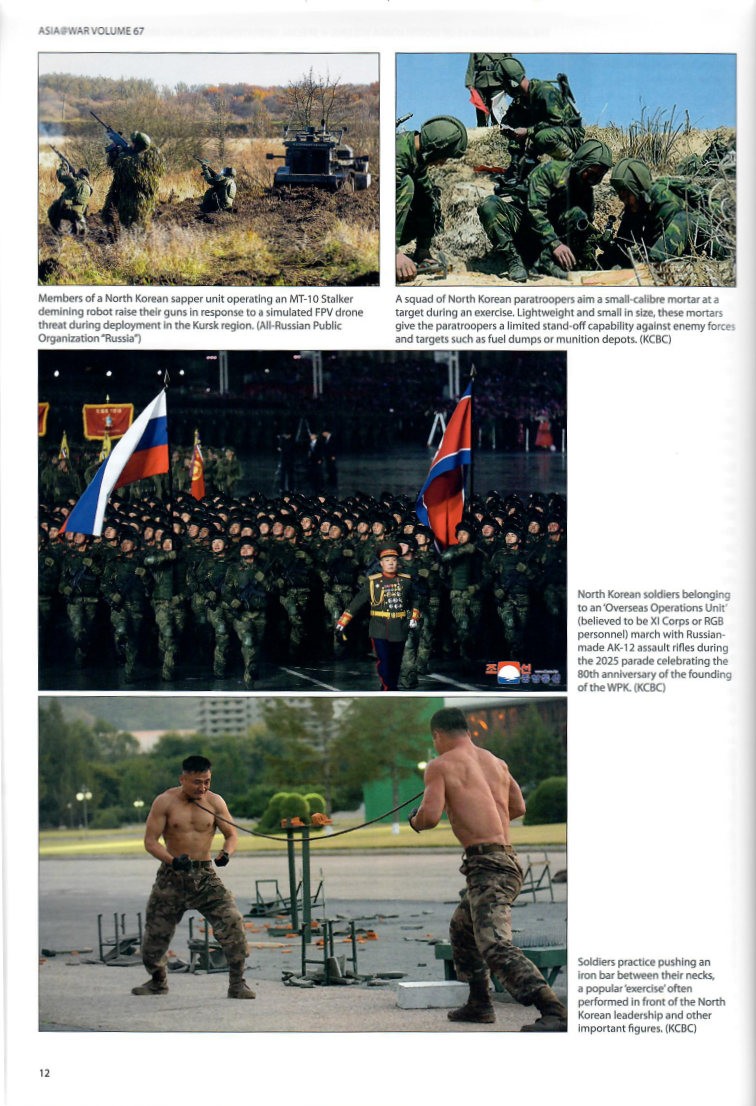
North Korea reports its special operations forces number 200,000 troops ready to strike South Korea, Japan and beyond as soon as they are ordered. Their missions include strategic, operational and tactical strikes in support of the ‘One Blow Non-Stop Attack’ as North Korean forces move into the Republic of Korea (ROK). Their task is to create a second front in the ROK rear, support the advance of heavier forces, and assassinate key ROK leaders. While North Korean special operations forces fall under their directorate, other branches also have their own special forces.
A vast majority of the special operations forces include light infantry units numbering 120,000 of the 200,000. These specialized light infantry forces are designed to move quickly unhindered by heavy weapons to seize key terrain for the heavier force attacks. Part of their repertoire is to use tunnels under the heavily mined and fortified demilitarized zone (DMZ). Four tunnels have been discovered, with defector rumors of up to 20 tunnels in existence. Ironically, the discovered tunnels have become popular tourist destinations with tours available of all but the first tunnel, while constructing them in the 1970s and 1980s “must have cost the North considerable expenses, the irony that they have now become sources of income to the South is palpable.”
The special operations forces of the DPRK (Democratic People’s Republic of Korea) are organized around the Special Operations Force, which is composed of three sniper brigades, four light infantry brigades, and three airborne light infantry brigades, often referred to as “Bolt”, “Lightning”, and “Thunder”. The irony of the airborne-qualified forces is the Korean People’s Army Air and Anti-Air Force (KPAAF) airlift consists of three Il-76 cargo aircraft (one of which is being converted to an early airborne platform, the other two can transport 120 paratroopers each) and around 200 An-2 Colt biplanes. The special operations forces receive the bulk of the new equipment and are equipped for infiltration by air, land and sea, although the lack of vehicles will allow for an initial surprise in limited numbers, while follow-on missions will be subject to intense counterattack by the now-alerted ROK, American and Japanese forces.
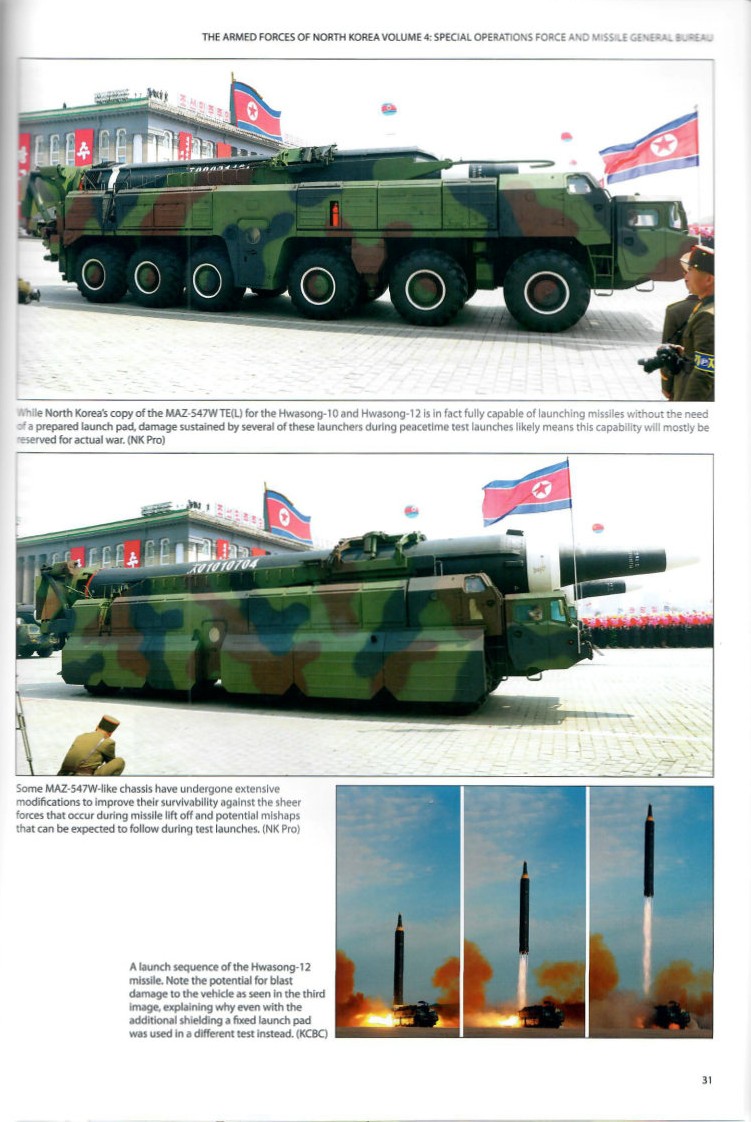
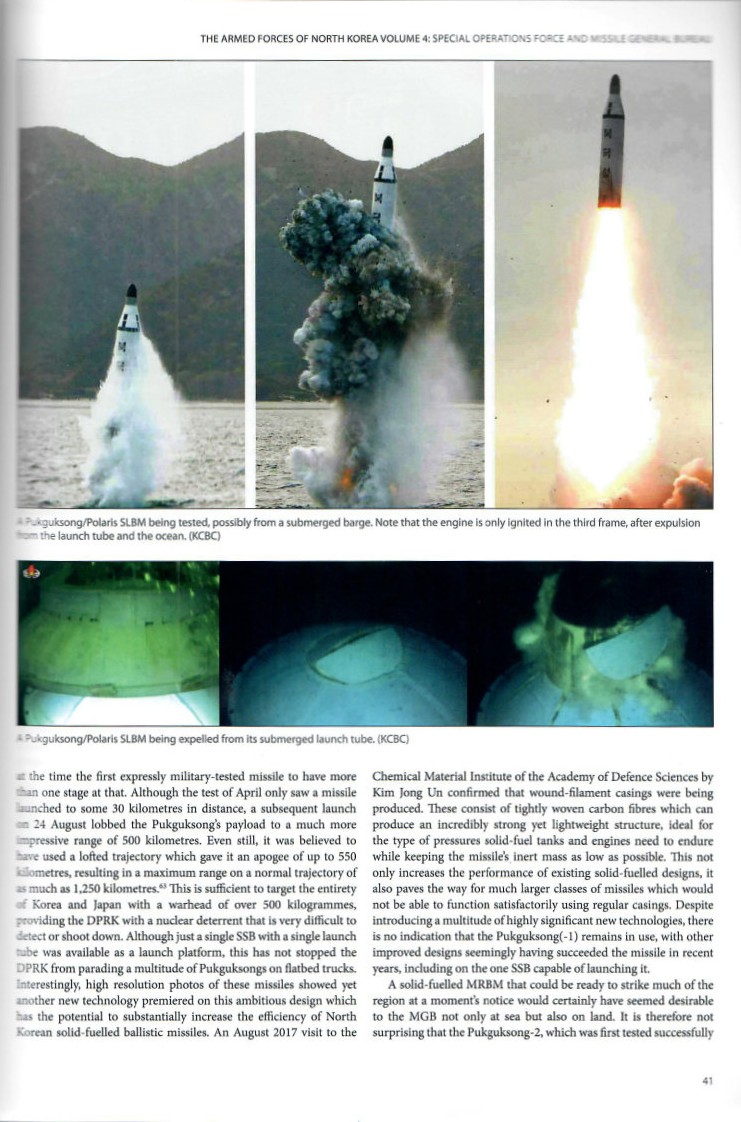
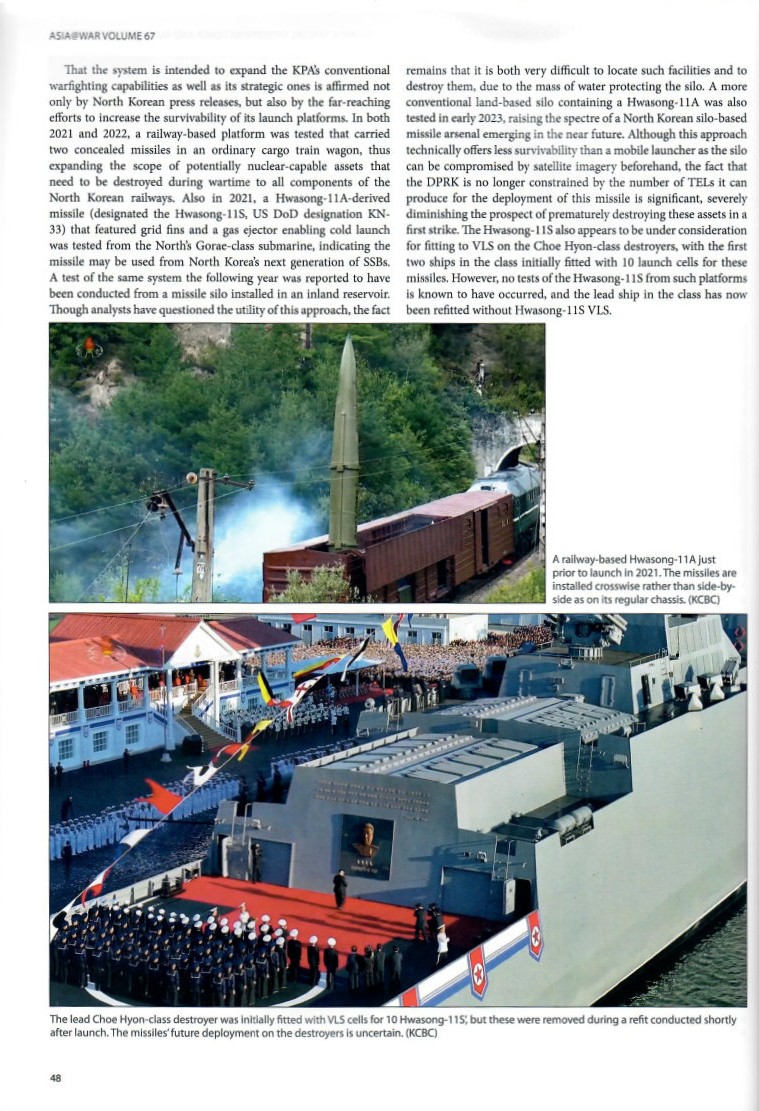
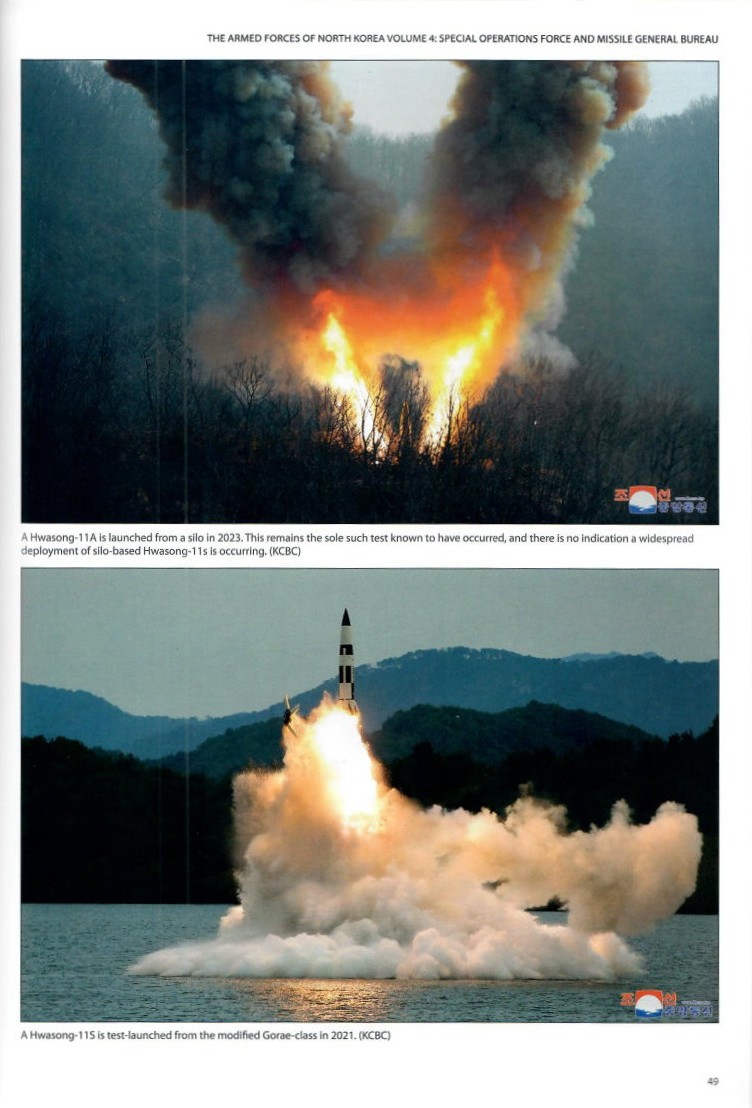
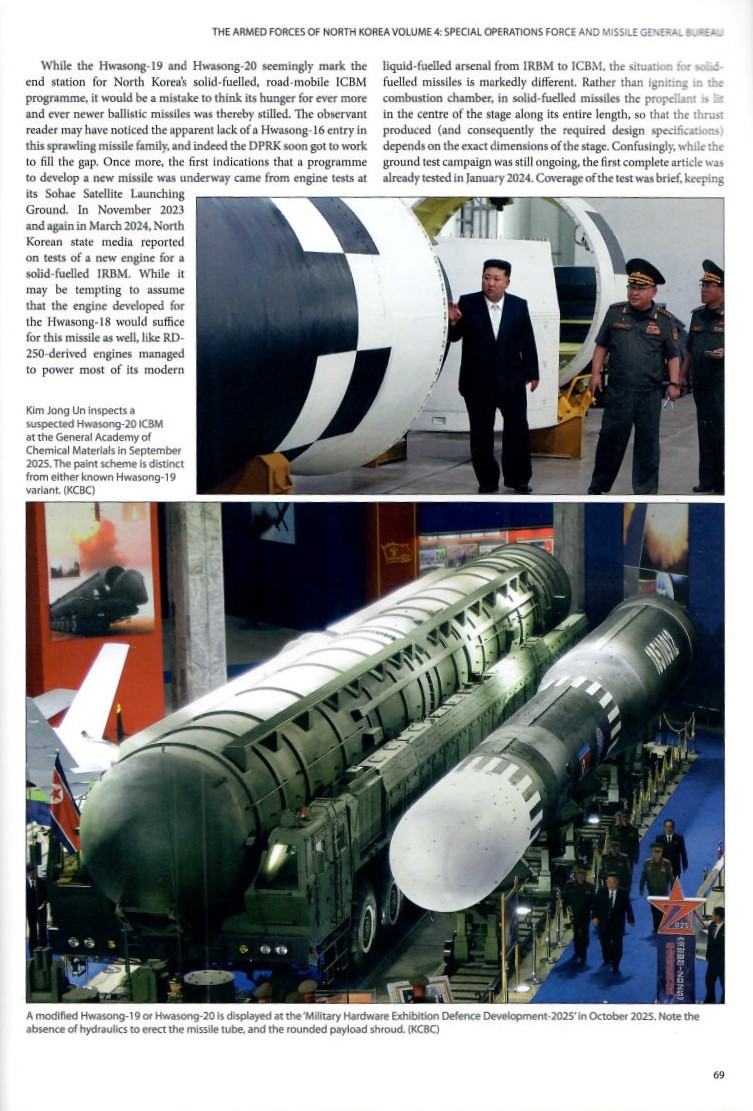
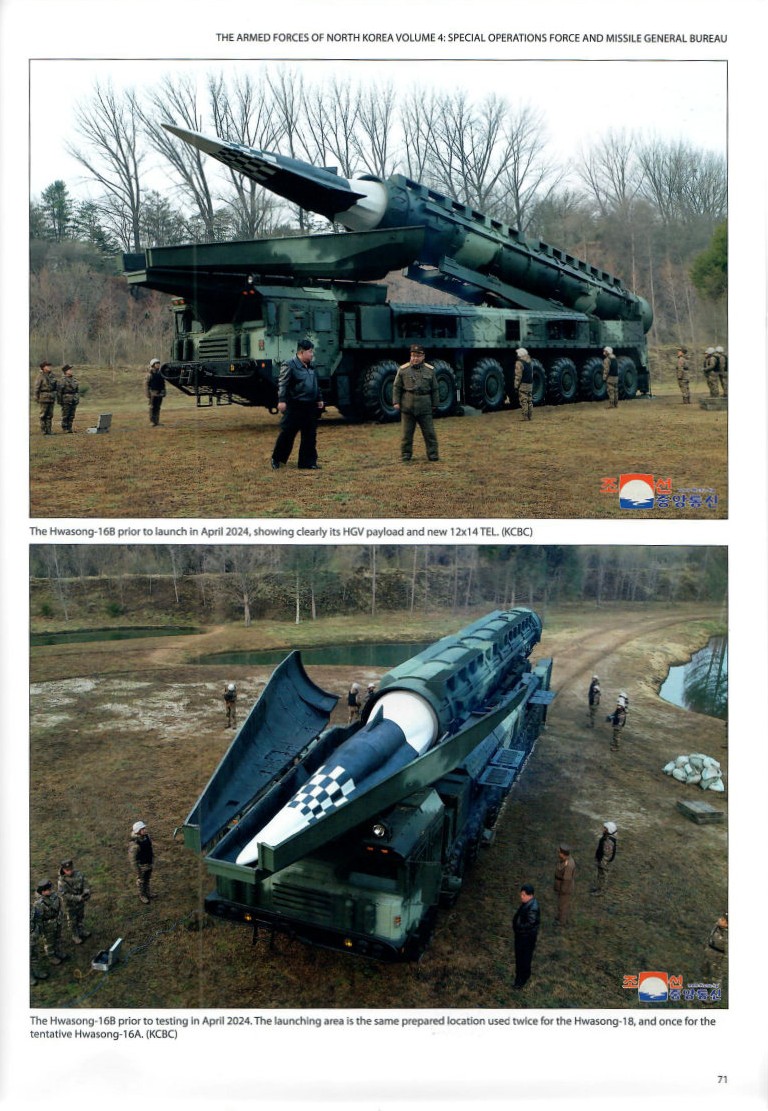
Two-thirds of this book is dedicated to the Missile General Bureau, which appears to be the bulk of North Korea’s intimidation and offensive ability, and covers land and sea-based missiles. The Hermit Kingdom has progressed light years in technology since its creation. Using Soviet Scud-B missiles, it has developed its own missiles, several variants of which have been fired in anger in Yemen, Ukraine and other hot spots. The North Korean Scud-based missiles are designated “Hwasong” – the Korean name for Mars. Hwasong missile variants began with the 1 Model through 16B, with the Hwasong-11 (A, B, E, E01, S, and Ma-1) through Hwasong-16B (hypersonic-capable intermediate-range ballistic missiles). Launch systems are covered extensively as well, from mobile TELs (Transporter Erector Launcher) to fixed sites to camouflaged trucks, train cars, surface vessels and submarines.
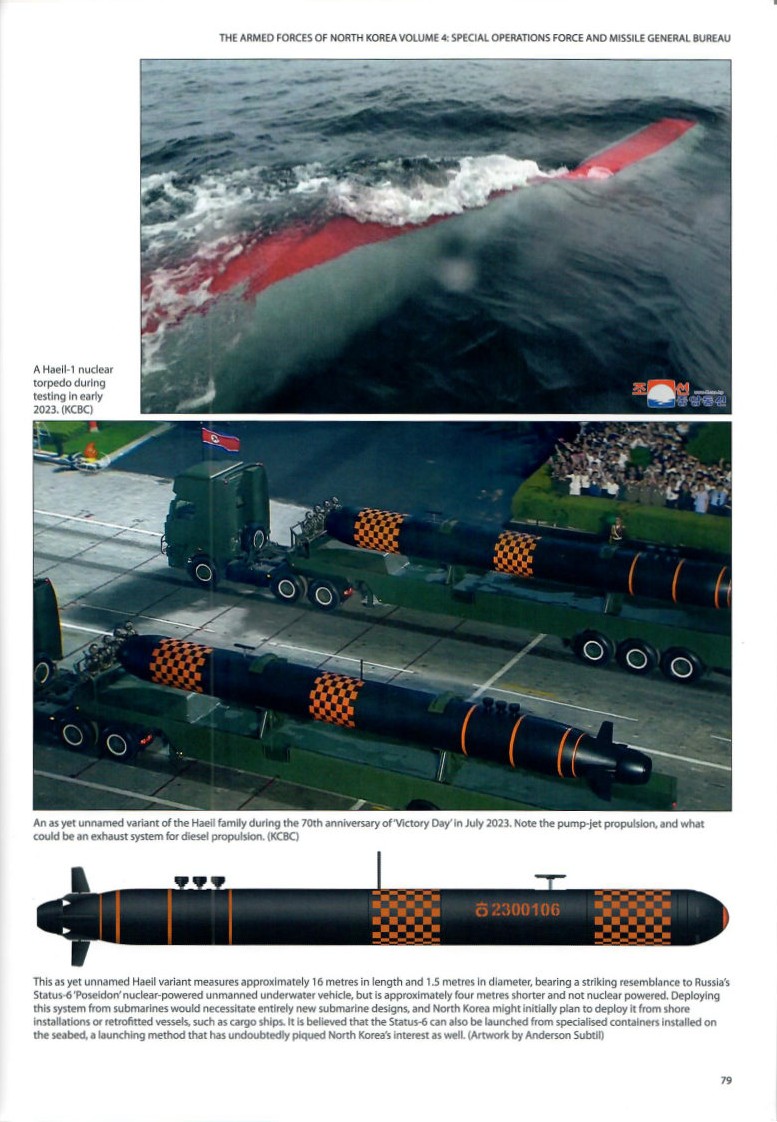
The authors do an amazingly thorough job of tracing the history of North Korean missiles from liquid to solid fueled, each test improving upon the other to cover the spectrum from short to intermediate to eventually, intercontinental, with multiple types of warheads. The amount of research conducted in the photographs, multitudes of transport systems and types of warheads is indeed very impressive. Interestingly, the North Koreans are also testing cruise missiles and nuclear torpedoes. Little is known about North Korea’s National Aerospace Technology Administration, but they are also looking at space-based systems. Lastly, there is a brief dive into biological and chemical weapons. While dubious in quality and capability, it does show a relentless quest for relevance and a first strike capability.
Modelers will find a lot of inspiration in this volume with its color photographs of the special operations forces and missile systems outlined in this book. The evolution is impressive and modelers can find examples of Cold War, current conflicts and modern weapons systems. The North Korean tunnels can also provide inspiration for vignettes and dioramas,
The authors’ concluding remarks sum up North Korea well:
Time passes differently in the Korean Peninsula’s northern half. Its intermittently starving population soldiers on through three generations of Kim family rule with little to show for it but a showcase capital and tenuous survival of the rest of the nation, as any prospect of universal prosperity is carefully snuffed out. The country appears to be in stasis, paralysed by the stifling autocracy. Yet looking in from the outside, the situation has something akin to baking a pie. Events follow each other often at glacial speeds, and the careless observer is tempted to direct his or her attention elsewhere. Glancing back after what seems like just a moment, the pie is badly burnt, and the kitchen is about to burst into flames. The past decades have seen the DPRK go through an apparently endless cycle of provocations, weapons tests and resumptions of diplomatic actions, ultimately to arrive back to the status quo, unfortunately, is an illusion however. In the meantime, North Korea has seen the chance to acquire technologies Kim Jon Un’s forefathers could not dreamed to possess, and the nuclear genie is now fully out of the bottle.
The authors did a fantastic job presenting information from an essentially closed system. This is a well-balanced book that doesn’t portray the KPA as eminently weak or impossibly invincible. Readers wanting to know more about North Korea’s armed forces are well served with this series and will be surprised and interested to learn how North Korea made its own way in the world with lessening support from her past allies, although recent developments and a thawing of relations with Russia, especially in the Ukraine, are cause for concern.
Profuse thanks to Casemate and IPMS/USA for providing the review sample.
Comments
Add new comment
This site is protected by reCAPTCHA and the Google Privacy Policy and Terms of Service apply.
Similar Reviews