September 2020

Book Author(s)
Marek Ryś and Teodor Liviu Moroşanu
Review Author
George Cully
Published on
Company
Mushroom Model Publications - MMP Books
MSRP
$11.99

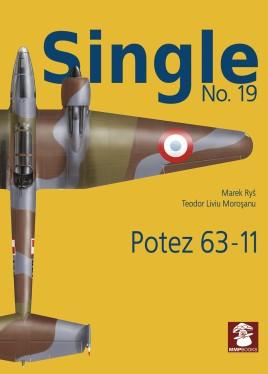
Developed from the Potez 63 long-range twin-engine fighter first flown in 1936, the Potez 63.11 reconnaissance aircraft was delivered in prototype form in late 1938. So promising was the design—and so urgent the need—that the French Armée de l’Air ordered 145 examples from the drawing board even before the plane had begun its initial trials. The first production machine was delivered in July 1939, and in that year alone Potez received orders for 1,684 63.11s. Deliveries were hampered by various component shortages and production difficulties, but even so, French aerial reconnaissance units had been equipped with 860 of these aircraft by the time that Germany invaded France in May 1940.

Book Author(s)
Richard Worrall
Review Author
Brian R. Baker
Published on
Company
Osprey Publishing
MSRP
$24.00

History

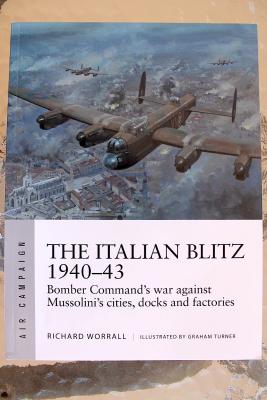
During World War II, after the Germans had invaded France, the Italians decided to get involved, and they took part in the final stages of the German assault. Once things had settled down, the Italians began expanding to the South. They had already occupied parts of Africa, but continued their advances into Greece.

The British Royal Air Force had already begun their bombing offensive against the Germans, using Hampdens, Whitleys, and Wellingtons, and later found that four engine aircraft were more appropriate for long range bombing, and supplanted and later replaced these types with Stirlings, Halifaxes, and Lancasters.

Book Author(s)
Ryan K. Noppen
Review Author
Bill Kluge
Published on
Company
Osprey Publishing
MSRP
$19.00

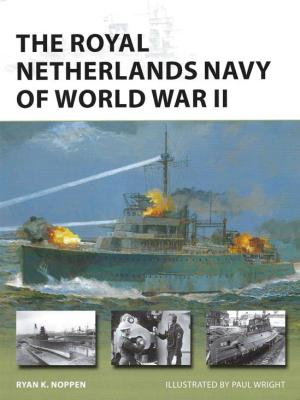
Much like its European contemporary France, the Netherlands entered the twentieth century with a considerable empire, a strong naval tradition, and a current navy badly in need of modernization and decisive political direction. Being on friendly terms with Great Britain through much of the 19th century ensured that the far-flung Dutch imperial possessions in the East Indies could count on the protection of the Royal Navy. The Royal Netherlands Navy need only keep small, inexpensive coastal vessels on hand for immediate defense. However, by the early 20th century, the Second Boer War with Britain in South Africa, coupled with Japanese naval expansion following Japan’s victory in the Russo-Japanese War changed the calculus in the minds of Dutch naval leadership.