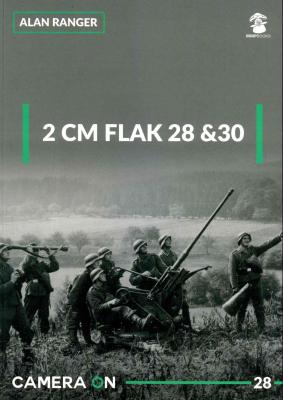
Alan Ranger is a former British Royal Engineer, engineer, collector of World War II militaria and original period photographs, and prolific author. Alan started his publishing days with Model Art of Japan this is his 28th book in the Camera On series (he already has another four in production), typically focusing on weapon systems and vehicles. The beauty of this book is the photos were taken by German soldiers during their wartime service, not typically posed and polished propaganda shots.
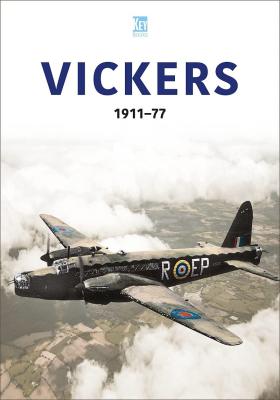
Anyone familiar with the Vickers name knows how critical their contribution to British industry has been. Starting in 1828 as a steel producer, the company diversified into arms, ships, railroad stock and aircraft. The aviation arm of the company got its start by building rigid airships and blimps. This experience not only gave them experience in building these types of structure, it also brought them Barnes Wallis as one of their designers. At the same time, they introduced the R.E.P. Type monoplane. This single seater had a steel tube frame and was used as the base trainer for a flying school Vickers opened. During the first World War, the “Gun Bus” series of pusher powered fighters were designed and built as well as the first multiengine military aircraft in the world, the E.F.B. 7, flown in August 1915. Vickers also built several other prototype fighter designs that contributed to the evolution of the type but were not produced in numbers.
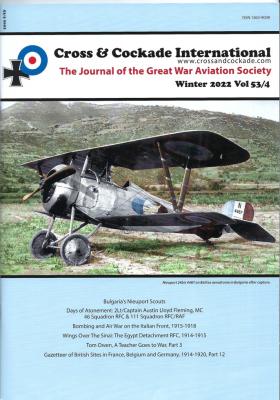
Cross & Cockade International is a non-profit UK based group known as the First World War Aviation Historical Society that publishes their journal four times a year. They also provide a free newsletter (sign up on their website) and occasionally publish WWI themed books like the Sopwith Dolphin monograph I reviewed earlier for IPMS USA. This Journal is the sister of the US Journal, Over The Front.
Reviewer’s Comments:
“- I also want to go fishing, Uncle Aliu!
You cannot, Abdulai, because it’s dangerous.
Uncle, I’m not afraid of the crocodiles!
You know, now there aren’t just crocodiles,
There are also the colonialists who drop bombs on the canoes,
[but] I cannot fear the crocodiles or the bombs.
This is my mission, as a militant of our Party.”
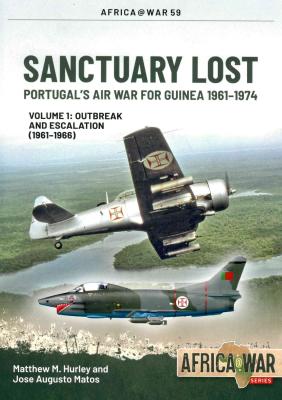
Thus opens the introduction of book, in the aptly named Introduction: Crocodiles and Bombs. Each chapter opens with a great quote that ties in with the chapter name – kudos to the authors for this additional nice touch. This book, while it covers Portugal’s war in Guinea (now Guinea Bissau, and not to be confused with the Republic of Guinea) is primarily focused on the Portuguese Air Force (Força Aérea Portuguesa-FAP) in its operations in Guinea supporting the counter-insurgency.
The origin of Pen and Sword Books is closely linked with its sister company, the Barnsley Chronicle; one of the UK's oldest provincial newspapers – established in 1858 – and one of the few weeklies still in private ownership. The first books published by the company were in response to public demand following of a series of articles published in the newspaper: Dark Peak Aircraft Wrecks told the story of crash sites in the Dark Peak area of the Peak District National Park, and a further weekly feature on the history of two Kitchener battalions, known as the Barnsley Pals, aroused a thirst for more information. Following on from the success of Dark Peak Wrecks and Barnsley Pals books, a number of local history paperbacks were produced along with a series of battlefield guidebooks. Battleground Europe proved immediately successful, and as more and more titles were produced the company made the decision to launch a book publishing arm of the group.
“On Thursday, 15 June 1955, thousands of people as usual were on the streets of downtown Buenos Aires. Some curious citizens had heard something about an air parade, and they were in the Plaza de Mayo looking up at the sky. At around 12:40 p.m., some Naval Aviation North American AT-6, PBY-5A Catalina and Beechcraft AT-11 planes appeared on the horizon, But they were not there for a parade; they were there to simply bomb Government House in an attempted coup against Juan Domingo Perón. This raid left behind more than 300 dead, 600 wounded and dead everywhere. The Army units that should have been mobilized to support the uprising never did. The coup attempt was aborted within a few hours. But unlike the bombing of the city of Guernica in 1937, the planes that bombed and the pilots who flew them were national forces. Perón would be finally overthrown three months later by the so-called Liberating Revolution.”
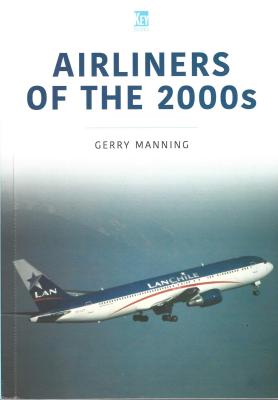
This is the 5th volume of a new Key Books Series Historic Commercial Aircraft. This covers the Airliners worldwide from 2000 to 2010. This covers all types of aircraft across the global airlines flying in this period. The book contents consists of many photos with individual captions describing the details of the aircraft and the operators.
During my Airline interiors career I work on the interiors for a lot of the aircraft shown on this book and is a great collection of Aircraft types and Liveries.
All the photographs and write up in this book really help to show the variation of aircraft and airlines using then during this period.
I recommend this book to everyone with an interest in Commercial Aircraft and or Airlines. Also great for commercial aircraft modelers. After reading this book I look forward to adding more of this series to my library.
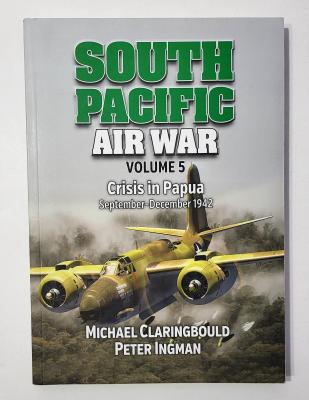
Volume Five of this series chronicles aerial warfare primarily in the New Guinea theatre in the critical period between September and December 1942. It can be read alone or as a continuation of the previous four volumes which span the first nine months of the Pacific War.
By early September the strategic picture in the theatre had changed markedly within just six weeks. From their new Buna beachhead the Japanese Army commenced a Papuan mountain campaign which threatened the Allied bastion of Port Moresby. Meanwhile the battle for Guadalcanal was raging, with the outcome of the wider Pacific War in the balance.
Against this background a strengthened US Fifth Air Force took the fight to the IJA with direct air support. While this was being conducted by P-39s, P-40Es, A-20As and B-25s, raids by B-17s against Rabaul aided US forces in the neighboring Solomons. RAAF Beaufighters, Beauforts, Bostons and Hudsons also contributed substantially to these efforts.
Mortons Media Group was established in the 19th century and has been producing book-length publications since the early 2000s. The company established a dedicated books division in 2019 and Mortons Books has already earned a reputation for publishing high-quality titles by authors who are true experts in their field. For the best reads on rail, aviation, nostalgia and history, look no further. This book is part of their imprint: Tempest Books addresses all aspects of aviation history are covered in authoritative detail. The aviators and aircraft of the Second World War are profiled by our titles alongside more modern fighters, bombers, reconnaissance aircraft and transports. 'Secret projects' and experimental designs are also an important part of the Tempest Books portfolio.
After the Battle (ATB) publications is a long lived publishing company that was recently acquired by Pen and Sword. For many years ATB published the quarterly magazine called, After the Battle. It recently was discontinued, but their many books use the same format of comparing photographs contemporary to the Second World War with modern views, hence the then and now moniker. They consistently publish articles and books of a very high quality. The images are superb, both contemporary and modern. They will be missed.