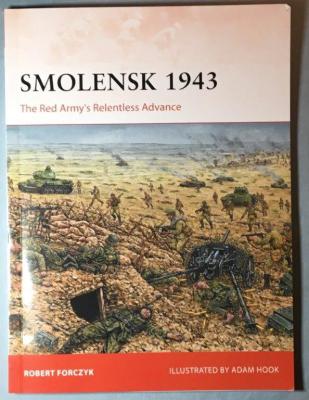
Osprey’s Campaign series of books is a well-established line covering some of the more famous campaigns in military history. The series started 29 years ago with the Normandy landings and with this installment, Smolensk 1943 being one of their latest releases.
What's New
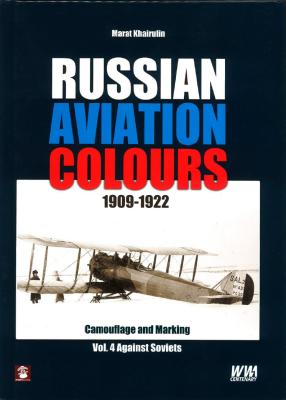
Following up the first three in this series, The Russian Aviation Colours 1909-1922: Camouflage and Markings, Volume 1 Early Years, Volume 2 “Great War”, Volume 3 “Red Stars”, comes MMP’s latest tome. This book, focused on ‘Against Soviets’ is the final volume in the series. The author leans heavily on Russian private archives, as well as archives, libraries, and museums.
The book is a nice hardbound, with a nice glossy cover, and 128 pages on high-quality stock with a matt finish. Mainly clear black and white period photos are supplemented with modern day color photos, color period posters and postcards, colour side and top views, and colour unit emblems and personal markings. The text is in English and quite readable. I counted 173 black and white photographs to go with an additional 21 color pictures. There were 79 color side profiles and another 51 color drawings highlighting markings details.
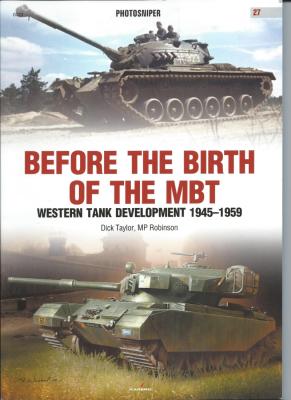
According to the Kagero website, this book is the first in a short series looking at the major developments of battle tanks by Western nations in the years following the end of the Second World War up through to the present day. This volume is a good mix of B&W images, design sketches, as well as a color photo section and selection of color profiles.
Background
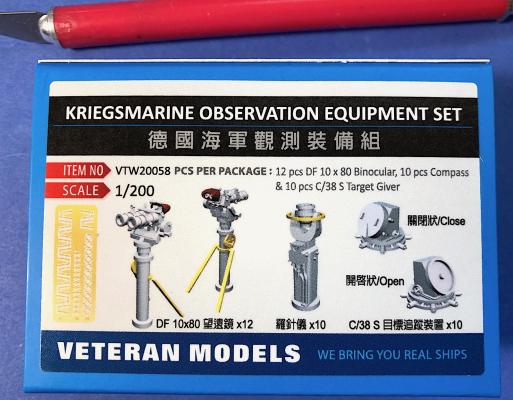
For directing the 38cm and 15cm guns, Bismarck was equipped with three armored fire control posts (in the conning tower, on the foretop, and on top of the aft superstructure. The main and aft control posts were equipped with 10.5m rangefinders, while the front control post received a 7m rangefinder. Each station was also equipped with optical target givers (Zielgeber C/38 S), two pieces in the aft post and three each in the fore and main posts. Binocular columns were also probably placed in the fire control posts. Veteran Models provides a diagram of the Bismarck showing possible locations for the equipment. The Battleship Bismarck By Stefan Draminski
Tru-Color paint was started in 2008 when Rick Galazzo and Scott Cohen, armed with a desire to improve the Accupaint formulas, set about to formulate a new model paint. Both gentlemen have extensive experience formulating commercial paints, so they brought their knowledge and experience to bear in the model world. The goal was to produce a paint that was a solvent-based formula with a quick drying time and a glossy finish. The result of their efforts is Tru-Color paint.
Introduction
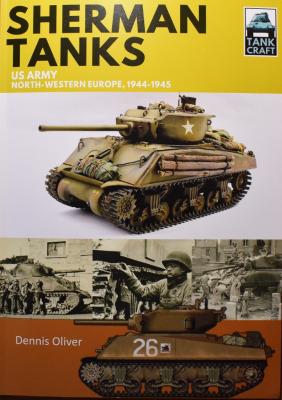
The aim of this innovative new series is to provide modelmakers and tank enthusiasts with a new standard of primarily visual reference of both full-size tanks and their scale models. Each book will contain detailed technical information imparted through drawings and photographs while the meticulously researched full-color profiles will provide a complete reference for paint schemes and markings, in addition every volume of TankCraft series will feature summaries of design histories and operational careers, and reviews of available kits. Each book is devoted to an iconic tank type – chosen for its popularity as a modelling subject – and the series will provide coverage across a range of different criteria, showcasing the best of the world’s tank types and providing invaluable insight and guidance for modelmakers.
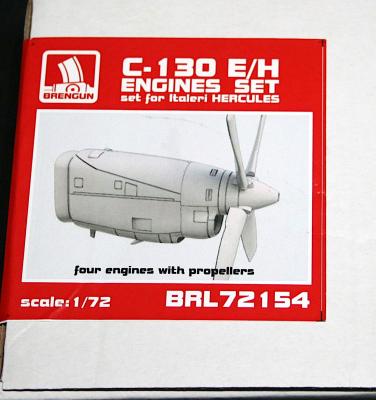
Brengun is a new company to me, but what I have seen they are producing a wide range of unique resin and photoetch accessories in 1/32, 1/48, 1/72 as well as 1/144. These nacelles were previously produced by Attack Squadron (Arma Hobby) and that product line was sold to Brengun, which is a big relief to C-130 fans.
Introduction
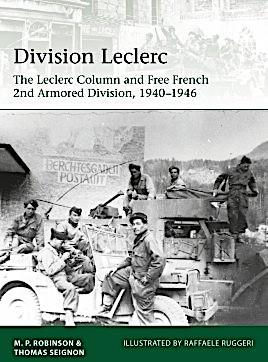
'General Leclerc' was the nom de guerreadopted by the Gaullist officer Philippe de Hautcloque, to protect his family in occupied France. He became France's foremost fighting commander, and his armored division (the '2e DB') its most famous formation. Starting as a small scratch force of mostly African troops organised and led by Leclerc in French Equatorial Africa, it achieved early success raiding Italian and German positions in co-operation with Britain's Long Range Desert Group. Following the Allied victory in North Africa it was expanded and reorganised as a US Army-style armoured division, with American tanks and other armoured vehicles. Shipped to the UK, in spring 1944, it was assigned to Patton's US Third Army, landing in time for the Normandy breakout and being given the honour of liberating Paris in August 1944.
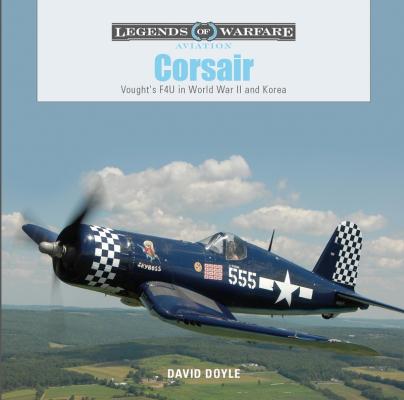
I really like the LEGENDS OF WARFARE series of books. These 9” by 9” hardback books cover aircraft, armored vehicles and ships in 112 pages filled mainly with good sized pictures.
This one is on the F4U Corsair from prototype through WWII, Korea and afterwards.
There is a quick introduction followed by chapters on each of the production versions, in this case, the prototype XF4U-1, the F4U-1 “Birdcage”, the -2 nightfighter, -1A with the raised canopy, the 20mm armed -1C, the -1D which was the most common version used during WWII, -4, -5, AU-1 ground attack version, -7 used by the French Navy, and the F2G.
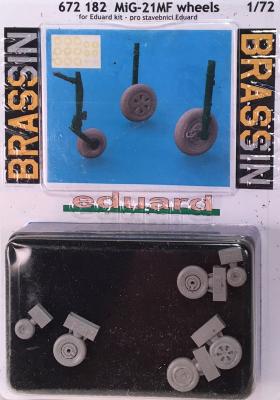
When Eduard released its 1/72 MiG-21MF kit last summer it also released several resin and photo-etch sets to go with it. One of the sets is a package of resin wheels. The set provides two sets of main wheels (one with solid wheel covers, the other with spoked wheel covers) and two nose wheels. The instructions note that the solid wheel covers were seldom used on the MF version of the MiG-21, so check your references to see which type the aircraft you are modeling has. I used the spoked set and I have put the other set aside on the assumption that the MiG-21MF is just the first of a MiG-21 series by Eduard, therefore it will come in handy later on.