
Michael Novosad
Reviews By Author
|
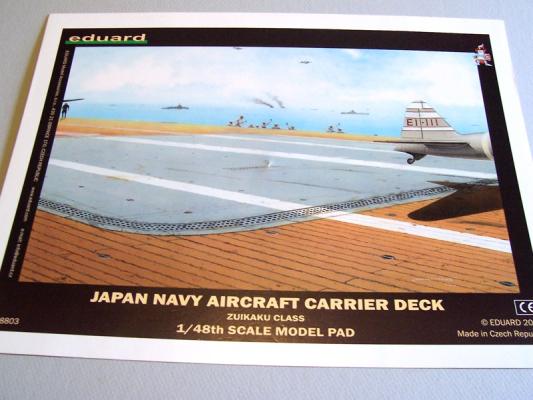
IJN Aircraft Carrier DeckPublished:
First ImpressionsThis review product arrived in the mail wrapped in cardboard and amply reinforced duct tape. Upon opening the mailing package I found a heavy-duty, injection-molded black plastic, 11 ¾” by 15 5/8” long, enclosed in a clear plastic bag wrapper. A small sprue of clear plastic parts was also enclosed. The aircraft carrier deck is molded as an inverted tray, and is quite sturdy. The engraving for the deck planks and elevator were clean and crisp, but might be considered too pronounced for an airplane model. For the bean counters, there are 190 tie downs. The welded seams are almost too finely rendered, with only a small portion that appears to have “faded”. There are four rectangular depressions that I assume receive the clear parts. On the underside of… more |
|
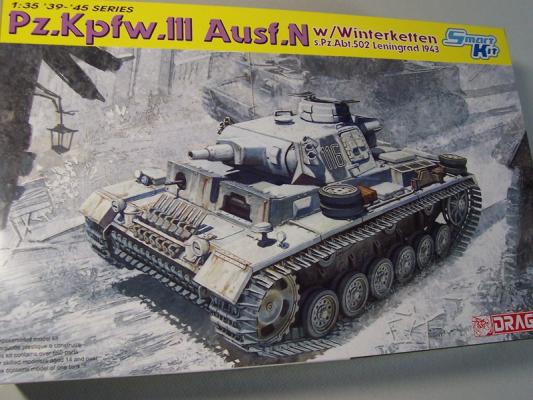
Pz. Kpfw. III Ausf. N with WinterkettenPublished:
History and PerformanceThe Panzerkampfwagen III was one of the workhorses of the German army during World War II. The development order was issued in 1935 for a full-tracked vehicle in the 15 ton class. The Ausf. A model was manufactured in 1937 and was armed with a 3.7 cm main gun. Ten of these vehicles were produced but were withdrawn from service in 1940 due to insufficient armor and poor suspension. Several other variants were manufactured in subsequent years with armament increased to include 5.0 cm and ultimately 7.5 cm main guns. There was also a model equipped with a flame thrower. The Panzerkampfwagen III saw service on all fronts during the war, but the improvements in armament and armor never quite matching its opponents.
The Panzerkampfwagen III… more |
|
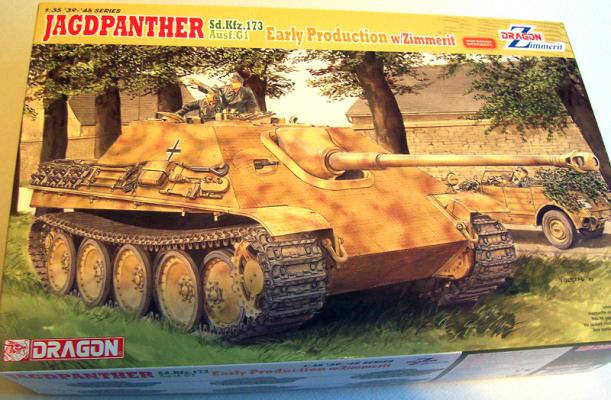
Jagdpanther Early Production w/ZimmeritPublished:
History and PerformanceThe Jagdpanther was based on the Panther chassis, using the engine and drive train, and mounted the 8.8 cm Pak 43/3 (L/71). The end result was probably the best tank killer the Germans fielded during World War II. 392 of these vehicles were produced from January 1944 until March 1945. The Jagdpanther had a weight of 46 tons, could reach a road speed of 45 km/hr. The main armament had 57 rounds on board with 3,000 round for the bow mounted machinegun. A crew of five manned the vehicle. The majority of the Jagdpanthers served on the Eastern front, with the greatest number on the West Front serving in the Ardennes Offensive. Zimmerit was factory-applied to several models of German AFV’s. This material had a rough surface and was to resist the… more |
|
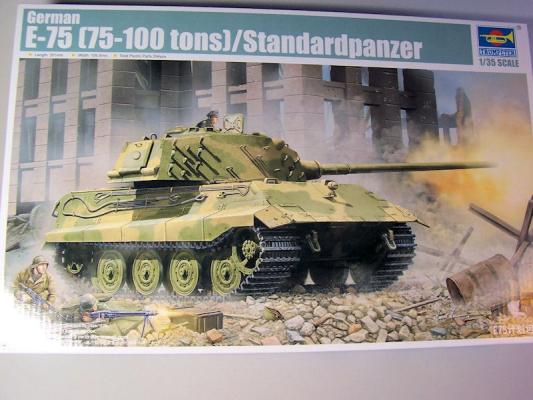
Standardpanzer E-75Published:
History and PerformanceIn November of 1944, the German armament giant Krupp proposed conceptual designs that would increase the armament of all Jagdpanzers and panzers currently in production. The idea behind the proposal was to permit the German vehicles to engage the enemy with the most effective armament with the minimum amount of protective armor. The E-75 "Standard panzer" was to be a heavy tank to replace the PzKpfW VIB Tiger II. The new vehicle would be armed with the 10.f cm KwK (L/68). This gun would have most likely required the redesign of the turret. The rate of fire would be reduced with the use of two-part munitions, and a second crew loader would be required, adding space for the additional crew. This vehicle never proceeded beyond the design… more |